
An Olfactory Journey Through India: An Unmissable Destination for Fragrance Lovers?
In India, where the vibrant colours of Holi blend with the intoxicating aromas of spices and flowers, perfume is far more than a simple adornment. It is an offering, a symbol of seduction, and an essential part of everyday life. Embarking on an olfactory journey through the ages, we discover the rich and complex history of Indian perfumery by exploring three iconic cities: Kannauj, Mysore, and Madurai.
Indian Perfumery: A Rich Heritage of Culture and History
The art of perfumery in India is deeply rooted in the country’s history and spiritual traditions. References to fragrant oils and perfumes can already be found in ancient sacred texts such as the Vedas and the Upanishads, where aromatic substances were used during religious ceremonies to purify both body and soul.
Over the centuries, Indian perfumery evolved under Persian, Arab, and Chinese influences. Advances in distillation and essential oil extraction techniques enabled artisans to create an extraordinary diversity of fragrances, establishing India as one of the world’s earliest centres of perfume craftsmanship.
Today, fragrance continues to play a central role in Indian daily life. It accompanies religious festivals, family celebrations, acts of seduction, and personal well-being. Offering perfume is considered a gesture of affection, respect, and hospitality.
Perfume in Everyday Indian Life
Religious Rituals
Indian temples are filled with the scent of incense and fragrant oils. Worshippers often perfume themselves before entering sacred spaces as a symbol of purification.
Garlands woven from intensely fragrant flowers such as jasmine and tuberose are offered to the gods. Tradition even discourages smelling these flowers beforehand, as doing so would symbolically “steal” the fragrance intended for the deities. Similar floral offerings adorn the puja rooms—small household shrines dedicated to Hindu gods and ancestors.
Sandalwood, regarded as sacred throughout India, occupies a special place in religious practice. Burned as incense in temples, it is also applied as a paste to the forehead to offer spiritual protection and ward off negative influences.
Life Celebrations
Fragrance accompanies every important stage of life, from weddings and births to major religious ceremonies.
During Hindu weddings, the bride and groom exchange the jaimala, elaborate flower garlands traditionally composed of roses, jasmine or marigolds depending on the season. Marigolds, symbols of the sun and positive energy, are especially popular during these celebrations.
Seduction

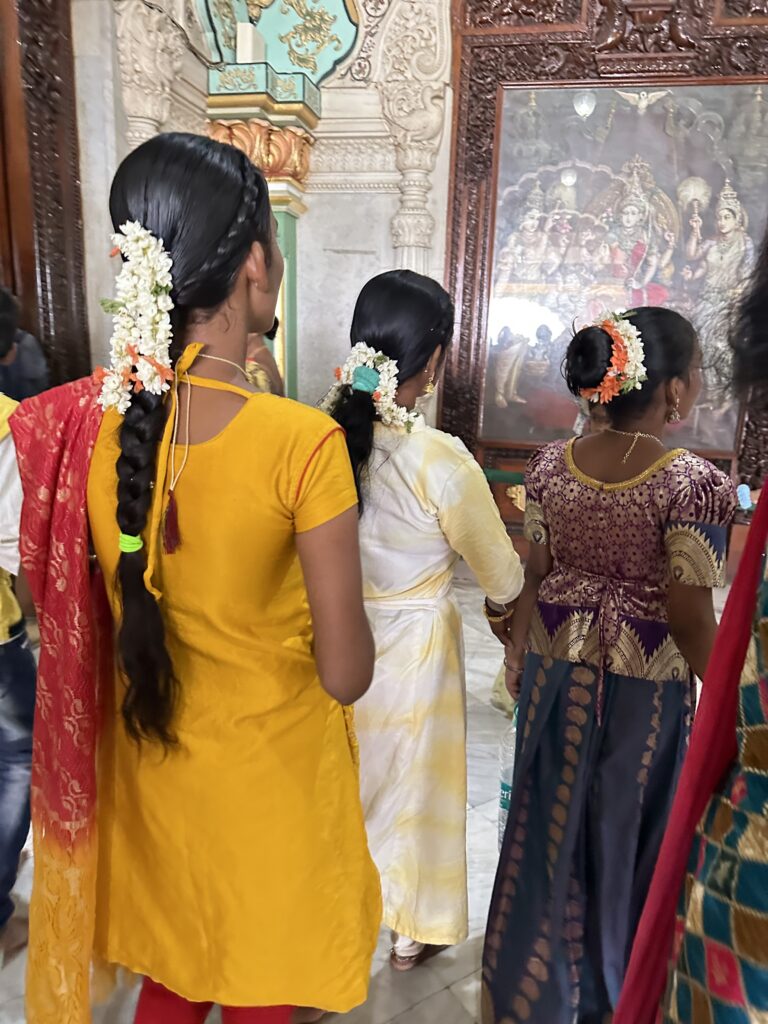
Perfume also plays a fundamental role in Indian ideals of beauty and attraction.
Women traditionally perfume their hair with floral oils before decorating their braids and buns with fresh Sambac jasmine garlands. As the flower buds gradually bloom throughout the day, they release their intoxicating fragrance, creating a naturally perfumed aura.
For newlyweds, bedrooms are often adorned with garlands of tuberose, a flower associated with sensuality and pleasure. Its narcotic scent has earned it the poetic nickname “the perfume of the night.”
Wellness
Essential oils have long been valued for their therapeutic and relaxing properties. They remain an integral part of Ayurvedic medicine, where aromatic plants are used to promote physical, emotional, and spiritual balance.
Kannauj: India’s Ancient Perfume Capital
Often described as the birthplace of Indian perfumery, Kannauj has enchanted emperors, poets, and travellers for more than two millennia. Situated on the fertile banks of the Ganges River, the city has earned its reputation as India’s perfume capital thanks to its ancestral distillation techniques and exceptional craftsmanship.
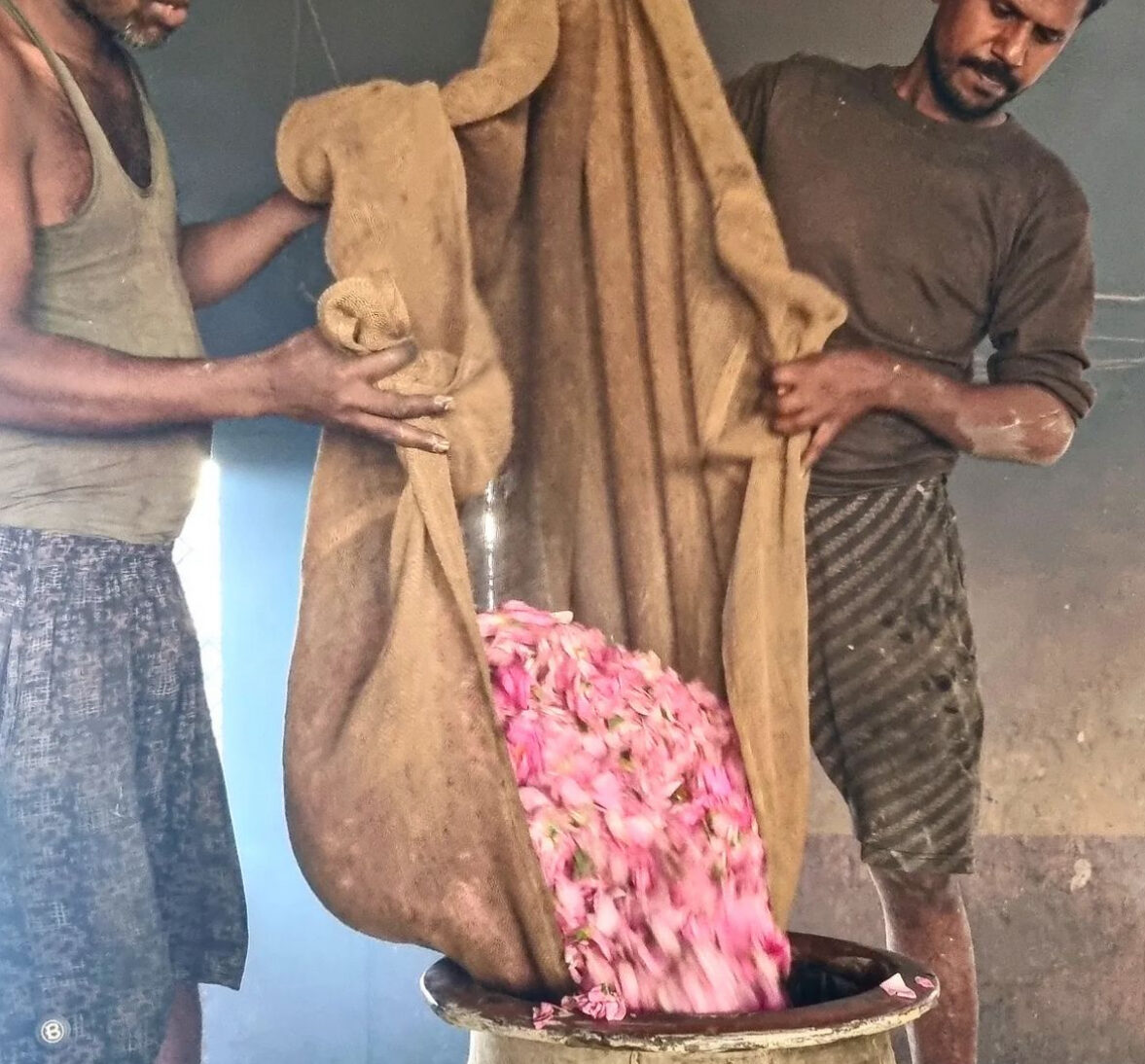
Kannauj is renowned for extracting fragrant oils from flowers such as jasmine, rose, kewda—a sweet, fruity floral blossom often compared to rose with a more exotic character—and the remarkable mitti attar, whose scent recreates the aroma of rain falling on dry earth. This unique fragrance is produced by distilling specially prepared clay.
A Legacy Spanning Two Thousand Years
Kannauj’s perfume-making tradition dates back over 2,000 years. During the Gupta Empire in the fourth century AD, the city had already established itself as an important centre of fragrance production.
Its distillation techniques have been carefully passed down from one generation to the next, allowing Kannauj to preserve its prestigious position within the global perfume industry.
Traditional Craftsmanship
The city’s reputation rests upon its remarkable expertise in extracting essential oils.
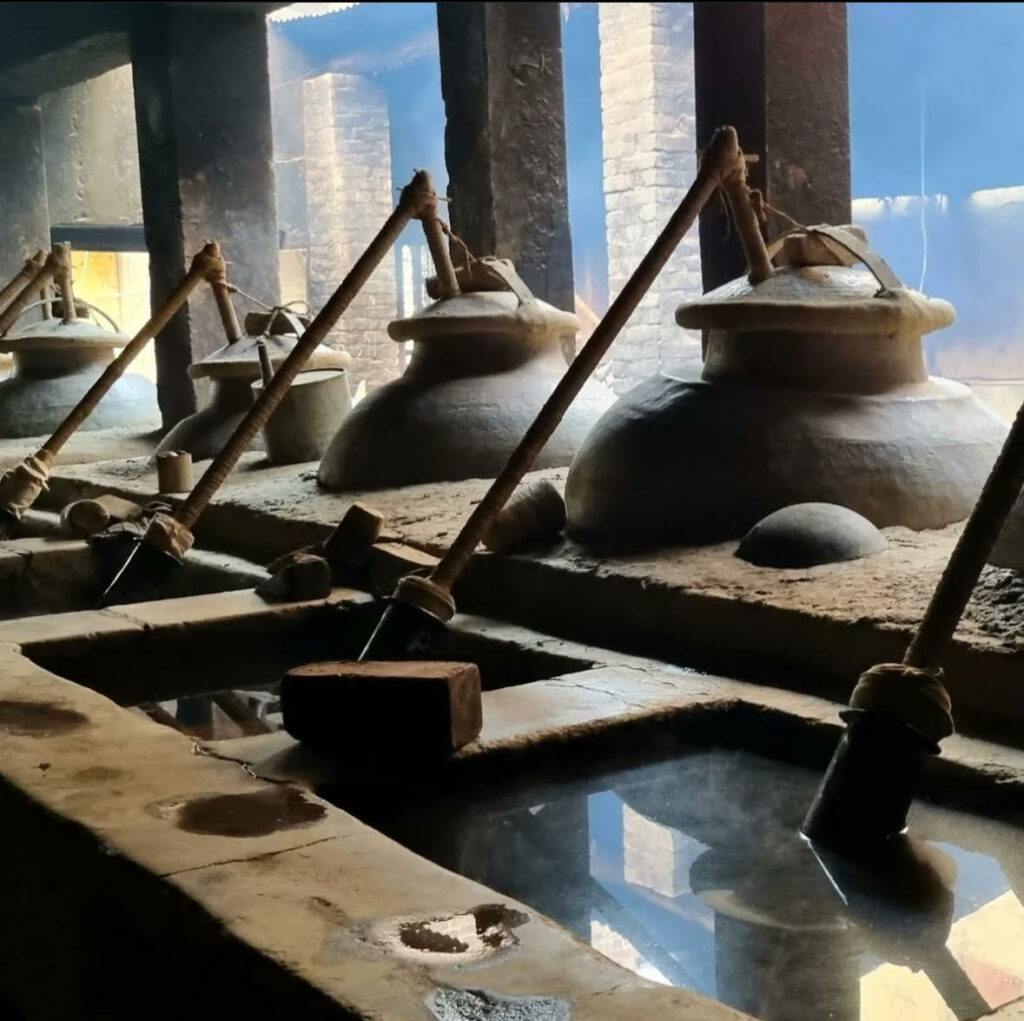
Its traditional Degh-Bhapka distillation method employs handcrafted copper stills connected to receivers immersed in cooling water. Slow steam distillation gently captures the aromatic molecules before they are absorbed into sandalwood oil, producing exceptionally pure and refined attars.
Although modern equipment has become increasingly common, many artisans continue to practise this centuries-old method, preserving an invaluable cultural heritage.
Exceptional Raw Materials
The fertile region surrounding Kannauj offers perfumers an extraordinary palette of botanical treasures.
Among its most prized flowers are:
- Jasmine
- Rose
- Kewda
- Tuberose
- Spikenard
These ingredients have formed the foundation of Indian perfumery for centuries.
The Art of Attar
Kannauj is internationally famous for its attars—traditional alcohol-free perfumes inherited from the Mughal Empire.
Unlike Western perfumes, attars are created by distilling flowers, spices, herbs or woods directly into sandalwood essential oil, which acts as both solvent and fixative. The result is an intensely rich, long-lasting fragrance with exceptional depth and natural complexity.
Kannauj also produces a wide range of Ayurvedic perfumes made exclusively from natural ingredients, free from synthetic chemicals.
An Economic and Cultural Treasure
Perfumery remains one of Kannauj’s most important industries, providing employment for thousands of people—from flower growers and distillers to artisans and master perfumers.
The city is also home to several perfume schools dedicated to preserving traditional knowledge and training future generations of artisans.
Protecting a Precious Heritage
Like many traditional industries, Kannauj faces significant challenges, including competition from synthetic fragrances and the pressures of globalisation.
Despite these obstacles, the city continues to safeguard its unique expertise while promoting the cultural importance of natural Indian perfumery.
For fragrance enthusiasts, Kannauj represents far more than a historical destination—it is a living museum where centuries of olfactory craftsmanship continue to flourish.
Mysore: The Royal Legacy of Sandalwood
Located in the heart of Karnataka, Mysore is renowned for its magnificent royal palace, impressive temples, and unique relationship with one of perfumery’s most precious ingredients: Santalum album, or Indian white sandalwood.
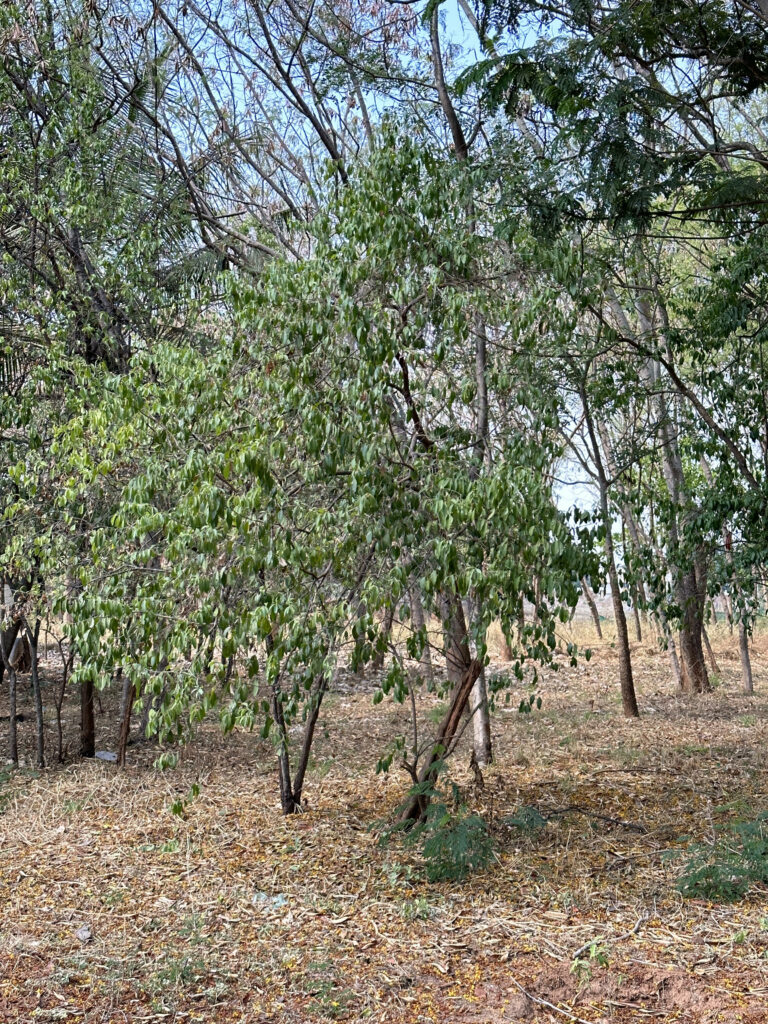
This elegant tree, whose pale heartwood gives it its Latin name album (“white”), grows as a semi-parasitic species, attaching its roots to neighbouring trees. Highly prized in perfumery, sandalwood produces a creamy, warm, milky, and velvety fragrance that has become one of the industry’s most treasured raw materials.
Its history is inseparable from the identity of Mysore itself.
Sandalwood: Mysore’s Greatest Treasure
Known throughout India as the “sacred wood,” sandalwood naturally grows in the tropical forests of southern India.
Mysore possesses one of the world’s most important sandalwood-producing regions, earning it the title of the country’s sandalwood capital.
Centuries of Tradition
The use of sandalwood in Mysore dates back many centuries.
Ancient rulers prized the wood for its religious significance and symbolic value. It featured prominently in royal ceremonies, Hindu rituals, traditional medicine, and the manufacture of sacred objects.
Mastering Sandalwood Distillation
Mysore has developed internationally recognised expertise in extracting sandalwood essential oil.
Local artisans continue to employ time-honoured distillation techniques to produce an oil celebrated for its exceptional richness, smoothness, and woody elegance.
A Precious Ingredient
Sandalwood oil is used in a remarkable variety of products, including:
- Fine fragrances
- Cosmetics
- Soap
- Aromatherapy
- Ayurvedic medicine
- Incense
- Religious artefacts
Its creamy, long-lasting character makes it one of the world’s most valuable perfume ingredients.
Economic and Cultural Importance
The sandalwood industry remains a cornerstone of Mysore’s economy, supporting thousands of livelihoods—from forestry workers and cultivators to distillers and perfumers.
Beyond its economic value, sandalwood has become one of the defining symbols of the city’s cultural identity.
Challenges for the Future
Despite its prestige, Mysore’s sandalwood industry faces considerable challenges.
Illegal logging and international trafficking have severely threatened natural sandalwood forests. As a result, sandalwood cultivation and harvesting are now strictly regulated by the Indian government.
These restrictions have also encouraged counterfeiting and increased competition from synthetic sandalwood molecules. Nevertheless, Mysore remains committed to protecting its remarkable heritage while promoting more sustainable cultivation and production practices.
Madurai: An Olfactory Symphony
Madurai, a historic city in Tamil Nadu in southeastern India, offers a truly unique sensory experience. Fragrant temples, lively spice markets, and a cuisine rich in aromas create an olfactory symphony that captivates every visitor.
A Perfumed History
Madurai’s history is deeply intertwined with spices. Once a major trading hub, the city attracted merchants from across the world. Its air was filled with the intense aromas of black pepper, clove, turmeric, nutmeg, and saffron.
But above all, Madurai is the kingdom of Sambac jasmine.
The Capital of Sambac Jasmine (Malligai)
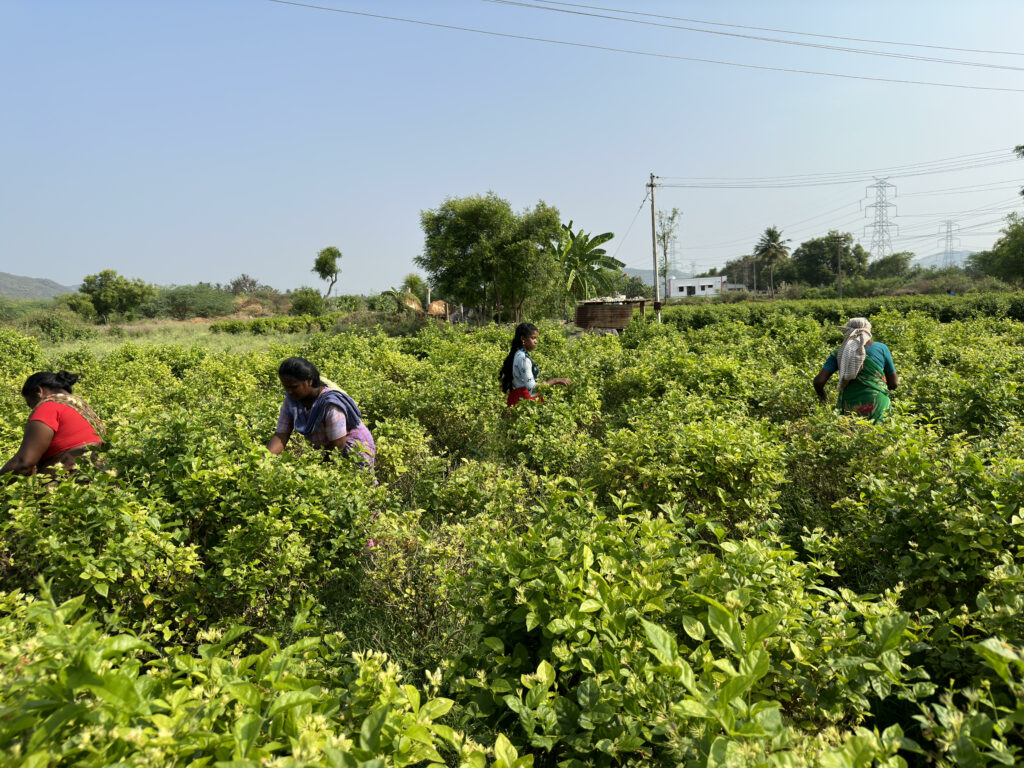
The most prized variety of jasmine, locally known as Madurai Malli, is cultivated in vast fields surrounding the city. Its intoxicating fragrance has become an iconic signature of Madurai.
The jasmine flower is deeply embedded in the city’s cultural identity—its shape appears in temple sculptures, traditional artworks, and ornamental jewellery.
The earliest references to Madurai jasmine can be found in Sangam literature, dating back to between 300 BCE and 300 CE.
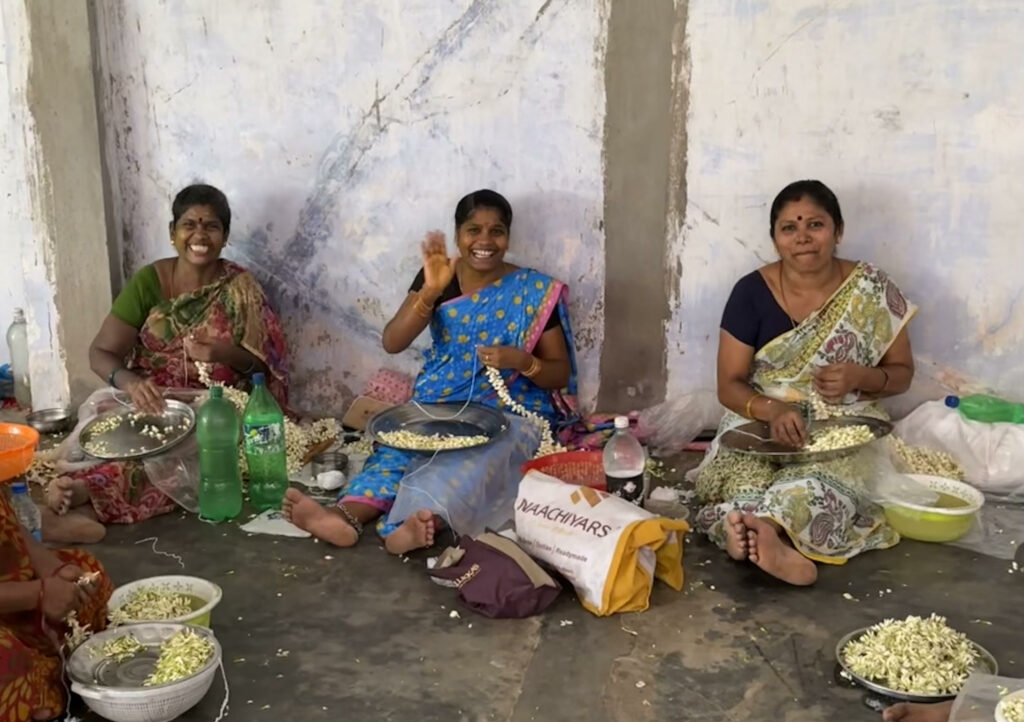
Freshly harvested jasmine buds are sold in early-morning flower markets known as “poo markets”, where growers bring their produce at dawn. These flowers are purchased while still in bud form and then woven into garlands used for prayer, decoration, and export across the world.
They are also essential to perfumery: solvent extraction produces precious concretes and absolutes, capturing the flower’s divine scent.
The term “sambac” comes from the Sanskrit campaka, referring to highly fragrant botanical species.
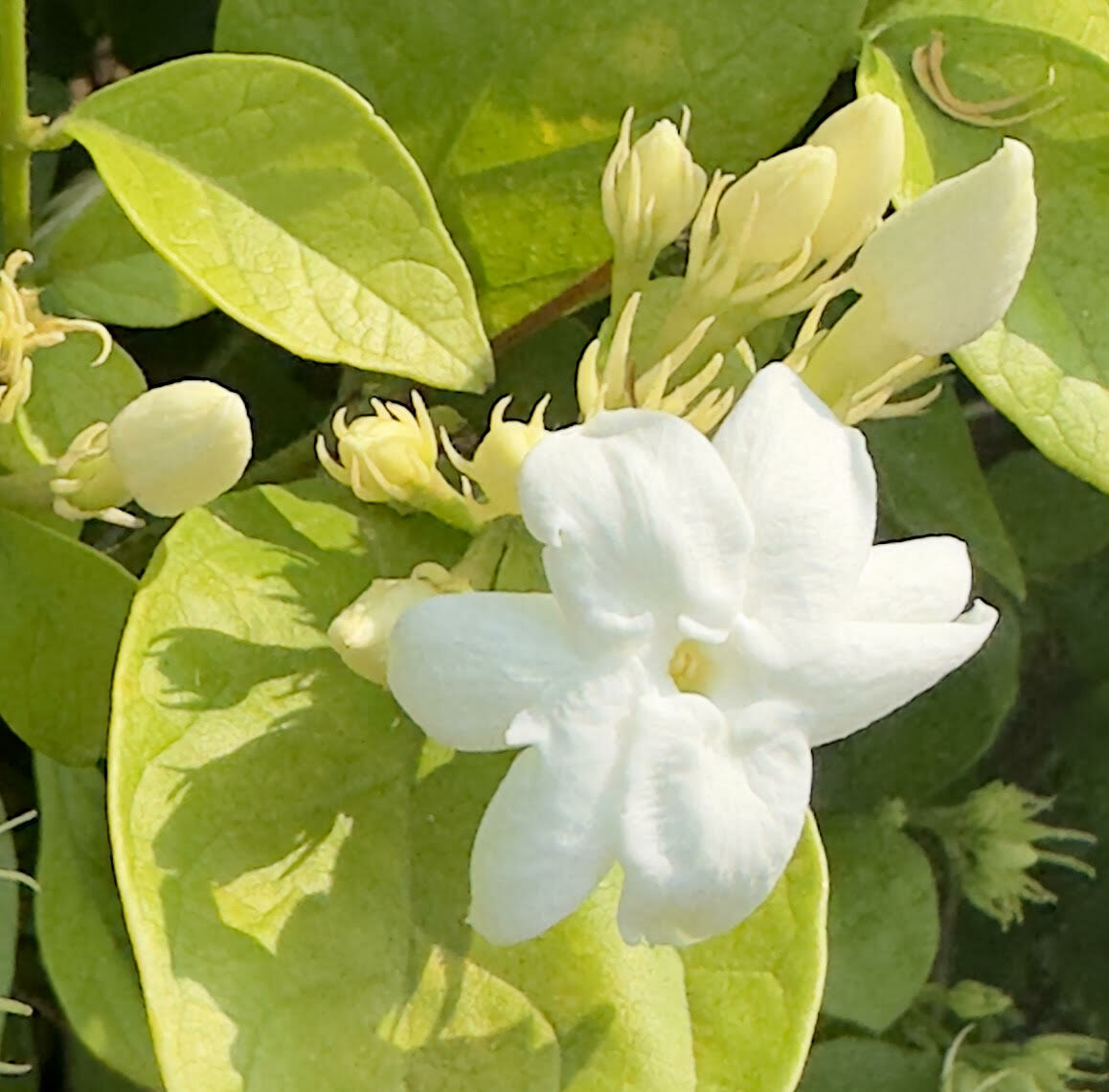
Its flowers, usually composed of 7 to 10 thick, waxy petals, release a complex scent profile. It opens with green, slightly banana-like freshness reminiscent of lily of the valley, before evolving into sunny, fruity, honeyed, and lightly animalic tones close to orange blossom.
While jasmine sambac has long been used in Indian and Middle Eastern attars, it only entered Western fine perfumery in the late 1980s.
Madurai: A Must-Visit Olfactory Destination
Madurai is an essential destination for anyone wishing to experience jasmine sambac at its source.
It is a city that must be explored through the nose. Its temples—especially the magnificent Meenakshi Temple, one of the largest Hindu temples in India—its markets, and its cuisine all offer an unforgettable sensory journey, where fragrance and spirituality merge in perfect harmony.
The Role of Perfume in India: Economic, Cultural, and Spiritual Dimensions
India’s fragrance industry is a dynamic and rapidly growing sector, representing a multi-billion-dollar market. Beyond its economic importance, perfume remains a gesture of respect, affection, and identity.
India is a true olfactory treasure, offering a journey through the richness of its culture, traditions, and natural resources. Kannauj, Mysore, and Madurai are not merely places on a map—they are the beating heart of a tradition that transcends borders and time.
Today, the future of Indian perfumery appears promising, driven by growing global demand for authentic, natural, and sustainable products. Consumers worldwide increasingly seek to understand the origin and meaning behind the fragrances they wear, turning toward scents that tell a genuine story. In this search for authenticity and depth, India offers an inexhaustible source of inspiration and precious raw materials, inviting the world to rediscover traditional perfumery in a modern context.
And if you wish to experience the magic of India at its source, you can embark on one of the olfactory journeys organized by Magali Quénet, founder of “Mon Parfum C’est Moi”. A passionate expert in raw materials, she invites participants to explore the origins of perfume with scent as the guiding thread of discovery. A truly immersive experience.
Article co-written by Elfa Jouini and Anne-Laure Hennequin