
How Do Tropical Notes Take You Travelling?
The tropics, with their natural lushness and their olfactory diversity, are an inexhaustible source of inspiration for perfumers the world over. Tropical olfactory notes bring a solar, fruity and tropical-floral touch to every fragrance. Let us explore these notes in detail and discover how they are used in perfumery to create unique olfactory sensations.
Fruity and Sunny Notes 🥭🍍🥥
The trend for tropical fruity perfumes comes to us from Brazil in the 1990s.
In Brazilian culture, the tradition has long been to douse oneself in “banho de cheiro,” infusions of refreshing and mystical plants for the body. In our more modern times, the tradition of the fragrant splash used for purely hedonistic purposes after the shower has taken precedence over these purifying infusions. The notes of tropical fruits, in which the country abounds (passion fruit/maracujá, açaí, pineapple, coconut, etc.), have replaced—or else blended with—the ancestral plants with their many virtues.
Since fruits cannot offer their aromatic essences owing to their overly high water content, perfumers have recreated these smells using synthetic molecules:
And so, from the 1990s onward, tropical fruit notes appeared—first in hygiene products, in the United States initially through the American brand Bath and Body Works, then little by little in our perfume bottles—to bring their joy, their colours and their energy, reminiscent of Brazilian carnivals.
Fruity notes are often used in perfumes for women, but they also appear in unisex and masculine compositions to add a fresh, invigorating dimension. They are particularly popular in summer perfumes and light eaux de toilette, where they bring a sensation of lightness and joy. Perfumers often combine them with floral, woody or spicy notes to create balanced and harmonious compositions.
Mango
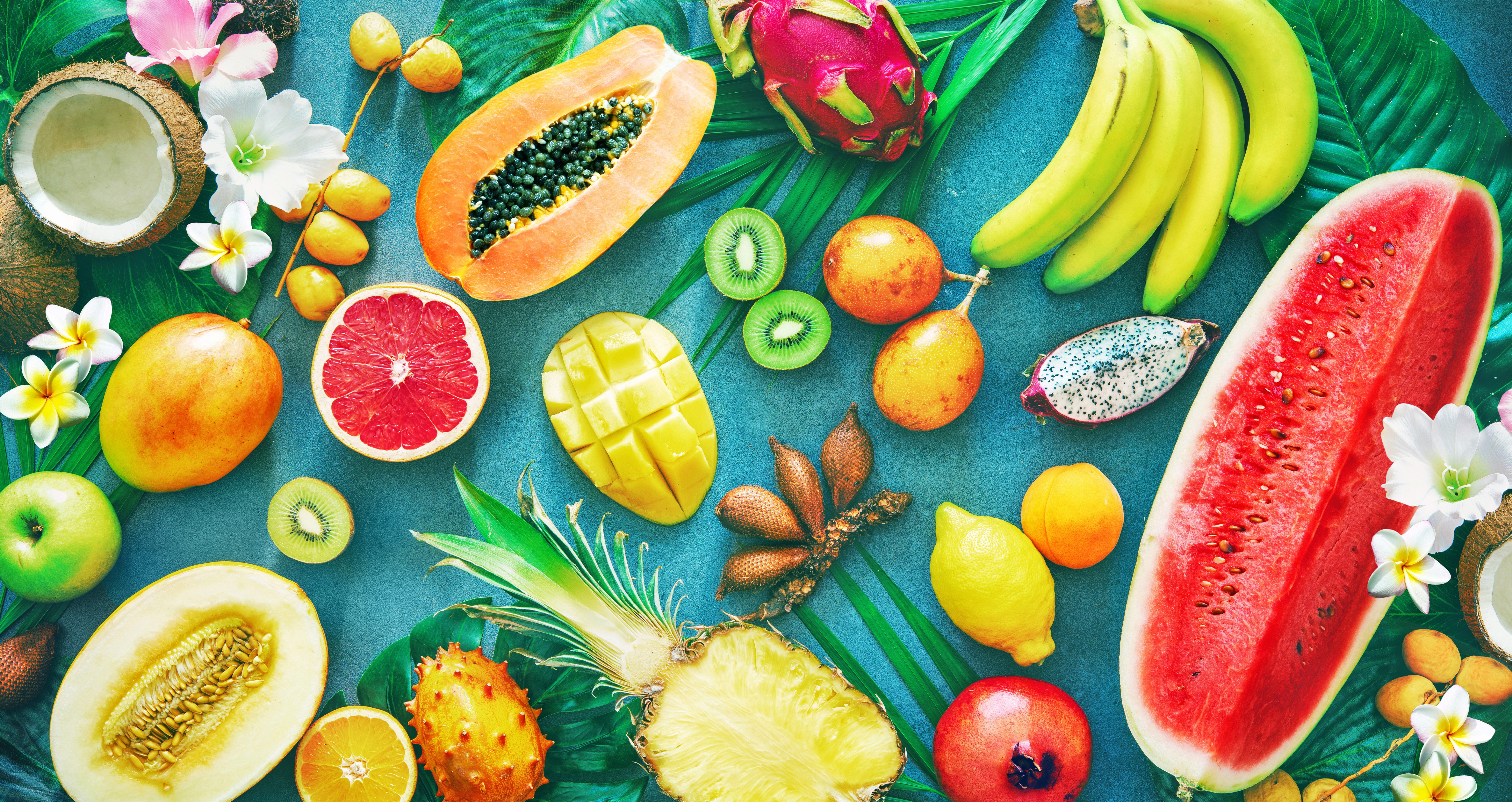
Mango is a juicy, sweet note that brings a sensation of tropical freshness—round, juicy and creamy. Native to South Asia, mango is rich in sweet and slightly tangy nuances. In perfumery, it is often used to add a gourmand, sunny touch to compositions.
Fame by Paco Rabanne uses mango to create a summery, gourmand fragrance, hyper-addictive.
Pineapple
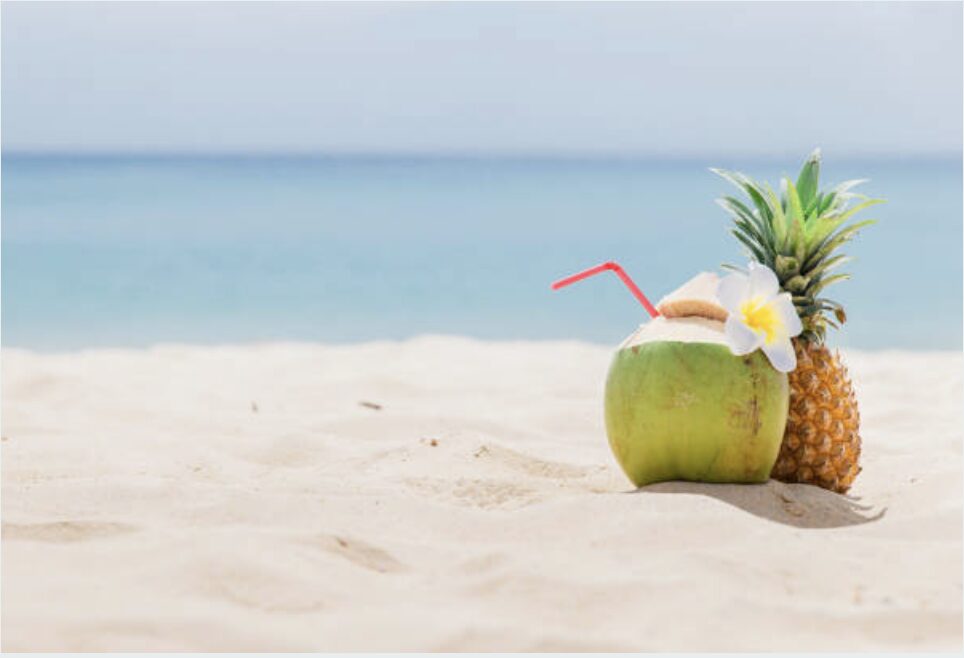
Pineapple is a fruit emblematic of the tropics, native to South America. Its fresh, sweet and slightly tangy scent is perfect for dynamic, refreshing perfumes. Pineapple brings a touch of exoticism and vivacity to fragrant compositions. Paired with coconut, it brings a festive piña colada note.
Dolce & Gabbana Pineapple is an excellent example of a perfume using this note to evoke a sensation of exotic holidays and pleasure under the sun.
Coconut
Coconut, with its creamy, milky smell, is essential for evoking the beaches of tropical islands. It brings a soft, comforting and exotic dimension to solar perfumes. Often used in summer compositions, it immediately recalls seaside holidays.
Le Beau by Jean-Paul Gaultier incorporates this note at the heart to add a tropical depth to its sophisticated, woody pyramid, and Bronze Goddess by Estée Lauder makes a more pronounced and ambery use of it for a purely summery effect.
Papaya
Papaya is another tropical fruit much appreciated in perfumery for its tropical sweetness. Native to the tropical regions of Central and South America, papaya offers sweet, juicy and slightly musky notes.
Papaya Paradise Cove by Bath & Body Works uses papaya, perfect for recalling a soft, calm day at the beach.
Guava
Guava, with its sweet and slightly floral aroma, is a less common but equally exotic fruity note. Native to the tropical regions of Central America, guava brings a unique tropical touch to fragrant compositions.
Delta of Venus by the house of Eris is a green floral perfume in which the papaya note in the base intensifies the exotic aspect of the fragrance.
Passion Fruit
Passion fruit is an intense, fragrant note that brings a sensation of freshness and gourmandise to perfumes. Native to the tropical regions of South America, this fruit is known for its sweet, tangy and slightly floral aroma.
Arancia Rossa by Laboratorio Olfattivo is a citrus fragrance in which the passion fruit note gives an exotic twist to a refreshing composition.
The Floral Notes of the Tropics 🌺
The floral notes of the tropics are often used as heart notes in fragrant compositions for their richness, combining a sensual and captivating dimension. They are combined with fruity, woody or spicy notes to create balanced and harmonious fragrances.
Whether to evoke the softness of the islands or the richness of tropical vegetation, the flowers of the tropics play a crucial role in the art of perfumery.
Ylang-Ylang
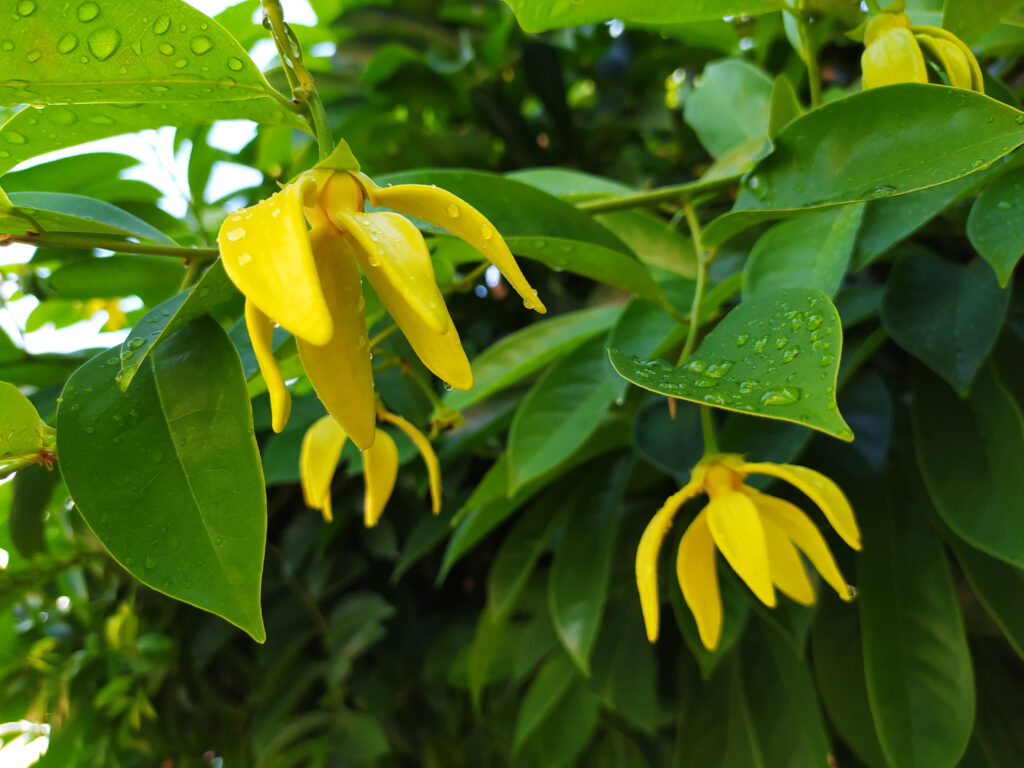
Ylang-ylang, whose name means “flower of flowers,” is native to Madagascar, the Comoros and the Philippines. This star-shaped yellow flower is known for its intoxicating scent, sweet and slightly spicy. Ylang-ylang essential oil is extracted by steam distillation of the fresh flowers, producing different fractions depending on the duration of the distillation, each with distinct olfactory nuances. Ylang-ylang is often used in floral, oriental and chypre compositions to add an exotic, sensual dimension. It can also be found in solar perfumes, evoking the warmth and softness of tropical islands.
Mon Guerlain by the eponymous house uses ylang-ylang to enrich its floral bouquet, bringing a touch of exotic, creamy luxury.
Frangipani
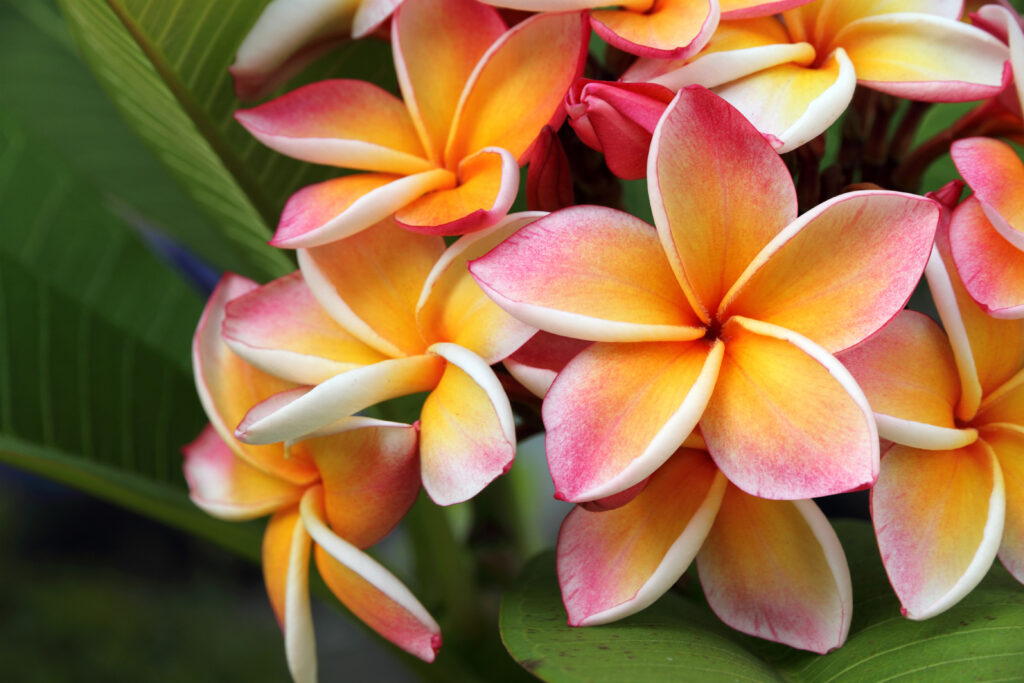
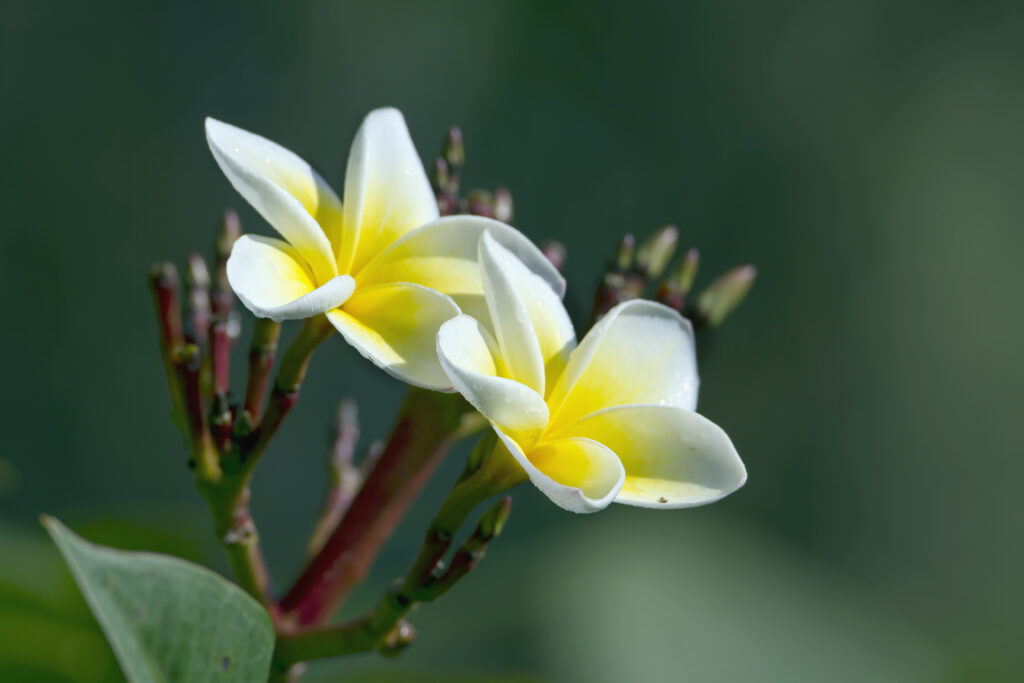
Frangipani, also known as plumeria, is a tropical flower emblematic of the Pacific islands, Central America and the Caribbean. Its scent is soft, sweet and slightly creamy, often associated with a sensation of purity and serenity.
Frangipani is prized for its exotic softness in floral compositions. It is often used in perfumes for women, bringing a delicate, soothing note.
Frangipani Flower Cologne by Jo Malone is a luminous, exotic fragrance inspired by the captivating beauty of the frangipani flower. With its fresh, woody notes, this cologne offers a sensory escape embodying the natural, captivating beauty of tropical flowers.
Gardenia
Gardenia is a tropical flower native to Asia and the Pacific islands. Its scent is rich, heady and slightly spicy, often described as intensely floral with creamy nuances. Gardenia is used in perfumes to bring a lush, sensual floral depth.
Velvet Gardenia by Tom Ford showcases this sumptuous flower combined with accords of honey and plum, making it divinely addictive and captivating.
Tiaré
The tiaré flower, or Gardenia tahitensis, is native to French Polynesia and is a symbol of beauty and purity. It scents the famous monoï oil. Its scent is soft, creamy and slightly sweet, with delicate floral nuances. Tiaré is often used in solar and floral perfumes to evoke paradisiacal beaches and sunny days.
Sunkissed Goddess by By Kilian is a floral amber in which the tiaré flower, combined with ylang-ylang, offers a warm, sensual perfume.
Hibiscus
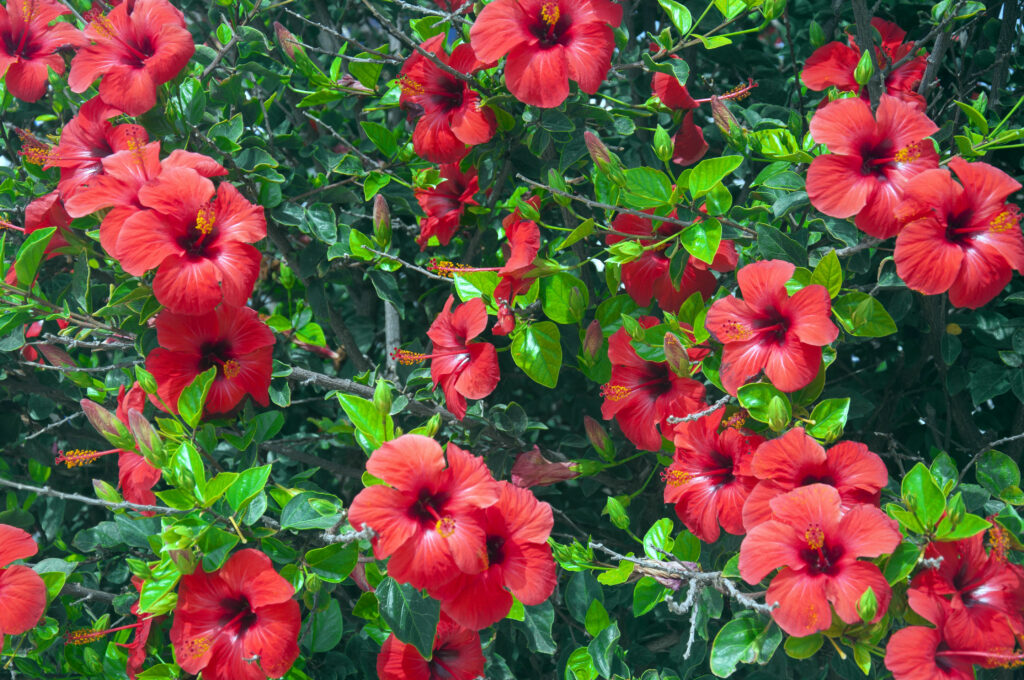
Hibiscus is a tropical flower found in many warm regions of the world, notably in Asia, Africa and the Caribbean. Its scent is soft, slightly fruity and floral.
Hibiscus is often used to bring a light, exotic touch to floral compositions.
Hibiscus Paradise by Bath & Body Works is a perfume in which the hibiscus flower at the heart brings a floral freshness to a gourmand fruity ensemble.
Sambac Jasmine
Sambac jasmine, also known as Arabian jasmine, is native to Southeast Asia. This variety of jasmine is fruitier and sweeter than jasmine grandiflorum, with slightly spicy nuances. Sambac jasmine is used to add an exotic, intoxicating floral depth to fragrant compositions.
Alien by Mugler uses this note to create a mysterious, ambery and musky fragrance, evoking the captivating beauty of the tropics.
Vanilla Notes ☀️
Vanilla is one of the most prized raw materials in perfumery, recognised for its soft, rich and enveloping smell. Native to tropical regions, vanilla brings a comforting warmth and a gourmand depth to fragrant compositions.
Madagascar vanilla, often called Bourbon vanilla, is the most famous variety and the most used in perfumery. This vanilla comes from the orchid Vanilla planifolia, cultivated mainly on the island of Madagascar, which produces about 80% of the world’s vanilla. Bourbon vanilla pods are known for their fragrant richness, creamy and sweet, with slightly spicy nuances.
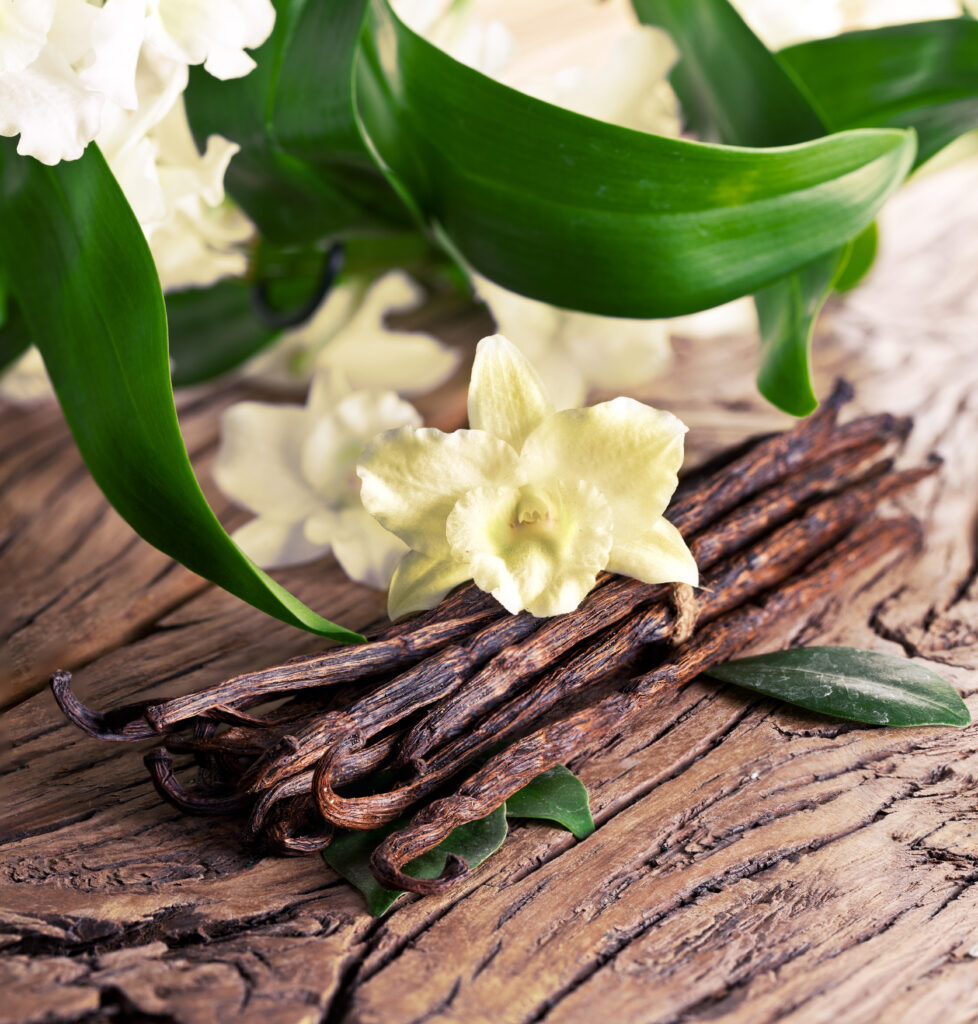
Vanilla production in Madagascar is a complex, artisanal process. Vanilla flowers are pollinated by hand, and the pods, once harvested, undergo a series of treatments including scalding, fermentation, drying and conditioning, in order to develop their characteristic aroma.
Serge Lutens – Un Bois Vanille: This fragrance uses Madagascar vanilla to create a creamy softness, enriched with notes of sandalwood, liquorice and caramel.
Tahitensis vanilla, cultivated mainly in French Polynesia, notably in Tahiti, is another precious variety. This vanilla comes from the orchid Vanilla tahitensis and is distinguished by its shorter, wider pods. Its aroma is more floral, fruity and exotic, with nuances of cherry and almond. The production of tahitensis vanilla also follows rigorous artisanal methods, and although its production is less abundant than that of Madagascar, it is highly appreciated for its unique qualities.
Les Indémodables – Vanille Havane: This fragrance showcases tahitensis vanilla with accords of tobacco, honey and rum, creating a rich, exotic composition.
The olfactory notes of the tropics offer a unique sensory escape. Whether through fruity and sunny notes, intoxicating flowers or gourmand vanillas, perfumers continue to draw inspiration from the tropics to create fragrances that transport the senses towards distant, paradisiacal horizons.
Article co-written by Elfa and Anne-Laure