
The Cocottes of the 19th Century
The cocottes were women of mysterious charm who occupied a singular place in French society. These renowned courtesans played a crucial role in the influential circles of the 19th century, being by turns admired and criticised. Besides their presence in the upmarket salons and their influence on political decisions, they were also linked to the flourishing perfume industry.
Let us see who these cocottes of 19th-century France are from a socio-cultural point of view, their relationship with perfumery and how the brand Les Cocottes de Paris celebrates their legacy.
The Cocottes: Who Are They?
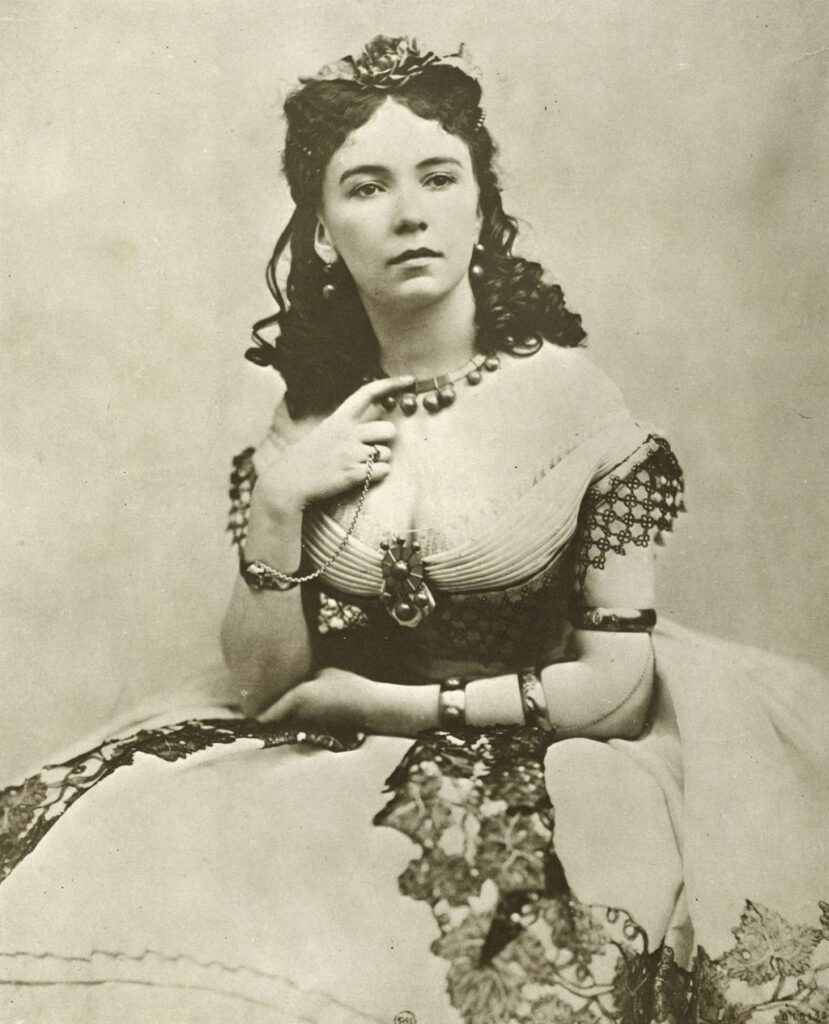
The demi-mondaines, the “does,” the scandalous women, the courtesans, or the cocottes: this is how the so-called women of easy virtue were nicknamed.
Women of great beauty, often from modest backgrounds, they engaged in prostitution in order to raise themselves into the highest spheres of society thanks to their charm, their intelligence and their talent as artists, singers or dancers, to seduce the influential men of the late 19th and early 20th centuries.
They were courted by powerful figures such as writers, artists, politicians, aristocrats and even crowned heads. But it was indeed they who chose their lovers!
Their charisma was not limited only to their ability to charm men—they were also important social actors. Some of them became the confidantes and advisers of powerful politicians, allowing them to have an indirect influence on the country’s decisions. However, this privileged position also aroused controversy and moral criticism, as they were often associated with behaviours interpreted as immoral.
Why Are They Called Cocottes?
The nickname “cocotte” has several possible origins.
It could come from the word “coquille” (shell), referring to their beauty and their outward charm.
The most likely origin would lie in the fact that they adorned themselves with luxurious outfits, and liked to add feathers to hats, fans, hairstyles, or even directly to their dresses and bodices. These feathers added a touch of lightness, elegance and theatricality to their clothes, in keeping with their status as free, independent women. Through these feathers, they came to be nicknamed cocottes.
Moreover, the term “cocotter” derives from it, since these women of easy morals perfumed themselves generously with opulent fragrances. This colloquial expression, somewhat old-fashioned and disparaging, refers to someone who has sprayed themselves with perfume excessively.
It is said that the wives of unfaithful men sometimes unmasked them by smelling this strong “cocotte” odour on them.
The Cocottes and the Link with the Perfumery of the Era
In the 19th century, the cocottes did not merely attract men through their charm and their brilliant wit—they were also recognised for their sartorial elegance. They sported clothes from Asia, such as shawls, fans and richly ornamented exotic dresses. These clothes, often imported from India and other Asian countries, were impregnated with perfumes emanating notably from dried patchouli leaves, a natural moth repellent, to protect them from insects during the long sea voyage from the East.
Patchouli, which is a plant whose essential oil gives off a powerful woody, earthy, intoxicating smell, quickly won over the cocottes, who adopted it as an olfactory signature, thus contributing to popularising its use in the perfumery of the era.
Patchouli was a symbol of exotic elegance and audacity, capturing the adventurous spirit of these mysterious women.
Besides patchouli, in their olfactory wardrobe one found fragrances with powerful, animalic musk notes. Musk evokes both passion and mystery, reinforcing their aura of enigmatic charmers.
Narcotic flowers such as tuberose, datura and narcissus also mark a turning point in the cocottes’ choice of perfumes—heady, captivating scents that become an olfactory hallmark of these women of character.
Amber, for its part, harmoniously completed this olfactory composition. With its warm, ambery, mellow notes, amber brought an opulent, magnetic, refined dimension to the fragrances.
They appropriated these unique, sensual perfumes to mark their presence and leave a memorable imprint in the minds of those they met.
The perfumery houses quickly took note of this trend and began to insert patchouli and other oriental notes into their creations. These perfumes were specially designed for the cocottes and the elegant women of high society who sought to distinguish themselves through unique, sensual fragrances at a time when eaux de cologne and floral eaux de toilette were prized for their romantic naturalness.
Thus, the close link between the cocottes and the perfume industry strengthened, shaping the evolution of olfactory tastes.
The Cocottes Honoured with the Les Cocottes de Paris Perfume Collection
Among the famous cocottes of the 19th century are emblematic figures.
These women left an indelible imprint on history and marked the society of their era.
Today, the brand Les Cocottes de Paris, created in 2015 by Anaïs Biguine, pays tribute to 5 of these legendary cocottes by offering perfumes dedicated to them. Each perfume is inspired by the personality and the unique character of these remarkable women, capturing their essence and their story in a bottle.
La Castiglione refers to Virginia Oldoïni, Countess of Castiglione, a woman described as the most beautiful of her century. Enigmatic, La Castiglione is a captivating, balmy woody amber perfume. Mugwort, cade, patchouli, ambergris and myrrh reflect the personality of one of the most desired cocottes.
Caroline Otero, a cabaret dancer and singer, is represented through La Belle Otero (the nickname she was given at the time). It is an aromatic, powdery, novelistic perfume in the image of this great courtesan. Absinthe, ginger and lavender adorn themselves with powdery, powerful notes between narcissus, musk and violet to become, thanks to sandalwood, infinitely sensual.
Mlle Cléo is Cléopâtre-Diane, known as Cléo, de Mérode. A muse and model, she posed for sculptors and painters. Of a delicate beauty, she is nonetheless an untamed cocotte.
Mlle Cléo is a fruity floral perfume where bergamot and lychee answer the delicate rose and the captivating ylang-ylang, and a falsely demure cotton flower.
Cora Pearl is a floral chypre evoking the demi-mondaine Emma Crouch. A proven seductress, she quickly grew rich thanks to her numerous carnal relationships with men of the high aristocracy. Cora Pearl is articulated around cardamom, violet and amber with a chypre accord of bergamot, jasmine, oakmoss and vetiver. It is a fragrance in which the nonchalant, seductive femininity of this cocotte is highlighted.
La Dame aux Camélias is the perfume reflecting the courtesan Marie Duplessis, who inspired Alexandre Dumas (fils) in the eponymous novel. She who added a white camellia to her neckline to signal her availability is represented by a powdery, musky floral fragrance. Violet, bergamot and grapefruit merge into a honeyed rose bouquet that stretches out into notes of ambergris and musk—gourmand, sensual and addictive.
The cocottes of the 19th century were much more than mere courtesans; they were influential, fascinating women who left an indelible mark on history.
Their close link with the flourishing perfume industry of the era helped to shape the world of perfumes as we know it today.
The legacy of the cocottes, although controversial, has continued to intrigue and inspire a great number of writers, and these singular women are forever engraved in French literature.
Banner photo credits: Loge im Sofiensaal, Josef Engelhart (1903). Vienna Museum, Austria. File licensed under the Creative Commons Attribution-Share Alike 3.0 Unported