
The Hesperidic Olfactory Category in Perfumery
Welcome to the captivating world of hesperidic perfumes, where the freshness of citrus mingles with the subtle art of perfumery. This article invites you on an olfactory journey through the history, ingredients and extraction techniques that define the hesperidic family. Discover emblematic citruses such as mandarin, lemon and bergamot, as well as less conventional notes such as citron or yuzu. We will also explore iconic perfumes that have left their mark on this category, revealing how hesperidics continue to captivate our senses and enrich the world of perfumery.
The History of Hesperidics: A Journey Through Time
Historically, hesperidics were prized for their refreshing and antiseptic properties. Today, they are used to create dynamic, sparkling perfumes, often paired with floral or spicy notes for a more complex signature.
The Garden of the Hesperides
The fascinating story of hesperidic perfumes begins in mythological antiquity, extends across the centuries, and continues to influence contemporary perfumery.
The hesperidic olfactory facet/family takes its name from the Hesperides, nymphs of Greek mythology. According to the myth, these nymphs guarded the precious garden where the “golden apples” grew, bestowing immortality and fertility on the gods of Olympus, and whose description evoked oranges. This interpretation would, however, be an anachronism, because at that time citrus fruits did not exist in that region! It may instead have been the quince, the literal translation of the word “golden apple” in Greek. Nevertheless, this idea of citrus in the garden of the Hesperides took hold all the more firmly because, often described as an earthly paradise, this garden evoked a world of freshness and purity—ideas still associated with citrus in perfumery.
The Rise of Citrus in Europe
Citrus fruits are native to Southeast Asia. Their introduction to Europe, notably through conquests and trade, marked a turning point. Lemons, oranges and other citruses became prized ingredients for their medicinal virtues, their refreshing properties and their invigorating scent.
In the 17th century, the fascination with citrus intensified in Europe. Italian perfumers, in particular, began to experiment with combinations of citrus essential oils and the aromatic herbs of the physic gardens of the time. These experiments gave rise to the first eaux de Cologne and to light perfumes that contrasted with the heavier, more opulent scents of the era. This period marks the beginning of the systematic use of hesperidics in perfumery.
The Golden Age of Hesperidics
The golden age of hesperidics extended from the 18th to the 19th century. During this period, hesperidic perfumes stood at the confluence of hygiene and pleasure and, used by the nobility and high society, they were synonymous with refinement and elegance.
Key Raw Materials: Citrus at the Heart of Creations
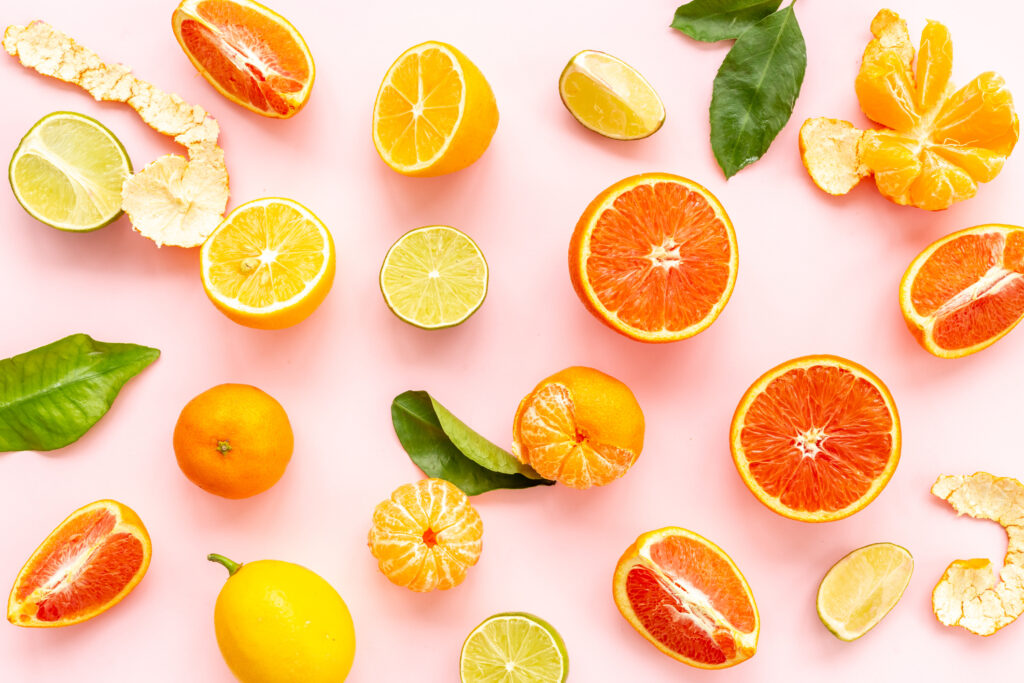
Hesperidics, with their captivating and refreshing essence, stand out in the world of perfumery thanks to specific raw materials: citrus fruits. These fruits, true jewels of nature, lie at the heart of the most emblematic creations of this olfactory facet/family.
The Variety of Citrus Used
Lemon: A symbol of freshness, lemon offers a sparkling, biting and slightly tangy note, much prized for its brightness and vivacity.
Orange: With its soft, fruity nuances, orange brings a warmth and roundness that are appreciated, particularly in soft hesperidic compositions.
Bergamot: Known for the scent it brings to Earl Grey tea, it is prized for its subtle bitterness and its green, floral freshness. This citrus is a must-have, bringing an elegant, refined touch.
Mandarin: Softer and slightly sweet, mandarin enriches hesperidic perfumes with a joyful, sunny facet.
Grapefruit: Its character, at once bitter and fresh, makes it an ideal top note for dynamic, modern perfumes.
In addition to classic citruses such as lemon, orange and bergamot, hesperidic fragrances are enriched by the use of less conventional but equally captivating fruits, such as citron, yuzu and bitter orange. Each of these citruses brings a unique dimension to fragrant compositions.
Citron: an ancient fruit, it offers a more robust and less acidic scent than the classic lemon. It has green and slightly floral notes that bring an interesting complexity to fragrances.
Yuzu: exoticism and freshness. Native to East Asia, yuzu is famous for its unique scent, combining notes of grapefruit, mandarin and lime. It brings an exotic touch and a pungent freshness to perfumes.
Bitter orange (bigarade): a sophisticated bitter orange, it stands out for its fresh and slightly bitter notes. It is often used to add a refined dimension and an interesting contrast to hesperidic perfumes.
Sweet lime (limette): lively and verdant, this small citrus typical of Mexico has a note that recalls a little of Coca-Cola or key lime pie, the iconic Florida dessert.
Combava: also called kaffir lime, whose leaves are prized as a spice in Thailand and India, it offers citronella, geranium and aldehydic facets, clean and tonic.
Calamansi or calamondin: a small citrus from the Philippines, lively and bursting, still very, very little used in perfumery.
Finger lime (caviar lime): a small citrus from Oceania whose pulp is composed of small crunchy beads recalling caviar. It is also called “finger lime” because of its size and its elongated shape (from 4 to 10 cm). Its very thin skin, which can be black, green, yellow or red, does not allow essence to be extracted from it. It is its crunchy, tangy texture that is reproduced in perfume.
The Intruders
A little apart in the kingdom of hesperidics, we can also mention materials which, although they are not citrus fruits, are categorised within this facet. They are often halfway between the hesperidic facet and the green facet.
Citronella: an Asian plant well known for its mosquito-repellent qualities, its long leaves are distilled to yield a green, lemony oil.
Lemongrass: often confused with citronella, lemongrass exhales herbaceous, lemony and fruitier notes.
Petitgrain: this is the essential oil obtained by distilling the leaves and twigs of the bitter orange tree (bigaradier). They are also called “brouts.” They are cut at the moment when the flowers give way to the fruit. Green, hesperidic and crunchy, it brings joy to top notes.
Verbena: known for its digestive virtues, verbena brings its lemony, green freshness to eaux de Cologne.
Ginger: here we flirt more with the spicy facet. Bursting and lively, sometimes slightly soapy, ginger brings its exotic, pungent lemony touch.
Cultures and Terroirs
These citruses are grown in specific terroirs, often characterised by a Mediterranean climate. The quality of the fruits depends largely on sunshine, the nature of the soil and the know-how of the growers. The regions of Italy, Spain and certain areas of North Africa are renowned for producing high-quality citrus for perfumery.
Extraction Methods: Capturing the Essence of Citrus
The quintessence of citrus in hesperidic perfumes rests on meticulous, precise extraction techniques aimed at capturing the purest essence of these fruits.
Cold Expression: The Traditional Technique
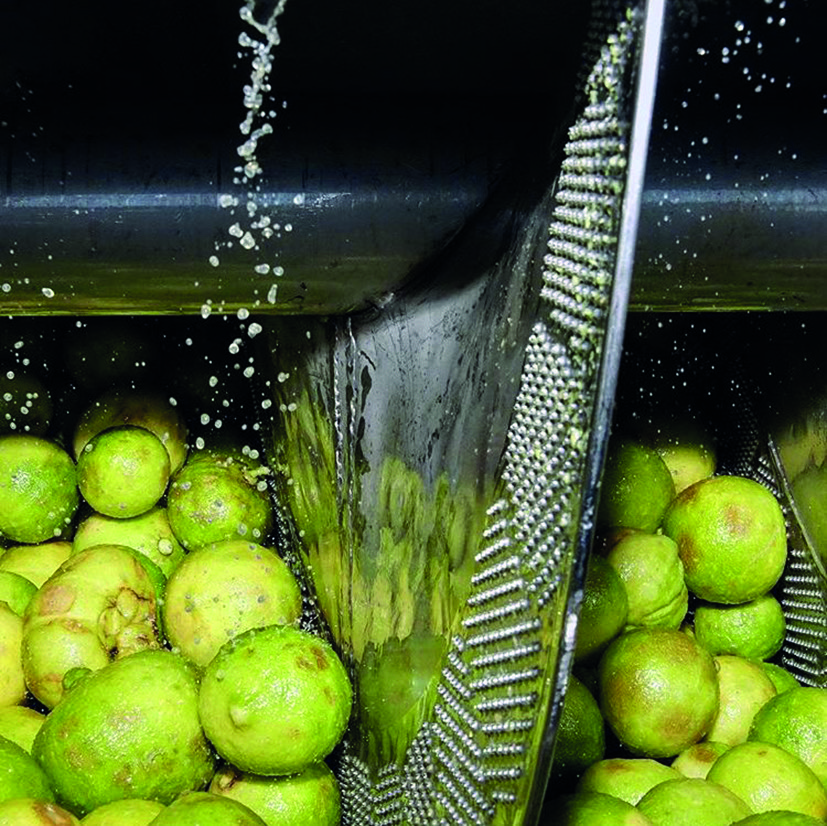
Principle: Cold expression is the most traditional and most commonly used method for extracting citrus essential oils.
There are two methods:
- Pelatrice: After being washed, the fruits are dropped into a machine that, by scraping the skin, releases the oil contained in the oil sacs of the zest. The water is then separated from the essential oil using a centrifuge and a decanter. This method preserves the freshness and integrity of the olfactory notes, thereby capturing the true essence of the fruit that is peeled without alteration due to heat.
- Sfumatrice (Sfuma Torchio): this other method consists of crushing the whole fruits together with their juice before passing them through the centrifuge. The essential oil combines the gourmand aspect of the fruit with the vivacity of the zest.
Steam Distillation: A Delicate Alternative
Although less frequent for citrus, steam distillation is sometimes used, notably for grapefruit and sweet lime. This technique involves passing steam through the raw materials to extract their aromatic compounds. Steam distillation makes it possible to obtain a softer, less acidic essence, offering an interesting alternative for more subtle notes.
Innovation and Technological Advances
Supercritical CO2 Extraction: This modern technique uses CO2 in a supercritical state to extract essential oils. It makes it possible to obtain very pure, concentrated extracts, capturing olfactory facets that are sometimes lost in traditional methods. This technological advance offers new possibilities in perfume creation, allowing perfumers to explore unprecedented facets and to create more complex, nuanced compositions.
Iconic References of Hesperidic Perfumes
Several fragrant creations have marked the history of hesperidics. Let us cite, for example, “Eau d’Orange Verte” by Hermès, a classic reference, or “Light Blue” by Dolce & Gabbana, which combines citrus and aquatic notes for a modern effect.
Eau d’Orange Verte by Hermès was created in 1979 by Jean-Claude Ellena. It is a timeless classic, representative of freshness and elegance, perfect for a sensation of cleanliness and vivacity. This fragrance opens on an invigorating burst of green orange, offering an intense freshness and a sparkling start. The heart reveals nuances of mint and blackcurrant, bringing a green and slightly fruity dimension. Finally, the base is composed of patchouli and woody notes, giving the perfume a subtle depth and sophistication.
Light Blue by Dolce & Gabbana was created in 2001 by Olivier Cresp. Light Blue is an emblematic summer fragrance, known for its lightness and its joyful character, ideal for sunny days. At the top, the perfume bursts with fresh notes of Granny Smith apple and Sicilian lemon, creating an energetic, refreshing start. The floral heart is composed of jasmine and bamboo, offering a touch of softness and elegance. The white wood notes bring a discreet warmth and a clean sensation.
Bigarade Concentrée by Frédéric Malle was created in 2002 by Jean-Claude Ellena. It is a minimalist, refined fragrance, characterised by its purity and clarity, capturing the essence of bitter orange in a unique and contemporary way. The bigarade dominates from the opening, offering a hesperidic freshness with a distinctive touch of bitterness. The heart is pared-down, highlighting the fresh and slightly spicy aspects of the bigarade. The base is understated, with a touch of rose and wood to balance the bitterness.
Mandarine Basilic by Guerlain was created in 2007 by Marie Salamagne. It is a dynamic, sunny fragrance, perfect for those seeking a fresh, natural perfume. The pairing of mandarin and basil creates a unique olfactory experience, at once hesperidic and aromatic. From the opening, the perfume unveils an explosion of mandarin, bringing a characteristic juicy, sparkling freshness. Mandarin, with its hesperidic brilliance, immediately gives a sensation of vitality and energy. Basil, the central ingredient of this perfume, intertwines with the citrus notes, bringing a green, slightly spicy and aromatic touch. This pairing creates a refreshing, invigorating contrast, evoking a Mediterranean garden in high summer. Then touches of green tea and amber add a subtle dimension and depth to the perfume. Green tea brings a slight astringency, while amber offers a soft warmth, balancing the freshness of the top and heart notes.
Escale à Portofino by Dior, created in 2008 by François Demachy, is part of the “Les Escales de Dior” collection. It is a perfume that captures the essence of the Italian dolce vita, with its refreshing hesperidic notes and its delicate floral accords. The perfume opens on radiant hesperidic notes, with a predominance of bergamot and lemon. This combination creates a fresh, sparkling start, evoking the invigorating energy of the Mediterranean coast. At the heart, the fragrance unveils a bouquet of white flowers, with a particular emphasis on orange blossom and petitgrain. These floral notes bring a touch of softness and elegance, balancing the freshness of the citrus. Then come bitter almond and musk, offering a soft, slightly creamy finish. This combination gives the perfume a sensation of comfort and warmth while maintaining its lightness.
California Dream by Louis Vuitton, launched in 2020, is a creation by Jacques Cavallier that celebrates the splendour of Californian sunsets. The top note is dominated by mandarin, bringing a juicy, sunny explosion. Just behind the mandarin, pear adds a fruity, delicate sweetness. This note creates a perfect balance with the acidity of the mandarin, bringing a touch of roundness and suavity. Ambrette, with its musky and slightly fruity nuances, offers a soft transition between the fruity top notes and the richer base. It gives the perfume a natural sensation of floating and comfort. In the base, benzoin reveals itself with its resinous and slightly vanilla-tinged facets. This note brings a richness and depth to the perfume, prolonging the sensation of warmth and serenity of the sunset.
Hesperidics are not merely perfumes; they are an expression of joy, freshness and vitality. From antiquity to the present day, these fragrances have crossed the eras, constantly reinventing themselves while retaining their timeless essence. As we conclude our exploration of hesperidics, we are left with an exciting question: what will be the next chapter in the evolution of this fascinating olfactory family? With continued advances in perfumery and the boundless creativity of perfumers, the future of hesperidics promises to be as bright and refreshing as their past.