The tropics, with their natural lushness and their olfactory diversity, are an inexhaustible source of inspiration for perfumers the world over. Tropical olfactory notes bring a solar, fruity and tropical-floral touch to every fragrance. Let us explore these notes in detail and discover how they are used in perfumery to create unique olfactory sensations.
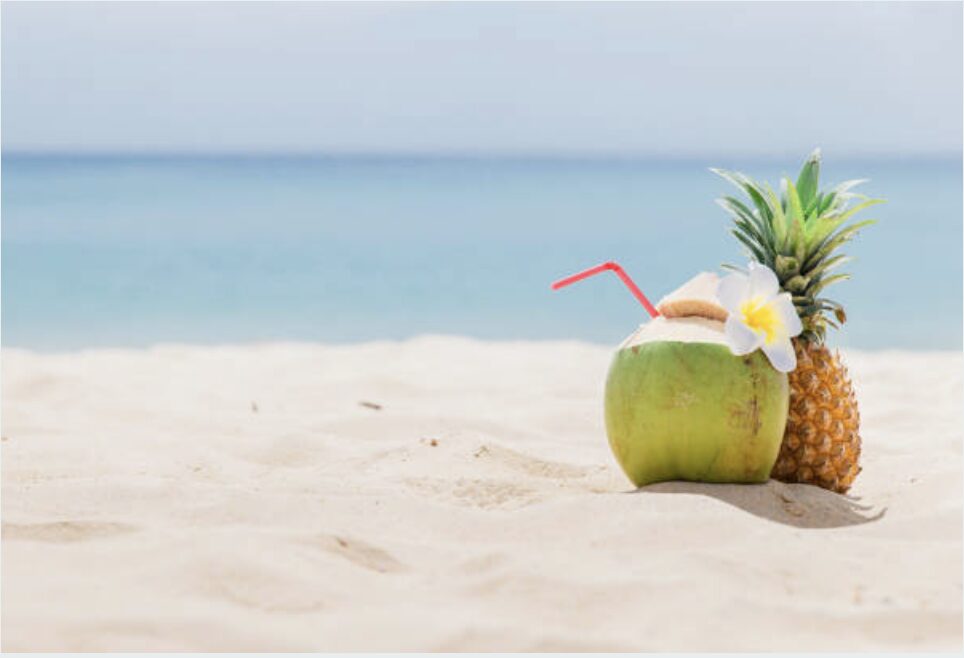
Fruity and Sunny Notes 🥭🍍🥥
The trend for tropical fruity perfumes comes to us from Brazil in the 1990s.
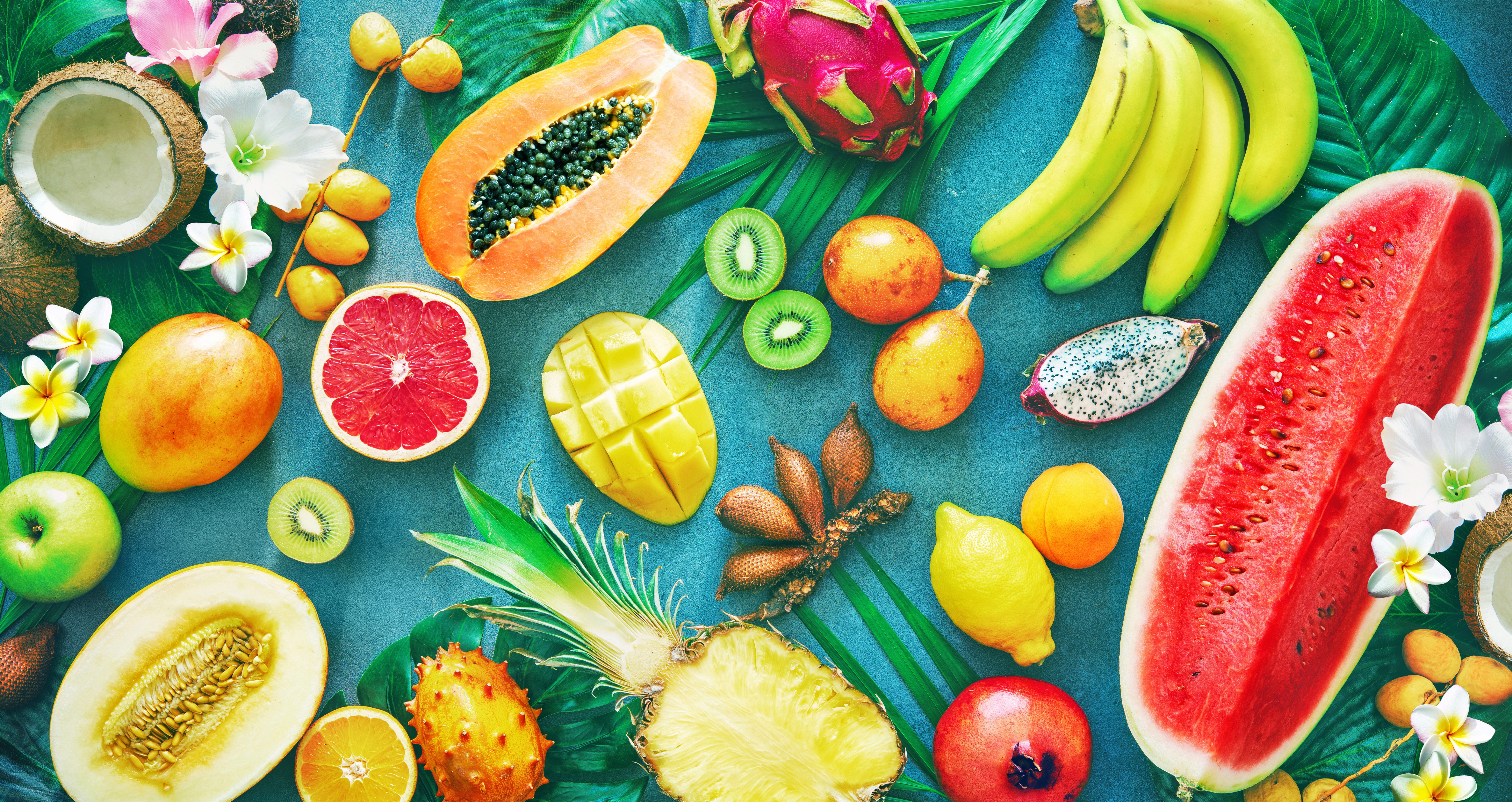
In Brazilian culture, the tradition has long been to douse oneself in “banho de cheiro,” infusions of refreshing and mystical plants for the body. In our more modern times, the tradition of the fragrant splash used for purely hedonistic purposes after the shower has taken precedence over these purifying infusions. The notes of tropical fruits, in which the country abounds (passion fruit/maracujá, açaí, pineapple, coconut, etc.), have replaced—or else blended with—the ancestral plants with their many virtues.
Since fruits cannot offer their aromatic essences owing to their overly high water content, perfumers have recreated these smells using synthetic molecules:
And so, from the 1990s onward, tropical fruit notes appeared—first in hygiene products, in the United States initially through the American brand Bath and Body Works, then little by little in our perfume bottles—to bring their joy, their colours and their energy, reminiscent of Brazilian carnivals.
Fruity notes are often used in perfumes for women, but they also appear in unisex and masculine compositions to add a fresh, invigorating dimension. They are particularly popular in summer perfumes and light eaux de toilette, where they bring a sensation of lightness and joy. Perfumers often combine them with floral, woody or spicy notes to create balanced and harmonious compositions.
Mango
Mango is a juicy, sweet note that brings a sensation of tropical freshness—round, juicy and creamy. Native to South Asia, mango is rich in sweet and slightly tangy nuances. In perfumery, it is often used to add a gourmand, sunny touch to compositions.
Fame by Paco Rabanne uses mango to create a summery, gourmand fragrance, hyper-addictive.
Pineapple
Pineapple is a fruit emblematic of the tropics, native to South America. Its fresh, sweet and slightly tangy scent is perfect for dynamic, refreshing perfumes. Pineapple brings a touch of exoticism and vivacity to fragrant compositions. Paired with coconut, it brings a festive piña colada note.
Dolce & Gabbana Pineapple is an excellent example of a perfume using this note to evoke a sensation of exotic holidays and pleasure under the sun.
Coconut
Coconut, with its creamy, milky smell, is essential for evoking the beaches of tropical islands. It brings a soft, comforting and exotic dimension to solar perfumes. Often used in summer compositions, it immediately recalls seaside holidays.
Le Beau by Jean-Paul Gaultier incorporates this note at the heart to add a tropical depth to its sophisticated, woody pyramid, and Bronze Goddess by Estée Lauder makes a more pronounced and ambery use of it for a purely summery effect.
Papaya
Papaya is another tropical fruit much appreciated in perfumery for its tropical sweetness. Native to the tropical regions of Central and South America, papaya offers sweet, juicy and slightly musky notes.
Papaya Paradise Cove by Bath & Body Works uses papaya, perfect for recalling a soft, calm day at the beach.
Guava
Guava, with its sweet and slightly floral aroma, is a less common but equally exotic fruity note. Native to the tropical regions of Central America, guava brings a unique tropical touch to fragrant compositions.
Delta of Venus by the house of Eris is a green floral perfume in which the papaya note in the base intensifies the exotic aspect of the fragrance.
Passion Fruit
Passion fruit is an intense, fragrant note that brings a sensation of freshness and gourmandise to perfumes. Native to the tropical regions of South America, this fruit is known for its sweet, tangy and slightly floral aroma.
Arancia Rossa by Laboratorio Olfattivo is a citrus fragrance in which the passion fruit note gives an exotic twist to a refreshing composition.
The Floral Notes of the Tropics 🌺
The floral notes of the tropics are often used as heart notes in fragrant compositions for their richness, combining a sensual and captivating dimension. They are combined with fruity, woody or spicy notes to create balanced and harmonious fragrances.
Whether to evoke the softness of the islands or the richness of tropical vegetation, the flowers of the tropics play a crucial role in the art of perfumery.
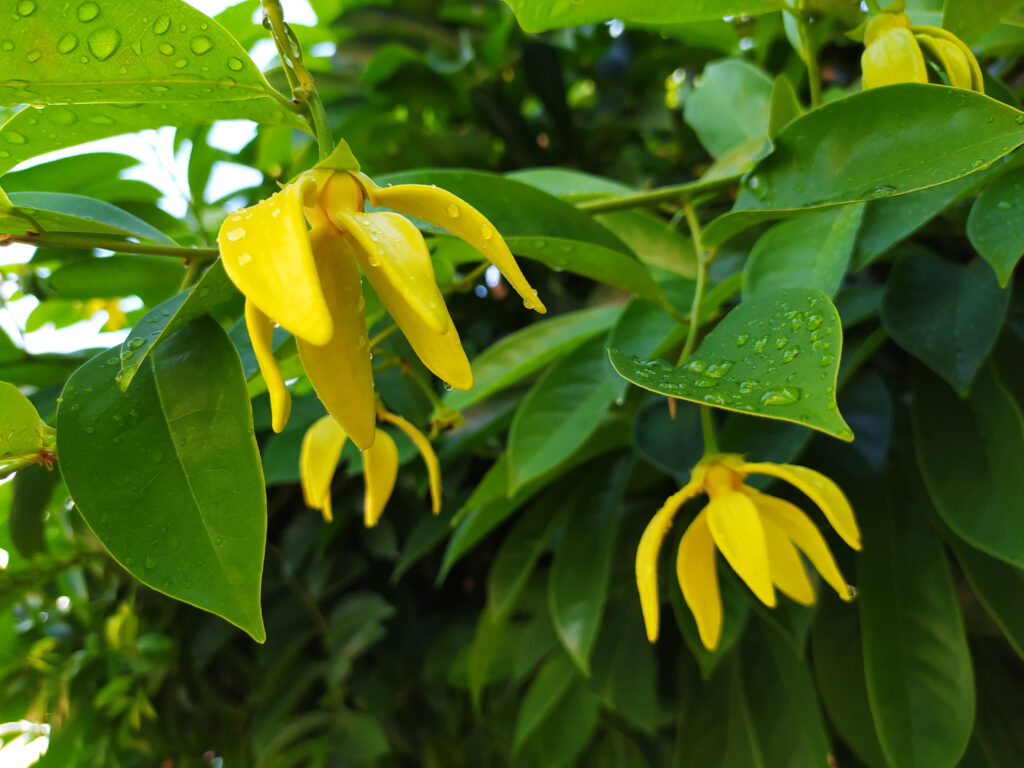
Ylang-Ylang
Ylang-ylang, whose name means “flower of flowers,” is native to Madagascar, the Comoros and the Philippines. This star-shaped yellow flower is known for its intoxicating scent, sweet and slightly spicy. Ylang-ylang essential oil is extracted by steam distillation of the fresh flowers, producing different fractions depending on the duration of the distillation, each with distinct olfactory nuances. Ylang-ylang is often used in floral, oriental and chypre compositions to add an exotic, sensual dimension. It can also be found in solar perfumes, evoking the warmth and softness of tropical islands.
Mon Guerlain by the eponymous house uses ylang-ylang to enrich its floral bouquet, bringing a touch of exotic, creamy luxury.
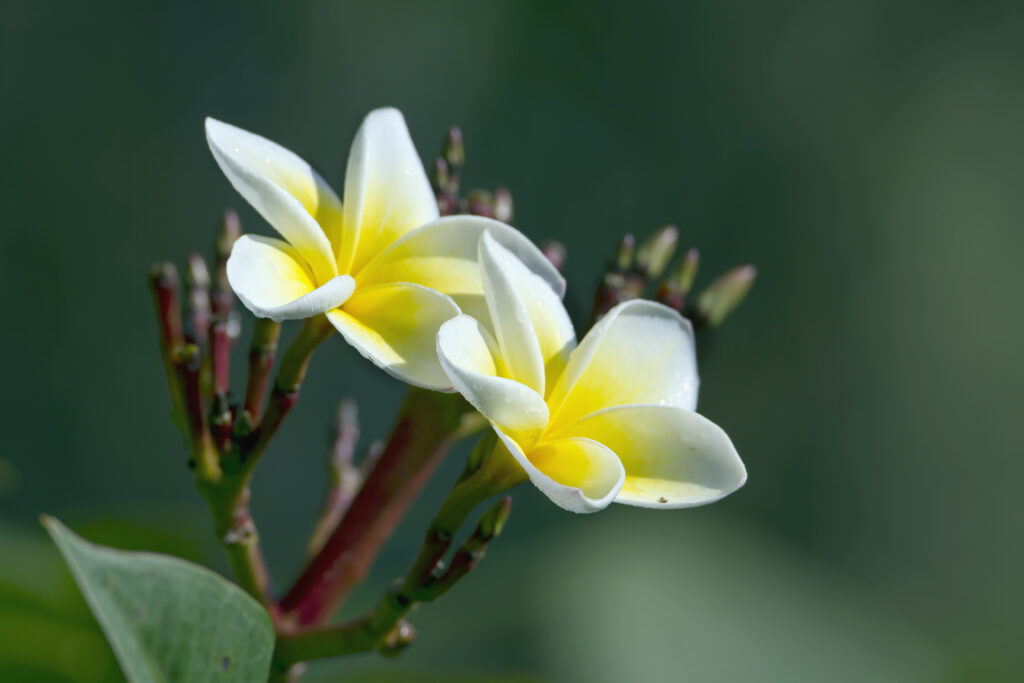
Frangipani
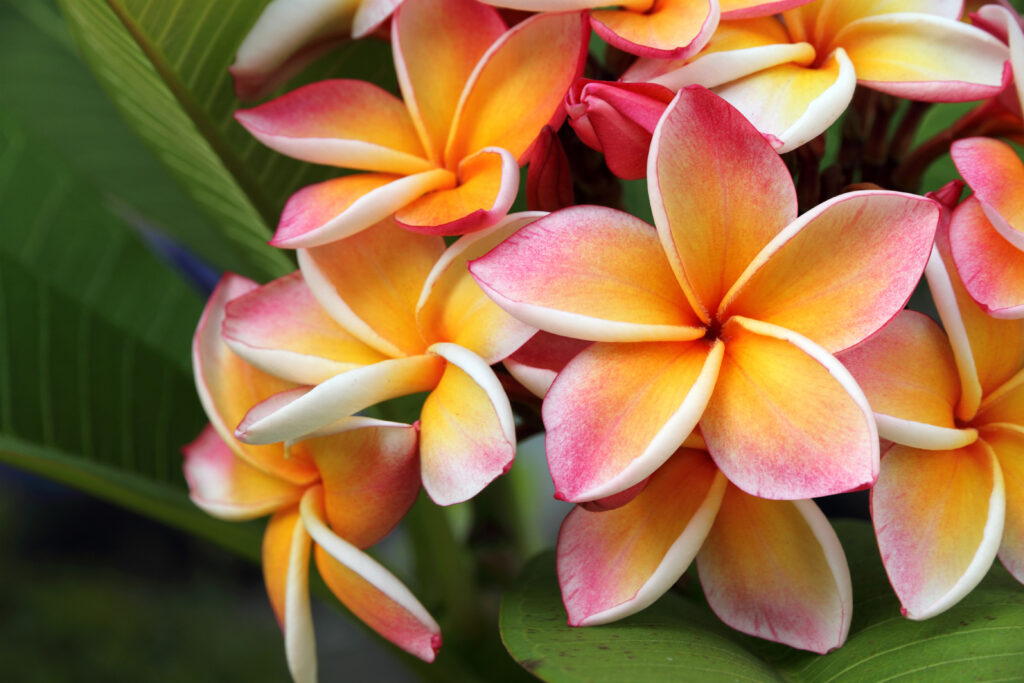
Frangipani, also known as plumeria, is a tropical flower emblematic of the Pacific islands, Central America and the Caribbean. Its scent is soft, sweet and slightly creamy, often associated with a sensation of purity and serenity.
Frangipani is prized for its exotic softness in floral compositions. It is often used in perfumes for women, bringing a delicate, soothing note.
Frangipani Flower Cologne by Jo Malone is a luminous, exotic fragrance inspired by the captivating beauty of the frangipani flower. With its fresh, woody notes, this cologne offers a sensory escape embodying the natural, captivating beauty of tropical flowers.
Gardenia
Gardenia is a tropical flower native to Asia and the Pacific islands. Its scent is rich, heady and slightly spicy, often described as intensely floral with creamy nuances. Gardenia is used in perfumes to bring a lush, sensual floral depth.
Velvet Gardenia by Tom Ford showcases this sumptuous flower combined with accords of honey and plum, making it divinely addictive and captivating.
Tiaré
The tiaré flower, or Gardenia tahitensis, is native to French Polynesia and is a symbol of beauty and purity. It scents the famous monoï oil. Its scent is soft, creamy and slightly sweet, with delicate floral nuances. Tiaré is often used in solar and floral perfumes to evoke paradisiacal beaches and sunny days.
Sunkissed Goddess by By Kilian is a floral amber in which the tiaré flower, combined with ylang-ylang, offers a warm, sensual perfume.
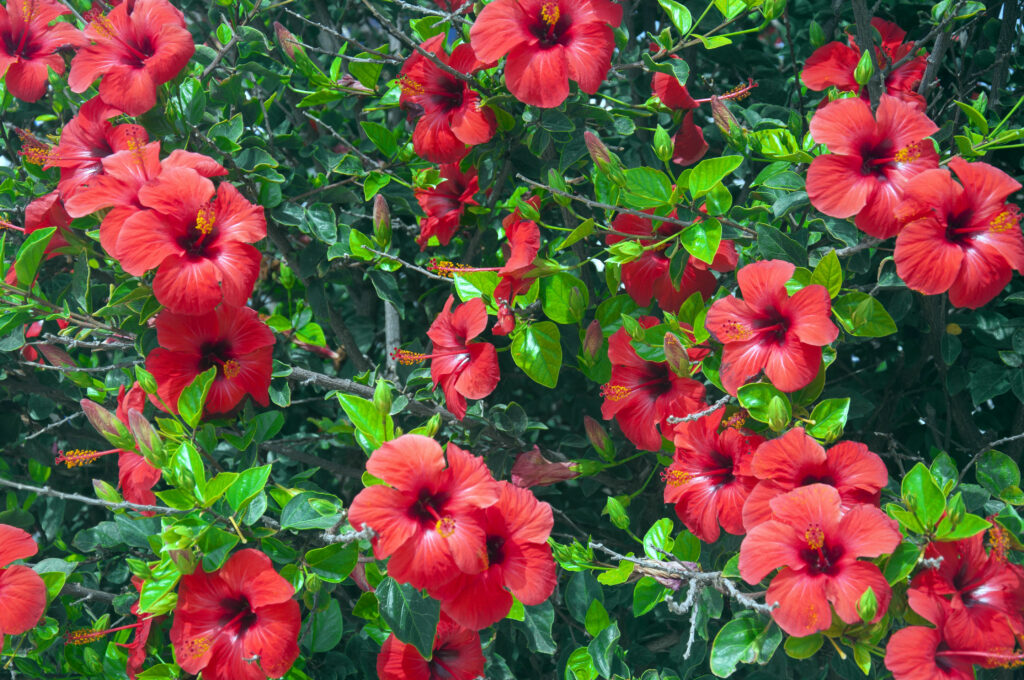
Hibiscus
Hibiscus is a tropical flower found in many warm regions of the world, notably in Asia, Africa and the Caribbean. Its scent is soft, slightly fruity and floral.
Hibiscus is often used to bring a light, exotic touch to floral compositions.
Hibiscus Paradise by Bath & Body Works is a perfume in which the hibiscus flower at the heart brings a floral freshness to a gourmand fruity ensemble.
Sambac Jasmine
Sambac jasmine, also known as Arabian jasmine, is native to Southeast Asia. This variety of jasmine is fruitier and sweeter than jasmine grandiflorum, with slightly spicy nuances. Sambac jasmine is used to add an exotic, intoxicating floral depth to fragrant compositions.
Alien by Mugler uses this note to create a mysterious, ambery and musky fragrance, evoking the captivating beauty of the tropics.
Vanilla Notes ☀️
Vanilla is one of the most prized raw materials in perfumery, recognised for its soft, rich and enveloping smell. Native to tropical regions, vanilla brings a comforting warmth and a gourmand depth to fragrant compositions.
Madagascar vanilla, often called Bourbon vanilla, is the most famous variety and the most used in perfumery. This vanilla comes from the orchid Vanilla planifolia, cultivated mainly on the island of Madagascar, which produces about 80% of the world’s vanilla. Bourbon vanilla pods are known for their fragrant richness, creamy and sweet, with slightly spicy nuances.
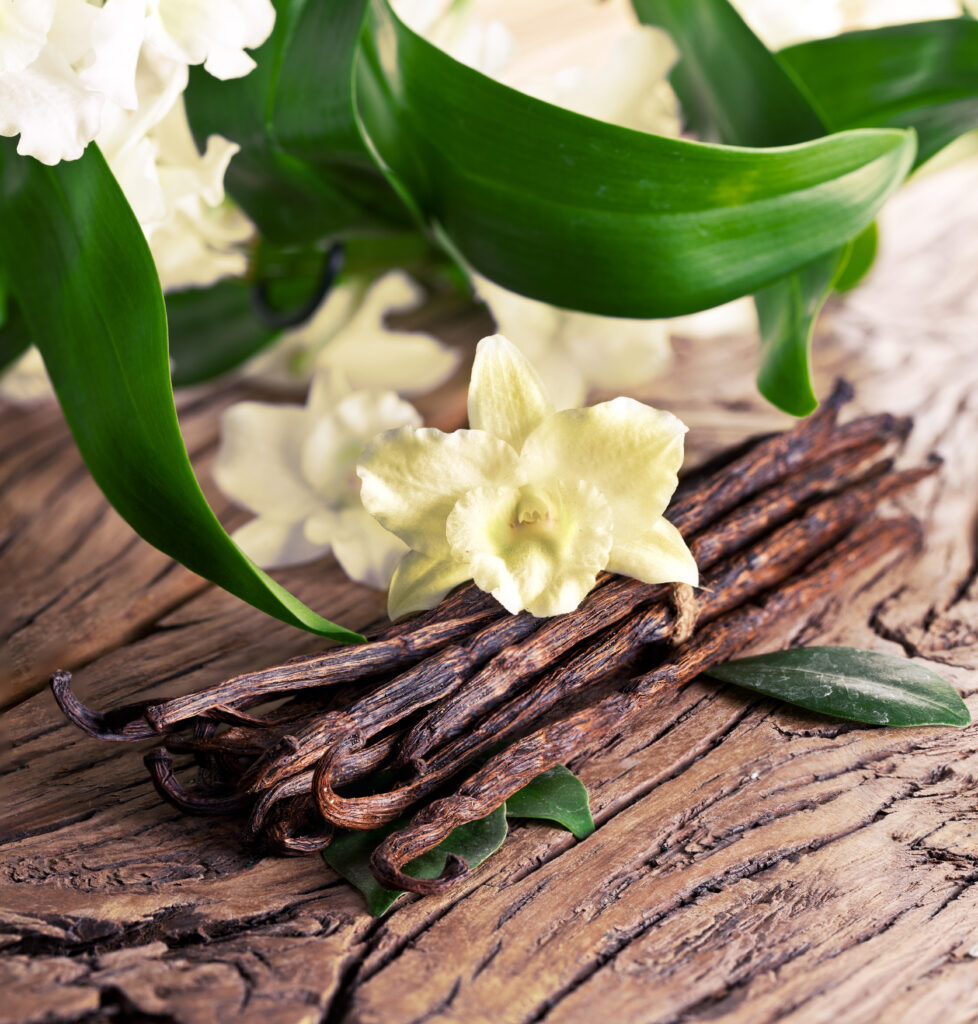
Vanilla production in Madagascar is a complex, artisanal process. Vanilla flowers are pollinated by hand, and the pods, once harvested, undergo a series of treatments including scalding, fermentation, drying and conditioning, in order to develop their characteristic aroma.
Serge Lutens – Un Bois Vanille: This fragrance uses Madagascar vanilla to create a creamy softness, enriched with notes of sandalwood, liquorice and caramel.
Tahitensis vanilla, cultivated mainly in French Polynesia, notably in Tahiti, is another precious variety. This vanilla comes from the orchid Vanilla tahitensis and is distinguished by its shorter, wider pods. Its aroma is more floral, fruity and exotic, with nuances of cherry and almond. The production of tahitensis vanilla also follows rigorous artisanal methods, and although its production is less abundant than that of Madagascar, it is highly appreciated for its unique qualities.
Les Indémodables – Vanille Havane: This fragrance showcases tahitensis vanilla with accords of tobacco, honey and rum, creating a rich, exotic composition.
The olfactory notes of the tropics offer a unique sensory escape. Whether through fruity and sunny notes, intoxicating flowers or gourmand vanillas, perfumers continue to draw inspiration from the tropics to create fragrances that transport the senses towards distant, paradisiacal horizons.
Article co-written by Elfa and Anne-Laure
Rosa Damascena is a botanical jewel prized for its intoxicating scent and precious oils. In this article, we will dive into the geographic and botanical origins of this iconic flower, its rich history, the methods used to extract its essence, its unique olfactory facets, how it differs from Rosa Centifolia, and finally, we will explore a few iconic perfumes that showcase it.
Geographic and Botanical Origins
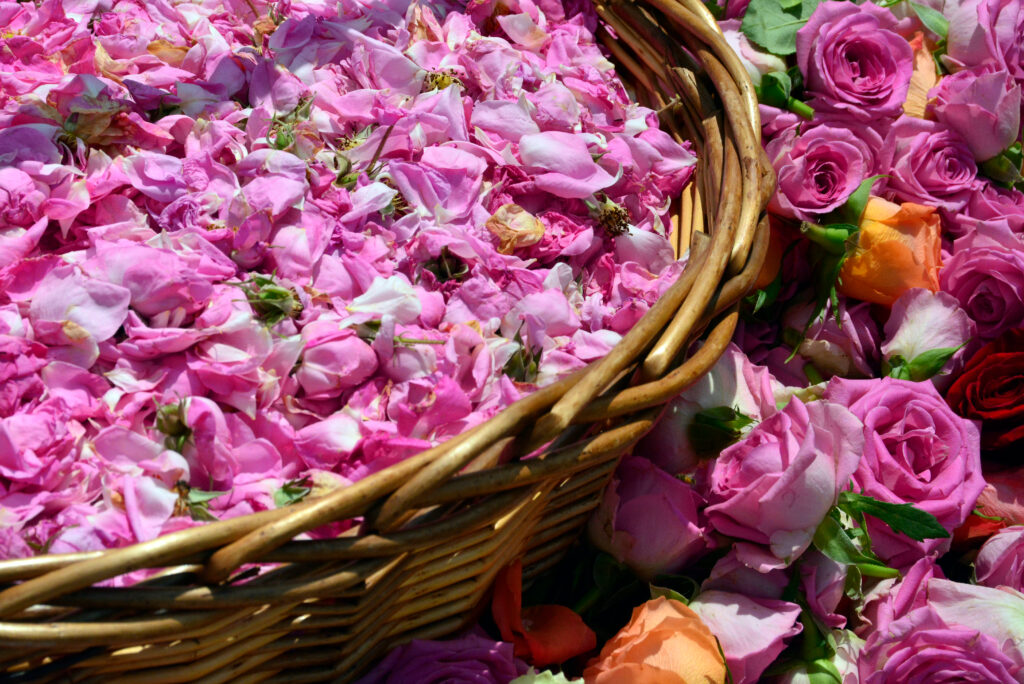
Rosa Damascena, commonly known as the Damask rose, takes its name from the ancient city of Damascus in Syria. But its true origin lies in Shiraz, Iran (formerly Persia). It is a hybrid of Rosa Gallica, Rosa Moschata and Rosa Fedtschenkoana, native to Central Asia and China. Botanically classified as Rosa Damascena, this rose belongs to the Rosaceae family. It generally takes the form of a robust shrub that can reach up to 2 metres in height. Its leaves are a glossy dark green, and its flowers, which bloom in early summer, range in colour from pale pink to deep red. Each flower is composed of multiple layers of petals, giving it a very dense and voluptuous appearance. It travelled from Shiraz to Damascus, a major Mediterranean trading hub in the Middle Ages. The Crusades of the Middle Ages facilitated its introduction to Europe. Christened the “Damask rose,” it was enthusiastically adopted in royal botanical gardens and apothecaries for its therapeutic virtues and its enchanting scent. From the Near East, the Damask rose also made a journey eastward to India and China, where it is still found and cultivated today. Persian Muslims invented rose water during the 8th century and would perfume Asia and the world with it for roughly 8 centuries. Between the 15th and 16th centuries, the Ottoman Empire made extensive use of the Damask rose: in its pharmacopoeia for its medicinal properties (migraines, stomach aches, ailments of the eyes or lungs, etc.). It could be ingested or applied as an ointment. Rose water was also used for its toning and deodorising cosmetic properties, and it was likewise incorporated into food dishes, both savoury and sweet. It also served to purify the home. Using the qumqum (sprinkler), visitors’ hands were washed as a gesture of welcome. In the 15th century, Sultan Murad III, unwilling to depend solely on Persia to supply his palace in Constantinople (now Istanbul) with rose petals and rose water, asked his gardener to begin cultivating these Damask roses in his province of Edirne (present-day Bulgaria), which proved to be an ideal climatic zone for their flowering. When Bulgaria gained its independence in 1880, it claimed the invention of modern rose essence through the principle of double distillation (the water from the first distillation is distilled again: see below). From that point on, the Bulgarian rose dominated the market until the 20th century. Its reign fell with the crisis resulting from the collapse of the USSR.
Today, the Damask rose used in perfumery comes mainly from Turkey, even though it is still cultivated in other countries such as Bulgaria, Morocco, India, Egypt, Iran and China. The popularity of Rosa Damascena as a source of essential oil has given rise to specialised cultivation techniques designed to maximise oil production. The Kazanlak Valley region in Bulgaria and the city of Isparta in Turkey are particularly famous for their annual rose festivals, which celebrate the flower harvest and the production of rose oil. These festivities highlight not only the economic importance of the rose, but also its role in the cultural heritage of these regions.
Extraction Methods
Extracting the essential oil (also called essence) of Rosa Damascena and its water is an art that has been refined over the centuries, combining tradition and technological innovation to capture the delicate, complex scent of this iconic flower. In perfumery, the two most widely used techniques for extracting its fragrant soul are hydrodistillation and volatile solvent extraction.
Hydrodistillation
No steam distillation, which could stick the flower’s delicate petals together. It is hydrodistillation that is favoured to extract the essential oil and the water of Rosa Damascena.
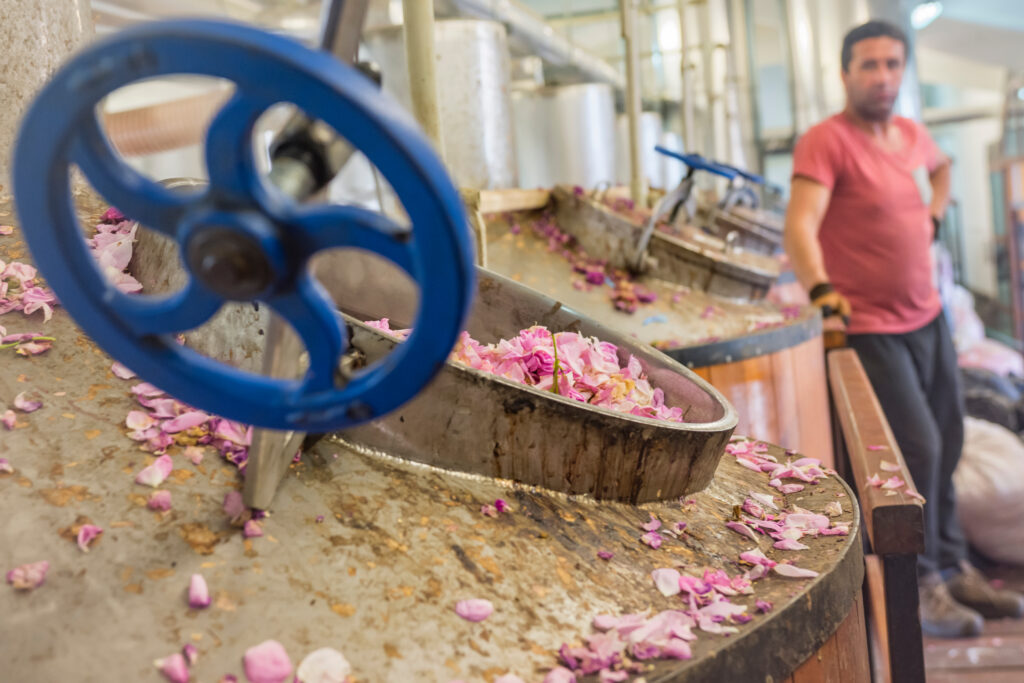
The process begins at daybreak, when the roses are picked by hand to ensure the freshness and quality of the petals. These petals are then placed in large distillation vats to which water is added. The mixture is brought to a boil in order to generate a vapour that becomes laden with the flowers’ aromatic compounds. This fragrant vapour is then cooled in a coil that condenses it, transforming it into a liquid containing both water and essential oil.
This liquid is poured into a Florentine flask, where the oil, lighter than water, separates naturally and floats to the surface.
This first oil is collected and, according to the Bulgarian technique known as “stripping,” the resulting rose water is steam-distilled again.
But that is not all! The water from this second distillation is also re-distilled, which yields a 3rd ESSENTIAL OIL. This process makes it possible to obtain several qualities of essential oil that can then be blended together.
Volatile Solvent Extraction
Here, the rose petals are placed in a vat on several levels.
This vat is filled with a solvent (hexane) that “washes” the flowers—that is, it becomes saturated with their fragrant components. Once the solvent is saturated with the flowers’ scent, it is extracted, filtered, and then evaporated.
Once the solvent has completely evaporated, all that remains is a fragrant wax saturated with the flowers’ aromatic components. This wax is called the CONCRETE.
This concrete can be used as is. But most of it is melted and washed in alcohol in order to remove the waxes. The resulting alcohol-based product is then heated to evaporate the alcohol and obtain a pure fragrant product called the ABSOLUTE.
Choosing the Method
The choice of extraction method often depends on the desired final product.
The essential oil obtained by hydrodistillation offers fruity facets reminiscent of lychee or raspberry, as well as spicy ones. It is used in perfumery and aromatherapy.
Rose water, another result of distillation, freshly petalled, is used in cosmetics and in cooking.
The absolute, with the best yield, is scented with warmer, sweeter, honeyed facets.
There are also other extraction methods for obtaining rose-based products: maceration in alcohol, which yields an infusion; CO2 extraction (SFE = Supercritical Fluid Extraction), which yields an extract; and headspace, which makes it possible to create an accord. But the most common remain hydrodistillation and solvent extraction.
Benefits of Rosa Damascena
Rosa Damascena is recognised for its many benefits to health and well-being.
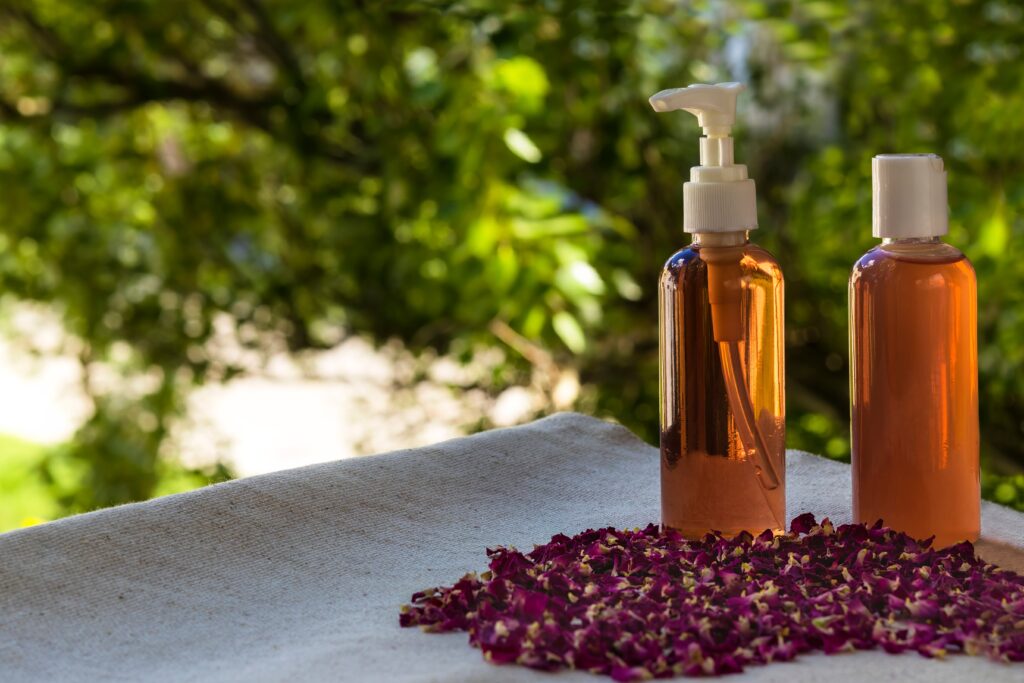
Used in aromatherapy, it helps reduce anxiety and stress thanks to its relaxing and antidepressant properties. On an emotional level, the essence of Rosa Damascena is known for opening the ANAHATA heart chakra, located at the sternum, associated with love, joy and inner peace, but also with sadness and despair. Rosa Damascena essential oil works to balance the heart chakra in order to restore confidence in oneself and in others.
In cosmetics, rose water and Rosa Damascena essential oil are valued for their moisturising, toning and anti-inflammatory effects, beneficial for sensitive skin and helping to prevent the signs of ageing.
In traditional medicine, Rosa Damascena is also used for its tonic virtues, notably to purify the blood and aid digestion.
Thus, this rose makes a significant contribution to physical and emotional health, reinforcing overall well-being.
Olfactory Facets of Rosa Damascena
Rosa Damascena is universally used for its complex and deeply captivating olfactory profile, which sets it clearly apart in the world of perfumery. This flower offers a kaleidoscope of olfactory nuances that can vary slightly depending on the soil and climatic conditions in which it is grown, as well as the extraction methods employed.
Top Notes: Delicate Freshness
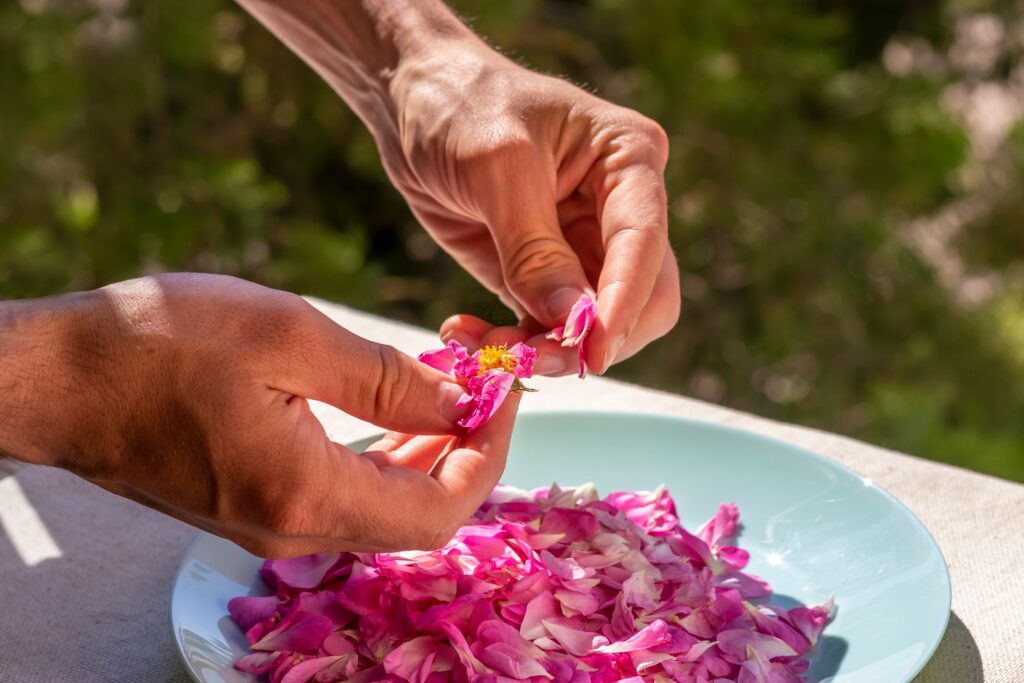
The top notes of Rosa Damascena are often described as fresh and slightly sweet, with accents of green notes. This can evoke morning dew on rose petals, a sensation of purity and freshness. These first olfactory impressions are light and volatile, evaporating quickly.
Heart Notes: Floral Richness
At the heart of the Rosa Damascena scent lies an intense floral richness. The heart notes are heavier and linger longer on the skin. This facet of the fragrance is primarily floral, with nuances of honey and, at times, a slight spiciness. It is here that the rose’s scent is at its most opulent and recognisable, offering an almost tactile sensory experience of the flower in full bloom thanks to the textures it evokes.
Base Notes: Subtlety and Depth
The base notes of Rosa Damascena reveal a complex subtlety, with musky and woody nuances that add to the richness of its scent. These deeper notes provide a solid foundation on which the fragrance can unfold, extending the perfume’s life on the skin and adding dimensions of warmth and depth that contrast with the freshness of the top notes. Nevertheless, Rosa Damascena remains very rarely used in base notes.
Unique Characteristics
What truly sets Rosa Damascena apart is its perfect balance between softness and richness. It has a unique ability to transform, presenting different olfactory facets at different moments, which makes it a prized choice for complex, multifaceted perfumes. Its scent can also vary slightly depending on the region of cultivation—roses grown in the rich, humid soils of Bulgaria may, for example, have heavier and sweeter notes compared to those grown in drier climates.
Distinction from Rosa Centifolia
Rosa Damascena and Rosa Centifolia, two jewels of horticulture and perfumery, display marked differences both botanically and olfactorily.
These differences influence their use in perfume creation and their cultivation around the world.
Rosa Centifolia is also known as the “May rose” because of its main flowering period.
It is characterised by very full flowers, with extremely tight, rounded petals that create an almost perfect cup shape.
Rosa Centifolia is traditionally cultivated in France, notably in the Grasse region, famous for its perfumery industry.
Olfactorily, Rosa Centifolia is known for its soft, subtle scent, often described as the closest to the natural fragrance of fresh roses. Its notes are delicately floral with accents of honey, but less intense than those of Damascena.
It is often used in light, romantic compositions, ideal for perfumes that call for finesse and understated elegance.
Examples of Iconic Perfumes
Nahéma by Guerlain, created by Jean-Paul Guerlain in 1979, is known as the dramatic and opulent interpretation of the rose. The fragrance opens on notes of bergamot, peach and a light touch of rosewood, before unfolding into a rich heart of Bulgarian rose and jasmine. The base is a warm blend of patchouli, vanilla and musk, enveloping the rose in a sweet, woody embrace.
Sa Majesté la Rose by Serge Lutens, created by Christopher Sheldrake in 2000. This perfume showcases the rose in an almost monolithic way, through the essence of the Damask rose with a luminous clarity. Notes of honey and chamomile add a subtle sweetness, while musk and guaiac wood provide a deep base, making this fragrance both majestic and commanding.
Portrait of a Lady by Editions de Parfums Frédéric Malle, created by Dominique Ropion in 2010, is a complex, multidimensional fragrance in which the rose blends with notes of blackcurrant, raspberry, cinnamon and clove, offering a modern and baroque interpretation of the flower. The base is rich—patchouli, sandalwood, incense and amber—creating a powerful and elegant sillage.
Isparta by Pierre Guillaume, created in 2012. Named after the Turkish region famous for its roses, Isparta offers a dark rose, almost red wine in character, with notes of resin, red wood and a hint of liqueur. The fragrance combines the sweetness of red fruit with the depth of labdanum and oud wood, for a rich and enveloping interpretation of the rose.
Rose de Taïf by Perris Monte Carlo, created by Luca Maffei in 2013. Rose de Taïf is an ode to the Rosa Damascena cultivated in Saudi Arabia, renowned for its rich, intense scent. This minimalist yet elegant fragrance opens on fresh notes of Sicilian lemon and nutmeg, which introduce the floral heart dominated by the rose of Taïf. Touches of geranium and light woods delicately support the rose, while amber and musks in the base add a subtle warmth, offering extended longevity on the skin. Rose de Taïf stands out for its purity and elegance, ideal for lovers of refined floral fragrances.
À la Rose by Francis Kurkdjian, created in 2014, is a vibrant tribute to femininity and elegance, inspired by the beauty and freshness of Centifolia and Damascena roses. The fragrance opens on bright, airy notes of Italian bergamot and Californian orange, offering a sparkling introduction that sets the stage for the floral heart. At the heart, the essences of Centifolia and Damascena rose unfold in all their splendour, accompanied by nuances of violet and magnolia, which add a dimension of softness and sophistication. The sillage is soft and lasting, with base notes of musk and cedar that anchor the fragrance while lending it an understated elegance.
Click Song by Une Nuit Nomade, created by Serge de Oliveira in 2022. Click Song is a tribute to Miriam Makeba, the famous South African singer. Click Song opens on fresh, sparkling notes of bergamot, soon followed by a Turkish rose accompanied by spicy nuances of geranium and cedar wood, creating a floral and woody harmony. The base is captivating, with notes of amber, labdanum, patchouli and vanilla, adding roundness and power.
Rosa Damascena remains one of the most prized raw materials in the world of perfumery. Its olfactory richness and fascinating history continue to inspire perfume creators around the world. Whether through its pure essence or integrated into fragrant compositions, the Damask rose is truly the queen of flowers.
As the perfumery industry continues to evolve, the place of Rosa Damascena seems assured, thanks to its unique profile that prompts perfumers to explore new creations. The future promises continued innovation around this legendary flower, perhaps exploring new uses in other fields such as natural medicine and eco-friendly skincare products. Rosa Damascena has not finished unfurling its petals to charm the world.
Article co-written by Elfa and Anne-Laure Hennequin