
Every year, Japan hosts one of its greatest natural spectacles: the cherry blossom season, or sakura. This poetic, fleeting moment fascinates as much as it moves. It embodies, on its own, a very singular relationship to time, to beauty… and to the invisible. Scent in Japan is perceived in the same way: as a discreet breath, a carrier of memory, culture and spirituality.
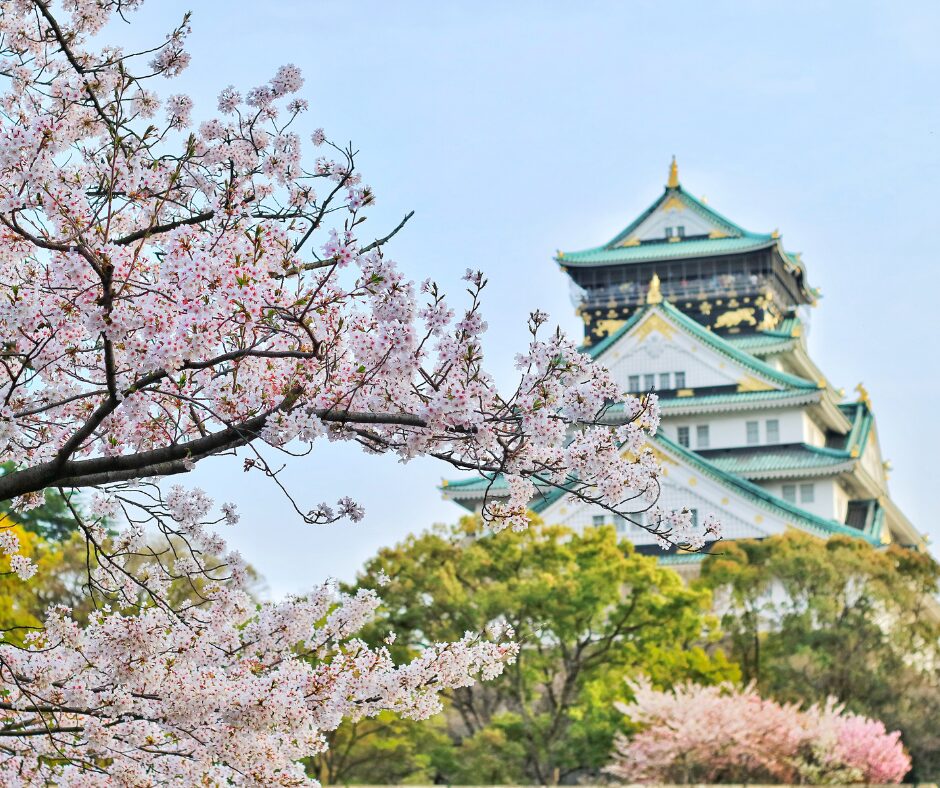
At the crossroads of art, care and silence, Japanese perfumery stands out for its extreme delicacy. Subtle, almost meditative, it oscillates between traditional heritage and technological modernity. In this article, we set out to explore this unique sensory universe, through its historical foundations, its emblematic brands, and the trends shaping its future.
History and olfactory tradition in Japan
Japan’s olfactory history does not begin with perfume as we understand it in the West, but with incense, whose use dates back more than 1,400 years. As early as the Nara period (8th century), the Japanese used fragrant woods imported from Southeast Asia for Buddhist religious rituals. These materials were so precious that they were kept as imperial treasures. One of the most emblematic woods, jinkō (agarwood, also known as oud wood), is still considered today a noble, sacred and mysterious ingredient.
But the height of this olfactory culture emerged during the Heian period (794–1185), with the codification of Kōdō, literally “the way of fragrance.” Less well known than ikebana (the art of flower arranging) or the tea ceremony, Kōdō is nonetheless one of the three great traditional Japanese arts. It consists of “listening” to the scents of heated—not burned—incense, in order to grasp its different nuances. This is not a mere sensory experience: it is a spiritual and aesthetic practice, an invitation to calm, concentration and introspection.
Each wood has its own olfactory profile, often poetic: an incense may be described as “calm as the sea at dawn,” or “luminous as a plum blossom in winter.” The relationship to scent is thus intimately tied to the imagination, to seasonality, and to the moment.
Unlike Western perfumery, which values expressiveness, even opulence, Japan has long cultivated an aesthetic of restraint. Scent is never invasive; it serves an atmosphere, a state of mind. In Japanese tradition, wearing too prominent a fragrance could be perceived as a lack of refinement, or even as a selfish act.
This subtle relationship to scent extends even to traditional clothing: kimonos were often imbued with delicate incense fumigations, a technique called takimono, used both to seduce and to signal social belonging.
Even today, certain rituals endure. Kōdō circles exist in several major Japanese cities, where this art is practiced under codified conditions. Likewise, Kōdō’s influence can be found in contemporary Japanese perfumery: discretion, precision, respect for olfactory silence.
And at the heart of this olfactory tradition, one image persists, fragile and evocative: that of the cherry trees in bloom. Ephemeral, they symbolize both transient beauty and the power of the present moment. A scent, in Japan, is like a sakura petal: it exists, then vanishes, never seeking to impose itself.
Modern perfumery and its specificities in Japan
Modern Japanese perfumery was not built in rupture with tradition, but rather in a form of silent continuity. While Western influences enabled the rise of liquid perfumes over the course of the 20th century, Japan chose early on to adapt this perfumery to its own olfactory sensibility, rather than to copy it.
Here, perfume is not a vehicle for assertive seduction, nor an accessory of power. It is a discreet extension of the self, on the border between skincare, intimacy and emotion. What is sought is lightness, transparency, airy and fresh notes that are almost imperceptible to others. The favorite accords? Green tea, yuzu, white woods, aquatic florals, clean musk, and shiso—that aromatic herb with facets that are both mentholated and green.
In Japan, people often speak of clean scents or skin scents: fragrances of the skin that evoke rather than assert. In contrast to the powerful sillages so present in Europe or the Middle East, Japanese perfume respects the olfactory bubble of others. It is worn not to be noticed, but to feel aligned with oneself. This relationship to scent is shaped by deep cultural values: politeness, modesty, harmony.
Houses like Shiseido, a pioneer since 1917 with Hanatsubaki, or Kenzo with Kenzo pour Homme in 1991, have embodied this Japanese olfactory aesthetic internationally. Today, more confidential brands such as Parfum Satori, Flora Notis by Jill Stuart, or THREE are deepening this path with compositions that are often minimalist, yet emotionally very powerful.
Packaging follows the same logic: pared-down design, soft hues, light bottles with sober lines, often inspired by nature or daily rituals. The care given to the object is just as important as the juice it contains, in a spirit of overall elegance and silent beauty.
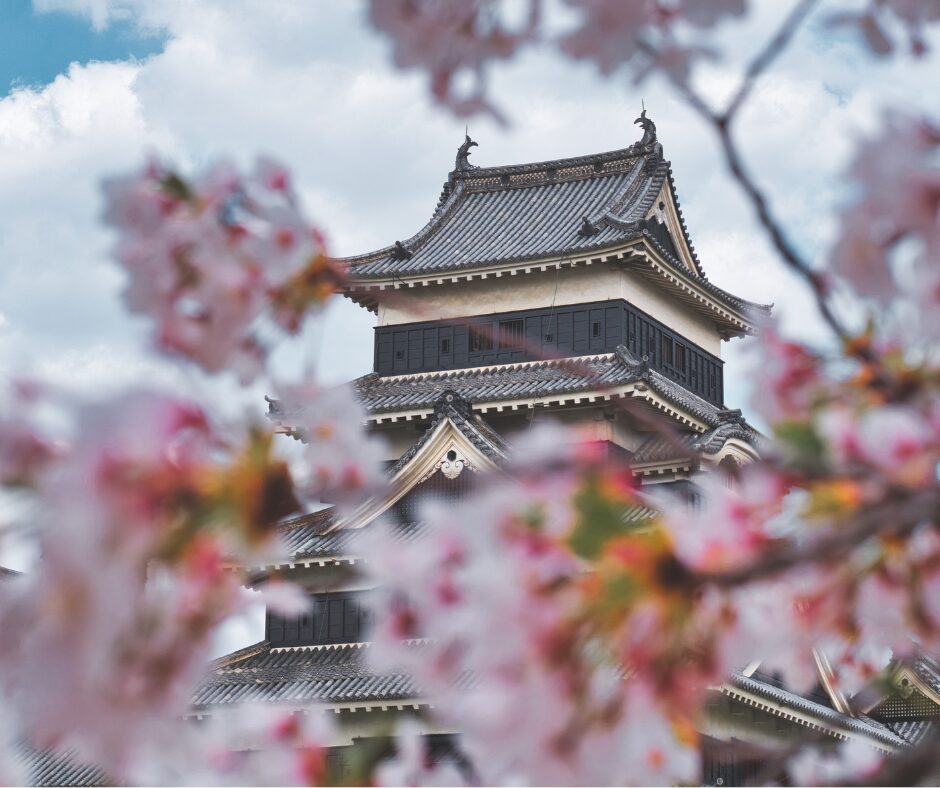
And in this delicate landscape, the cherry blossoms hold a special place. They return each year like an immaterial perfume, inscribed in the collective memory. This symbol of fleetingness, of fragile beauty, continues to inspire modern Japanese perfumers, who sometimes attempt to translate sakura into scent—without ever fixing it, always through a form of poetic suggestion.
The perfume industry in Japan
Far from the media spotlight of Grasse or Paris, the Japanese perfume industry has developed in a more underground fashion, though no less ambitious. It rests on solid pillars, starting with major cosmetics groups such as Shiseido, Kao, Pola Orbis and Kanebo, all of which have their own research laboratories, production chains and fragrance brands.
The domestic market is structured around three main axes: personal fragrances, home fragrances, and scented care products (mists, oils, lotions, etc.). Unlike Europe, where perfume is often experienced as a statement of identity, Japan favors gentle uses and subtle applications, often hybrids between fragrance, skincare and wellbeing.
A crucial point in the strategy of Japanese brands: technological innovation. Here, brands do not merely compose accords; they also invent new forms of diffusion, light textures, or encapsulated fragrances that release throughout the day. Some brands even develop textiles impregnated with scented microcapsules, activated by friction or body heat.
Formulation standards are also stricter than in Europe: fragrances must be non-allergenic, with little or no alcohol, and controlled longevity so as not to disturb others. This explains the dominance of alternative formats: pillow mists, solid perfumes, roll-ons and scented oils are commonplace, especially in lifestyle boutiques.
The Japanese industry also excels in the integration of local ingredients, often sourced from traditional agriculture or wild harvesting. Yuzu (a fresh, tangy citrus), hinoki (Japanese cypress), kinmokusei (golden osmanthus) and matcha are all emblematic olfactory materials—both distinctly Japanese and universal.




On the distribution side, Japanese brands have also mastered the art of experiential retail: stores are designed as sensory cocoons, somewhere between visual minimalism and high-tech sophistication. Testing a perfume never happens amid the hustle: you settle in, you breathe, you take your time. A whole philosophy of respect for the sense of smell, almost meditative, unfolds in these points of sale.
Finally, it is worth noting that Japan also plays a key role in the industry as a test market: many foreign brands launch their innovations there first, to gauge the reception of a demanding public attentive to the smallest detail. If a perfume works in Japan, it can work anywhere.
Trends and innovations in Japanese perfumery
Discreet yet buzzing with activity, the Japanese olfactory scene is today experiencing a revival, marked by the emergence of new independent brands, a more sensory approach to consumption, and an approach more emotional than ever.
A first strong trend: the return to craftsmanship and local materials. Houses such as Di Ser, based in Sapporo, or Parfum Satori in Tokyo, create fragrances in small batches, from rare ingredients, sometimes grown or distilled on site. Their creations incorporate typically Japanese elements such as shiso, kōdō-matsu (ceremonial pine) or kinmokusei, that little orange flower that perfumes Japanese streets in autumn. This is artisanal, author-driven perfumery, subtly rooted in Japanese nature, a world away from globalized trends.
Another notable movement: functional perfumery. Fragrance is becoming an everyday tool to soothe, focus, comfort. This current draws inspiration from Zen practices and gentle medicine: brands are developing “anti-stress,” “morning wake-up” and “olfactory memory” fragrances. These products are often sold as “aroma mists,” oils or scented sticks, to be used as personal rituals. The success of these ranges shows just how much perfume is perceived in Japan as an extension of wellbeing, rather than a social marker.
In terms of technological innovation, Japan remains at the forefront. Some companies are already exploring digital perfumery, through smart diffusers or collaborations between perfumers and engineers. Devices make it possible to program scents according to the time of day, or even one’s mood. A brand like Scentee Machina, for example, offers a connected diffuser designed like a work of art, controllable via smartphone.
Finally, younger Japanese generations are redefining their relationship to fragrance. Less constrained by norms of discretion, they are opening up to bolder sillages and international niche perfumery, while valuing ethical, transparent and local consumption. Vegan, alcohol-free fragrances with traceable ingredients are increasingly appealing. Emotion, the sincerity of the approach and the story behind the bottle often matter more than the prestige of the brand.
And as a symbolic nod, the sakura—eternal metaphor of passing time—continue to inspire countless seasonal olfactory creations, among local and international brands alike. Every spring, perfumery shelves take on shades of pale pink, in an olfactory tradition that has become a cultural rendezvous in its own right.
Perfumery in Japan is not shouted; it is sensed, like the scent of sakura carried on the wind. Anything but a copy of the Western model, it follows its own path: an art of discretion, of the precise gesture, of suspended time. It speaks in a low voice, but often says what matters most.
Between a thousand-year-old incense tradition and a refined, high-tech modernity, it offers another way of thinking about scent: more inward, more poetic, at times meditative. In an era saturated with stimuli, this sensitive and respectful approach to fragrance appears almost as a form of resistance: slowing down, breathing, feeling.
At a time when global perfumery tends toward standardization, Japan is tracing a unique—and perhaps essential—path. It restores perfume to its original function: marking the moment, without weighing it down.
What if the future of fragrance lay precisely in this art of silence and fleetingness, like that of the cherry trees in bloom?
The sense of smell is often underestimated; yet it profoundly structures our relationship with the world. It influences our memories, our emotions and even our social interactions. But what happens when this sense is absent? This is the reality of people with anosmia, a condition that can be congenital or acquired.
Living without a sense of smell upends the perception of flavours, the appreciation of perfumes and the safety of everyday life. For these people, smelling a perfume does not come down to a simple olfactory experience, but becomes a real challenge of interpretation through other senses. How do they define a smell? What strategies do they adopt to choose a perfume? And how does the perfume industry try to make this world more accessible?
This article dives into the world of the anosmic and explores the solutions put in place to help them perceive scents differently.

Understanding the Odourless World of Anosmia
What Is Anosmia?
Anosmia is the total loss of the sense of smell. It can be congenital (present from birth) or acquired following an illness, a head trauma, a viral infection or prolonged exposure to toxic substances. There are also forms of partial anosmia, where certain smells are still perceived while others disappear completely.
According to the association Anosmie.org, a significant proportion of the population is affected by olfactory disorders to varying degrees. Yet this condition remains largely unknown and receives little media coverage. Unlike the loss of sight or hearing, which directly affects our perception and our interactions, smell often acts in a discreet but essential way. Its disappearance can nevertheless have major repercussions on daily life.
A Sensory Loss with Multiple Consequences
Losing the sense of smell is not simply a passing inconvenience; it is a profound transformation of the perception of the world. Anosmia brings about changes in three major areas:
Food and taste: Smell plays a key role in the perception of flavours. Without it, foods lose much of their aromatic complexity. A strawberry no longer has a sweet-fruity taste, but comes down to a soft, slightly tangy sensation on the tongue. Chocolate becomes a simple creamy texture, without its gourmand, comforting notes. Anosmics must adapt by favouring dishes with varied textures and more pronounced mouth sensations, such as the heat of chilli or the acidity of a citrus fruit.
Emotions and memory: Smell is directly connected to the limbic system, the area of the brain that manages emotions and memory. A smell can instantly revive a childhood memory or provide a sensation of well-being. Deprived of this olfactory connection, many anosmics report a feeling of emotional isolation, as if they had lost a link with their sensory past.
Safety and self-perception: Smell is a natural alert mechanism. It makes it possible to detect a gas leak, an incipient fire or the spoiling of food. Anosmics must compensate for this loss by adopting safety reflexes, such as using smoke and gas detectors or asking their loved ones to check the freshness of food. They also lose the ability to perceive their own body odour, which can be a source of worry in social interactions.
A Late Realisation
Anosmia is often diagnosed late, because it does not cause immediate difficulty in communicating with others, unlike deafness or blindness. Many congenitally anosmic people only realise their condition in adolescence, when olfactory experiences take on a more prominent place in social and intimate life.
This is the case for Marie-Soline, anosmic from birth, who only truly became aware of her absence of smell at the age of 15. Like her friends, she wanted to choose a perfume for herself, but in the shop, she smelled nothing. She did not understand what “a woody perfume” or “a floral note” meant. “I felt excluded from a world that everyone understood except me,” she says. Her circle, having never noticed this lack, paid no attention to her feelings, considering that smell was not an essential sense.
At 18, she came across a report on anosmia by chance. Intrigued, she consulted an ENT specialist, who prescribed an MRI. The verdict was final: she had never had an olfactory bulb. “It was both a shock and a relief. I finally had an explanation,” she says.
A Still Poorly Understood Condition
Unlike blindness or deafness, anosmia is an invisible disability. It does not change appearance or verbal communication, which often makes it misunderstood by those around. Anosmics often have to explain their condition to their loved ones, who struggle to imagine a world without smells.
Marie-Soline explains that she still sometimes faces misunderstandings: “Someone hands me a flower saying ‘smell how good this smells!’ and I have to remind them that I perceive nothing. People forget, because it is a sense that is automatic for them.”
Anosmia is still largely under-diagnosed and little recognised by society. Yet it profoundly impacts the perception of the world, social relationships and even the mental health of those who suffer from it.
Anosmia: An Obstacle to the Perception of Perfume
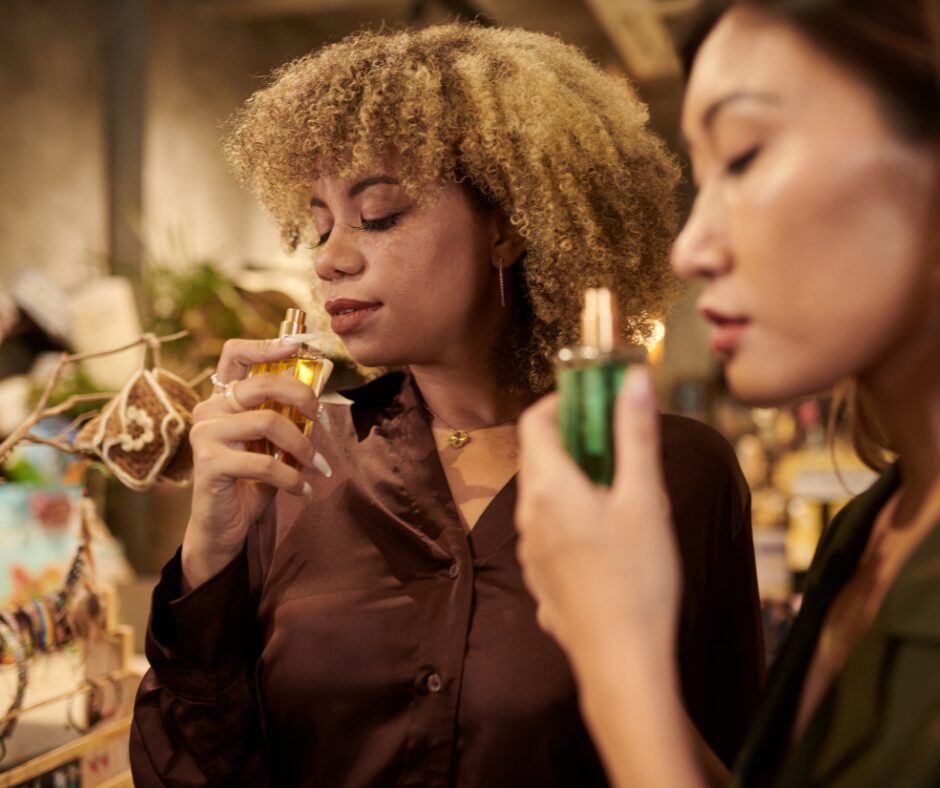
Perfume is much more than a simple smell sprayed on the skin: it represents an identity, a unique olfactory signature. For an anosmic person, this invisible language is totally absent, which poses a challenge in the choice and appreciation of a perfume.
In a world where scents are omnipresent—whether through perfumery, gastronomy or even the atmosphere of places—anosmics must adopt alternative strategies to make this sensory world their own. If, for most people, the choice of a perfume rests on an immediate sensory experience, for anosmic people this selection is based on other criteria, such as the aesthetics of the bottle, the emotions conveyed by brands’ storytelling, or the opinion of those around them.
An Inaccessible Ritual
Wearing perfume is often perceived as an intimate, sensory gesture. It is a ritual that is not limited to an application on the skin, but that encompasses a complete experience: the pleasure of discovering a new fragrance, the act of testing different notes, and the satisfaction of wearing a scent that matches one’s identity. For anosmics, however, this ritual becomes abstract.
Marie-Soline, a congenital anosmic, explains that she became aware of her condition when she wanted, like her friends, to choose a perfume for herself. When she went to the shop, she realised that she smelled nothing and did not understand the salespeople’s descriptions: “it’s floral,” “it’s woody”… She found this strange, and this experience revealed to her a sensory gap she had never realised before.
The Importance of the Visual and Touch
Deprived of smell, anosmic people develop other sensibilities to apprehend perfumes. One of the essential elements is the visual. Bottles become a first indication of a perfume’s universe:
Bottles with clean, minimalist shapes often evoke modern, fresh compositions. Those adorned with gilding and baroque motifs recall heady, sophisticated perfumes.
Colours also play a role: a blue juice is often associated with freshness and the sea (oops, Angel by Mugler!), while a red bottle suggests an intense, sensual fragrance.
In parallel, touch takes on a predominant place. Some anosmics associate the olfactory description with a physical sensation. Marie-Soline thus explains that she prefers “soft” materials such as vanilla. When something soft is described to her, she imagines it as a comfort blanket, cosy and reassuring.
Relying on Descriptions and Emotions
Words are another key to allowing anosmics to understand a perfume. Many perfume houses today invest in olfactory storytelling that no longer merely lists the top, heart and base notes, but seeks to tell a real sensory story.
Marie-Soline shares that when she has to choose a perfume, she relies on the description her circle gives her, using sensory references accessible to her. Her loved ones describe the scents through other sensory markers such as texture or colour. For example:
- A powdery perfume will be compared to the softness of a velvet fabric.
- A woody perfume will evoke the rough sensation of a tree trunk under the hand.
- A spicy note might be described as a warmth that tingles on the tongue.
The Impact of Outside Opinions
Finally, many anosmics rely on those around them to make their choice. They ask their loved ones to smell the perfumes for them and give them a sincere opinion. Marie-Soline explains that she chooses her perfumes based on the recommendations of her loved ones: “If I’m told that this perfume suits me, then I adopt it. I have no other way of knowing.”
A Different but Just as Meaningful Approach
Although anosmics cannot experience perfume as the majority of people do, their relationship with fragrances is no less profound. They develop a unique, intimate way of choosing their scents, relying on the other senses, on their imagination and on the narrative that accompanies each fragrance.
In the next section, we will see how certain perfume houses innovate to make the olfactory experience accessible beyond the sense of smell alone.
How Do You Define Smells and Perfumes Without a Sense of Smell?
Anosmics develop strategies to apprehend the olfactory world by relying on other senses. Without being able to perceive scents directly, they use analogies based on texture, vision, language or even music.
Through Texture and Sensations
Marie-Soline relies on the opinion of her loved ones, who describe the scents to her using comparisons with touch. A “soft” perfume will evoke for her a sensation of comfort similar to that of a plush comfort blanket. Likewise, she prefers vanilla notes, which she instinctively associates with an enveloping, reassuring texture.
Through Sight and Colours
Colour plays an important role in the olfactory imagination of anosmics. Green perfumes are often perceived as fresh and natural, while golden bottles evoke warmth and elegance. Marie-Soline applies this logic to her food choices: she favours foods with bright colours and textures she enjoys, such as red-fruit herbal teas, whose vivid hue and slight acidity she likes.
Through Words and Emotions
Perfumers’ descriptions help anosmics to project themselves into a sensory experience. A perfume described as “a walk in the forest after the rain” or “a comforting cocoon of vanilla and amber” makes it possible to evoke a world that, although not perceptible olfactorily, can be felt through the imagination.
Through Music and Sounds
Some perfume houses have explored the links between music and scents. L’Orchestre Parfum, for example, associates each fragrance with a melody, thus allowing anosmic people to imagine a perfume through the prism of music. This is the principle of synaesthesia. The top notes then become high, crystalline sounds, the heart notes warm chords, and the base notes deep, captivating bass tones.
Perfume Brands and the Sensory Experience Beyond Smell
Faced with the challenge of anosmia, some brands offer innovative approaches to make perfumery accessible beyond the sense of smell.
L’Orchestre Parfum: When Perfume Becomes Music
Founded by Pierre Guguen, L’Orchestre Parfum offers a unique approach where each fragrance is associated with a musical composition. This multisensory experience transforms perfume into a melody that can be felt otherwise than with the sense of smell.
The brand’s creations incorporate instruments and rhythms reflecting the soul of each fragrance, allowing anosmic people to apprehend them through sound. Rather than simply describing olfactory notes, L’Orchestre Parfum invites you to listen to the scents, offering a sensory immersion where olfaction becomes an auditory experience. This innovative approach broadens the way perfume can be perceived, making the olfactory world more inclusive and accessible.
Viktor & Rolf: A Visual and Narrative Experience
Some brands, like Viktor & Rolf, bet on sculptural bottles and striking visual campaigns. Through iconic designs, such as the famous grenade-shaped bottle of Flowerbomb or the bow silhouette of Bonbon, the brand creates a strong identity that transcends olfaction. These objects become symbols of desire and emotion, offering a sensory experience where sight and touch replace smell.

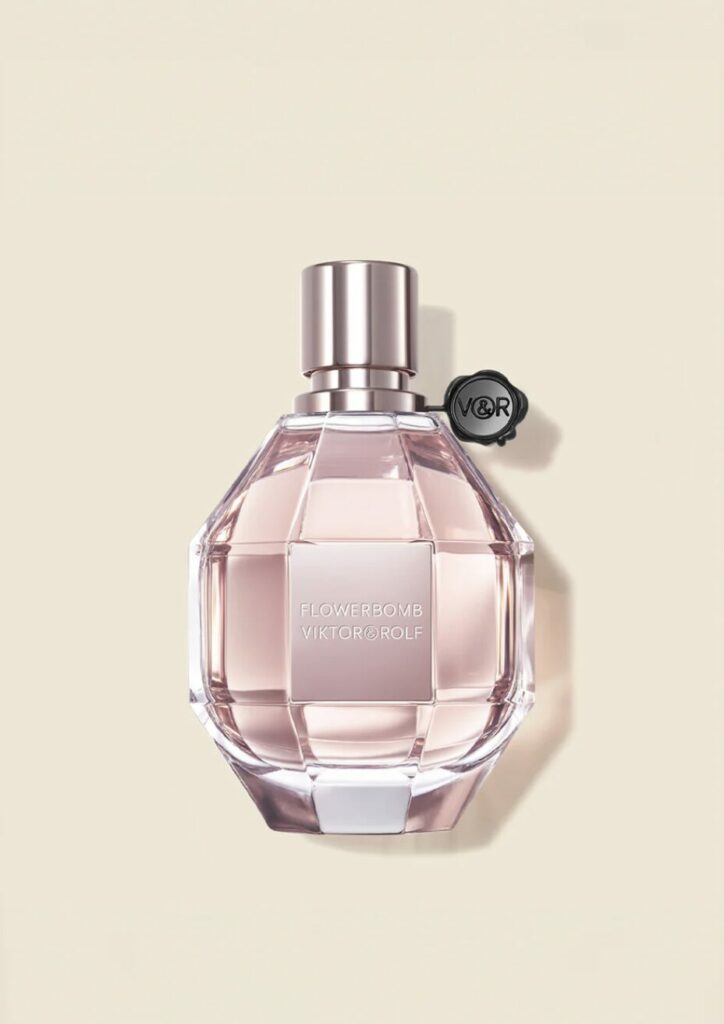
Moreover, Viktor & Rolf’s advertising campaigns play on immersive storytelling, staging the perfume in artistic, dreamlike worlds. These stagings allow anosmic people to make a perfume their own differently, by associating it with a strong sensory world. The perfume can then be perceived beyond the sense of smell alone. Example: Spicebomb Infrared and the sound that raises the body’s heat: https://www.youtube.com/watch?v=Pg6KNZZUCPs
J’emme: An Innovative and Inclusive Olfactory Approach
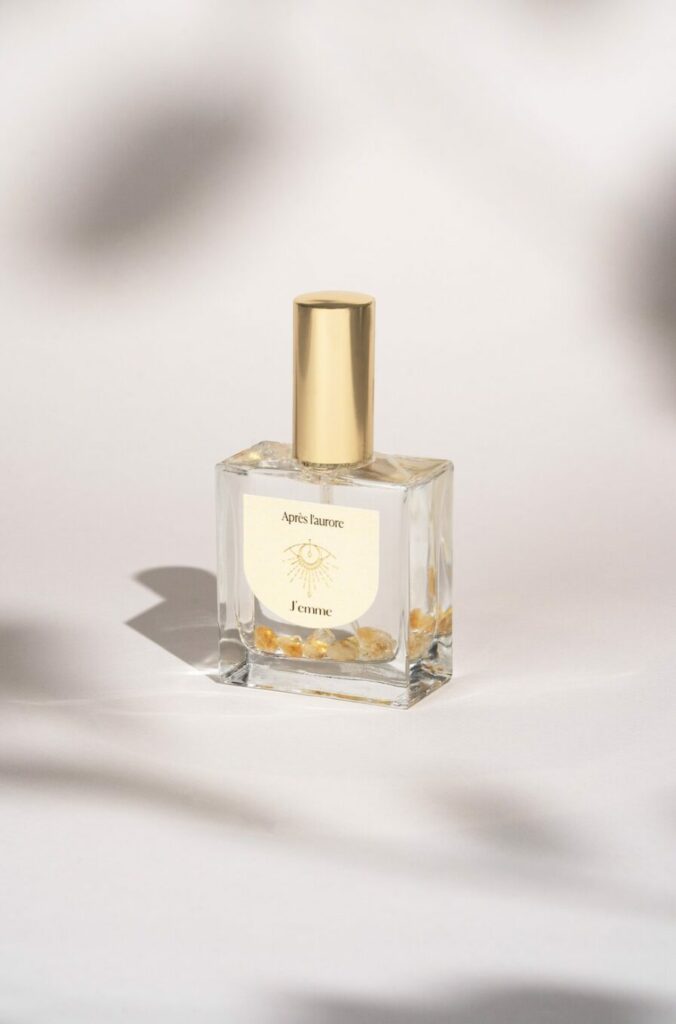
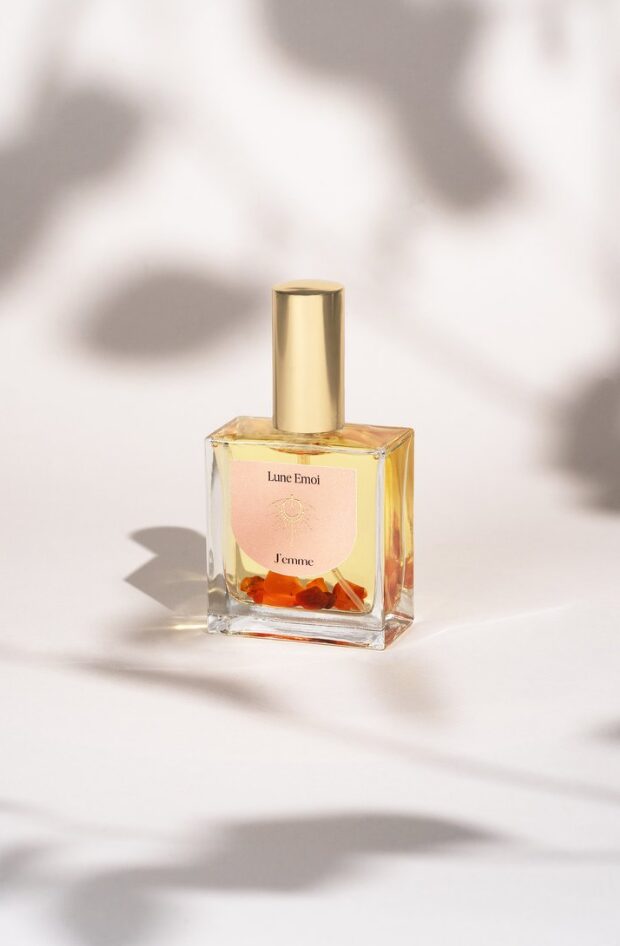
The Belgian brand J’emme, founded by Julie Tinant, associates its perfumes with semi-precious stones, offering a sensory experience where the visual, touch and energy replace olfaction. Each fragrance is linked to a specific stone, such as Après l’Aurore and citrine, symbolising confidence and optimism.
The bottles, containing visible crystals, create a tactile and visual interaction, allowing anosmics to feel their perfume differently. J’emme favours immersive storytelling, highlighting emotions and intentions rather than purely olfactory descriptions. This innovative approach redefines perfumery by making it more inclusive and accessible to people deprived of the sense of smell.
Anosmia is much more than a simple sensory deficit. It profoundly impacts quality of life, self-perception and social interactions. Thanks to scientific advances and technological innovations, the hope of more effective care is on the horizon.
In the meantime, raising awareness remains essential to better understand this condition and offer solutions suited to anosmic people, whether in their daily lives or through more inclusive initiatives in the world of perfumery and gastronomy.