
Myrrh in Perfumery
Myrrh is an aromatic substance used since antiquity for its medicinal and fragrant properties. This odorous resin from Commiphora holds a rich, refined history. In this article, we are going to discover the botanical and geographical origins of myrrh, its place in religions, its use in perfumery, as well as its olfactory characteristics.
Botanical and Geographical Origins of Myrrh

Myrrh comes from the bark of several species of trees belonging to the genus Commiphora, of the Burseraceae family.
These trees are mainly cultivated in Africa, notably in Ethiopia, Somalia and Kenya, as well as in the Middle East. The Commiphora species differ from one another in terms of shape, size, colour and the chemical composition of the resin they produce.
Myrrh trees are woody plants that can reach up to 4 to 5 metres in height. They have compound leaves, which are often light green or silvery in colour, and flowers that can be white, pink or red. The fruits are capsules that contain seeds.
The harvest of myrrh is done by making incisions in the bark of the tree, which allows the sap to flow out and solidify into an odorous resin.
Myrrh trees are often cultivated in semi-arid zones, where the environmental conditions are difficult, notably owing to the heat, the lack of water and the poverty of the soils.
Myrrh is a precious, costly substance, which has been used since antiquity for its medicinal, cosmetic and fragrant properties. Owing to its rarity and its value, myrrh was considered a luxury product and was often given as a gift to leaders and dignitaries.
Myrrh: Between History and Religion
Myrrh also carries a strong religious significance, notably in Christianity and in the funerary practices of antiquity. In the Bible, myrrh is mentioned several times, and it is often associated with royalty and divinity.
One of the best-known passages is found in the Gospel according to Saint Matthew, where it is said that the Magi offered myrrh, as well as frankincense and gold, to Jesus at his birth. These gifts were represented as signs of the importance of Jesus and of his prophetic destiny.
This precious resin was also used in the funerary practices of antiquity, owing to its preservation properties and its pleasant, captivating scent.
The Egyptians used it to embalm the bodies of the pharaohs and nobles, while the Hebrews used it to perfume garments and funeral sheets.
Today, myrrh is still used in the religious rituals of certain cultures, notably in the Orthodox Church, where it is burned in the form of incense during religious services.
Use of Myrrh in Perfumery
Myrrh is a prized olfactory note in perfumery, which brings a warm, resinous touch to compositions.
It is generally steam-distilled to extract the essence, which will then be used as a raw material in perfumery.
In oriental perfumes, myrrh marries perfectly with notes such as amber, patchouli, vanilla and tonka bean. These compositions, often opulent and charismatic, are much appreciated for their intense, mysterious sillage.
It also brings a spicy, woody dimension to perfumes, reinforcing the character of woody notes such as cedar, vetiver or oud. It is often combined with spices such as cinnamon, pepper or clove to create powerful, refined perfumes with multiple facets.
Myrrh is available in the form of an absolute or an essential oil, which are used by perfumers to create perfume compositions.
Myrrh absolute is often used to add depth and richness to perfumes, while myrrh essential oil is used to add a resinous, slightly bitter touch.
Myrrh Absolute in Fine Perfumery

Myrrh absolute, extracted with solvents, preserves more of the aromatic components of the myrrh resin, thus offering a richer, deeper fragrance than the essential oil. This characteristic is particularly appreciated by perfumers when they work on sophisticated, complex compositions.
Moreover, myrrh absolute marries harmoniously with other ingredients used in fine perfumery, such as floral notes, precious woods and exotic spices. The absolute will be used in the base note, giving depth and a unique character to olfactory creations, reinforcing the longevity and the complexity of fragrances.
Myrrh Essential Oil in Perfumery
Myrrh essential oil, although it also possesses appreciated olfactory qualities, can be considered less precious in the context of perfumery. Its extraction method by steam distillation can lead to a partial loss of the aromatic components, resulting in a less rich perfume, less faithful to the original smell of the resin.
However, myrrh essential oil remains an important ingredient in perfumery and can be used to bring a spicy balsamic nuance, as well as one of moss and mushroom, to compositions.
In addition to its use in perfumery, myrrh is also used in skincare products. It is known for its anti-inflammatory and antioxidant properties, which makes it a precious ingredient in anti-ageing products. It is also appreciated for its antiseptic and healing properties. It is also used in ambient perfumes, scented candles and incense.
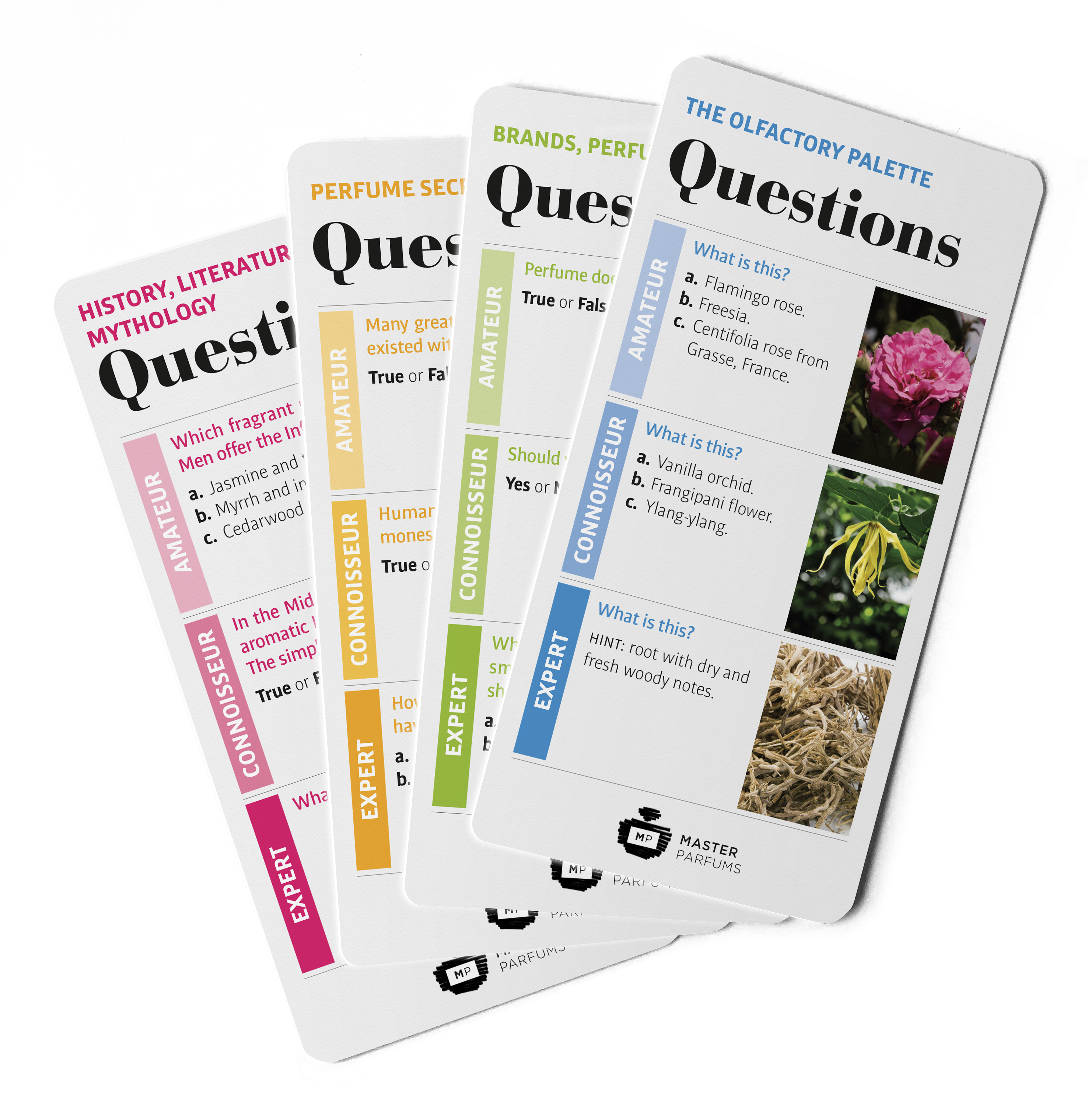
TEST YOUR PERFUME KNOWLEDGE
Myrrh holds no more secrets for you?
Raw materials, olfactory notes, iconic perfumes, history…
Keep testing your knowledge with the Master Parfums Pocket Quizzes.
A Few Examples of Myrrh-Based Perfumes
At Hermès in 2018, Christine Nagel added a new creation to the Hermessence collection. Myrrhe Églantine is a delicate, fresh floral ambery perfume combining myrrh and wild rose.
Myrrhiad, created in 2012 by Pierre Guillaume, combines myrrh with notes of black tea absolute, vanilla and liquorice to create a perfume with enveloping, gourmand and leathery facets.
For Serge Lutens, Christopher Sheldrake created La Myrrhe in 1995, a complex perfume—fresh, soapy, slightly bitter. A honeyed, floral myrrh, suave and spicy.
Myrrh, a Precious and Sustainable Ingredient
Nowadays, perfumery attaches growing importance to sustainability and ethics in the production of raw materials. Myrrh, thanks to its non-destructive extraction process and the sustainable management of Commiphora trees, is a raw material respectful of the environment and of the local communities that depend on it.
To learn more about myrrh and the other iconic ingredients of perfumery, discover our Master Parfums perfume-culture quiz. 120 questions and answers on the history and culture of perfume, to learn while having fun!