

Warm Spicy Notes in Perfumery
Perfumery is a delicate art that uses various ingredients to create unique, captivating aromas. Among these ingredients, warm spices hold a prime place, notably at the end of the year. These spices add a unique depth and warmth to perfumes, making them irresistible and giving an additional texture.
Distinctions Between Warm Spices and Cold Spices
Spices in perfumery are often distinguished by their sensory temperature, which influences the perception and the emotion evoked by a fragrance. Warm spices, such as cinnamon, nutmeg and clove, are characterised by their enveloping, deep smells. They tend to evoke a sensation of warmth and well-being, often associated with memories of cosy interiors and festive moments.
By contrast, cold spices, such as black pepper, cardamom or ginger, bring a sensation of freshness and vivacity. Their pungency offers a clarity and an energy that can revitalise and brighten a fragrant composition. These spices are frequently used in perfumes with lighter, airier profiles, conferring on them a distinct openness and luminosity.
Mastering the balance between these two types of spice can give rise to fragrant creations of remarkable complexity and depth, each family of spices playing a crucial role in the construction of a perfume’s olfactory identity.
Warm Spices Widely Used in Perfumery
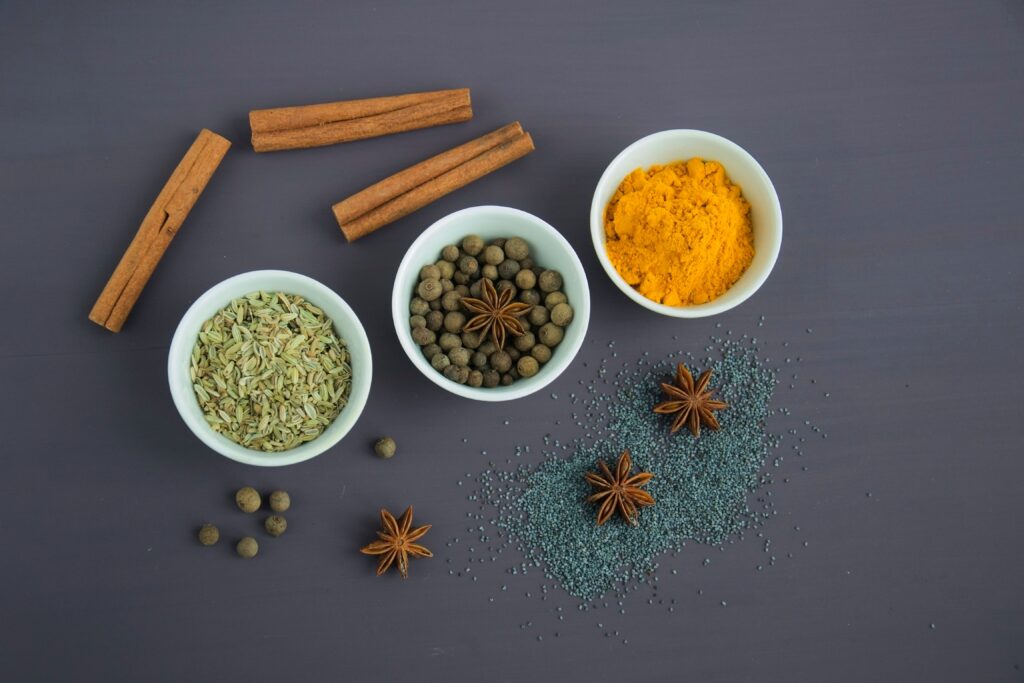
Cinnamon: A Flagship Spice
Cinnamon is a key component in perfumery, appreciated for its ability to arouse sensations of warmth and comfort. This spice, obtained from the Cinnamomum tree, has been used for thousands of years for its captivating scent and its medicinal benefits. Historically, it enhanced incense and sacred oils as early as antiquity, revealing its richness and its depth in spiritual and ritual contexts.
Olfactorily, cinnamon offers a rich, complex profile, blending warm, sweet notes with woody touches and a hint of spice. Its versatility allows it to appear both as a top note and as a heart note, where it can play the leading or complementary role, adding depth and a spicy character to perfumes. It marries harmoniously with oriental, gourmand, and even fruity notes, to create enveloping, welcoming perfumes.
Cinnamon transcends its status as a spice in perfumery to become a true conveyor of emotions. Its use in perfumery is not limited to its sensory properties, but encompasses a deep emotional dimension, making it an olfactory signature that is at once timeless and profound.
Clove: Depth and Character
Clove is a spice that plays a significant role in the elaboration of perfumes thanks to its pungent aroma and its slightly bitter nuance. Used mainly in woody or spicy perfumes, it confers on fragrances a remarkable intensity and depth, as well as a pronounced character.
This ingredient, drawn from the clove tree, has a long history, spanning millennia in the fields of cooking and traditional medicine. In perfumery, its value lies in its ability to project a powerful and distinctly spicy scent.
The olfactory profile of clove is characterised by a penetrating, spicy robustness, enhanced by woody notes and a hint of bitterness, thus bringing an intriguing complexity to perfumes. It finds its place as a heart or base note, combining well with floral and fruity notes to enrich compositions with a rich spicy dimension.
Nutmeg: Subtle and Enveloping
Nutmeg, drawn from the nutmeg tree, has been a culinary and medicinal treasure since antiquity, revered for its distinctive taste and its curative properties. Its presence in perfumery, where it is celebrated for its subtle, comforting scent, testifies to its transition from a kitchen ingredient to an olfactory component rich in tradition and exoticism. Its taste is close to a pepper-cinnamon blend.
The scent of nutmeg is complex and multidimensional, offering a rich olfactory experience where spicy tonalities blend with sugary sweetness, all supported by a woody, musky base. This combination creates a refined subtlety in perfumes, where nutmeg brings a warm depth without ever eclipsing the other notes.
In perfumery, its versatility is showcased as a heart note, capable of complementing and embellishing a variety of aromatic profiles, from woody to floral to oriental. This adaptability makes nutmeg a favoured choice for perfume creators seeking to enrich their compositions with balance and elegance.
Allspice Berries: A Vibrant, Pungent Spice
Allspice berries, also known as Jamaica pepper or allspice, are native to the Caribbean and Central America. They are renowned for their unique scent that combines the characteristics of several spices such as cinnamon, clove and nutmeg. This blend offers a complex, spicy and woody olfactory profile with a slightly fruity nuance.
In perfumery, allspice berries are appreciated for their ability to bring a spicy, exotic touch to compositions. Their unique character makes them a fascinating choice for perfume creators seeking to infuse a touch of originality into their creations.
Pumpkin Spice: The Autumn Trend
Pumpkin Spice, known for its association with pumpkin pie in American cooking, has recently gained popularity in perfumery, where it is valued for its gourmand, warm qualities. This blend, composed of cinnamon, nutmeg, ginger, and sometimes clove and allspice, is appreciated for its rich, comforting scent that evokes autumn and its delights.
As an ingredient in candles and ambient perfumes, Pumpkin Spice is mainly used to enrich gourmand scents, adding a touch of softness and warmth. It harmonises particularly with sweet, creamy notes, contributing to a sensation of comforting, childlike indulgence.
Examples of Perfumes That Emphasise Warm Spices
Youth Dew by Estée Lauder (1953) Perfumer: Josephine Catapano Youth Dew is a spicy oriental fragrance for women that revolutionised the world of perfume with its bold blend of aldehydes, cinnamon and clove. It is a rich, complex scent, saturated with warm spices that confer on it a voluptuous, timeless sensation.
Opium by Yves Saint Laurent (1977) Perfumers: Jean Amic and Jean-Louis Sieuzac Opium is a timeless classic of spicy oriental perfumery. With its top notes of mandarin, plum, clove, coriander seed and pepper, it envelops in a mysterious, sensual veil. Warm spices are at the heart of this fragrance, giving it a charismatic, unforgettable aura.
Noir Épices by Frédéric Malle (2000) Perfumer: Michel Roudnitska Noir Épices is a modern, refined interpretation of traditional spices. It reinvents the theme with an ambery-spicy ambiance, making the spice not an accompaniment, but the star of the composition. The warm character of the spices creates an aura that is at once luxurious and mysterious.
901 by Bon Parfumeur (2017) Perfumer: Corinne Cachen This spicy ambery fragrance for women and men blends spicy notes of ginger, black pepper and nutmeg, with touches of almond and pimento at the heart, and a base of patchouli, vanilla and tonka bean, creating a rich, complex perfume that celebrates warm spices in all their splendour.
La Couche du Diable by Serge Lutens (2019) Perfumer: Christopher Sheldrake This woody ambery perfume emphasises cinnamon in its heart notes, creating an enigmatic, spicy warmth. Combined with oud, amber and woody notes in the base, the fragrance forms a rich, captivating sillage, typical of Serge Lutens’s warm spicy signature.
The Guardian Master – 5 – by Spiritum (2022) Perfumer: Philippe Paparella-Paris This fragrance fits perfectly into the theme of warm spices, with spicy bursts of nutmeg and cardamom that compose a woody bouquet enhanced by notes of pimento, pepper and turmeric, thus offering an explosion of warmth and pungency to a captivating, highly spiritual perfume.