

Anosmia: A Life Without Smell
The sense of smell is often underestimated; yet it profoundly structures our relationship with the world. It influences our memories, our emotions and even our social interactions. But what happens when this sense is absent? This is the reality of people with anosmia, a condition that can be congenital or acquired.
Living without a sense of smell upends the perception of flavours, the appreciation of perfumes and the safety of everyday life. For these people, smelling a perfume does not come down to a simple olfactory experience, but becomes a real challenge of interpretation through other senses. How do they define a smell? What strategies do they adopt to choose a perfume? And how does the perfume industry try to make this world more accessible?
This article dives into the world of the anosmic and explores the solutions put in place to help them perceive scents differently.

Understanding the Odourless World of Anosmia
What Is Anosmia?
Anosmia is the total loss of the sense of smell. It can be congenital (present from birth) or acquired following an illness, a head trauma, a viral infection or prolonged exposure to toxic substances. There are also forms of partial anosmia, where certain smells are still perceived while others disappear completely.
According to the association Anosmie.org, a significant proportion of the population is affected by olfactory disorders to varying degrees. Yet this condition remains largely unknown and receives little media coverage. Unlike the loss of sight or hearing, which directly affects our perception and our interactions, smell often acts in a discreet but essential way. Its disappearance can nevertheless have major repercussions on daily life.
A Sensory Loss with Multiple Consequences
Losing the sense of smell is not simply a passing inconvenience; it is a profound transformation of the perception of the world. Anosmia brings about changes in three major areas:
Food and taste: Smell plays a key role in the perception of flavours. Without it, foods lose much of their aromatic complexity. A strawberry no longer has a sweet-fruity taste, but comes down to a soft, slightly tangy sensation on the tongue. Chocolate becomes a simple creamy texture, without its gourmand, comforting notes. Anosmics must adapt by favouring dishes with varied textures and more pronounced mouth sensations, such as the heat of chilli or the acidity of a citrus fruit.
Emotions and memory: Smell is directly connected to the limbic system, the area of the brain that manages emotions and memory. A smell can instantly revive a childhood memory or provide a sensation of well-being. Deprived of this olfactory connection, many anosmics report a feeling of emotional isolation, as if they had lost a link with their sensory past.
Safety and self-perception: Smell is a natural alert mechanism. It makes it possible to detect a gas leak, an incipient fire or the spoiling of food. Anosmics must compensate for this loss by adopting safety reflexes, such as using smoke and gas detectors or asking their loved ones to check the freshness of food. They also lose the ability to perceive their own body odour, which can be a source of worry in social interactions.
A Late Realisation
Anosmia is often diagnosed late, because it does not cause immediate difficulty in communicating with others, unlike deafness or blindness. Many congenitally anosmic people only realise their condition in adolescence, when olfactory experiences take on a more prominent place in social and intimate life.
This is the case for Marie-Soline, anosmic from birth, who only truly became aware of her absence of smell at the age of 15. Like her friends, she wanted to choose a perfume for herself, but in the shop, she smelled nothing. She did not understand what “a woody perfume” or “a floral note” meant. “I felt excluded from a world that everyone understood except me,” she says. Her circle, having never noticed this lack, paid no attention to her feelings, considering that smell was not an essential sense.
At 18, she came across a report on anosmia by chance. Intrigued, she consulted an ENT specialist, who prescribed an MRI. The verdict was final: she had never had an olfactory bulb. “It was both a shock and a relief. I finally had an explanation,” she says.
A Still Poorly Understood Condition
Unlike blindness or deafness, anosmia is an invisible disability. It does not change appearance or verbal communication, which often makes it misunderstood by those around. Anosmics often have to explain their condition to their loved ones, who struggle to imagine a world without smells.
Marie-Soline explains that she still sometimes faces misunderstandings: “Someone hands me a flower saying ‘smell how good this smells!’ and I have to remind them that I perceive nothing. People forget, because it is a sense that is automatic for them.”
Anosmia is still largely under-diagnosed and little recognised by society. Yet it profoundly impacts the perception of the world, social relationships and even the mental health of those who suffer from it.
Anosmia: An Obstacle to the Perception of Perfume
Perfume is much more than a simple smell sprayed on the skin: it represents an identity, a unique olfactory signature. For an anosmic person, this invisible language is totally absent, which poses a challenge in the choice and appreciation of a perfume.
In a world where scents are omnipresent—whether through perfumery, gastronomy or even the atmosphere of places—anosmics must adopt alternative strategies to make this sensory world their own. If, for most people, the choice of a perfume rests on an immediate sensory experience, for anosmic people this selection is based on other criteria, such as the aesthetics of the bottle, the emotions conveyed by brands’ storytelling, or the opinion of those around them.
An Inaccessible Ritual
Wearing perfume is often perceived as an intimate, sensory gesture. It is a ritual that is not limited to an application on the skin, but that encompasses a complete experience: the pleasure of discovering a new fragrance, the act of testing different notes, and the satisfaction of wearing a scent that matches one’s identity. For anosmics, however, this ritual becomes abstract.
Marie-Soline, a congenital anosmic, explains that she became aware of her condition when she wanted, like her friends, to choose a perfume for herself. When she went to the shop, she realised that she smelled nothing and did not understand the salespeople’s descriptions: “it’s floral,” “it’s woody”… She found this strange, and this experience revealed to her a sensory gap she had never realised before.
The Importance of the Visual and Touch
Deprived of smell, anosmic people develop other sensibilities to apprehend perfumes. One of the essential elements is the visual. Bottles become a first indication of a perfume’s universe:
Bottles with clean, minimalist shapes often evoke modern, fresh compositions. Those adorned with gilding and baroque motifs recall heady, sophisticated perfumes.
Colours also play a role: a blue juice is often associated with freshness and the sea (oops, Angel by Mugler!), while a red bottle suggests an intense, sensual fragrance.
In parallel, touch takes on a predominant place. Some anosmics associate the olfactory description with a physical sensation. Marie-Soline thus explains that she prefers “soft” materials such as vanilla. When something soft is described to her, she imagines it as a comfort blanket, cosy and reassuring.
Relying on Descriptions and Emotions
Words are another key to allowing anosmics to understand a perfume. Many perfume houses today invest in olfactory storytelling that no longer merely lists the top, heart and base notes, but seeks to tell a real sensory story.
Marie-Soline shares that when she has to choose a perfume, she relies on the description her circle gives her, using sensory references accessible to her. Her loved ones describe the scents through other sensory markers such as texture or colour. For example:
- A powdery perfume will be compared to the softness of a velvet fabric.
- A woody perfume will evoke the rough sensation of a tree trunk under the hand.
- A spicy note might be described as a warmth that tingles on the tongue.
The Impact of Outside Opinions
Finally, many anosmics rely on those around them to make their choice. They ask their loved ones to smell the perfumes for them and give them a sincere opinion. Marie-Soline explains that she chooses her perfumes based on the recommendations of her loved ones: “If I’m told that this perfume suits me, then I adopt it. I have no other way of knowing.”
A Different but Just as Meaningful Approach
Although anosmics cannot experience perfume as the majority of people do, their relationship with fragrances is no less profound. They develop a unique, intimate way of choosing their scents, relying on the other senses, on their imagination and on the narrative that accompanies each fragrance.
In the next section, we will see how certain perfume houses innovate to make the olfactory experience accessible beyond the sense of smell alone.
How Do You Define Smells and Perfumes Without a Sense of Smell?
Anosmics develop strategies to apprehend the olfactory world by relying on other senses. Without being able to perceive scents directly, they use analogies based on texture, vision, language or even music.
Through Texture and Sensations
Marie-Soline relies on the opinion of her loved ones, who describe the scents to her using comparisons with touch. A “soft” perfume will evoke for her a sensation of comfort similar to that of a plush comfort blanket. Likewise, she prefers vanilla notes, which she instinctively associates with an enveloping, reassuring texture.
Through Sight and Colours
Colour plays an important role in the olfactory imagination of anosmics. Green perfumes are often perceived as fresh and natural, while golden bottles evoke warmth and elegance. Marie-Soline applies this logic to her food choices: she favours foods with bright colours and textures she enjoys, such as red-fruit herbal teas, whose vivid hue and slight acidity she likes.
Through Words and Emotions
Perfumers’ descriptions help anosmics to project themselves into a sensory experience. A perfume described as “a walk in the forest after the rain” or “a comforting cocoon of vanilla and amber” makes it possible to evoke a world that, although not perceptible olfactorily, can be felt through the imagination.
Through Music and Sounds
Some perfume houses have explored the links between music and scents. L’Orchestre Parfum, for example, associates each fragrance with a melody, thus allowing anosmic people to imagine a perfume through the prism of music. This is the principle of synaesthesia. The top notes then become high, crystalline sounds, the heart notes warm chords, and the base notes deep, captivating bass tones.
Perfume Brands and the Sensory Experience Beyond Smell
Faced with the challenge of anosmia, some brands offer innovative approaches to make perfumery accessible beyond the sense of smell.
L’Orchestre Parfum: When Perfume Becomes Music
Founded by Pierre Guguen, L’Orchestre Parfum offers a unique approach where each fragrance is associated with a musical composition. This multisensory experience transforms perfume into a melody that can be felt otherwise than with the sense of smell.
The brand’s creations incorporate instruments and rhythms reflecting the soul of each fragrance, allowing anosmic people to apprehend them through sound. Rather than simply describing olfactory notes, L’Orchestre Parfum invites you to listen to the scents, offering a sensory immersion where olfaction becomes an auditory experience. This innovative approach broadens the way perfume can be perceived, making the olfactory world more inclusive and accessible.
Viktor & Rolf: A Visual and Narrative Experience
Some brands, like Viktor & Rolf, bet on sculptural bottles and striking visual campaigns. Through iconic designs, such as the famous grenade-shaped bottle of Flowerbomb or the bow silhouette of Bonbon, the brand creates a strong identity that transcends olfaction. These objects become symbols of desire and emotion, offering a sensory experience where sight and touch replace smell.
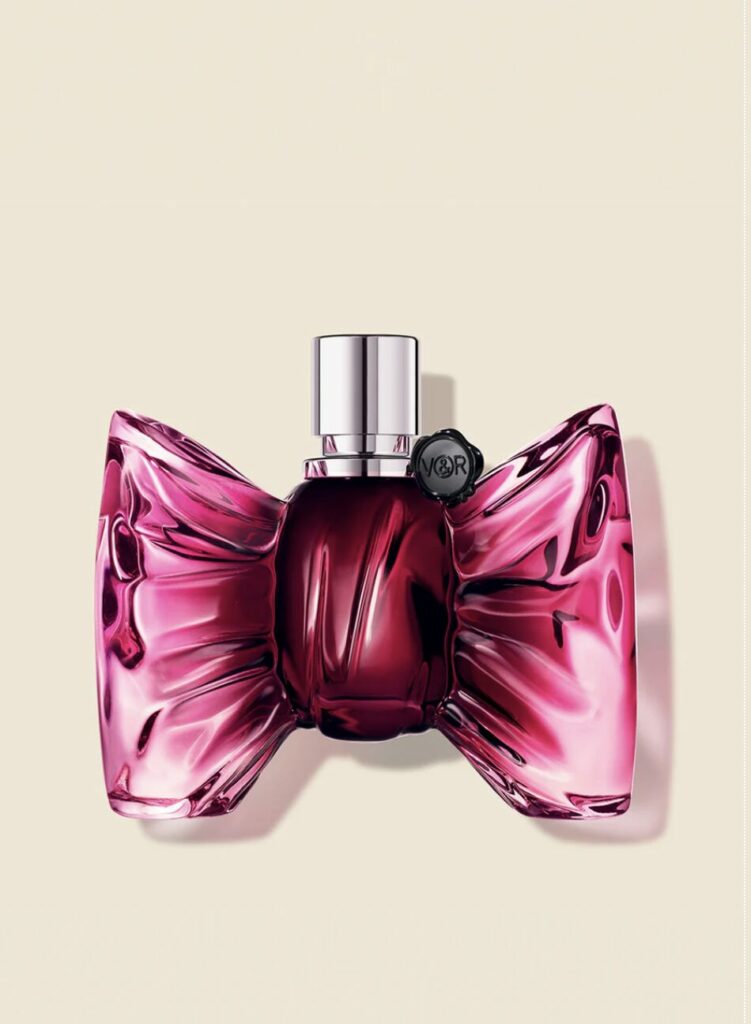
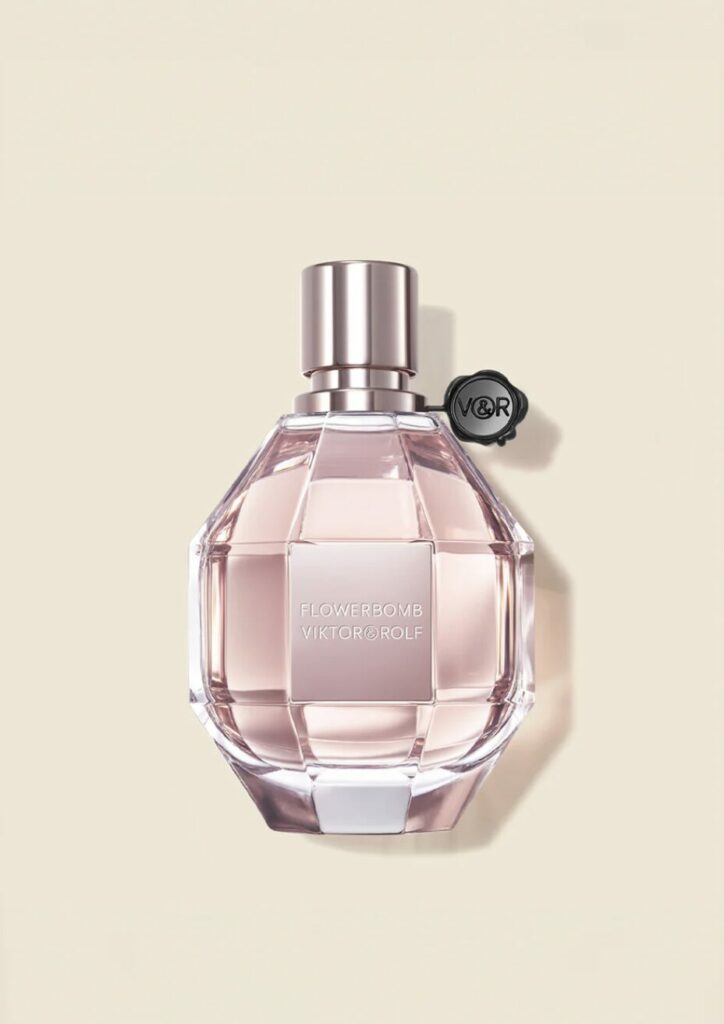
Moreover, Viktor & Rolf’s advertising campaigns play on immersive storytelling, staging the perfume in artistic, dreamlike worlds. These stagings allow anosmic people to make a perfume their own differently, by associating it with a strong sensory world. The perfume can then be perceived beyond the sense of smell alone. Example: Spicebomb Infrared and the sound that raises the body’s heat: https://www.youtube.com/watch?v=Pg6KNZZUCPs
J’emme: An Innovative and Inclusive Olfactory Approach
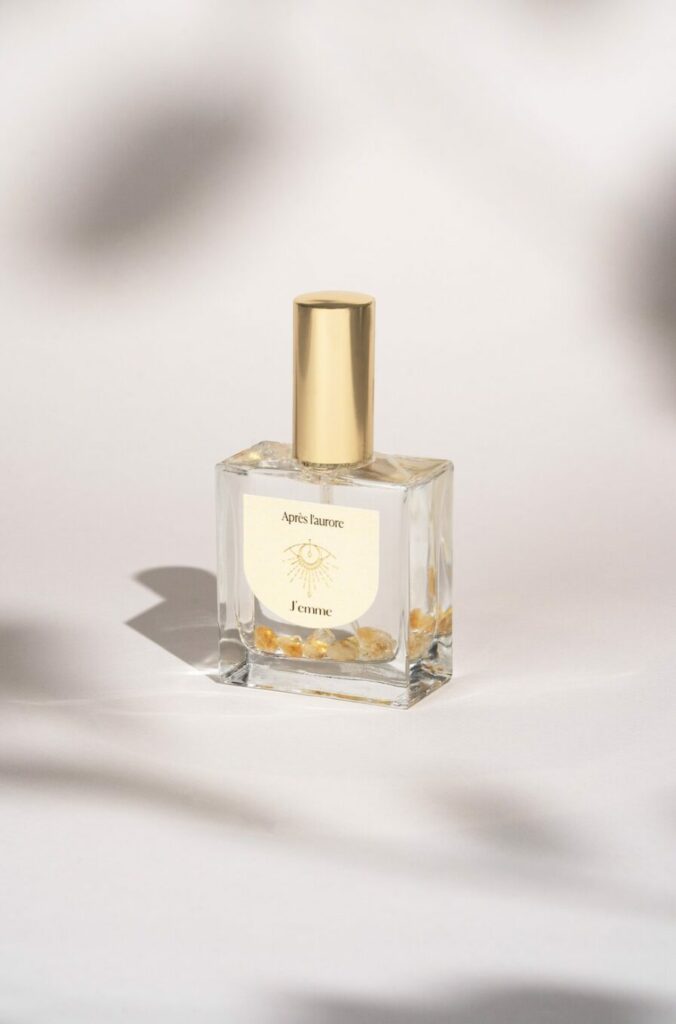
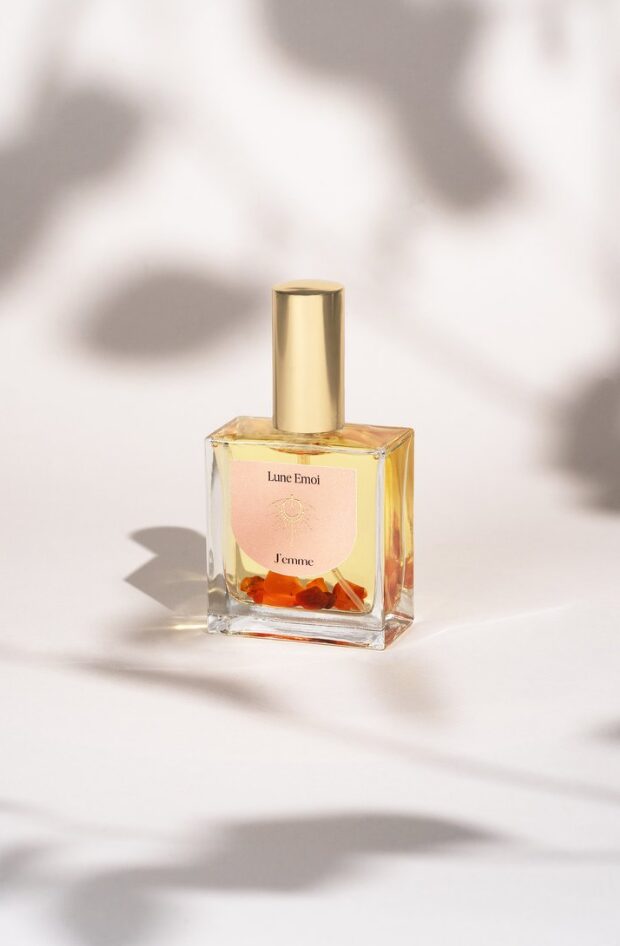
The Belgian brand J’emme, founded by Julie Tinant, associates its perfumes with semi-precious stones, offering a sensory experience where the visual, touch and energy replace olfaction. Each fragrance is linked to a specific stone, such as Après l’Aurore and citrine, symbolising confidence and optimism.
The bottles, containing visible crystals, create a tactile and visual interaction, allowing anosmics to feel their perfume differently. J’emme favours immersive storytelling, highlighting emotions and intentions rather than purely olfactory descriptions. This innovative approach redefines perfumery by making it more inclusive and accessible to people deprived of the sense of smell.
Anosmia is much more than a simple sensory deficit. It profoundly impacts quality of life, self-perception and social interactions. Thanks to scientific advances and technological innovations, the hope of more effective care is on the horizon.
In the meantime, raising awareness remains essential to better understand this condition and offer solutions suited to anosmic people, whether in their daily lives or through more inclusive initiatives in the world of perfumery and gastronomy.