
Perfume and Artificial Intelligence
The integration of AI into our lives is now an indisputable reality, and the perfumery sector, rich in traditions, also finds itself at a technological crossroads. From algorithms capable of defining olfactory profiles to tools for researching unprecedented combinations, AI is establishing itself as an agent of change. This article proposes to draw up an overview of these advances while opening the debate on the future impact of AI on the ancestral profession of the perfumer. Is artificial intelligence a revolution or the beginning of a replacement in the art of perfumery?
AI in Perfumery: a Portrait of Current Uses
Artificial Intelligence, commonly called AI, with its capacities for analysing and processing massive data, is revolutionising the search for new olfactory harmonies. It assists perfumers by proposing unexplored olfactory accords, optimises formulations according to consumer preferences and even anticipates olfactory trends. From the selection of essences to the prediction of their success on the market, AI proves to be a precious tool for perfumery houses.
This artificial intelligence is weaving a complex, rich web in the olfactory field, profoundly modifying the way perfumes are designed, produced and marketed. Today, its application extends across several main axes.
Creation and Formulation
Intelligent systems are now capable of analysing thousands of compounds and creating formulas that could have taken years to develop by traditional methods. AI can predict the interactions between molecules, suggest improvements to increase the stability and longevity of perfumes, and even generate less costly and more sustainable alternatives.
Personalisation
AI opens the door to unprecedented levels of personalisation. By analysing consumer data, from personal preferences to global consumption trends, it enables the creation of perfumes that respond to specific tastes, transforming perfume into a highly individual experience.
Trend Prediction
Algorithms can now detect patterns of consumer preferences and anticipate future olfactory trends. This allows perfumery brands to stay ahead of the market, developing fragrances that will capture consumers’ interest even before they know they desire them.
Production Optimisation
On the production side, AI helps to optimise supply chains and manage stocks more efficiently, reducing waste and improving the yield of precious ingredients.
Evaluation and Testing
AI is also used for the evaluation of perfumes, where sensors and smell machines can assess the quality of a perfume, its strength, its longevity and other important parameters, often more quickly and more objectively than human tests.
These current uses of AI in perfumery are only the tip of the iceberg. As the technology continues to progress, we can expect its role in the creation and distribution of perfumes to broaden, taking us towards unexplored, fascinating olfactory territories.
The Perfumer-AI Symbiosis: Collaboration or Competition?
Can AI replace the perfumer? The question is sensitive and opens up many avenues of reflection. While AI excels at managing data and detecting patterns, creativity and emotion remain the undisputed domain of the perfumer, who draws on their experience, their olfactory memory and their intuition to create perfumes that tell a story, evoke memories, arouse emotions—subtle nuances that escape AI.
In the contemporary olfactory arena, artificial intelligence has joined perfumers, giving rise to a passionate debate: are we witnessing an enriching collaboration or a competition for creative supremacy?
AI, with its ability to process voluminous, complex data, serves as a tool for perfumers to broaden their creative palette. It offers logistical support, suggesting combinations of molecules that even the most experienced perfumers might not consider. These suggestions can lead to unexpected discoveries, propelling perfume creation in bold new directions.
However, the rapid evolution of AI algorithms raises the question of their potential to surpass human capacities. With AI developing its own ‘intuition’ based on data patterns, perfumers might feel themselves in competition with a force that works 24/7, without rest or need for inspiration.
The symbiosis between perfumers and AI should not be seen as a competition, but rather as a cooperation. Perfumers bring their artistic sensitivity and their emotional understanding, while AI offers precision and innovation. Together, they can push back the frontiers of creativity, generating fragrances that are not only new, but also deeply resonant on an emotional level.
The roles within this symbiosis are clear: AI is a powerful research and development assistant, while the perfumer remains the final decision-maker, the soul behind the perfume, the one who gives the green light to transform a formula into a marketable fragrance.
It is essential to view this relationship while keeping in mind the ethical implications. Transparency about the use of AI in perfume creation is crucial to maintaining consumer trust. Moreover, the industry must consider the impact on employment and traditional artisanal skills. Finding a balance between technology and craftsmanship is imperative.
AI should not be perceived as a replacement, but rather as an additional tool in the perfumer’s arsenal. It is important that the perfume industry maintains a harmony between the efficiency of AI and the personal touch and expertise that only a perfumer can bring to a fragrance.
The future of AI in perfumery is not to replace the perfumer, but rather to become their most faithful ally, a tool harnessing their creative and analytical capacities.
Technological Avant-Garde and AI-Assisted Creation
Symrise¹ and Givaudan² show how AI can be used to innovate in the field of perfumery. These creation houses use AI to personalise experiences, optimise production processes, and push back the frontiers of creativity.
Symrise and IBM
Symrise, a world leader in flavours and fragrances, continues to push innovation in the industry, emphasising that AI represents the next great innovation since the introduction of synthetic materials into perfumery at the end of the 19th century.
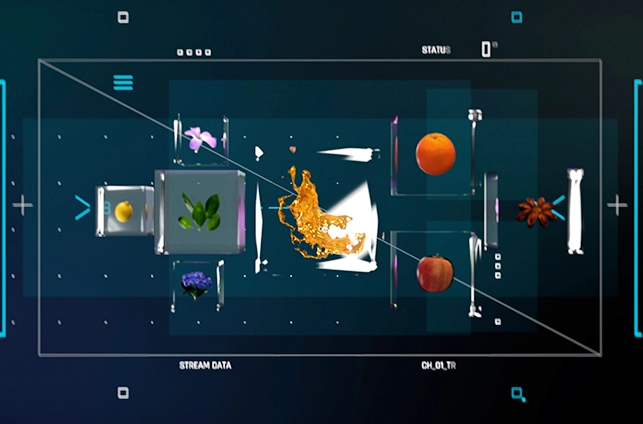
In collaboration with IBM, Symrise developed an AI perfumer assistant named Philyra that can generate perfumed compositions by analysing millions of formulas, raw materials and consumer preferences. This project makes it possible to quickly create adapted, personalised perfumes for specific markets. Philyra was used by the perfumer Dave Apel to create two distinct perfumes for the Brazilian brand Egeo by O Boticário, targeting Brazilian millennials. These creations were launched at the beginning of 2019.
By harnessing machine-learning algorithms, Symrise is able to analyse consumption trends and individual preferences to offer bespoke creations. Their approach combines data science with olfactory expertise, enabling the creation of unique perfumes that meet the specific expectations of each consumer.
Givaudan and Carto
Givaudan, another giant of the industry, integrates AI not only to analyse trends, but also to assist perfumers in the creative process. Their AI system can suggest innovative ingredient combinations, helping perfumers to explore new olfactory possibilities.
Givaudan launched Carto, an artificial-intelligence tool intended to revolutionise the perfumers’ creation process. This interactive platform is designed to maximise the olfactory performance of creations using a unique “Odour Value Map” and aims to integrate consumer understanding to refine creations. Carto encourages perfumers to explore new accords in a playful way with a touchscreen and an instant-sampling robot, which allows faster trial production than traditional methods. The system has been deployed in Givaudan’s creation centres and is being tested by perfumers for its integration into the creative process, showing promising results.
Calice Becker, perfumer and director of the Givaudan Perfumery School, emphasises that “Carto” helps perfumers to experiment more and with greater efficiency, while affirming that the human creative touch remains irreplaceable.
The perfume “She was an Anomaly” by Etat Libre d’Orange was born of an inspiration developed using Givaudan’s “Carto” artificial-intelligence tool. The AI made it possible to suggest an overdose of two ingredients: iris and white musk, with the rest of the formulation managed, considered and mastered by the perfumer Daniela Andrier. This process illustrates the integration of AI technology into the traditional art of perfume creation, marking a distinctive moment of innovation and singularity in the industry.
“This perfume is the fruit of the unexpected. I played with Carto, entrusting it with loved, familiar materials. Carto suggested an overdose of two ingredients. I took care of the rest.” – Daniela Andrier, perfumer (Givaudan)
The rise of artificial intelligence in perfumery symbolises a true revolution, redefining the frontiers of olfactory creation. These tools illustrate how AI can enrich the creative process, offering perfumers new perspectives to explore innovative, unexpected accords. This technology, complementing human intuition and all its expertise, opens the way to an era of unprecedented personalisation and innovation. However, it also raises ethical questions and challenges linked to the balance between tradition and technological progress.
As AI continues to develop, it will be fascinating to see how it shapes the future of perfumery, broadening the horizons of what we can create and feel through the sense of smell.