

Perfumery in Japan – Between Tradition and Modernity
Every year, Japan hosts one of its greatest natural spectacles: the cherry blossom season, or sakura. This poetic, fleeting moment fascinates as much as it moves. It embodies, on its own, a very singular relationship to time, to beauty… and to the invisible. Scent in Japan is perceived in the same way: as a discreet breath, a carrier of memory, culture and spirituality.
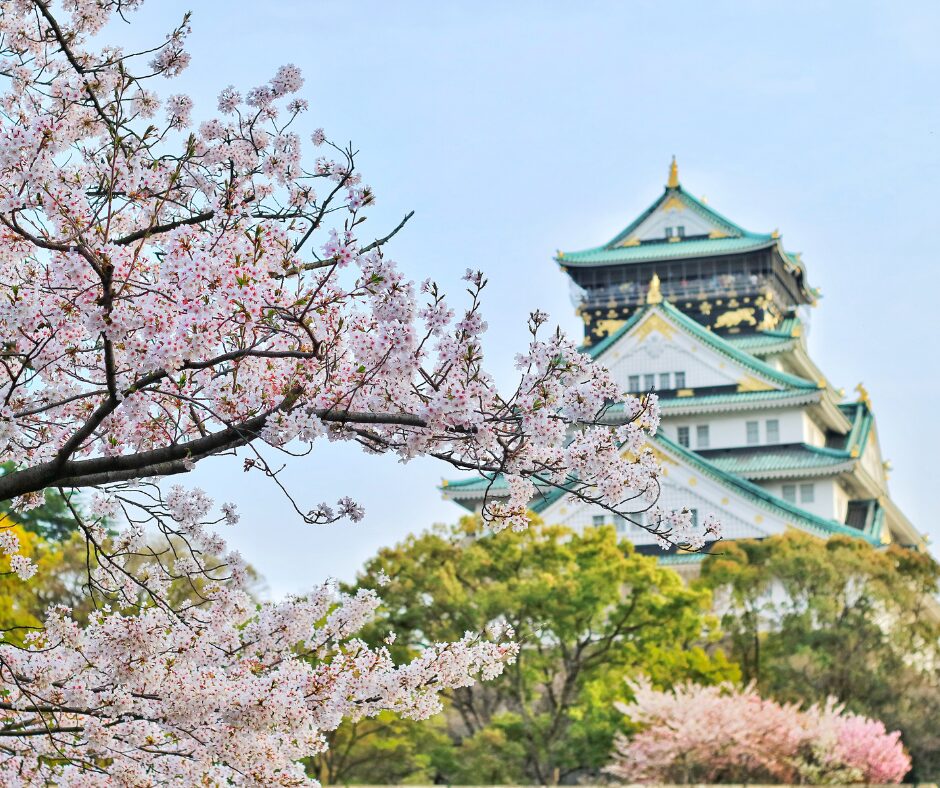
At the crossroads of art, care and silence, Japanese perfumery stands out for its extreme delicacy. Subtle, almost meditative, it oscillates between traditional heritage and technological modernity. In this article, we set out to explore this unique sensory universe, through its historical foundations, its emblematic brands, and the trends shaping its future.
History and olfactory tradition in Japan
Japan’s olfactory history does not begin with perfume as we understand it in the West, but with incense, whose use dates back more than 1,400 years. As early as the Nara period (8th century), the Japanese used fragrant woods imported from Southeast Asia for Buddhist religious rituals. These materials were so precious that they were kept as imperial treasures. One of the most emblematic woods, jinkō (agarwood, also known as oud wood), is still considered today a noble, sacred and mysterious ingredient.
But the height of this olfactory culture emerged during the Heian period (794–1185), with the codification of Kōdō, literally “the way of fragrance.” Less well known than ikebana (the art of flower arranging) or the tea ceremony, Kōdō is nonetheless one of the three great traditional Japanese arts. It consists of “listening” to the scents of heated—not burned—incense, in order to grasp its different nuances. This is not a mere sensory experience: it is a spiritual and aesthetic practice, an invitation to calm, concentration and introspection.
Each wood has its own olfactory profile, often poetic: an incense may be described as “calm as the sea at dawn,” or “luminous as a plum blossom in winter.” The relationship to scent is thus intimately tied to the imagination, to seasonality, and to the moment.
Unlike Western perfumery, which values expressiveness, even opulence, Japan has long cultivated an aesthetic of restraint. Scent is never invasive; it serves an atmosphere, a state of mind. In Japanese tradition, wearing too prominent a fragrance could be perceived as a lack of refinement, or even as a selfish act.
This subtle relationship to scent extends even to traditional clothing: kimonos were often imbued with delicate incense fumigations, a technique called takimono, used both to seduce and to signal social belonging.
Even today, certain rituals endure. Kōdō circles exist in several major Japanese cities, where this art is practiced under codified conditions. Likewise, Kōdō’s influence can be found in contemporary Japanese perfumery: discretion, precision, respect for olfactory silence.
And at the heart of this olfactory tradition, one image persists, fragile and evocative: that of the cherry trees in bloom. Ephemeral, they symbolize both transient beauty and the power of the present moment. A scent, in Japan, is like a sakura petal: it exists, then vanishes, never seeking to impose itself.
Modern perfumery and its specificities in Japan
Modern Japanese perfumery was not built in rupture with tradition, but rather in a form of silent continuity. While Western influences enabled the rise of liquid perfumes over the course of the 20th century, Japan chose early on to adapt this perfumery to its own olfactory sensibility, rather than to copy it.
Here, perfume is not a vehicle for assertive seduction, nor an accessory of power. It is a discreet extension of the self, on the border between skincare, intimacy and emotion. What is sought is lightness, transparency, airy and fresh notes that are almost imperceptible to others. The favorite accords? Green tea, yuzu, white woods, aquatic florals, clean musk, and shiso—that aromatic herb with facets that are both mentholated and green.
In Japan, people often speak of clean scents or skin scents: fragrances of the skin that evoke rather than assert. In contrast to the powerful sillages so present in Europe or the Middle East, Japanese perfume respects the olfactory bubble of others. It is worn not to be noticed, but to feel aligned with oneself. This relationship to scent is shaped by deep cultural values: politeness, modesty, harmony.
Houses like Shiseido, a pioneer since 1917 with Hanatsubaki, or Kenzo with Kenzo pour Homme in 1991, have embodied this Japanese olfactory aesthetic internationally. Today, more confidential brands such as Parfum Satori, Flora Notis by Jill Stuart, or THREE are deepening this path with compositions that are often minimalist, yet emotionally very powerful.
Packaging follows the same logic: pared-down design, soft hues, light bottles with sober lines, often inspired by nature or daily rituals. The care given to the object is just as important as the juice it contains, in a spirit of overall elegance and silent beauty.
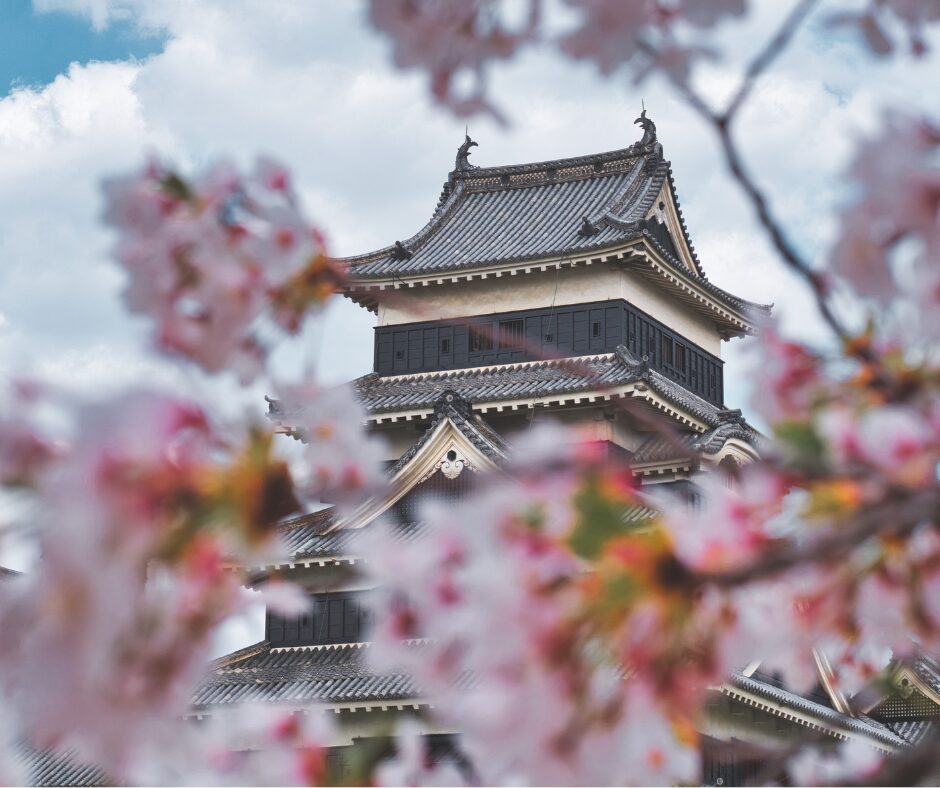
And in this delicate landscape, the cherry blossoms hold a special place. They return each year like an immaterial perfume, inscribed in the collective memory. This symbol of fleetingness, of fragile beauty, continues to inspire modern Japanese perfumers, who sometimes attempt to translate sakura into scent—without ever fixing it, always through a form of poetic suggestion.
The perfume industry in Japan
Far from the media spotlight of Grasse or Paris, the Japanese perfume industry has developed in a more underground fashion, though no less ambitious. It rests on solid pillars, starting with major cosmetics groups such as Shiseido, Kao, Pola Orbis and Kanebo, all of which have their own research laboratories, production chains and fragrance brands.
The domestic market is structured around three main axes: personal fragrances, home fragrances, and scented care products (mists, oils, lotions, etc.). Unlike Europe, where perfume is often experienced as a statement of identity, Japan favors gentle uses and subtle applications, often hybrids between fragrance, skincare and wellbeing.
A crucial point in the strategy of Japanese brands: technological innovation. Here, brands do not merely compose accords; they also invent new forms of diffusion, light textures, or encapsulated fragrances that release throughout the day. Some brands even develop textiles impregnated with scented microcapsules, activated by friction or body heat.
Formulation standards are also stricter than in Europe: fragrances must be non-allergenic, with little or no alcohol, and controlled longevity so as not to disturb others. This explains the dominance of alternative formats: pillow mists, solid perfumes, roll-ons and scented oils are commonplace, especially in lifestyle boutiques.
The Japanese industry also excels in the integration of local ingredients, often sourced from traditional agriculture or wild harvesting. Yuzu (a fresh, tangy citrus), hinoki (Japanese cypress), kinmokusei (golden osmanthus) and matcha are all emblematic olfactory materials—both distinctly Japanese and universal.




On the distribution side, Japanese brands have also mastered the art of experiential retail: stores are designed as sensory cocoons, somewhere between visual minimalism and high-tech sophistication. Testing a perfume never happens amid the hustle: you settle in, you breathe, you take your time. A whole philosophy of respect for the sense of smell, almost meditative, unfolds in these points of sale.
Finally, it is worth noting that Japan also plays a key role in the industry as a test market: many foreign brands launch their innovations there first, to gauge the reception of a demanding public attentive to the smallest detail. If a perfume works in Japan, it can work anywhere.
Trends and innovations in Japanese perfumery
Discreet yet buzzing with activity, the Japanese olfactory scene is today experiencing a revival, marked by the emergence of new independent brands, a more sensory approach to consumption, and an approach more emotional than ever.
A first strong trend: the return to craftsmanship and local materials. Houses such as Di Ser, based in Sapporo, or Parfum Satori in Tokyo, create fragrances in small batches, from rare ingredients, sometimes grown or distilled on site. Their creations incorporate typically Japanese elements such as shiso, kōdō-matsu (ceremonial pine) or kinmokusei, that little orange flower that perfumes Japanese streets in autumn. This is artisanal, author-driven perfumery, subtly rooted in Japanese nature, a world away from globalized trends.
Another notable movement: functional perfumery. Fragrance is becoming an everyday tool to soothe, focus, comfort. This current draws inspiration from Zen practices and gentle medicine: brands are developing “anti-stress,” “morning wake-up” and “olfactory memory” fragrances. These products are often sold as “aroma mists,” oils or scented sticks, to be used as personal rituals. The success of these ranges shows just how much perfume is perceived in Japan as an extension of wellbeing, rather than a social marker.
In terms of technological innovation, Japan remains at the forefront. Some companies are already exploring digital perfumery, through smart diffusers or collaborations between perfumers and engineers. Devices make it possible to program scents according to the time of day, or even one’s mood. A brand like Scentee Machina, for example, offers a connected diffuser designed like a work of art, controllable via smartphone.
Finally, younger Japanese generations are redefining their relationship to fragrance. Less constrained by norms of discretion, they are opening up to bolder sillages and international niche perfumery, while valuing ethical, transparent and local consumption. Vegan, alcohol-free fragrances with traceable ingredients are increasingly appealing. Emotion, the sincerity of the approach and the story behind the bottle often matter more than the prestige of the brand.
And as a symbolic nod, the sakura—eternal metaphor of passing time—continue to inspire countless seasonal olfactory creations, among local and international brands alike. Every spring, perfumery shelves take on shades of pale pink, in an olfactory tradition that has become a cultural rendezvous in its own right.
Perfumery in Japan is not shouted; it is sensed, like the scent of sakura carried on the wind. Anything but a copy of the Western model, it follows its own path: an art of discretion, of the precise gesture, of suspended time. It speaks in a low voice, but often says what matters most.
Between a thousand-year-old incense tradition and a refined, high-tech modernity, it offers another way of thinking about scent: more inward, more poetic, at times meditative. In an era saturated with stimuli, this sensitive and respectful approach to fragrance appears almost as a form of resistance: slowing down, breathing, feeling.
At a time when global perfumery tends toward standardization, Japan is tracing a unique—and perhaps essential—path. It restores perfume to its original function: marking the moment, without weighing it down.
What if the future of fragrance lay precisely in this art of silence and fleetingness, like that of the cherry trees in bloom?