
The Cocoa Note in Perfumery
In a heart-shaped box for Valentine’s Day, a warm cake for an afternoon snack, a cup we drink after getting out of bed, or a bar we devour in search of comfort… Whether milk chocolate, extra-dark, roasted, raw, enhanced with dried fruit, or refreshed with mint or chili, or even accented with a pinch of salt—all to the delight of our taste buds—cocoa has carved out a special place in our lives. Since the 1990s, it has also found its way into our perfume bottles.
To celebrate World Chocolate Day, Master Parfums invites you to discover the essential raw material used in its production, known as “brown gold”: cocoa.
The Origins of Cocoa
Let’s head to South America: cocoa beans come from a tree, the cacao tree, whose very first cultivators were the Olmecs, followed by the Maya of Mexico’s Yucatán region. For both the Maya and the Aztecs, these beans were a symbol of opulence and luxury reserved for royalty and the gods. For a long time, they were used as currency to trade for food, clothing, and precious goods.
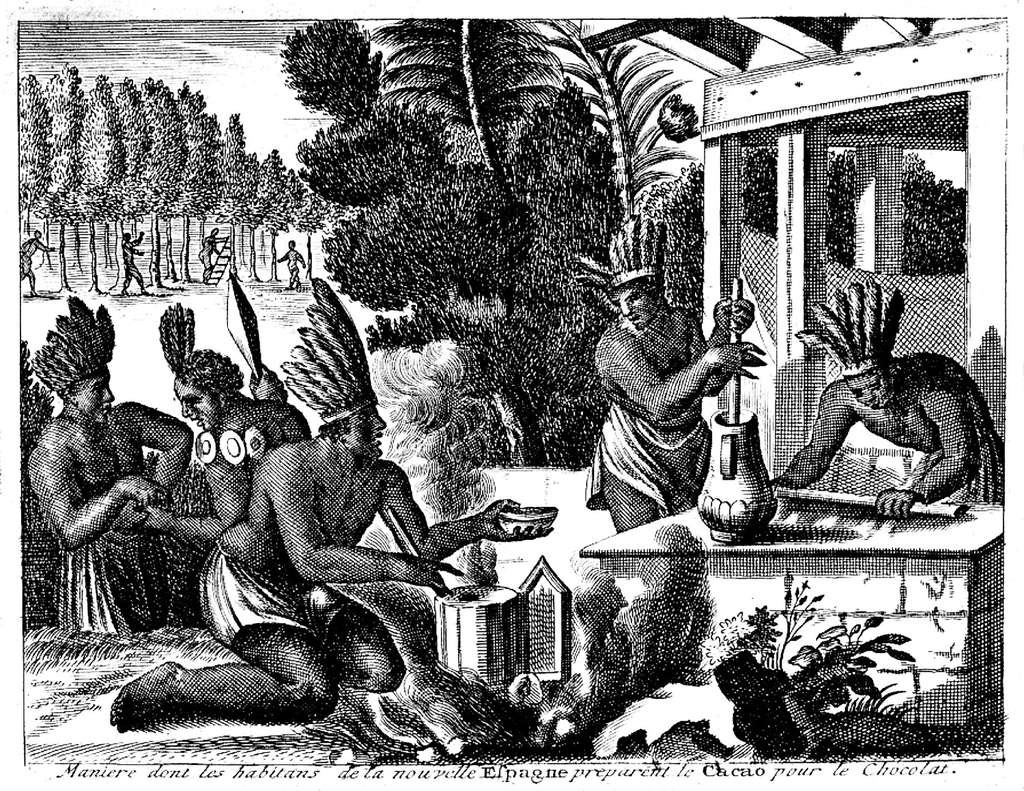
The Maya used the beans to make a very popular bitter drink called xocoatl. As you may have guessed, this is the precursor to the hot chocolate we enjoy today: cocoa beans ground in hot water, transformed into a drink colored red by annatto, and flavored with chili pepper and sometimes vanilla and tuberose. In 1502, Christopher Columbus became the first European to taste it on the island of Guanaja, near Honduras, where he was offered the famous beverage; however, Columbus was not impressed by this overly bitter xocoatl and paid little attention to the bag of beans the Native Americans gave him.
The Olmecs, Toltecs, and Maya worshipped Quetzalcóatl, the feathered serpent god who came to Earth to bestow agriculture, science, and art upon humankind. He reigned over Tula, which had become a lush city thanks to the cotton and cacao trees he had planted to protect the inhabitants from famine. But by giving them cacao—the food of the gods—he provoked their wrath. Several legends differ as to how he was punished, but in the end he fled by sea and promised he would return in the “Year of the Reed.” That year was 1519, when the Spaniards set foot on the continent. Believing he was witnessing the return of their god in the form of Hernán Cortés, the Aztec emperor Moctezuma offered him the famous xocoatl, a sacred drink, to welcome him.
Captivated by this energizing and euphoric beverage—thanks to its theobromine content—Hernán Cortés brought the recipe back to Europe, where sugar was added to mitigate its bitterness, eventually enchanting all the courts of Europe. Centuries later, in 1828, the Dutchman Van Houten discovered a process for turning cocoa into a powder that could be mixed with liquid, and it was the Englishman Joseph Fry who, in 1847, developed the first chocolate bar at his chocolate factory in Bristol. If Christopher Columbus could see the place that cocoa, in all its forms, occupies today throughout the world, he would surely be kicking himself!
The Cocoa Bean: A Botanical Overview
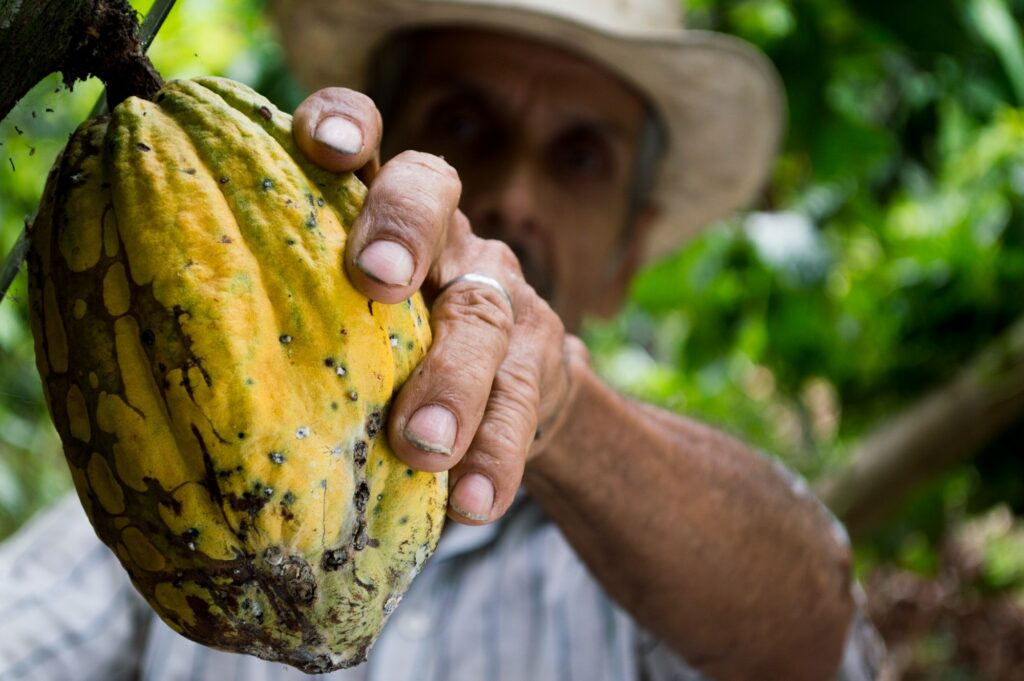
The cocoa bean comes from the cacao tree, the most widely cultivated species in the Theobroma family of trees. The cacao tree is native to the tropical forests of Central America and West Africa, and today, Africa accounts for two-thirds of global cacao production, particularly Ghana and Côte d’Ivoire. South America ranks second, primarily due to Brazil and Ecuador.
After four years, small yellow flowers appear on the trunk and branches of the cacao tree. After being pollinated, a few lucky ones out of thousands produce a fruit called a pod—a cacao tree yields an average of 80 pods per year. Inside these pods lies a sweet, viscous pulp containing between 25 and 50 seeds: the precious cacao beans.
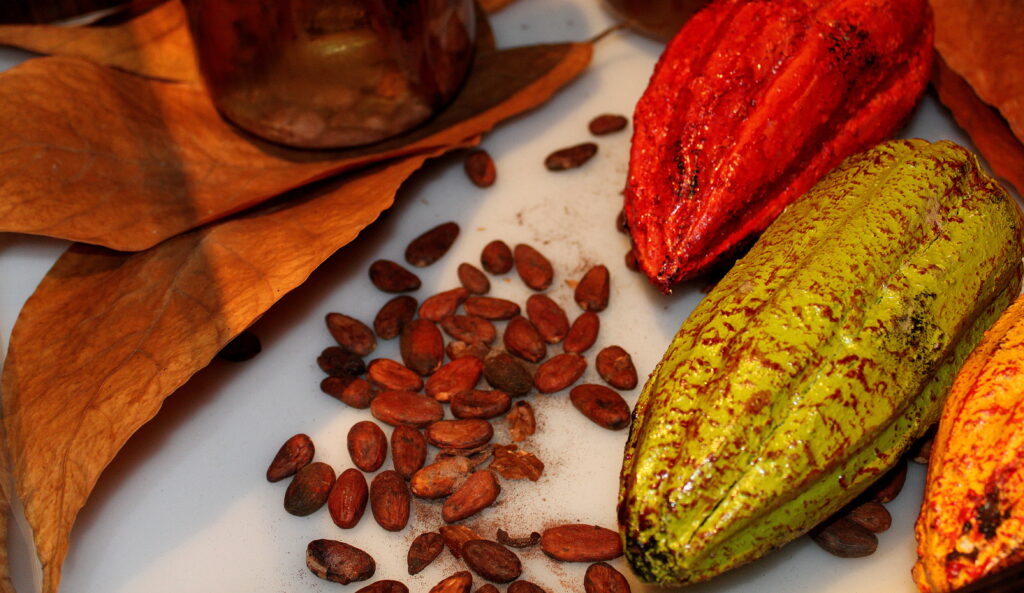
It takes 4 to 6 months for them to reach maturity. Once harvested, they are fermented for a few days before being dried in the sun. Next, they are roasted, a process that increases the amount of aromatic compounds they contain tenfold, thereby enhancing their aroma. This is also what gives them their bitterness. Finally, the beans are ground into cocoa powder, which is used in a wide variety of food products, each more delicious than the last.
Cocoa and Chocolate Notes in Perfumery
In perfumery, cocoa is primarily used to evoke a rich, warm, and sweet chocolate—even caramelized—but it can also be soft, powdery, or bitter, with a hint of woodiness. It has the potential to be alternately sensual and comforting, spicy and milky.
In our perfumes, cocoa is often found as a base note, blending with vanilla, musks, and a host of woody notes to create a guaranteed sensuality, particularly in oriental fragrances. When paired with floral notes, the cocoa note’s seductive quality is accentuated, but be aware that it is by no means out of place in woody, fruity, or even aromatic compositions. Generally speaking, cocoa is a highly versatile note: no matter which olfactory family it is incorporated into, it will bring a richness all its own.
Extracting Cocoa and Chocolate Notes in Perfumery
It is possible to obtain a beautiful cocoa powder absolute—dense, balsamic, and almost animalic. While alcoholates and CO₂ extractions are more faithful to the aromas of chocolate in bar form or in a cake fresh from the oven, they are also costly and lack intensity. They are therefore more commonly used in compositions to complement accords that recreate the familiar scents of cocoa.
Patchouli and tonka bean are popular choices for evoking chocolate—especially almond-flavored chocolate in the case of tonka bean. Musk notes, especially habanolide musk, help evoke the sweetness of white chocolate. There’s also Chocovan, a synthetic base developed by Givaudan that’s primarily composed of vanillin and brings to mind a morning cup of hot chocolate. Pyrazines are another reliable option—molecules that evoke dark chocolate in all its refined yet raw complexity.
A Few Fragrances Centered on Cocoa
The 1990s saw cocoa become increasingly prominent in perfumery. In 1992, Thierry Mugler incorporated it into his fragrance Angel: a fruity heart note set against a base of vanilla, patchouli, and cocoa, evoking caramelized chocolate. It also showcased the power of the ethyl-maltol molecule, with its sweet, cotton-candy scent… and caused a huge sensation in the world of perfumery! Today, it is considered the pioneer of the gourmand fragrance family.
Annick Goutal’s Eau de Charlotte (1982) is an elegant fragrance blending lily of the valley and mimosa. While the chocolate note is more subtle here, it beautifully enhances that of blackcurrant bud.
Christian Dior’s Pure Poison Élixir (2006) marks the enchanting encounter between orange blossom, jasmine, and an amber cocoa absolute.
In Calvin Klein’s surprising aromatic fougère fragrance CK IN2U for Him (2007), cocoa reunites with an old friend from South America: chili pepper!
L’Instant de Guerlain for Men (2015): This oriental fragrance combines cocoa with notes of tea, jasmine, resin, and spices… A surprising blend.
Yes I Do (2016) by État Libre d’Orange offers delightfully nostalgic notes of sugarcane and marshmallow and leaves a cocoa-scented trail with hints of sun-kissed amber.
Cacao Porcelana (2019) from the niche house Atelier Materi features a surprising variety of white cacao from Peru, evoking both the creaminess of milk and the bitterness of nuts. After a rich, syrupy opening, notes of blond tobacco and sandalwood transform it into a powdery fragrance that is utterly sensual.
At Dior, Vanilla Diorama (2021) opens with the piquancy of pink pepper before delighting us with cocoa, cardamom, and rum—creating a warm, slightly animalic fragrance—all wrapped in a veil of Bourbon vanilla.
Naturally, it made perfect sense for the Akro brand, created by perfumer Olivier Cresp, to celebrate chocolate addiction in Dark, a bittersweet fragrance where cocoa flirts with vanilla and cinnamon, and succumbs to the indulgent allure of hazelnut.
Want to have fun creating gourmand accords? With the Master Parfums olfactory game-book and its scented pencils, you can sketch on scent strips to inspire your own sweet treats!