
Olfactory Changes Linked to Chemotherapy
For this Pink October, Master Parfums has undertaken to write a series of informative and thoughtful articles addressing the theme of cancer and the sense of smell. Through these publications, our aim is to shed light on the olfactory alterations induced by chemotherapy, as well as to inform about the use of new smell-related technologies for cancer detection. We seek to educate and raise awareness about these changes, while offering support and an in-depth understanding of the challenges that result from them.
Chemotherapy, although essential for treating certain forms of cancer, can have a major impact on quality of life, notably because it can lead to disturbances of taste and smell. This article explores these sensory changes, while touching on solutions such as aromatherapy and olfactotherapy.
Changes in the Perception of Flavours
Dysgeusia
Cancer treatment, notably by chemotherapy, is often synonymous with various side effects that can profoundly alter patients’ quality of life.
One of these effects, widely reported, is an unpleasant sensation of a metallic taste in the mouth, also perceptible through retronasal olfaction, changing the way foods and drinks are perceived and enjoyed.
A metallic taste, often described as a sensation of having metal in the mouth or as if the saliva tasted of iron, is an alteration of the sense of taste, also called dysgeusia. This phenomenon can make foods and drinks less appetising, negatively influence the patient’s appetite, and significantly impact quality of life and nutritional well-being.
During retronasal olfaction—that is, when air passes through the oral cavity towards the olfactory receptors at the top of the nose during chewing or swallowing—this metallic taste, having become a smell, is all the more perceptible. This modifies the flavour of foods, or even creates an aversion to food.
The exact mechanisms behind chemotherapy-induced metallic taste are not fully understood. However, it is generally suggested that chemotherapy drugs laden with metallic molecules, which aim to eliminate fast-growing cancer cells, also affect healthy cells, notably those of the taste buds and the nasal cavity. This disrupts the normal functioning of the taste and smell receptors, leading to altered perceptions, such as the famous metallic taste.
Anosmia
Another of the side effects of chemotherapy is anosmia.
A temporary or permanent loss of smell, anosmia poses an invisible but deeply disturbing obstacle. Smells form a backdrop to our lives, awakening memories and important moments. The sudden disappearance of this sense can plunge individuals into a world devoid of these olfactory nuances, affecting not only their ability to perceive the subtle pleasures of everyday life, but also to detect potential dangers, such as spoiled food, the smell of smoke, or gas leaks.
For patients undergoing chemotherapy, anosmia adds an extra layer of challenge, disconnecting not only their inner world from these olfactory stimuli, but also affecting taste and, consequently, appetite and nutrition.
Furthermore, the emotional and psychological impact of anosmia should not be underestimated, since smells are intimately linked to our memories and experiences. The absence of this olfactory connection with happy or reassuring memories can also be fertile ground for feelings of melancholy or isolation. In this context, emotional support, recognition of the phenomenon, and the exploration of alternative or complementary therapies to compensate for this loss become key pillars in the holistic support of the patient throughout their care journey.
Olfactory Therapies to Relieve Patients Undergoing Cancer Treatment
Aromatherapy

Aromatherapy uses essential oils to stimulate the senses and promote well-being. Although research is limited, some studies suggest that aromatherapy can help improve mood and reduce anxiety in chemotherapy patients.
How does it work?
Essential oils such as lavender, rosemary and sweet orange can be diffused into the air or applied to the skin. The aim is to stimulate the remaining olfactory receptors and create a pleasant sensory experience.
Aromatherapy uses essential oils extracted from plants with the aim of promoting physical and psychological health and well-being.
It involves the use of essential oils via diffusion, inhalation, or topical application to address various issues such as stress, anxiety, pain, and other health problems.
Although the exact mechanism remains a subject of research, it is thought that the smells of the oils can influence physiological and psychological responses through their interactions with the limbic system in the brain.
Aromatherapy is widely used to manage stress, improve sleep quality, reduce pain symptoms, and for various other well-being-related applications.
Olfactotherapy: A World of Emotional Fragrances
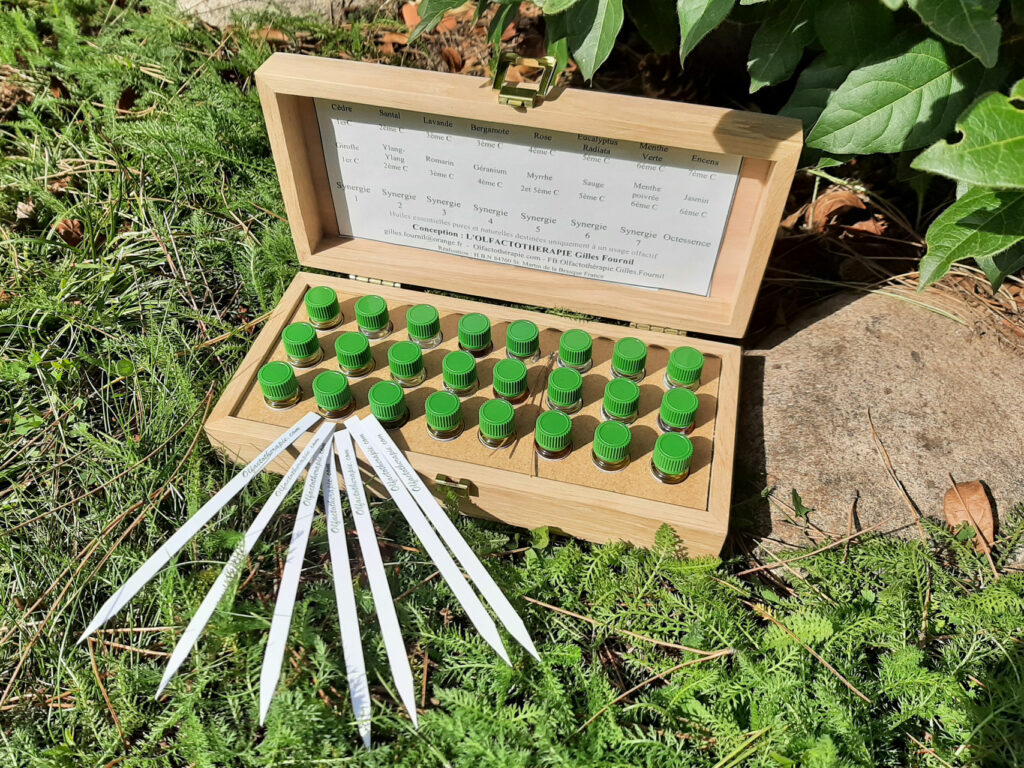
Olfactotherapy is an approach that also uses smells but focuses more on emotional balance and psychotherapy. It explores the links between smells and memories to trigger specific emotional reactions, help release emotional blockages, or work on traumas and memories.
Olfactotherapy is based on the idea that smells can directly access the emotional brain (the limbic system) and thus trigger, explore, and potentially reprogram emotional responses.
It is used above all in the context of emotional management, the treatment of trauma, and from a psychotherapeutic perspective to work on behavioural and emotional patterns.
The choice of fragrances for chemotherapy patients must be made with care, taking into account their new olfactory sensitivities. This can involve a process of trial, exploring different smells until identifying those that provide comfort or evoke pleasant memories without causing nausea or discomfort.
This therapy can offer a space of mental escape, allowing patients to momentarily step away from the intensity of the treatment journey.
Being Attentive to Individual Needs
It is imperative to approach olfactotherapy in a personalised way, being attentive to individual responses to different smells and adjusting the practice accordingly.
The implementation of olfactotherapy in the overall care plan should be done in collaboration with the patient’s medical team, in order to ensure the safety and effectiveness of the approach.
Although olfactotherapy is not a cure, it can offer a gentle, soothing complementary method to improve the quality of life of chemotherapy patients. Through the reconquest of the olfactory space, it aims to reintroduce moments of well-being and comfort into the tumult of the medical journey.
Olfactotherapy and Aromatherapy: Two Different Approaches
These two approaches use smells and aromas in a therapeutic context, but they are distinguished by their objectives, methodologies and founding principles.
Both therapies recognise the power of smells to influence state of mind and emotions, and harness the deep connection between smell and the brain’s limbic system.
There are nonetheless differences between the two approaches: aromatherapy has a broader application and can target physical and mental well-being, whereas olfactotherapy focuses more precisely on the psychological and emotional aspects, often by exploring in depth the memories and emotions linked to smells.
While aromatherapy is more widely recognised and used in various healthcare and well-being settings, olfactotherapy, although less widespread, offers a fascinating path in the field of psychotherapy and personal development, exploring the depth of the emotional responses linked to smells.
The olfactory and gustatory modifications caused by chemotherapy trace a unique sensory path for each patient, where aromatherapy and olfactotherapy prove to be potential allies in managing the physical and emotional dimensions of this journey.
These aromatic therapies, by combining science and well-being, reveal a panorama where smells become instruments of support and comfort, weaving narratives of resilience and hope at every stage of treatment.
In the end, they remind us that the path to healing is a richly multidimensional experience, deserving exploration and appreciation in all its forms.