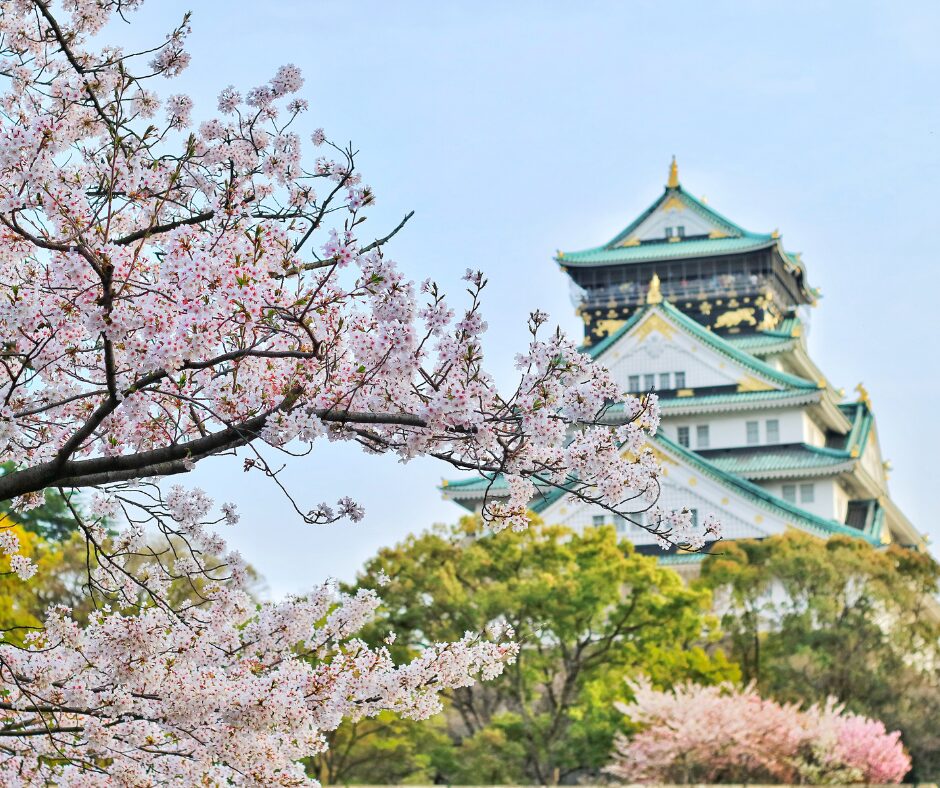
Every year, Japan hosts one of its greatest natural spectacles: the cherry blossom season, or sakura. This poetic, fleeting moment fascinates as much as it moves. It embodies, on its own, a very singular relationship to time, to beauty… and to the invisible. Scent in Japan is perceived in the same way: as a discreet breath, a carrier of memory, culture and spirituality.
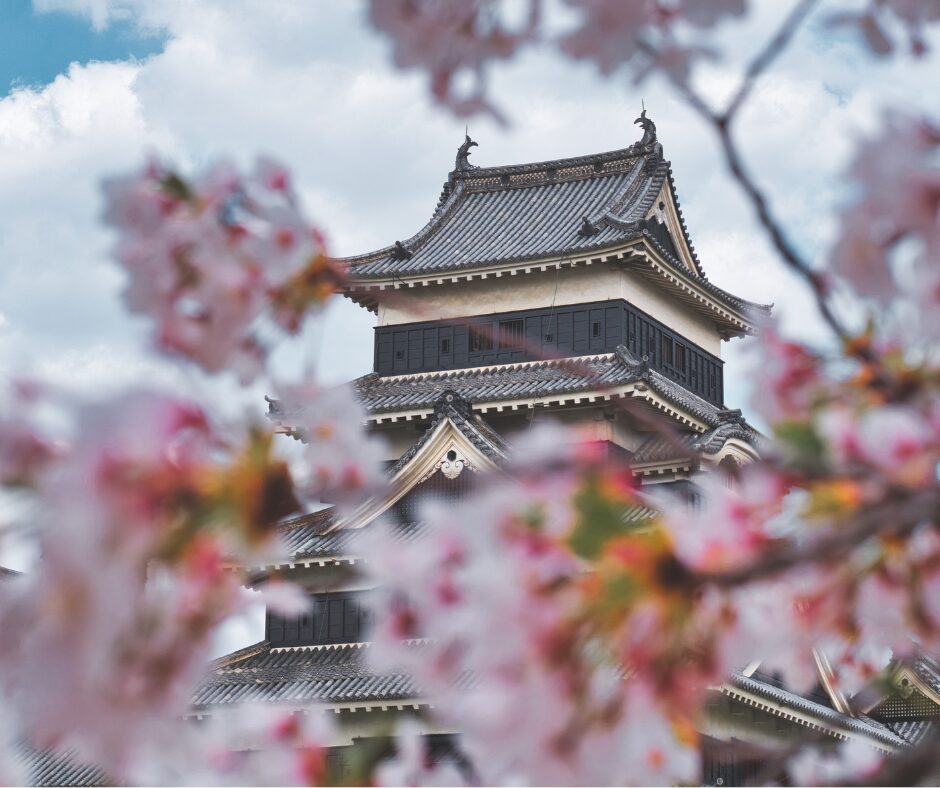
At the crossroads of art, care and silence, Japanese perfumery stands out for its extreme delicacy. Subtle, almost meditative, it oscillates between traditional heritage and technological modernity. In this article, we set out to explore this unique sensory universe, through its historical foundations, its emblematic brands, and the trends shaping its future.
History and olfactory tradition in Japan
Japan’s olfactory history does not begin with perfume as we understand it in the West, but with incense, whose use dates back more than 1,400 years. As early as the Nara period (8th century), the Japanese used fragrant woods imported from Southeast Asia for Buddhist religious rituals. These materials were so precious that they were kept as imperial treasures. One of the most emblematic woods, jinkō (agarwood, also known as oud wood), is still considered today a noble, sacred and mysterious ingredient.
But the height of this olfactory culture emerged during the Heian period (794–1185), with the codification of Kōdō, literally “the way of fragrance.” Less well known than ikebana (the art of flower arranging) or the tea ceremony, Kōdō is nonetheless one of the three great traditional Japanese arts. It consists of “listening” to the scents of heated—not burned—incense, in order to grasp its different nuances. This is not a mere sensory experience: it is a spiritual and aesthetic practice, an invitation to calm, concentration and introspection.
Each wood has its own olfactory profile, often poetic: an incense may be described as “calm as the sea at dawn,” or “luminous as a plum blossom in winter.” The relationship to scent is thus intimately tied to the imagination, to seasonality, and to the moment.
Unlike Western perfumery, which values expressiveness, even opulence, Japan has long cultivated an aesthetic of restraint. Scent is never invasive; it serves an atmosphere, a state of mind. In Japanese tradition, wearing too prominent a fragrance could be perceived as a lack of refinement, or even as a selfish act.
This subtle relationship to scent extends even to traditional clothing: kimonos were often imbued with delicate incense fumigations, a technique called takimono, used both to seduce and to signal social belonging.
Even today, certain rituals endure. Kōdō circles exist in several major Japanese cities, where this art is practiced under codified conditions. Likewise, Kōdō’s influence can be found in contemporary Japanese perfumery: discretion, precision, respect for olfactory silence.
And at the heart of this olfactory tradition, one image persists, fragile and evocative: that of the cherry trees in bloom. Ephemeral, they symbolize both transient beauty and the power of the present moment. A scent, in Japan, is like a sakura petal: it exists, then vanishes, never seeking to impose itself.
Modern perfumery and its specificities in Japan
Modern Japanese perfumery was not built in rupture with tradition, but rather in a form of silent continuity. While Western influences enabled the rise of liquid perfumes over the course of the 20th century, Japan chose early on to adapt this perfumery to its own olfactory sensibility, rather than to copy it.
Here, perfume is not a vehicle for assertive seduction, nor an accessory of power. It is a discreet extension of the self, on the border between skincare, intimacy and emotion. What is sought is lightness, transparency, airy and fresh notes that are almost imperceptible to others. The favorite accords? Green tea, yuzu, white woods, aquatic florals, clean musk, and shiso—that aromatic herb with facets that are both mentholated and green.
In Japan, people often speak of clean scents or skin scents: fragrances of the skin that evoke rather than assert. In contrast to the powerful sillages so present in Europe or the Middle East, Japanese perfume respects the olfactory bubble of others. It is worn not to be noticed, but to feel aligned with oneself. This relationship to scent is shaped by deep cultural values: politeness, modesty, harmony.
Houses like Shiseido, a pioneer since 1917 with Hanatsubaki, or Kenzo with Kenzo pour Homme in 1991, have embodied this Japanese olfactory aesthetic internationally. Today, more confidential brands such as Parfum Satori, Flora Notis by Jill Stuart, or THREE are deepening this path with compositions that are often minimalist, yet emotionally very powerful.
Packaging follows the same logic: pared-down design, soft hues, light bottles with sober lines, often inspired by nature or daily rituals. The care given to the object is just as important as the juice it contains, in a spirit of overall elegance and silent beauty.
And in this delicate landscape, the cherry blossoms hold a special place. They return each year like an immaterial perfume, inscribed in the collective memory. This symbol of fleetingness, of fragile beauty, continues to inspire modern Japanese perfumers, who sometimes attempt to translate sakura into scent—without ever fixing it, always through a form of poetic suggestion.
The perfume industry in Japan
Far from the media spotlight of Grasse or Paris, the Japanese perfume industry has developed in a more underground fashion, though no less ambitious. It rests on solid pillars, starting with major cosmetics groups such as Shiseido, Kao, Pola Orbis and Kanebo, all of which have their own research laboratories, production chains and fragrance brands.
The domestic market is structured around three main axes: personal fragrances, home fragrances, and scented care products (mists, oils, lotions, etc.). Unlike Europe, where perfume is often experienced as a statement of identity, Japan favors gentle uses and subtle applications, often hybrids between fragrance, skincare and wellbeing.
A crucial point in the strategy of Japanese brands: technological innovation. Here, brands do not merely compose accords; they also invent new forms of diffusion, light textures, or encapsulated fragrances that release throughout the day. Some brands even develop textiles impregnated with scented microcapsules, activated by friction or body heat.
Formulation standards are also stricter than in Europe: fragrances must be non-allergenic, with little or no alcohol, and controlled longevity so as not to disturb others. This explains the dominance of alternative formats: pillow mists, solid perfumes, roll-ons and scented oils are commonplace, especially in lifestyle boutiques.
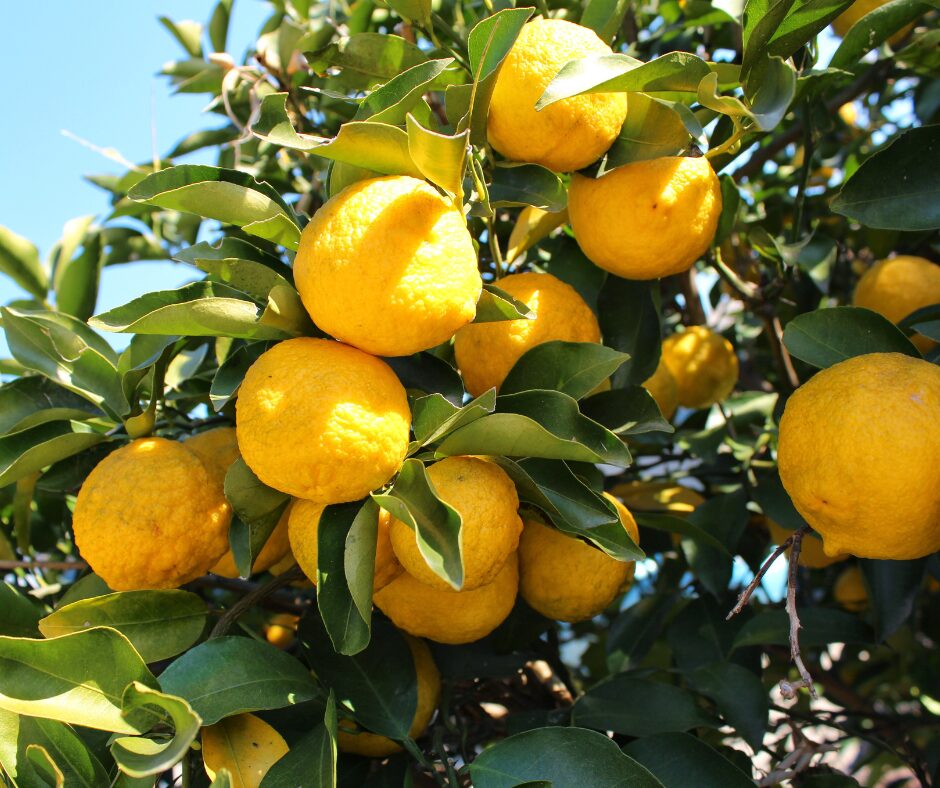
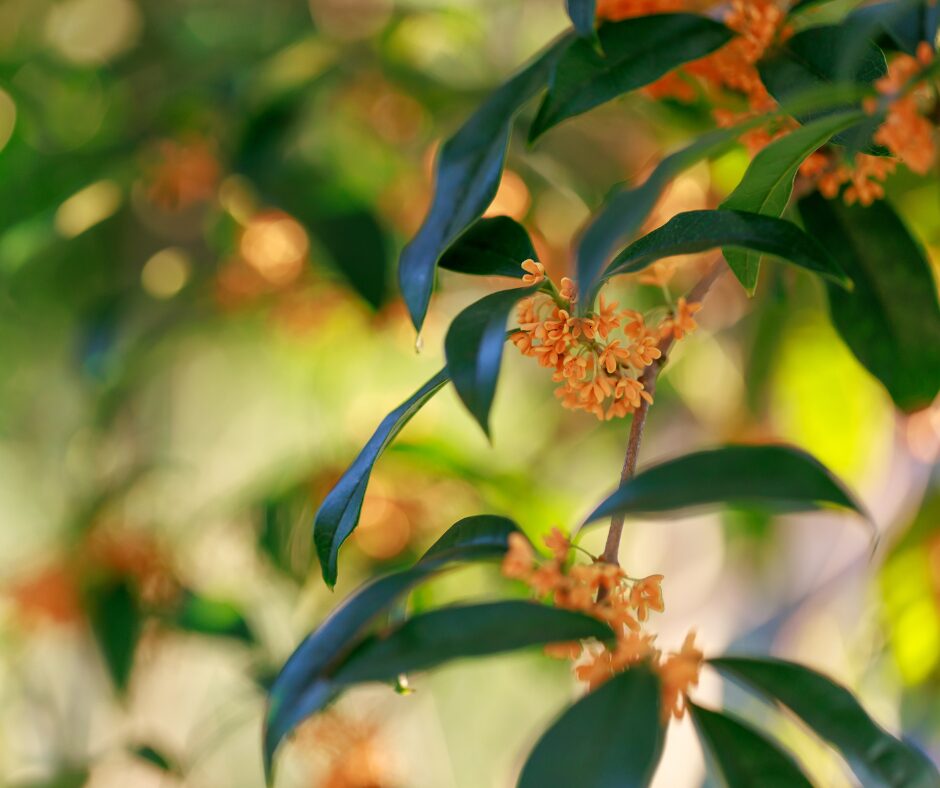
The Japanese industry also excels in the integration of local ingredients, often sourced from traditional agriculture or wild harvesting. Yuzu (a fresh, tangy citrus), hinoki (Japanese cypress), kinmokusei (golden osmanthus) and matcha are all emblematic olfactory materials—both distinctly Japanese and universal.


On the distribution side, Japanese brands have also mastered the art of experiential retail: stores are designed as sensory cocoons, somewhere between visual minimalism and high-tech sophistication. Testing a perfume never happens amid the hustle: you settle in, you breathe, you take your time. A whole philosophy of respect for the sense of smell, almost meditative, unfolds in these points of sale.
Finally, it is worth noting that Japan also plays a key role in the industry as a test market: many foreign brands launch their innovations there first, to gauge the reception of a demanding public attentive to the smallest detail. If a perfume works in Japan, it can work anywhere.
Trends and innovations in Japanese perfumery
Discreet yet buzzing with activity, the Japanese olfactory scene is today experiencing a revival, marked by the emergence of new independent brands, a more sensory approach to consumption, and an approach more emotional than ever.
A first strong trend: the return to craftsmanship and local materials. Houses such as Di Ser, based in Sapporo, or Parfum Satori in Tokyo, create fragrances in small batches, from rare ingredients, sometimes grown or distilled on site. Their creations incorporate typically Japanese elements such as shiso, kōdō-matsu (ceremonial pine) or kinmokusei, that little orange flower that perfumes Japanese streets in autumn. This is artisanal, author-driven perfumery, subtly rooted in Japanese nature, a world away from globalized trends.
Another notable movement: functional perfumery. Fragrance is becoming an everyday tool to soothe, focus, comfort. This current draws inspiration from Zen practices and gentle medicine: brands are developing “anti-stress,” “morning wake-up” and “olfactory memory” fragrances. These products are often sold as “aroma mists,” oils or scented sticks, to be used as personal rituals. The success of these ranges shows just how much perfume is perceived in Japan as an extension of wellbeing, rather than a social marker.
In terms of technological innovation, Japan remains at the forefront. Some companies are already exploring digital perfumery, through smart diffusers or collaborations between perfumers and engineers. Devices make it possible to program scents according to the time of day, or even one’s mood. A brand like Scentee Machina, for example, offers a connected diffuser designed like a work of art, controllable via smartphone.
Finally, younger Japanese generations are redefining their relationship to fragrance. Less constrained by norms of discretion, they are opening up to bolder sillages and international niche perfumery, while valuing ethical, transparent and local consumption. Vegan, alcohol-free fragrances with traceable ingredients are increasingly appealing. Emotion, the sincerity of the approach and the story behind the bottle often matter more than the prestige of the brand.
And as a symbolic nod, the sakura—eternal metaphor of passing time—continue to inspire countless seasonal olfactory creations, among local and international brands alike. Every spring, perfumery shelves take on shades of pale pink, in an olfactory tradition that has become a cultural rendezvous in its own right.
Perfumery in Japan is not shouted; it is sensed, like the scent of sakura carried on the wind. Anything but a copy of the Western model, it follows its own path: an art of discretion, of the precise gesture, of suspended time. It speaks in a low voice, but often says what matters most.
Between a thousand-year-old incense tradition and a refined, high-tech modernity, it offers another way of thinking about scent: more inward, more poetic, at times meditative. In an era saturated with stimuli, this sensitive and respectful approach to fragrance appears almost as a form of resistance: slowing down, breathing, feeling.
At a time when global perfumery tends toward standardization, Japan is tracing a unique—and perhaps essential—path. It restores perfume to its original function: marking the moment, without weighing it down.
What if the future of fragrance lay precisely in this art of silence and fleetingness, like that of the cherry trees in bloom?
Perfumery, an art rooted in dreams and imagination, has long drawn inspiration from mythology to infuse its creations with grandeur and mystery. Ancient gods and goddesses—symbols of strength, beauty, and seduction—continue to captivate our imagination centuries later. Since the 1980s, these mythological references have evolved alongside changing cultural trends and perceptions. Let us revisit this olfactory journey, where Antiquity meets the present to continually reinvent the timeless beauty of fragrance.
Since ancient times, perfume has been associated with the sacred. It was used in religious rituals to honor the gods, seek their favor, and mark solemn occasions. This connection between fragrance and divinity still exists today, although it has taken on a more artistic and narrative dimension. Contemporary perfumers draw on the richness of classical mythology to reinterpret legendary figures such as Achilles, the invincible hero, or Aphrodite, the goddess of beauty, through fragrances that celebrate their mystical aura, sensuality, and timeless appeal.

These perfumes offer far more than a pleasant scent—they create emotional experiences. Through sophisticated and evocative accords, they invite fragrance lovers to identify with legendary characters or immerse themselves in imaginary worlds where the power of gods and the splendor of goddesses intertwine with the personal pursuit of identity and beauty.
The Ancient Gods: The Birth of the Masculine Myth
During the 1980s, ancient gods and heroes became iconic symbols of the masculine ideal in perfumery. Fragrances inspired by mythology reflected an image of men as strong, fearless conquerors, embodying triumphant masculinity. Their names alone reinforced the association between fragrance and divine power, transforming every bottle into an ode to heroism and virility.
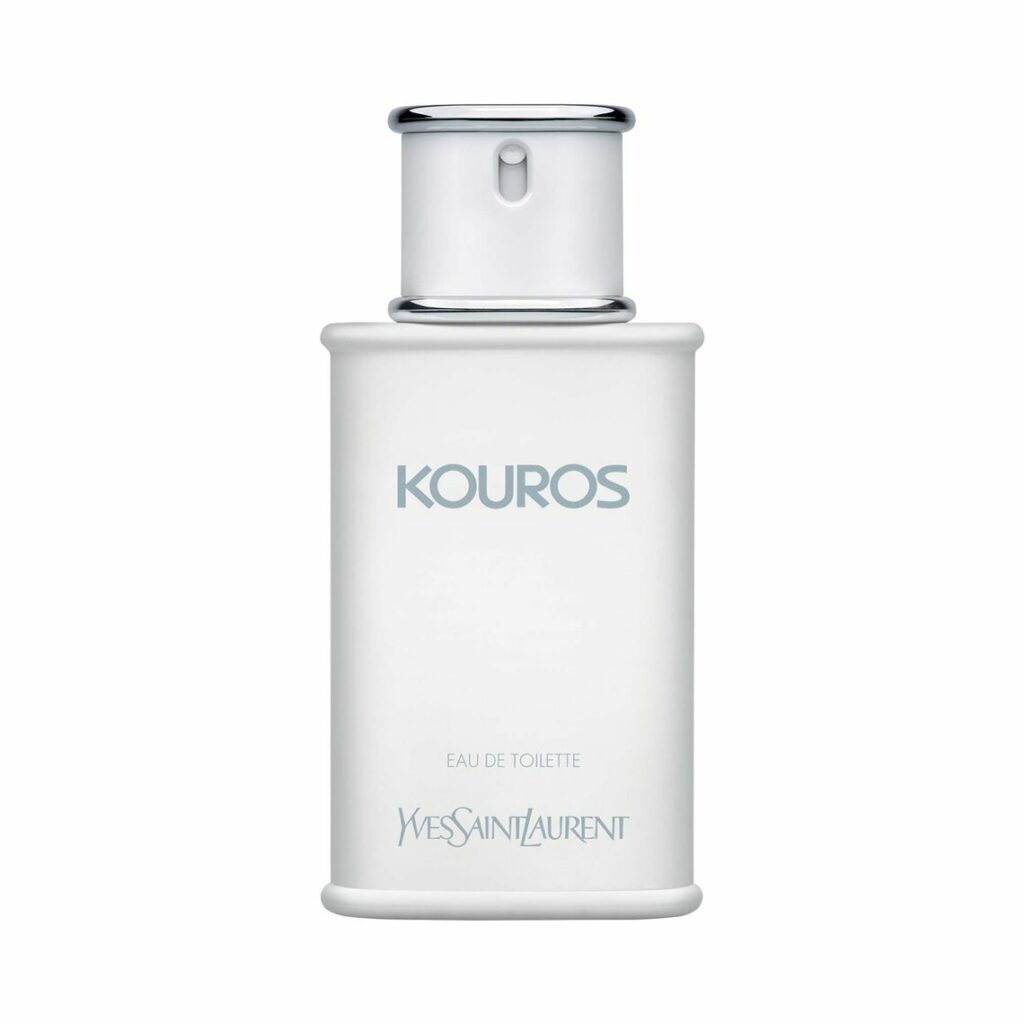
One of the earliest and most influential examples is Kouros by Yves Saint Laurent, launched in 1981. Inspired by the marble statues of idealized young men from Ancient Greece, Kouros stood out thanks to its bold composition. Its animalic, musky, and chypre notes portrayed a confident man who was both untamed and sculptural—almost timeless. More than simply a fragrance, Kouros became a tribute to classical aesthetics, where physical strength and elegance exist in perfect harmony.
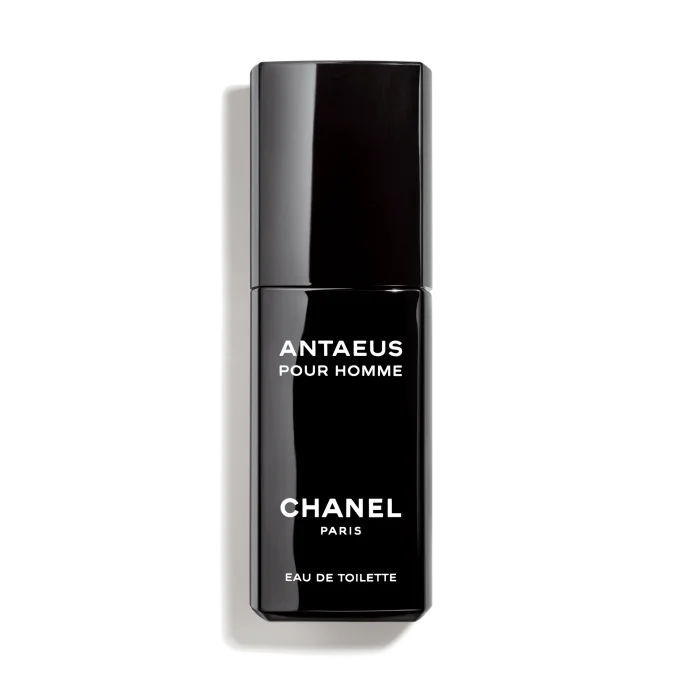
That same year, Antaeus by Chanel drew inspiration from another powerful myth. Antaeus, the son of Gaia (Mother Earth), was an invincible giant whose strength depended on remaining in contact with the ground. The fragrance captures this fascinating duality of overwhelming power and underlying vulnerability through its leathery, chypre composition, dark, sophisticated, and deeply intriguing. Rather than merely glorifying masculinity, Antaeus tells the story of strength rooted in the earth while constantly striving for transcendence.
A few years later, in 1986, Givenchy introduced Xeryus, inspired by the Persian king Xerxes, whose legendary reputation lent the fragrance a mythical dimension. Combining aromatic, woody, and spicy notes, Xeryus embodied an elegant yet commanding masculinity. It was created for leaders—men who sought to master their world without sacrificing refinement.
These mythologically inspired fragrances of the 1980s appealed to more than luxury consumers. They reflected a broader cultural vision of masculinity that celebrated virility, endurance, and authority. Ancient gods, symbols of power and domination, offered a compelling visual and emotional language that translated contemporary masculine aspirations into olfactory form. Dominated by leather, chypre, and aromatic accords, these fragrances became more than accessories—they represented an ideal, elevating everyday life toward heroic immortality.
This fascination with male deities would not disappear, but it would gradually evolve. While these early creations emphasized strength and domination, the following decades would explore more nuanced emotions, incorporating sensitivity, seduction, and even feminine influences, ultimately redefining mythology’s place in modern perfumery.
The 2000s: A New Era of Seduction and Lightness
At the turn of the millennium, mythology-inspired perfumery underwent a significant transformation. While the 1980s celebrated heroic masculinity through bold, commanding fragrances, the 2000s embraced lighter, more seductive, and sometimes playful interpretations. Ancient gods and goddesses, once symbols of raw power, became embodiments of desire, attraction, and emotion, appealing to a new generation seeking modernity and accessibility.
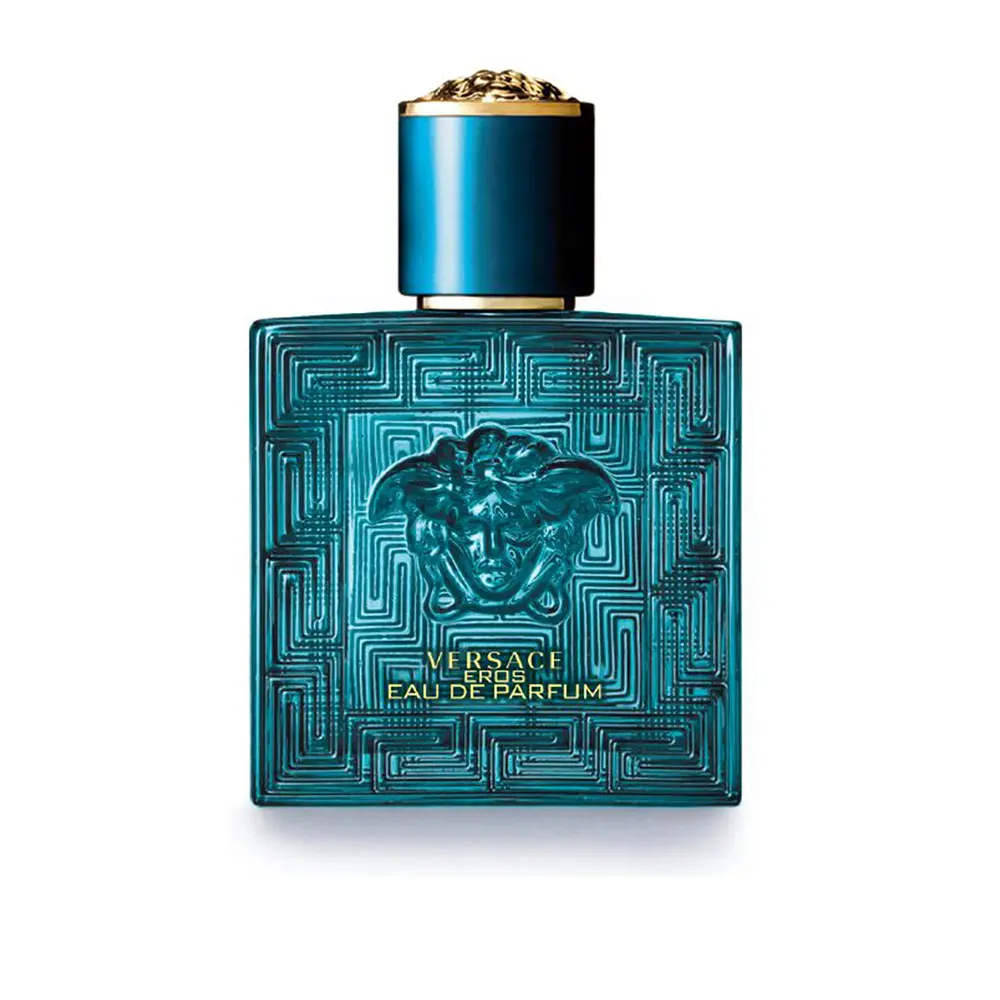
One of the defining fragrances of this new era is Eros by Versace, launched in 2012. Inspired by the Greek god of love and passion, the fragrance celebrates unapologetic sensuality. Fresh mint and crisp green apple blend seamlessly with an oriental base of tonka bean and vanilla. The message is unmistakable: Eros represents a magnetic, seductive man whose true strength lies in his ability to captivate. This is no austere mythological hero, but a confident modern man who embraces the power of attraction.

A similar reinterpretation appears in Invictus by Paco Rabanne, released in 2013. Here, the invincible hero of antiquity is reimagined for the twenty-first century. Invictus is no distant deity but an athlete—a contemporary hero. Aquatic notes evoke the salty skin of a champion in the midst of competition, while aromatic bay leaf, the ancient symbol of victory, combines with woody accords to express the exhilaration of immediate success. Mythology becomes a celebration of modern values such as self-achievement, resilience, and personal victory.
This evolution also marked a break from the traditional codes of mythological perfumery. Heavy, opulent compositions built around leather, resins, and rich chypre accords gave way to brighter, fresher, and more luminous creations. Perfumers sought to captivate a younger audience with fragrances that balanced freshness and sensuality. Mythological gods and heroes were no longer untouchable figures frozen in antiquity—they became relatable symbols reflecting contemporary aspirations.
This renewed emphasis on seduction also mirrored broader cultural changes. Luxury was increasingly associated not only with prestige but also with pleasure, spontaneity, and self-expression. Even the bottles reflected this shift. The monumental, architectural designs of the 1980s were replaced by more dynamic creations, such as Invictus’ trophy-shaped bottle or the sculptural sensuality of the Eros flacon.
Beyond men’s fragrances, this softer and more seductive interpretation also found its way into women’s perfumery. The 2000s laid the foundations for creations such as Olympéa by Paco Rabanne, Gaultier Divine by Jean Paul Gaultier, and Goddess by Burberry, where divine femininity would emerge in an entirely new light.
Ultimately, the 2000s redefined mythology in perfumery by making it more inclusive, approachable, and emotionally engaging. Gods were no longer mere symbols of authority and domination; they became storytellers capable of expressing personal emotions and aspirations. Mythology ceased to be a distant legend and instead became a mirror in which everyone could recognize themselves.
The Rise of the Goddesses: Divine Femininity Takes Center Stage
For many years, mythological references in perfumery focused primarily on male figures, celebrating strength, conquest, and power. Over time, however, a shift emerged: women claimed their place in the olfactory pantheon. The rise of goddesses in fragrance marks a turning point in which femininity is celebrated in all its forms—sensual, sovereign, mysterious, and empowering. Fragrances are no longer simply tributes to heroic male figures; they have become symbols of confidence and self-expression for modern women.
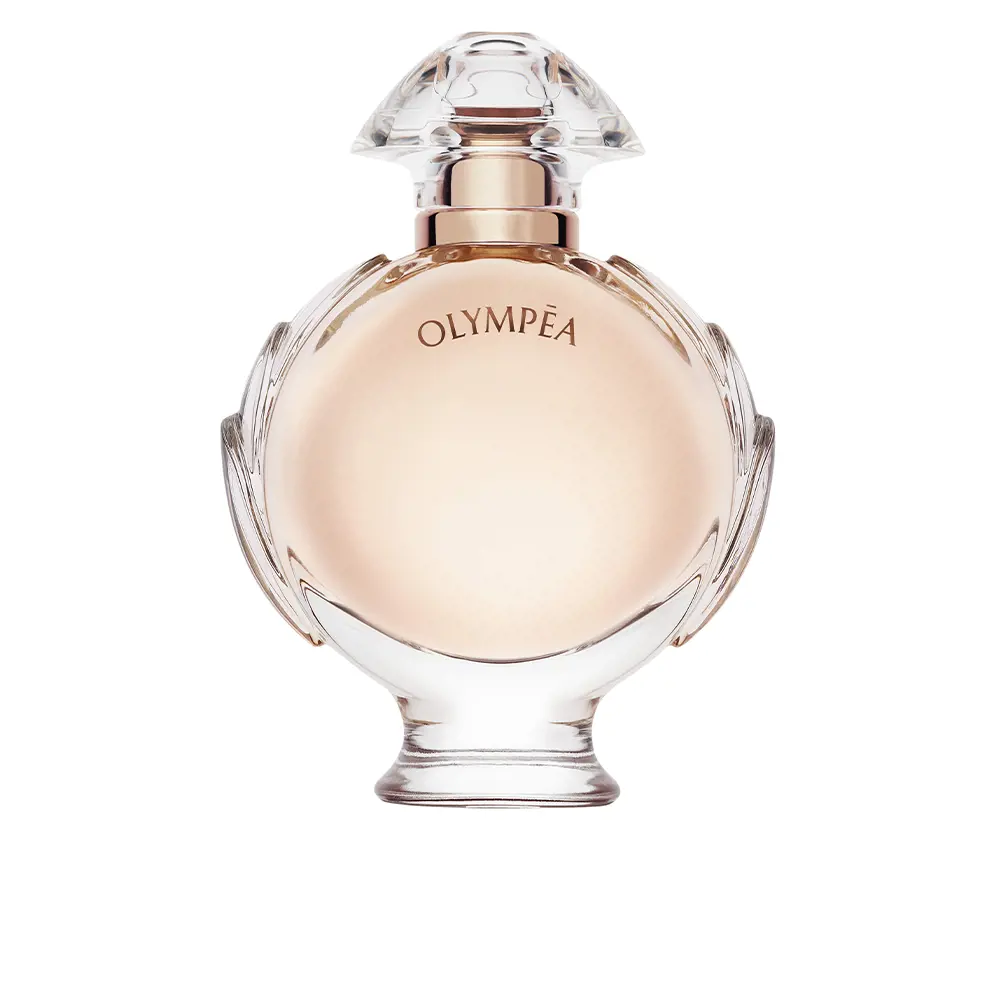
One of the most striking examples of this movement is Olympéa by Paco Rabanne, launched in 2015. Inspired by Mount Olympus, the fragrance imagines a contemporary goddess—a woman who is both powerful and sensual, radiating irresistible magnetism. Its composition contrasts the salty freshness of salted vanilla with warm, enveloping vanilla notes. Olympéa does not celebrate passive femininity; instead, it portrays a determined woman capable of ruling the modern world while remaining deeply sensual and playfully seductive.
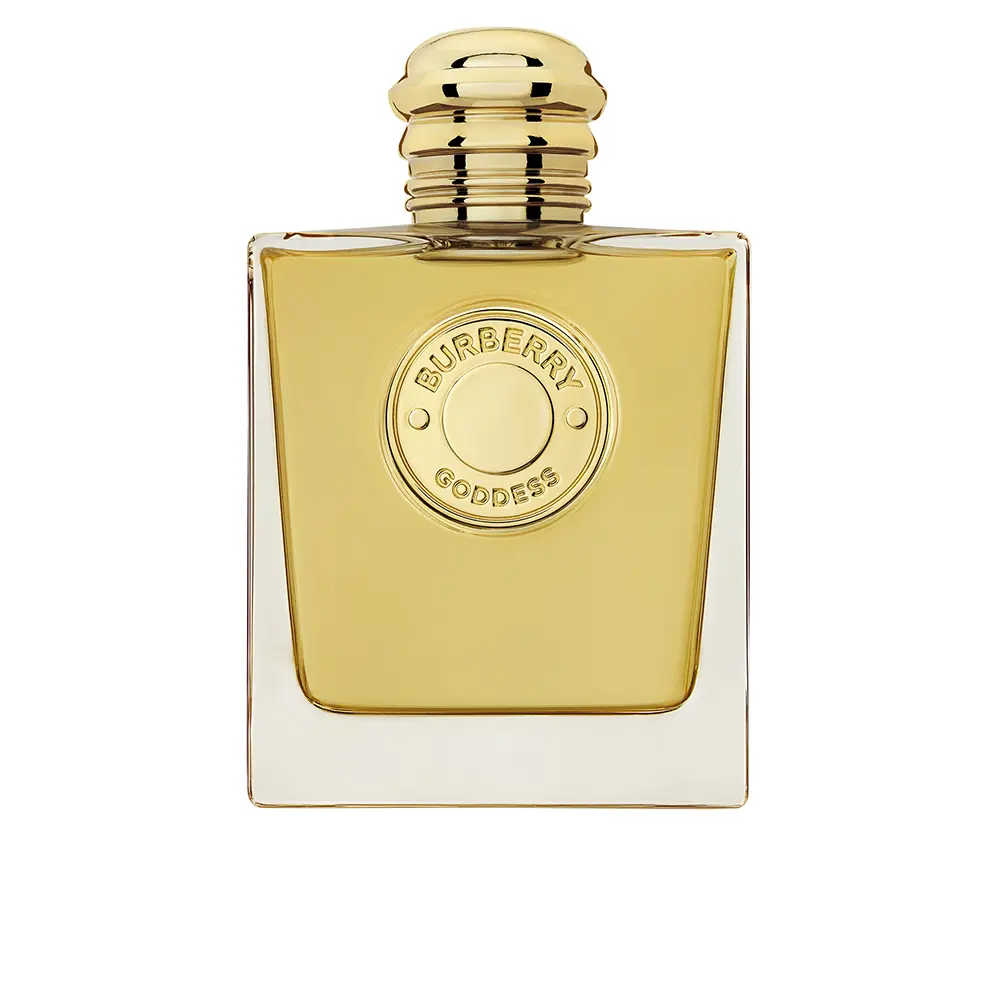
More recently, Goddess by Burberry (2023) introduced a softer, more universal interpretation of feminine divinity. Blending creamy vanilla with delicate white flowers and subtle woody notes, it speaks to women who find their strength in serenity. Rather than emphasizing the grandiosity traditionally associated with ancient goddesses, Goddess reflects the aspirations of today’s woman—self-assured, grounded, and quietly powerful.
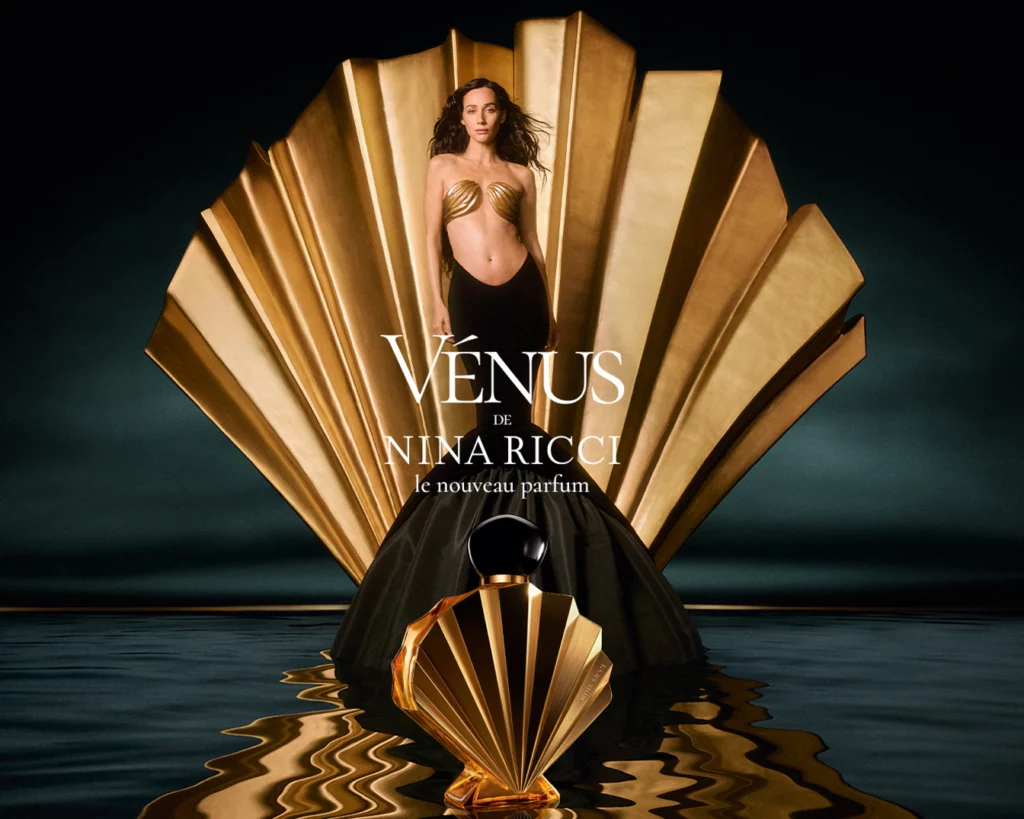
The newest addition to this divine lineage is Venus by Nina Ricci, inspired by the Roman goddess of love and beauty. Conceived as an ode to self-love, the fragrance encourages women to embrace themselves fully and shine with confidence. This luminous floral chypre composition showcases magnolia, enriched by addictive vanilla and wrapped in soft white patchouli.
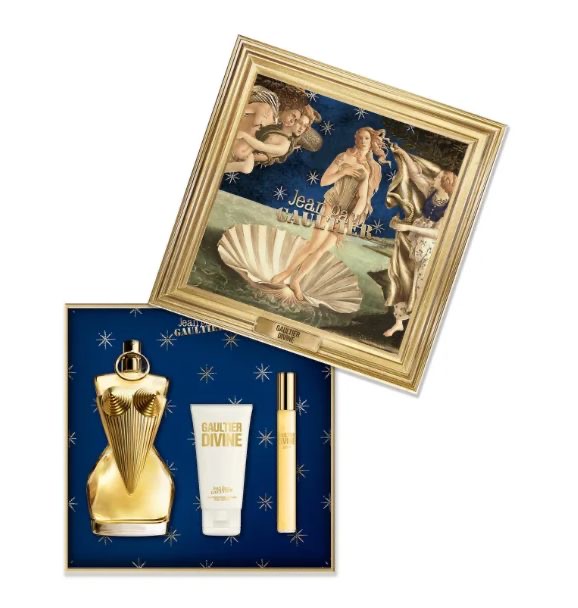
Interestingly, the same Venus also adorned the 2024 Christmas collector’s edition of Gaultier Divine by Jean Paul Gaultier, confirming that the goddess of love is very much in vogue within the Puig fragrance portfolio.
Yet the celebration of divine femininity is far from a recent invention. As early as 1930, Jean Patou introduced Divine, a floral fragrance paying tribute to feminine beauty and majesty. In 1939, Lancôme launched Danaé, inspired by the Greek princess seduced by Zeus. While visionary for their time, these fragrances remained isolated examples in a market still largely dominated by masculine symbolism. Only decades later would perfumery fully embrace and reinterpret the concept of the divine feminine.
A Reflection of Modern Womanhood
This growing prominence of goddesses also mirrors profound social change. Modern women increasingly assert their independence, strength, and freedom, and perfumery has evolved alongside them. Today’s goddesses are no longer distant, idealized muses—they embody real women, with their strengths, vulnerabilities, ambitions, and complexity.
Each fragrance becomes an expression of this multifaceted femininity, inviting women to dream, identify with, or empower themselves through scent.
By restoring goddesses to the center of olfactory storytelling, perfumery has opened a new chapter in which divinity is no longer synonymous with unattainable perfection but instead reflects deeply human aspirations. These goddesses no longer remain on Mount Olympus—they walk among us, carrying messages of love, resilience, confidence, and personal fulfillment. Through every bottle, modern women are invited to reconnect with their own inner greatness, ready to conquer their world one spray at a time.
Contemporary Interpretations: Between Heritage and Modernity
Today, niche perfumery has also embraced mythology, often through more poetic, artistic, and abstract interpretations.
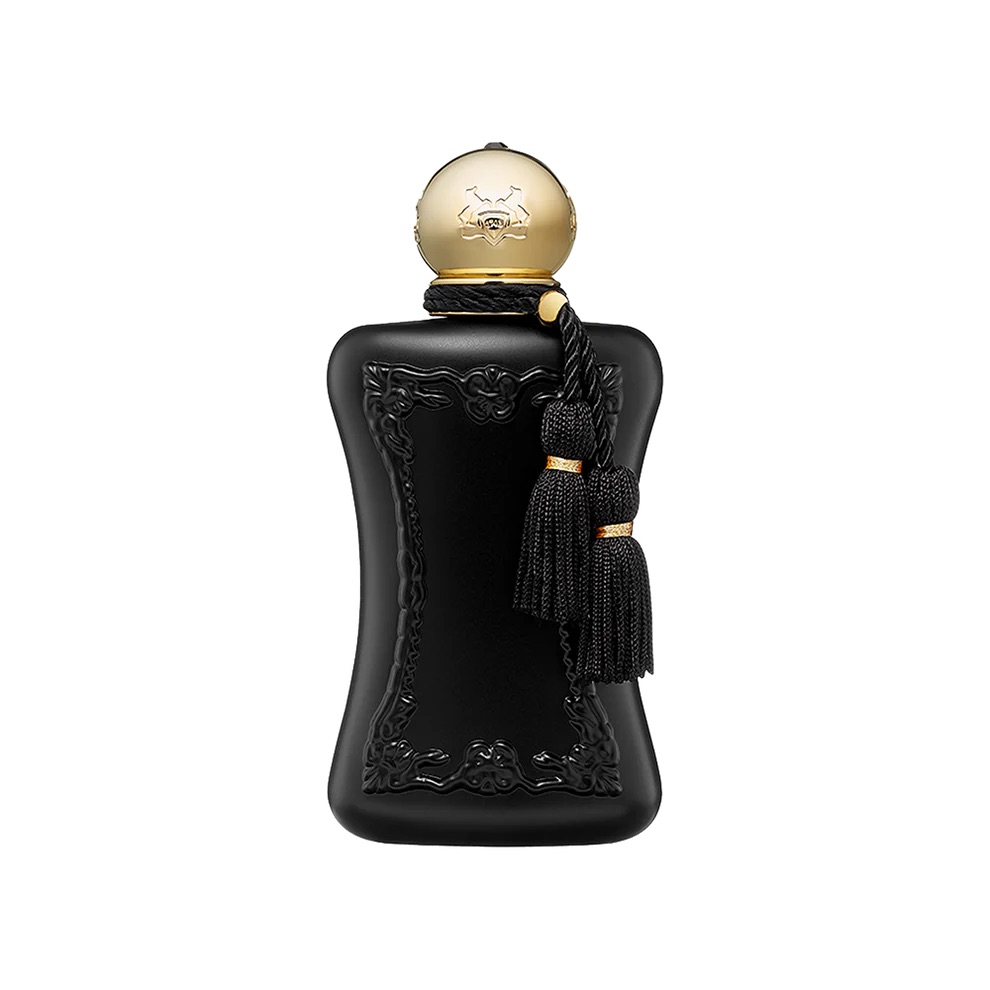
At Parfums de Marly, Athalia pays tribute to a strong yet enigmatic heroine through an elegant blend of powdery iris, amber, and musk. Far removed from conventional representations, the fragrance evokes a mysterious goddess existing somewhere between shadow and light.
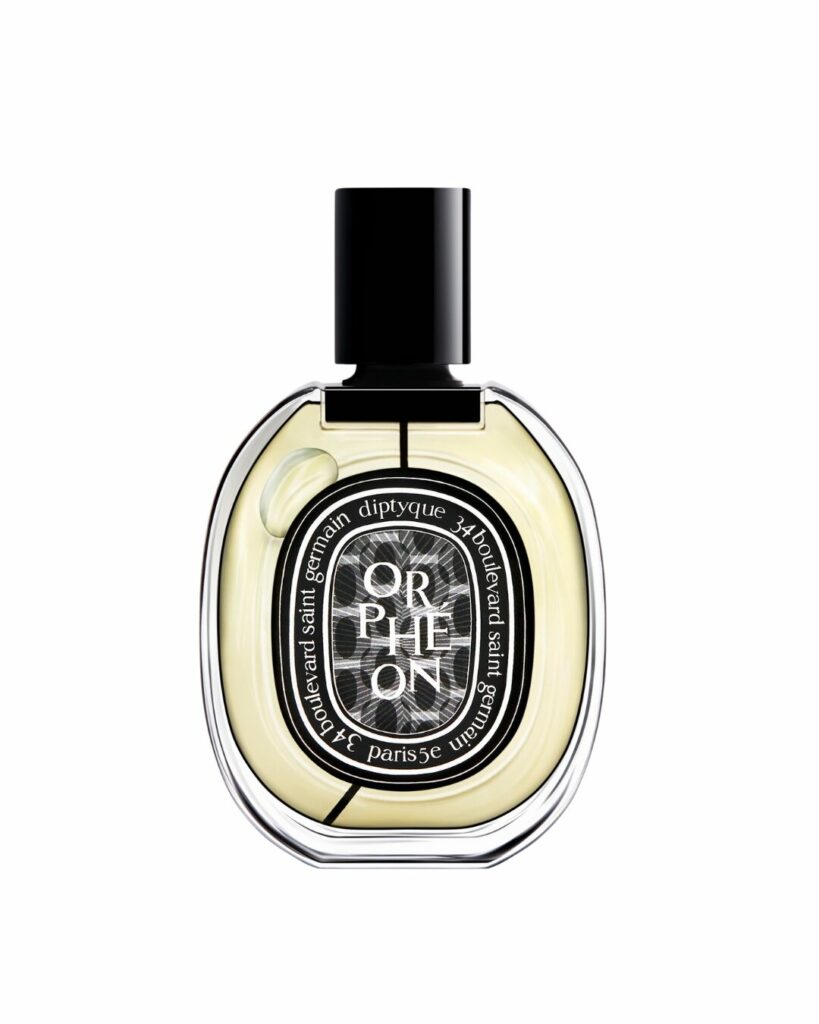
With Orphéon, Diptyque draws inspiration from the legend of Orpheus and his lyre but reimagines the myth in an intimate, urban setting. Cedarwood, juniper berry, soft powdery facets, and almond-like tonka bean recreate the warm atmosphere of literary cafés, where the divine and the everyday subtly intersect.
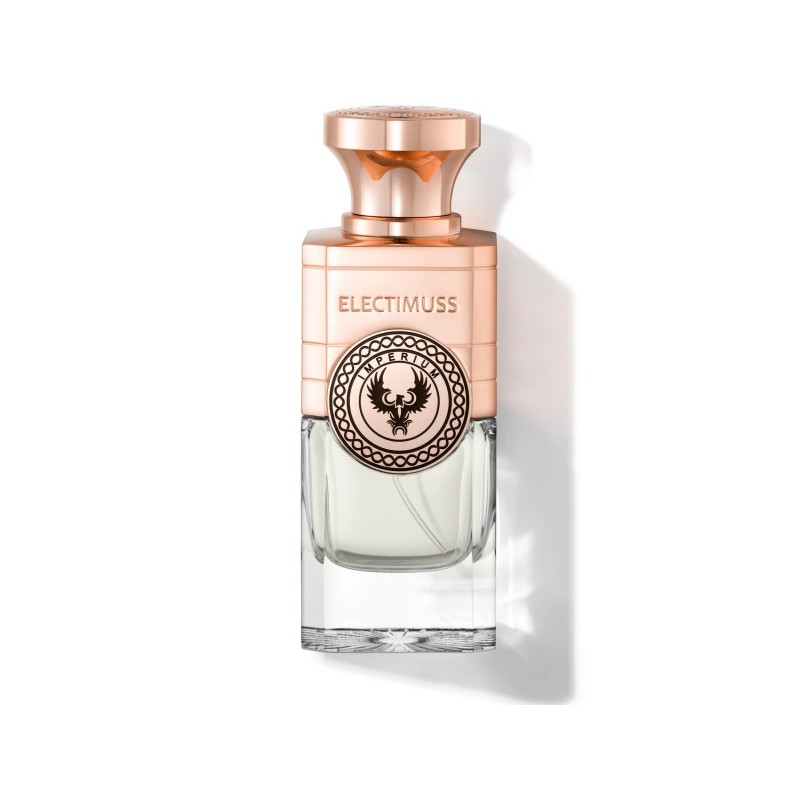
Meanwhile, the London-based house Electimuss looks to Ancient Rome and its extraordinary fascination with perfume. Its luxurious collection celebrates the Romans’ relentless pursuit of the world’s finest raw materials, reviving the rich rituals, stories, and olfactory traditions of an empire whose influence still resonates today.
A Lasting Trend: Reinventing the Myth
The enduring fascination with ancient gods and goddesses reflects a universal desire for transcendence and escapism. These timeless mythological figures provide perfumers with an inexhaustible source of inspiration, allowing them to reinterpret ideas of power, sensuality, and elegance through fragrances that resonate with contemporary values.
While the late twentieth century largely celebrated heroic masculine archetypes, the twenty-first century has increasingly embraced sovereign femininity. Beyond questions of gender, however, mythology offers a universal language in which every fragrance becomes a gateway to a unique olfactory pantheon.
Ancient gods and goddesses represent far more than a simple fascination with classical mythology. They embody humanity’s enduring search for power, beauty, seduction, and self-transcendence. From the heroic masculine creations of the 1980s to today’s flourishing celebration of divine femininity, each era has reinterpreted these timeless stories to reflect its own ideals and aspirations.
Modern perfumery continues to reinvent these myths, creating fragrances that invite us to embody our own greatness. Whether you see yourself as a hero or a goddess, perfume becomes a bridge between the ancient world and contemporary emotion—a promise of escape, self-discovery, and empowerment.
Thanksgiving, the iconic autumn holiday, is much more than a family meal. It is a celebration of the senses, where scents play a central role. From the indulgent notes of traditional desserts to smoky accords evoking a crackling fireplace, and the freshness of seasonal fruits, Thanksgiving offers a rich and diverse olfactory inspiration. A sensory journey into this warm and festive celebration, steeped in enduring tradition. Let’s explore the scents associated with this beloved holiday from across the Atlantic.

Thanksgiving: A Celebration of Gratitude and Togetherness
Thanksgiving, celebrated in the United States on the fourth Thursday of November and in Canada in October, has its roots in early harvests and the cooperation between settlers and Indigenous peoples. Symbolizing gratitude and sharing, this holiday gathers families around a bountiful meal featuring emblematic dishes like roast turkey, sweet potatoes, and pumpkin pies.
Beyond the meal, Thanksgiving embodies warmth and comfort. Homes are adorned with autumnal decorations, fireplaces crackle, and the atmosphere around the table is convivial. It is a time to slow down, reconnect with loved ones, and savor simple pleasures. Through its flavors and traditions, Thanksgiving also inspires the world of perfumery, seeking to recreate this unique ambiance in evocative olfactory creations.
The Scents of Thanksgiving
Eucalyptus and Fireplace Aromas
Thanksgiving begins the moment guests arrive, greeted by a blend of natural and warm aromas.
Eucalyptus bouquets, often used as table decorations, lend a green and resinous freshness. This aromatic facet also resonates in perfumes with woody or herbal accents, balancing the richness of gourmand notes.
Complementing this is the comforting scent of a crackling fireplace, captured in perfumery through smoky and woody accords. These notes evoke the raw intensity of burning wood—a quintessential autumn evening experience.

The Smell of Wood
The essence of a fireplace relies on raw materials that convey the distinctive scent of burnt wood. Cedar, guaiac, or birch notes are ideal for a realistic and evocative smoky facet.
Cedar: Its dry and resinous nuances evoke logs crackling in the hearth.
Guaiac: Slightly milky and smoky, it adds a soft, enveloping warmth.
Burnt birch: Burnt birch, often used in small amounts, adds a distinctive intensity to woody accords, evoking the raw sensation of a freshly lit fire.
Sandalwood: Creamy and comforting, it softens smoky accords and extends their warmth on skin.
Vetiver: With its earthy dryness, it adds an autumnal forest touch.
Cedar and vetiver, drier and earthier, can be incorporated as a subtle nod to autumn and the forest. These well-balanced woods provide structure to the fragrance, delivering a sense of comfort without excess.
In perfumery, these accords translate the universal emotions of safety and serenity one feels surrounded by family in a cozy setting. Their intensity, though pronounced, is never overwhelming, wrapping the wearer like a warm blanket on a chilly fall evening.
Notable Fragrances:
Maison Margiela – Replica By the Fireplace: A blend of vanilla, roasted chestnuts, and clove, reminiscent of sweet pies and caramelized sweet potatoes.
La Manufacture Parfums – Bois de Feu: Smoky cade wood and oud intertwine with incense, benzoin, and vanilla, echoing a timeless fireplace warmth.
Diptyque – Feu de Bois Candle: Captures dense, smoky notes of slowly burning logs, conjuring moments of cozy fireside chats.
The Aromas of Food and Desserts
The olfactory richness of Thanksgiving continues with the aromas wafting from the kitchen, each dish telling its own story.
Roast Turkey
The centerpiece of the meal, roast turkey, fills the home with rich and savory aromas.

In perfumery, culinary inspirations appear in bold creations like :
Versatile Parfums – La Foncedalle : featuring grilled chicken notes that reimagine savory accords evocative of crispy turkey skin.
The Spices: the olfactory signature of Thanksgiving
Thanksgiving wouldn’t be complete without its signature spicy aromas. Cinnamon, nutmeg, clove, and ginger are the stars of the holiday, associated with warmth and comfort. These powerful notes bring depth and a sense of coziness, reminiscent of seasonal pies and hot drinks.
Notable Spiced Fragrances:
Diptyque – Eau Duelle: A gentle vanilla accented with ginger and pepper, evoking the warmth of spiced eggnog.
Hermès – Ambre Narguilé: Cinnamon, honey, and candied fruits recreate the ambiance of spiced drinks and desserts.
Serge Lutens – Ambre Sultan: Perfect for fans of amber and spice, it captures the essence of Thanksgiving’s festive spice blends.
Sweet Potatoes, Yams and Spiced Pumpkin
Sweet potatoe mash, yams topped with marshmallow, and pumpkin dishes, staples of Thanksgiving, bring sweet and spicy aromas.
Notable Gourmand Fragrances:
Officine universelle Bully- Eau Triple Caribbean sweet potato and afghan carrot: Blending the sunny sweetness of carrot with the spicy accents of sweet potato, warmed by the woody and gourmand notes of vetiver.
By Killian – Love, Don’t Be Shy: With marshmallow, orange blossom, and vanilla, it’s a nod to the sweet nostalgia of marshmallow-topped sweet potatoes.
Parlez-moi de Parfum – Guimauve de Noël: An olfactory ode to melting marshmallow.
Fruity Nuances in Complex Compositions
Fruits play a key role in the overall structure of fragrances inspired by Thanksgiving. They bring essential brightness to the top notes, contrasting with the heavier, enveloping bases of woods or resins. This contrast creates balanced compositions, where the energy of the fruits complements the richness of autumnal accords.
Perfumers often use fruits as a connecting thread, linking the various facets of a fragrance. For instance, a cranberry top note can transition into a floral and spicy heart before settling into a woody and amber base. This olfactory progression mirrors the evolution of a Thanksgiving meal, with its flavors blending harmoniously.
Cranberries and Tangy Berries
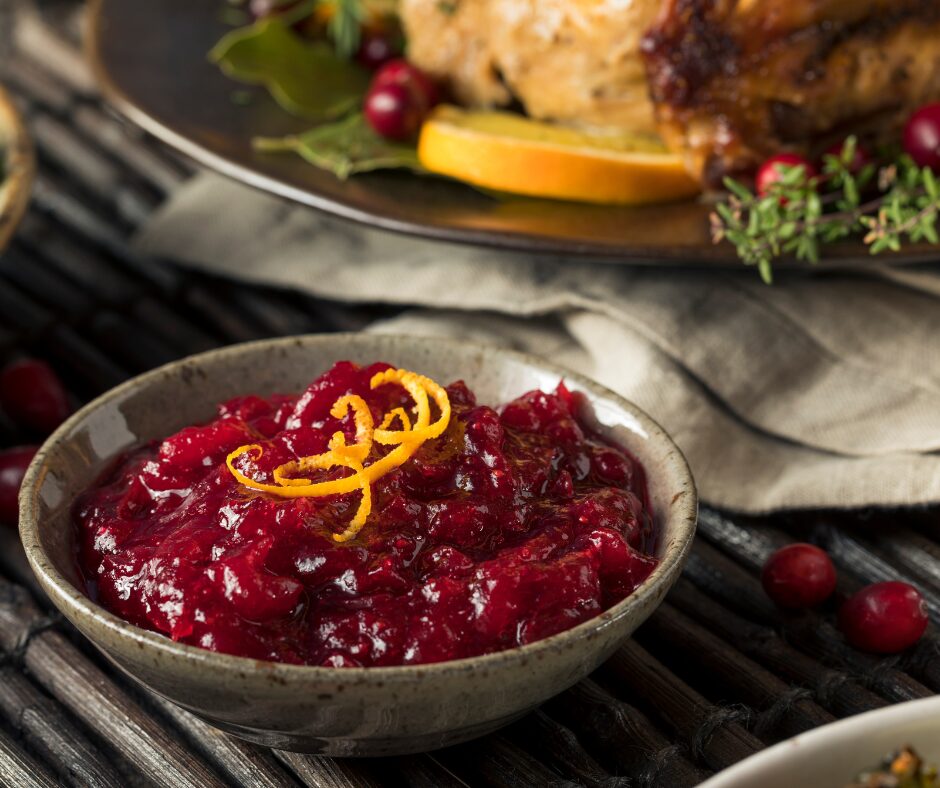
Cranberries, a key Thanksgiving ingredient. The traditionnal cranberry gravy that accompanies the turkey adds a tangy twist to the meal.
In perfumery, their acidic brightness is recreated with red berry accords, bringing a vibrant freshness to compositions. Perfumers draw inspiration from their vibrancy to infuse their creations with a sparkling and juicy freshness.
Red berry accords, such as raspberry or redcurrant, share the same energy as cranberry: a blend of tartness and sweetness that awakens the senses. These light and luminous notes are often featured in top notes, offering a joyful and vibrant first impression, perfectly capturing the lively spirit of this celebration.
Notable Berry-Inspired Fragrances:
Ralph Lauren – Polo Red: Evokes crisp cranberries on an amber-woody base.
Givenchy – Ange ou Démon Le Secret: Cranberries add a mischievous and seductive touch to this floral scent.
Demeter Fragrance Library – Cranberry: the bright, tangy aroma of ripe berries, unsweetened, inspired by the autumn landscapes of New England.
Autumn Fruits
Autumn fruits, such as apples and pears, play a central role in the Thanksgiving imagination.
Often caramelized or roasted in traditional dishes, these fruits are translated into perfumery through gourmand and rounded accords.
The apple is the star of apple cider, the warm drink enjoyed during Thanksgiving. It can be captured in fragrance with notes that are both sweet and rounded, evoking a nostalgic sensation.
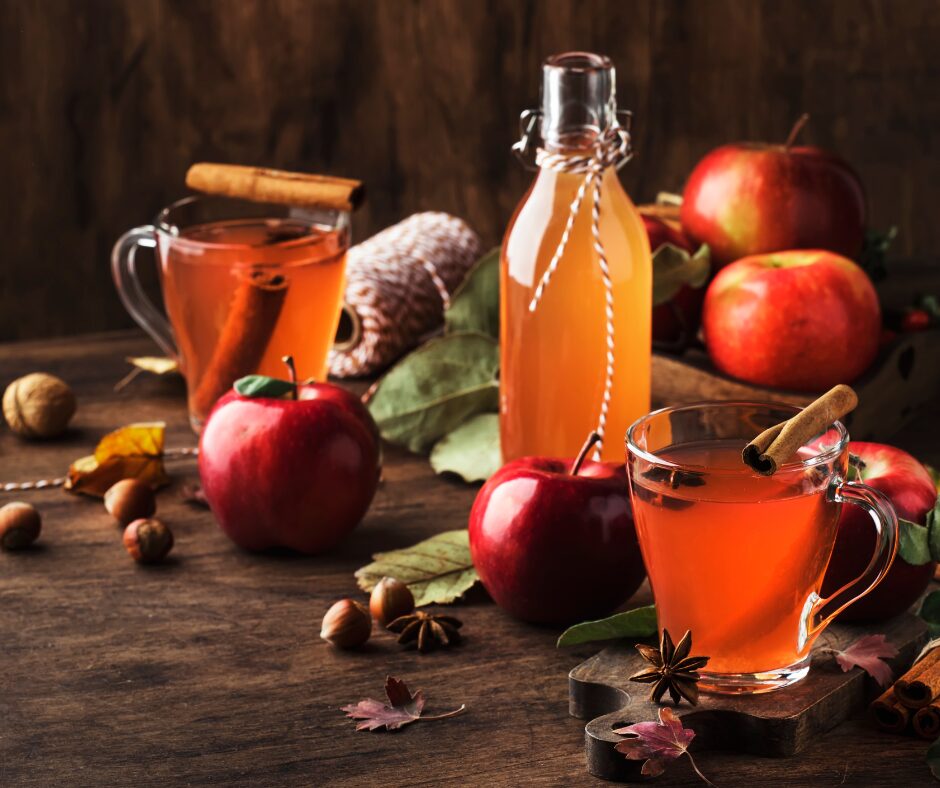
Nina Ricci – Nina: Apple, lemon, and white floral accords create a soft and sweet scent reminiscent of candy apples.
By Killian – Apple Brandy on the Rocks: Liqueur-like notes of apple brandy are enhanced with a unique icy touch atop a refined woody base. The perfect cocktail for a festive and sophisticated atmosphere.
Nobile 1942 – La Danza delle Libellule: Combines notes of apple, cinnamon, and vanilla to offer a soft, spicy fragrance reminiscent of apple pastries.
Freshly Baked Bread and Biscuits
The aroma of freshly baked bread and homemade biscuits enhances Thanksgiving’s cozy atmosphere.
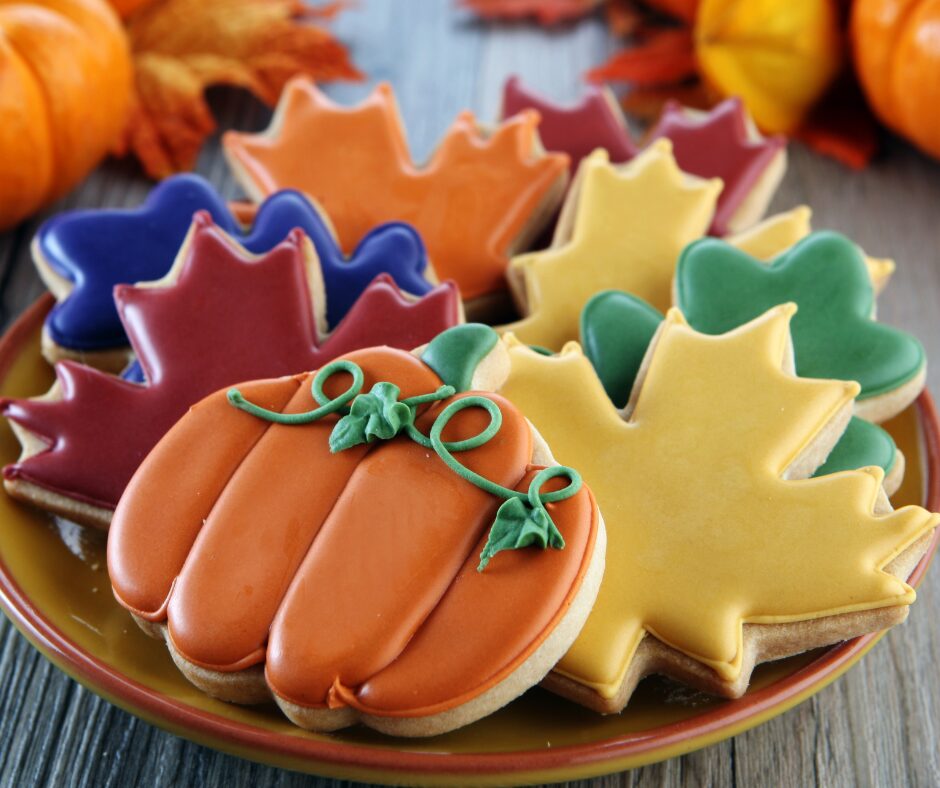
Serge Lutens – Jeux de peau: Inspired by bakery memories, this fragrance combines notes of milk, wheat, and vanilla, reminiscent of fresh bread and golden biscuits.
L’artisan Parfumeur- Bois Farine: Blends dried fruits, floury notes, and creamy woods for a signature reminiscent of warm bread.
Scents of Wood – Bread in Chesnut: Combines the buttery creamy facets of Sandalwood, with the toasted warmth of Bran absolute and almond tonalities of Tonka Bean.
Prada – Infusion d’Amande: Almond and heliotrope notes recall homemade cookies.
L’Artisan Parfumeur – Noir Exquis: Coffee, maple, and candied chestnuts capture the essence of autumn treats.
The Sweetness of Thanksgiving Desserts
One of the most defining elements of Thanksgiving is the aroma of sweet desserts fresh out of the oven. Pumpkin pies, pecan pies, and apple pies fill the air with rich, indulgent scents. In perfumery, these aromas are often translated into accords of vanilla, caramel, and brown sugar. Vanilla, both soft and creamy, acts as a universal comforting note, instantly evoking childhood memories and moments shared with family.
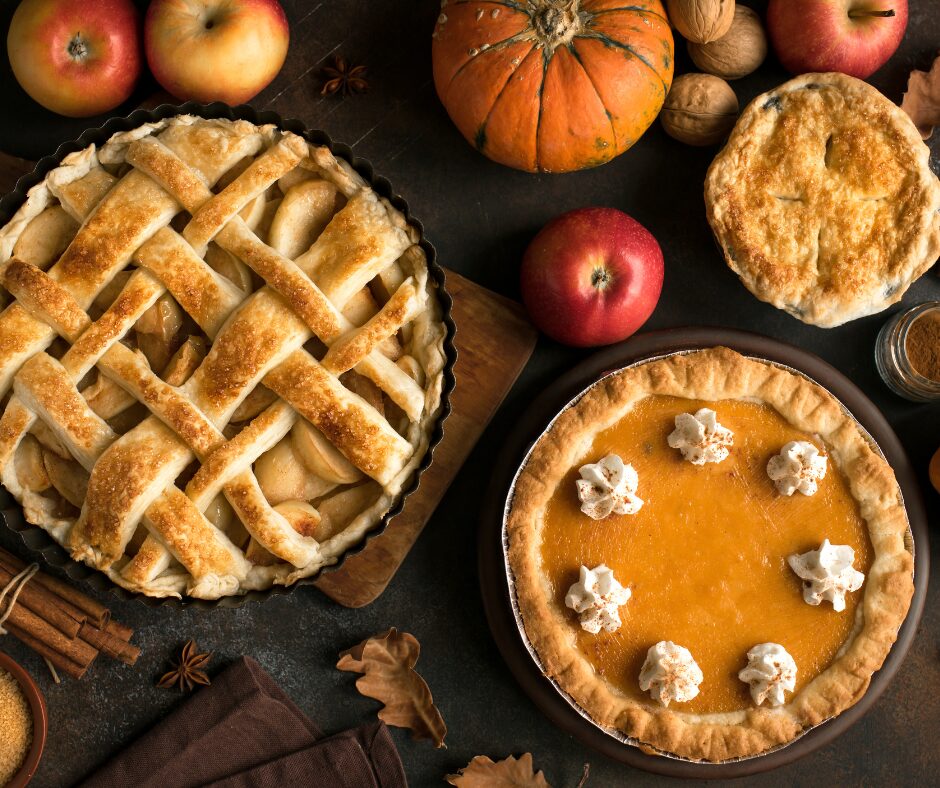
These aromas are perfectly captured in creations like:
État Libre d’Orange – Like This, which embraces the spiced sweetness of pumpkin with notes of ginger and immortelle, paired with the flavors of a pumpkin latte.
Tom Ford – Tobacco Vanille, beautifully recreates the aroma of roasted nuts with its warm, spicy, and enveloping nuances.
Maison Violet – Pour rêver, featuring smoky and frosted chestnut notes wrapped in vanilla, reminiscent of warm seasonal treats.
Thanksgiving is a sensory celebration where every moment, from the arrival at the table to the desserts, is marked by unique aromas. This sensory richness serves as an endless source of inspiration for perfumers. By capturing gourmand, woody, smoky, and fruity accords, they extend the cozy atmosphere of Thanksgiving far beyond shared meals and autumn evenings.
Co-written by Elfa and Anne-Laure
In India, where the vibrant colours of Holi blend with the intoxicating aromas of spices and flowers, perfume is far more than a simple adornment. It is an offering, a symbol of seduction, and an essential part of everyday life. Embarking on an olfactory journey through the ages, we discover the rich and complex history of Indian perfumery by exploring three iconic cities: Kannauj, Mysore, and Madurai.

Indian Perfumery: A Rich Heritage of Culture and History
The art of perfumery in India is deeply rooted in the country’s history and spiritual traditions. References to fragrant oils and perfumes can already be found in ancient sacred texts such as the Vedas and the Upanishads, where aromatic substances were used during religious ceremonies to purify both body and soul.
Over the centuries, Indian perfumery evolved under Persian, Arab, and Chinese influences. Advances in distillation and essential oil extraction techniques enabled artisans to create an extraordinary diversity of fragrances, establishing India as one of the world’s earliest centres of perfume craftsmanship.
Today, fragrance continues to play a central role in Indian daily life. It accompanies religious festivals, family celebrations, acts of seduction, and personal well-being. Offering perfume is considered a gesture of affection, respect, and hospitality.
Perfume in Everyday Indian Life
Religious Rituals
Indian temples are filled with the scent of incense and fragrant oils. Worshippers often perfume themselves before entering sacred spaces as a symbol of purification.
Garlands woven from intensely fragrant flowers such as jasmine and tuberose are offered to the gods. Tradition even discourages smelling these flowers beforehand, as doing so would symbolically “steal” the fragrance intended for the deities. Similar floral offerings adorn the puja rooms—small household shrines dedicated to Hindu gods and ancestors.
Sandalwood, regarded as sacred throughout India, occupies a special place in religious practice. Burned as incense in temples, it is also applied as a paste to the forehead to offer spiritual protection and ward off negative influences.
Life Celebrations
Fragrance accompanies every important stage of life, from weddings and births to major religious ceremonies.
During Hindu weddings, the bride and groom exchange the jaimala, elaborate flower garlands traditionally composed of roses, jasmine or marigolds depending on the season. Marigolds, symbols of the sun and positive energy, are especially popular during these celebrations.
Seduction

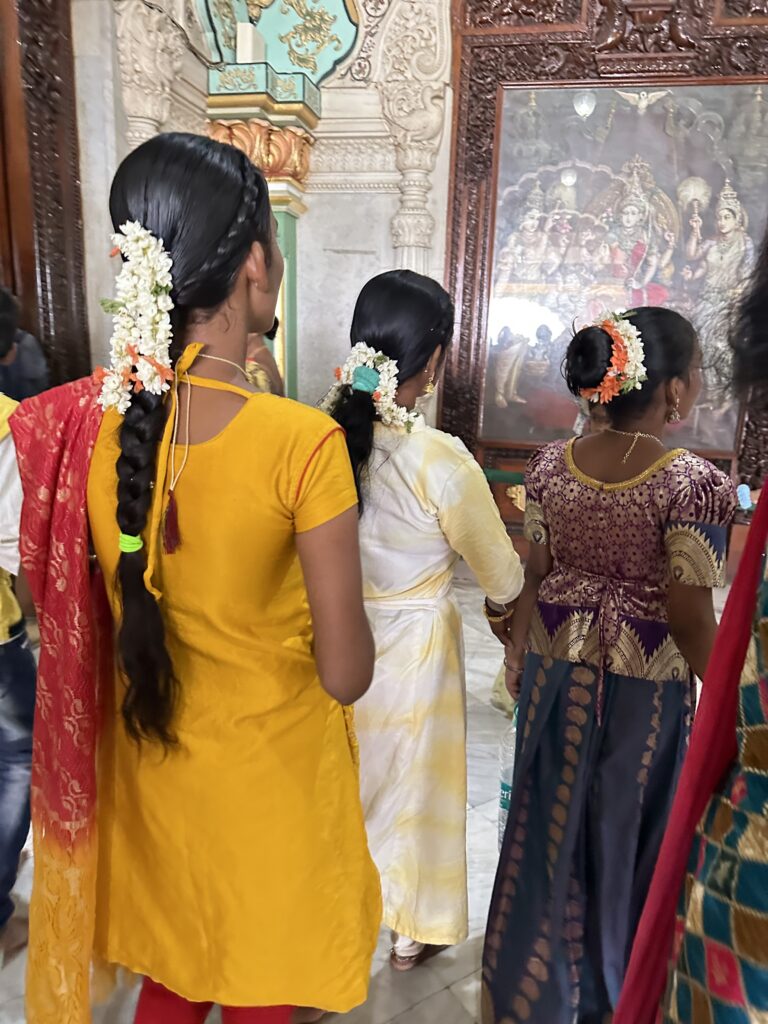
Perfume also plays a fundamental role in Indian ideals of beauty and attraction.
Women traditionally perfume their hair with floral oils before decorating their braids and buns with fresh Sambac jasmine garlands. As the flower buds gradually bloom throughout the day, they release their intoxicating fragrance, creating a naturally perfumed aura.
For newlyweds, bedrooms are often adorned with garlands of tuberose, a flower associated with sensuality and pleasure. Its narcotic scent has earned it the poetic nickname “the perfume of the night.”
Wellness
Essential oils have long been valued for their therapeutic and relaxing properties. They remain an integral part of Ayurvedic medicine, where aromatic plants are used to promote physical, emotional, and spiritual balance.
Kannauj: India’s Ancient Perfume Capital
Often described as the birthplace of Indian perfumery, Kannauj has enchanted emperors, poets, and travellers for more than two millennia. Situated on the fertile banks of the Ganges River, the city has earned its reputation as India’s perfume capital thanks to its ancestral distillation techniques and exceptional craftsmanship.
Kannauj is renowned for extracting fragrant oils from flowers such as jasmine, rose, kewda—a sweet, fruity floral blossom often compared to rose with a more exotic character—and the remarkable mitti attar, whose scent recreates the aroma of rain falling on dry earth. This unique fragrance is produced by distilling specially prepared clay.
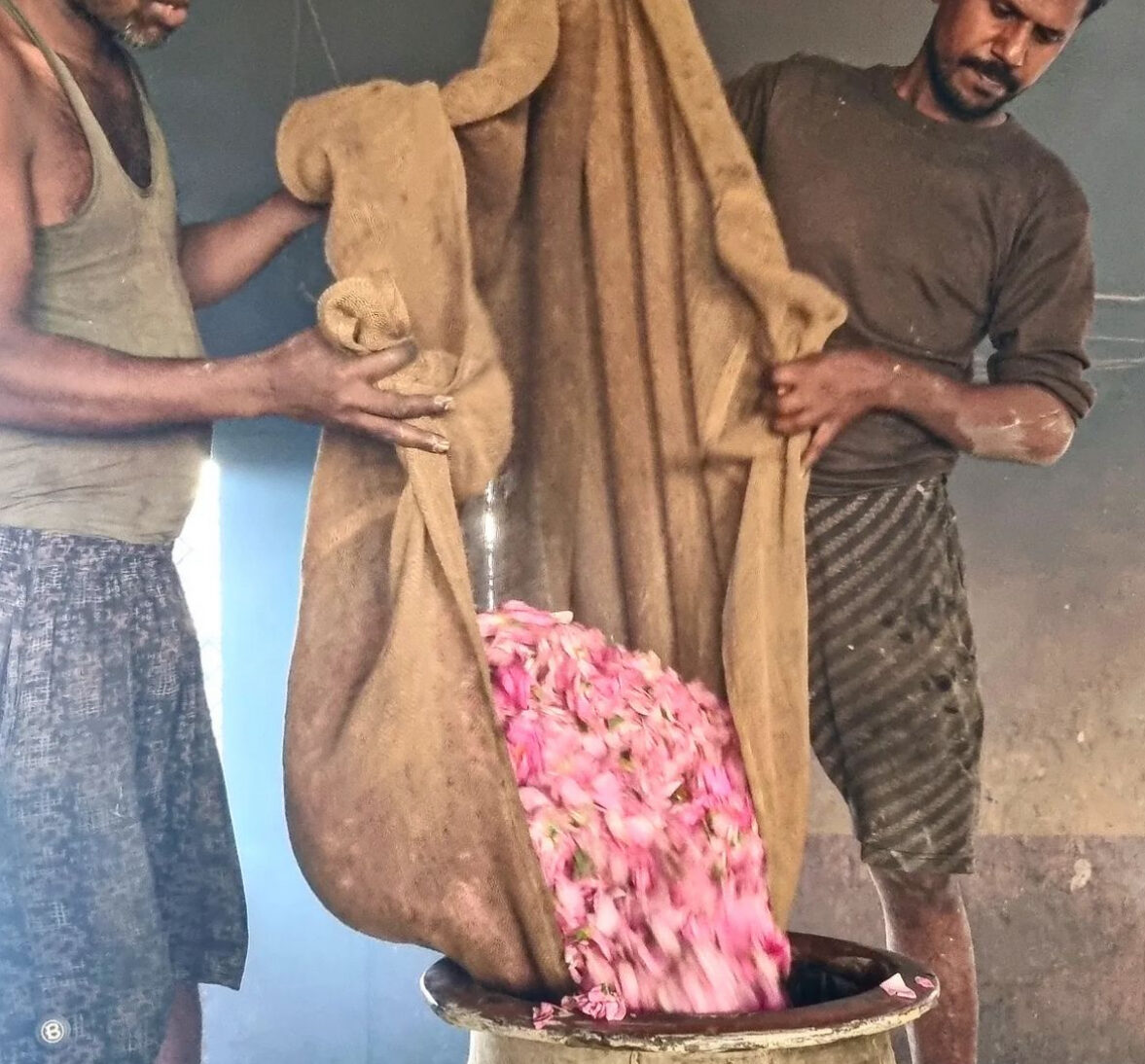
A Legacy Spanning Two Thousand Years
Kannauj’s perfume-making tradition dates back over 2,000 years. During the Gupta Empire in the fourth century AD, the city had already established itself as an important centre of fragrance production.
Its distillation techniques have been carefully passed down from one generation to the next, allowing Kannauj to preserve its prestigious position within the global perfume industry.
Traditional Craftsmanship
The city’s reputation rests upon its remarkable expertise in extracting essential oils.
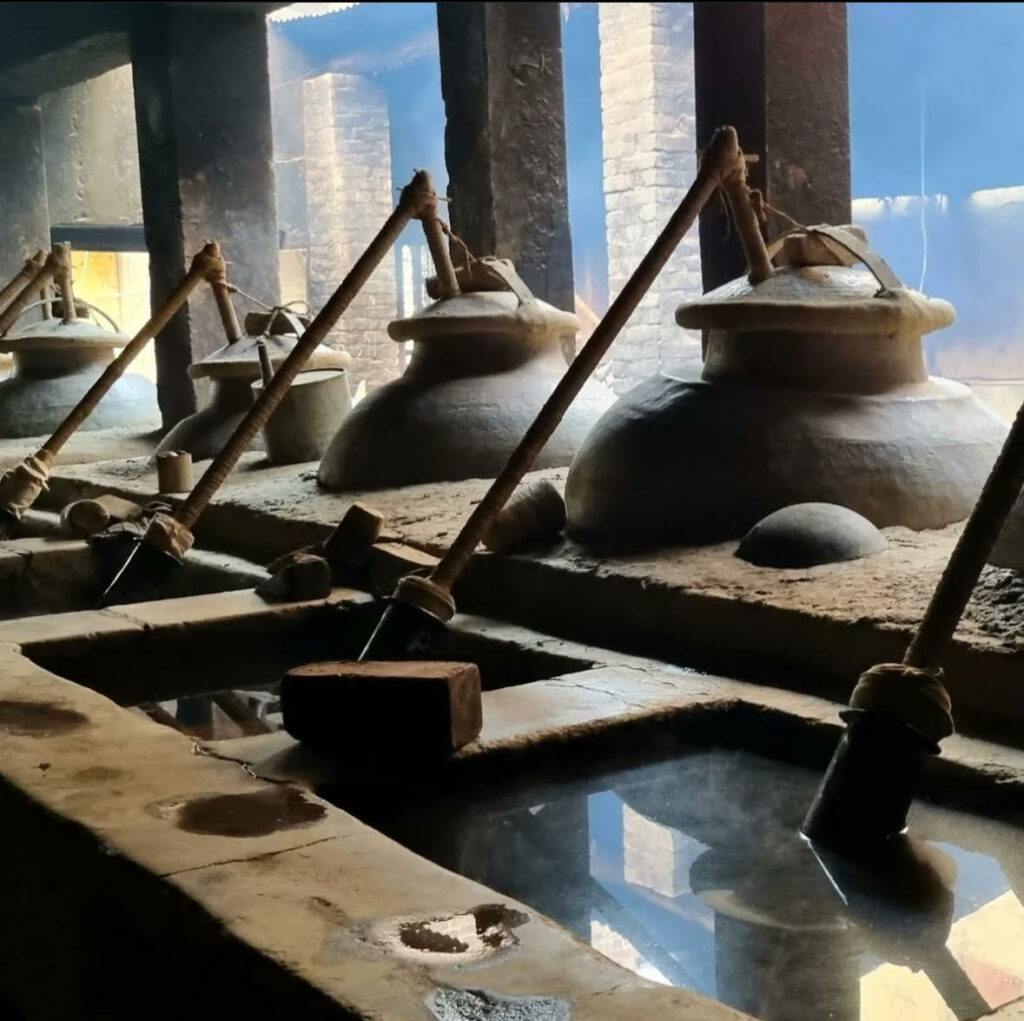
Its traditional Degh-Bhapka distillation method employs handcrafted copper stills connected to receivers immersed in cooling water. Slow steam distillation gently captures the aromatic molecules before they are absorbed into sandalwood oil, producing exceptionally pure and refined attars.
Although modern equipment has become increasingly common, many artisans continue to practise this centuries-old method, preserving an invaluable cultural heritage.
Exceptional Raw Materials
The fertile region surrounding Kannauj offers perfumers an extraordinary palette of botanical treasures.
Among its most prized flowers are:
- Jasmine
- Rose
- Kewda
- Tuberose
- Spikenard
These ingredients have formed the foundation of Indian perfumery for centuries.
The Art of Attar
Kannauj is internationally famous for its attars—traditional alcohol-free perfumes inherited from the Mughal Empire.
Unlike Western perfumes, attars are created by distilling flowers, spices, herbs or woods directly into sandalwood essential oil, which acts as both solvent and fixative. The result is an intensely rich, long-lasting fragrance with exceptional depth and natural complexity.
Kannauj also produces a wide range of Ayurvedic perfumes made exclusively from natural ingredients, free from synthetic chemicals.
An Economic and Cultural Treasure
Perfumery remains one of Kannauj’s most important industries, providing employment for thousands of people—from flower growers and distillers to artisans and master perfumers.
The city is also home to several perfume schools dedicated to preserving traditional knowledge and training future generations of artisans.
Protecting a Precious Heritage
Like many traditional industries, Kannauj faces significant challenges, including competition from synthetic fragrances and the pressures of globalisation.
Despite these obstacles, the city continues to safeguard its unique expertise while promoting the cultural importance of natural Indian perfumery.
For fragrance enthusiasts, Kannauj represents far more than a historical destination—it is a living museum where centuries of olfactory craftsmanship continue to flourish.
Mysore: The Royal Legacy of Sandalwood
Located in the heart of Karnataka, Mysore is renowned for its magnificent royal palace, impressive temples, and unique relationship with one of perfumery’s most precious ingredients: Santalum album, or Indian white sandalwood.
This elegant tree, whose pale heartwood gives it its Latin name album (“white”), grows as a semi-parasitic species, attaching its roots to neighbouring trees. Highly prized in perfumery, sandalwood produces a creamy, warm, milky, and velvety fragrance that has become one of the industry’s most treasured raw materials.
Its history is inseparable from the identity of Mysore itself.
Sandalwood: Mysore’s Greatest Treasure
Known throughout India as the “sacred wood,” sandalwood naturally grows in the tropical forests of southern India.
Mysore possesses one of the world’s most important sandalwood-producing regions, earning it the title of the country’s sandalwood capital.

Centuries of Tradition
The use of sandalwood in Mysore dates back many centuries.
Ancient rulers prized the wood for its religious significance and symbolic value. It featured prominently in royal ceremonies, Hindu rituals, traditional medicine, and the manufacture of sacred objects.
Mastering Sandalwood Distillation
Mysore has developed internationally recognised expertise in extracting sandalwood essential oil.
Local artisans continue to employ time-honoured distillation techniques to produce an oil celebrated for its exceptional richness, smoothness, and woody elegance.
A Precious Ingredient
Sandalwood oil is used in a remarkable variety of products, including:
- Fine fragrances
- Cosmetics
- Soap
- Aromatherapy
- Ayurvedic medicine
- Incense
- Religious artefacts
Its creamy, long-lasting character makes it one of the world’s most valuable perfume ingredients.
Economic and Cultural Importance
The sandalwood industry remains a cornerstone of Mysore’s economy, supporting thousands of livelihoods—from forestry workers and cultivators to distillers and perfumers.
Beyond its economic value, sandalwood has become one of the defining symbols of the city’s cultural identity.
Challenges for the Future
Despite its prestige, Mysore’s sandalwood industry faces considerable challenges.
Illegal logging and international trafficking have severely threatened natural sandalwood forests. As a result, sandalwood cultivation and harvesting are now strictly regulated by the Indian government.
These restrictions have also encouraged counterfeiting and increased competition from synthetic sandalwood molecules. Nevertheless, Mysore remains committed to protecting its remarkable heritage while promoting more sustainable cultivation and production practices.
Madurai: An Olfactory Symphony
Madurai, a historic city in Tamil Nadu in southeastern India, offers a truly unique sensory experience. Fragrant temples, lively spice markets, and a cuisine rich in aromas create an olfactory symphony that captivates every visitor.
A Perfumed History
Madurai’s history is deeply intertwined with spices. Once a major trading hub, the city attracted merchants from across the world. Its air was filled with the intense aromas of black pepper, clove, turmeric, nutmeg, and saffron.
But above all, Madurai is the kingdom of Sambac jasmine.
The Capital of Sambac Jasmine (Malligai)
The most prized variety of jasmine, locally known as Madurai Malli, is cultivated in vast fields surrounding the city. Its intoxicating fragrance has become an iconic signature of Madurai.
The jasmine flower is deeply embedded in the city’s cultural identity—its shape appears in temple sculptures, traditional artworks, and ornamental jewellery.

The earliest references to Madurai jasmine can be found in Sangam literature, dating back to between 300 BCE and 300 CE.
Freshly harvested jasmine buds are sold in early-morning flower markets known as “poo markets”, where growers bring their produce at dawn. These flowers are purchased while still in bud form and then woven into garlands used for prayer, decoration, and export across the world.
They are also essential to perfumery: solvent extraction produces precious concretes and absolutes, capturing the flower’s divine scent.
The term “sambac” comes from the Sanskrit campaka, referring to highly fragrant botanical species.
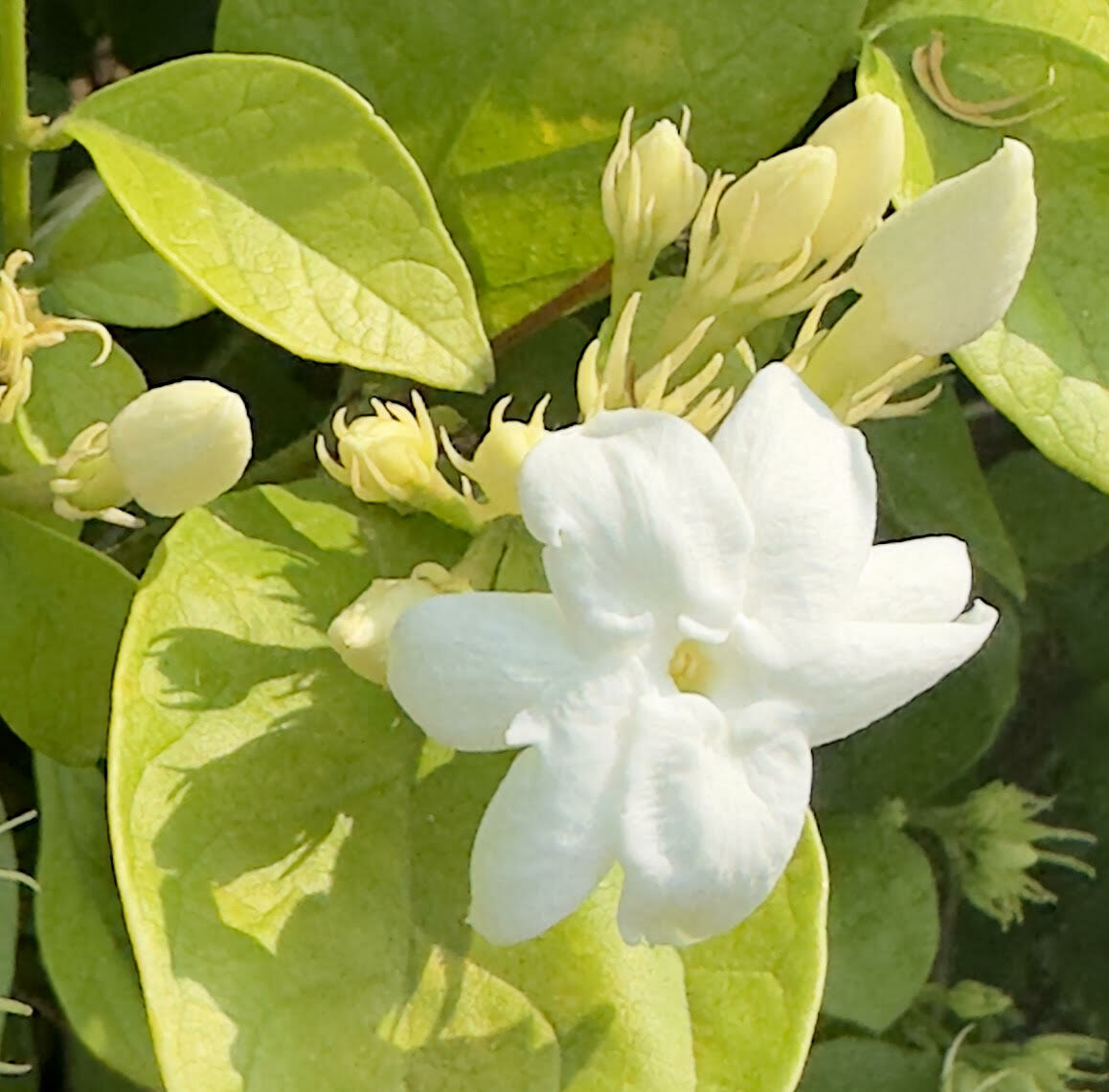
Its flowers, usually composed of 7 to 10 thick, waxy petals, release a complex scent profile. It opens with green, slightly banana-like freshness reminiscent of lily of the valley, before evolving into sunny, fruity, honeyed, and lightly animalic tones close to orange blossom.
While jasmine sambac has long been used in Indian and Middle Eastern attars, it only entered Western fine perfumery in the late 1980s.
Madurai: A Must-Visit Olfactory Destination
Madurai is an essential destination for anyone wishing to experience jasmine sambac at its source.
It is a city that must be explored through the nose. Its temples—especially the magnificent Meenakshi Temple, one of the largest Hindu temples in India—its markets, and its cuisine all offer an unforgettable sensory journey, where fragrance and spirituality merge in perfect harmony.
The Role of Perfume in India: Economic, Cultural, and Spiritual Dimensions
India’s fragrance industry is a dynamic and rapidly growing sector, representing a multi-billion-dollar market. Beyond its economic importance, perfume remains a gesture of respect, affection, and identity.
India is a true olfactory treasure, offering a journey through the richness of its culture, traditions, and natural resources. Kannauj, Mysore, and Madurai are not merely places on a map—they are the beating heart of a tradition that transcends borders and time.
Today, the future of Indian perfumery appears promising, driven by growing global demand for authentic, natural, and sustainable products. Consumers worldwide increasingly seek to understand the origin and meaning behind the fragrances they wear, turning toward scents that tell a genuine story. In this search for authenticity and depth, India offers an inexhaustible source of inspiration and precious raw materials, inviting the world to rediscover traditional perfumery in a modern context.
And if you wish to experience the magic of India at its source, you can embark on one of the olfactory journeys organized by Magali Quénet, founder of “Mon Parfum C’est Moi”. A passionate expert in raw materials, she invites participants to explore the origins of perfume with scent as the guiding thread of discovery. A truly immersive experience.
Article co-written by Elfa Jouini and Anne-Laure Hennequin
On the occasion of International Women’s Rights Day, on 8 March, it is essential to pay tribute to the remarkable contributions of women in the world of perfumery. Historically, the industry has been perceived as dominated by men, but over the decades, talented women have broken down the barriers, bringing their unique sensitivity, their creativity and their innovative vision. This article highlights some of the most influential women perfumers, their inspiring journeys, and the olfactory creations that have left an indelible imprint on the world of perfumes.
Breaking Traditional Barriers
Women have established themselves in the world of perfumery, traditionally dominated by men, through a combination of talent, perseverance and innovation. Their rise in this olfactory art can be attributed to several key factors that reflect both a cultural shift and the evolution of the industry itself.
Historically, perfumery was considered an extension of chemistry, a field where women had little presence. However, over time, perceptions evolved, and education as well as increased access to specialised training opened doors. Institutions such as ISIPCA in France played a crucial role in training generations of perfumers, including talented women who then left their mark on the industry.
Sensitivity and Approach
Women brought a different sensitivity and perspective to perfume creation, often drawing on their intuitive understanding of emotions and lived experiences to design fragrances that resonate deeply on an emotional level. This ability to weave rich, complex olfactory narratives not only allowed women to distinguish themselves in the field but also enriched the diversity of perfumes available on the market.
Innovation, Creativity and Mentoring
Women perfumers have often been at the forefront of innovation, pushing the limits of creativity to explore new facets of perfumery. Whether through the use of modern techniques, the reinterpretation of traditional notes or the development of new molecules, their work has contributed to shaping olfactory trends and introducing new standards of beauty and excellence in the industry.
The importance of networking and mentoring cannot be underestimated in the rise of women in perfumery. By establishing strong links with other industry professionals and benefiting from the support of mentors, women have been able to navigate the sector more effectively, gaining visibility and recognition. Moreover, many established women perfumers have taken to heart the mentoring of the new generation, thus ensuring a legacy of female talent in perfumery.
The Olfactory Architects of Modern Perfumery
The Master Perfumers
Germaine Cellier
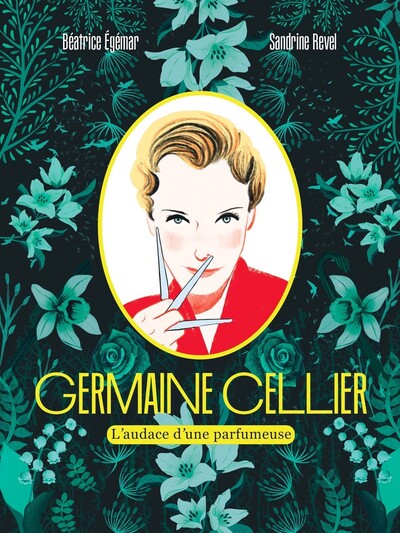
Germaine Cellier was a pioneer in the world of perfumery, known for her revolutionary work in the 1940s and 1950s. She created emblematic perfumes for the house of Balmain, such as Vent Vert, and Fracas for R. Piguet. G. Cellier is recognised for having broken the conventions of her time, introducing bold compositions that changed the face of modern perfumery.
Daniela Andrier
Daniela Andrier is a renowned perfumer working mainly with Givaudan, one of the largest perfume creation houses. She is not an in-house perfumer for a specific brand but collaborates with several luxury brands. D. Andrier is known for her delicate, precise approach to perfumery, with creations such as Infusion d’Iris for Prada or Untitled for Maison Martin Margiela. Her strength lies in her ability to create perfumes that evoke subtle, complex emotions, which has earned her recognition in the industry.
Calice Becker
Calice Becker is director of perfumery creation at Givaudan and was the creative force behind perfumes such as J’Adore by Dior. Her contribution to perfumery goes beyond her creations; now perfumer vice-president and director of the Givaudan Perfumery School, she is a mentor and a source of inspiration for the new generations of perfumers, proving the importance of passion, innovation and determination in the pursuit of excellence. In 2021, she was the laureate of the Fragrance Foundation’s “Lifetime Achievement Perfumer Award” for her brilliant career and her visionary leadership in promoting the art of perfumery. Calice Becker continues to influence the industry with her work, leaving a lasting mark that testifies to her creative genius.
Nathalie Lorson
Trained at Roure, Nathalie Lorson is a master perfumer at Firmenich. She has created perfumes for a multitude of brands, including Encre Noire for Lalique. N. Lorson is appreciated for her aptitude in creating complex, enveloping fragrances, using her talent to explore new olfactory dimensions, as with Black Opium by YSL. N. Lorson recreated the Héritage collection of the house of Violet with great mastery. She collaborates with various brands as an independent perfumer, and has received several awards recognising her talent.
Isabelle Doyen
Isabelle Doyen is a master perfumer whose creations stimulate the imagination through their originality and their audacity. Long associated with the house of Annick Goutal, now Goutal Paris, I. Doyen was the creative force behind several of the brand’s emblematic perfumes, such as Songes and Nuit Étoilée, which reflect her talent for capturing the essence of nature and human emotions. Her collaboration with Camille Goutal, daughter of Annick Goutal, led to a series of fragrances that celebrate the founder’s legacy while introducing new olfactory directions. I. Doyen is also known for her work on independent creations that defy traditional categorisations, showing her penchant for experimentation and innovation.
Nathalie Feisthauer
Nathalie Feisthauer is an independent perfumer, having created Lab-Scent after working at Givaudan then Symrise. She contributed to the creation of perfumes such as Eau des Merveilles for Hermès and has a reputation for her innovative work. She has received several awards, notably the FIFI Perfumer of the Year award in 2019, the Best Revelation award with the launch of the Sous le Manteau collection in 2020, and a FIFI Award with L’Orchestre Parfum for Electro Limonade in 2021.
Annick Menardo
Annick Menardo is a perfumer who has worked for Firmenich. She is famous for her bold, innovative creations, such as Hypnotic Poison for Dior and Body Kouros for Yves Saint Laurent. A. Menardo has a particular talent for creating perfumes that are both contemporary and timeless, using a varied range of ingredients to capture complex emotions.
Aliénor Massenet
Aliénor Massenet works as a perfumer for Symrise, one of the great perfume creation houses. Over the course of her career, she has created perfumes for a variety of brands, including Memo Paris. A. Massenet is known for her detailed approach and her ability to create rich, complex fragrances, where memories and emotions are highlighted through her compositions.
Sophia Grojsman
Sophia Grojsman, working mainly with IFF (International Flavors & Fragrances), is famous for her unique approach to perfumery. She has created emblematic perfumes such as Eternity for Calvin Klein and Trésor for Lancôme. Grojsman is known for her generous use of floral notes, in particular rose, and has been rewarded with numerous awards for her contributions to the industry.
Françoise Caron
Françoise Caron has worked on a multitude of perfumed creations over the course of her career for various houses, notably for Hermès with the creation of Eau d’Orange Verte. An independent worker with recognised expertise, Caron is famous for her ability to capture freshness and simplicity in her perfumes, creating works that are both delicate and powerful.
Honorine Blanc
Honorine Blanc is a perfumer at Firmenich who has produced many emblematic perfumes, notably the blockbuster Flowerbomb for Viktor & Rolf. Her mastery of floral compositions and her talent for creating bold fragrances make her a respected figure in the field. H. Blanc is known for her collaborative work with various luxury brands.
Anne Flipo
A perfumer at International Flavors & Fragrances (IFF) since 2004, Anne Flipo’s journey began at ISIPCA, where she developed her passion for raw materials. Rich in a unique talent, she has created many successful perfumes for luxury brands. Her expertise in balancing natural and synthetic ingredients gives rise to unique, distinctive fragrances. Composing for prestigious brands such as Guerlain, Yves Saint Laurent and Lancôme, Anne Flipo continues to pursue her work and to inspire through her admirable output. She notably signs the new fragrance of Essential Parfums, Néroli Botanica.
A Relevant New Approach
Daphné Bugey
Daphné Bugey, a perfumer at Firmenich, has created fragrances for a variety of brands, including Le Labo with Rose 31, for example. D. Bugey is appreciated for her know-how combining contemporary and traditional ingredients to create innovative fragrances. She also works independently with various houses.
Sonia Constant
Sonia Constant works for Givaudan and has created perfumes for brands such as Valentino, but is above all recognised for her work for Narciso Rodriguez, with whom she has collaborated on a large collection around musk. She is known for her modern approach and her use of unexpected raw materials to create perfumes that defy conventions. S. Constant has also created her own brand, EllaK, in which she transcribes all her creative sensitivity.
Emilie Coppermann
Emilie Coppermann, a perfumer at Symrise, is recognised for her dynamic, innovative creations, notably for brands such as The Different Company. Her mastery of woody and fresh accords makes her an essential figure in the industry, Dance of the Dawn being an example of this. E. Coppermann also works independently with many houses, bringing her unique approach to each project.
Cécile Zarokian
Cécile Zarokian is an independent perfumer who has established her own company, Cécile Zarokian Parfums. She is known for creations such as Amouage Epic Woman. C. Zarokian has gained recognition for her artisanal approach to perfumery, developing perfumes that tell a story and evoke deep emotions.
Christine Nagel
Christine Nagel is currently the in-house perfumer for Hermès, having succeeded Jean-Claude Ellena. Before joining Hermès, she worked on projects for many prestigious brands. C. Nagel is known for her narrative approach to perfumery, creating perfumes that tell stories and capture moments. Among her notable creations at Hermès is Eau de Rhubarbe Écarlate. Her appointment as head perfumer at Hermès marks a significant step in her career, underlining her talent and her vision in the art of perfumery.
Mathilde Laurent
Mathilde Laurent has been the in-house perfumer for Cartier since 2005, where she is famous for having created a variety of emblematic perfumes, including La Panthère. Before joining Cartier, M. Laurent worked at Guerlain. Her bold approach and her innovative use of ingredients make her a leading figure in the industry, pushing the limits of olfactory creation.
Olivia Giacobetti
Olivia Giacobetti is recognised for her ability to capture the essence of invisible, ephemeral things in her perfumes. She is an independent perfumer and the founder of her own brand, IUNX. Among her most famous creations is En Passant for Frédéric Malle, highlighting subtle notes of lilac. O. Giacobetti is appreciated for her poetic style and her ability to create nuanced, captivating perfumes.
Vero Kern
Vero Kern was the founder of Vero Profumo, a Swiss niche brand. As an independent perfumer, she created perfumes that became cult in the world of niche perfumery, such as Onda, Kiki, and Rubj. Kern was known for her use of high-quality raw materials and for her bold, timeless compositions.
Amélie Bourgeois
Amélie Bourgeois is a French perfumer whose passion and expertise for olfactory creation distinguish her in the world of perfumery. Trained at the ISIPCA perfumery school, one of the most prestigious in the world, Amélie quickly developed a unique creative signature, marked by a bold exploration of raw materials and an avant-garde approach to composition. Her vision of perfumery, at once poetic and innovative, has led her to work on various olfactory projects, from niche perfumes to artistic collaborations.
Anne-Sophie Behaghel
Anne-Sophie Behaghel also possesses a solid training in perfumery, having refined her talent and her technique at ISIPCA before embarking on a distinguished career in the industry. Anne-Sophie is recognised for her ability to harmoniously balance complexity and subtlety in her creations, as witnessed by her work for major brands and niche projects. Her passion for telling stories through perfumes and her meticulous attention to detail make her a creative force in the field.
(Together, Amélie Bourgeois and Anne-Sophie Behaghel founded Le Studio Flair, an olfactory creation studio that stands out through its personalised approach and its commitment to innovation and excellence.)
Sophie Labbé
Sophie Labbé took up the art of perfumery after being inspired by Jean Kerléo, a perfumer at Jean Patou. She studied at ISIPCA in Versailles before joining IFF, where she practised for more than 20 years before joining, in 2019, the Paris teams of Firmenich. Her perfumes, imbued with her passion for nature and romanticism, stand out for their softness and their harmony. Sophie Labbé is recognised for her determination to perfect each creation. Her compositions, such as Very Irresistible by Givenchy or Parisienne by Yves Saint Laurent, charm through their ability to reveal unique atmospheres and stories.
Véronique Nyberg
Véronique Nyberg, an artist and chemist by training, found her passion in perfumery after her studies at the IFF Perfumery School. Her journey led her through various cities, refining her creativity and her mastery of contrasts. In 2014, she joined MANE in Paris as vice-president of fine perfumery creation. Her artistic signature lies in the subtle harmony of opposites. For Véronique, innovation is the fruit of deep introspection, nourished by experiences and imagination, giving rise to singular, captivating creations.
And so many others still… Today, perfumery has the good fortune to see many women perfumers continue to emerge, allowing it to benefit ever more from this feminine artistic sensitivity.
Extraordinary Contributions to Perfumery
The contributions of these extraordinary women to perfumery are invaluable. They have not only paved the way for other creative women in this traditionally male field but have also enriched our world with fragrances that awaken the senses and arouse deep emotions. Their legacy inspires a new generation of women perfumers to explore the art of perfumery without limits, promising a future where the boundaries of creativity and innovation continue to be pushed back. In celebrating International Women’s Day, we recognise not only their past achievements but also the future impact of women in the perfume industry.
The establishment of women in perfumery reflects a broader shift in society towards greater gender equality and the recognition of talent regardless of gender. Their success in this olfactory art underlines the importance of the diversity of perspectives and experiences in creating perfumes that inspire—bound up with the determination that can lead to excellence, regardless of gender.
In February, there is electricity in the air 💕 During this month dedicated to love, Master Parfums takes you on a journey through the deep and fascinating connection between fragrance and romance.
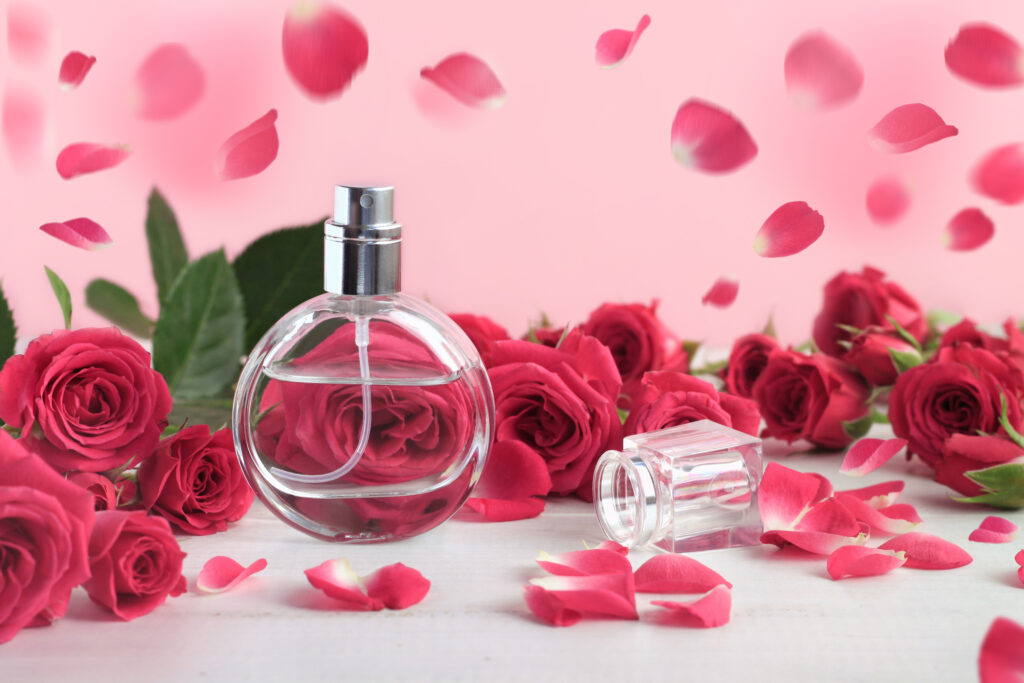
Perfume as a Weapon of Seduction
To trace the earliest links between perfume and seduction, one must go back to the very origins of perfume itself.
Let us travel to Antiquity: the Egyptians were already passionate users of scented products. According to perfume historian Élisabeth de Feydeau, priests in Egyptian temples—considered the first perfumers in history—sought to communicate with the divine. “Burning fragrant woods and resins was a way of seducing the gods in the literal sense: attracting their attention in order to obtain their favour,” she explains.
Perfumed fumigations, ointments, and balms used to anoint the bodies of the deceased were all mystical tools designed to appeal to the gods and secure access to eternal life.
At the same time, scented products also played a role in human seduction—but only among the elite. In ancient times, power was almost equivalent to divinity. The wealthiest classes associated olibanum and myrrh with aphrodisiac properties, while rose and lily were highly prized. Cleopatra herself was said to be inseparable from her perfumed wigs and scented baths.
It was only when perfumes were attributed medicinal and therapeutic properties that ordinary people were allowed to participate in rituals previously reserved for gods and pharaohs.
Over time, perfume’s role shifted depending on the era. With social changes and scientific progress, its medicinal and hygienic function gradually faded—reaching its peak during the Renaissance—while its seductive power slowly re-emerged.
But this return was relatively late. According to Élisabeth de Feydeau, until the 19th century in the West, women who wore perfume were often courtesans—the so-called “cocottes”—wrapped in sensual and narcotic scents such as patchouli, animalic notes (amber, musk, civet), and intoxicating flowers like tuberose, narcissus, and datura.
In the 18th century, even the British Parliament passed a surprising law: a man could annul his marriage if he discovered his wife had used perfume. This shows just how powerful and “bewitching” fragrances were believed to be.
It was only in the 20th century that perfume fully re-emerged as a symbol of pleasure, hedonism, and seduction. During the Belle Époque, the “Art Nouveau woman” became central, associated with floral scents such as lily of the valley, lilac, violet, rose, and jasmine. Orientalist influences then introduced warmer, more mysterious, and sensual notes.
The 20th century ultimately became the era of perfume democratization—and perfume never stopped playing Cupid.
From Cleopatra enchanting Mark Antony with the precious scents of her skin and hair, to modern advertising campaigns built around romantic seduction, perfume has always embraced the language of desire. Who remembers the 1980s slogan: “An unknown man offers you flowers? That’s the magical effect of Impulse!”
Today, even if we no longer take perfume’s enchanting power literally, perfumers continue to play the role of Cupid, creating fragrances that capture the intensity of love and emotion.
Two olfactory families are especially suited to this role…

Cupid’s Favorite Olfactory Families
Every fragrance tells a story through the olfactory pyramid defined by Jean Carles. And love stories are also what bouquets of flowers express—making the floral family one of the most emblematic representations of love itself.
A floral fragrance may highlight a single flower (a soliflore), but most compositions embrace the richness of a full bouquet. The rose—said in legend to have been born from a drop of Venus’ blood and a kiss from Eros—is the ultimate symbol of passion. Jasmine brings seduction, while tuberose expresses intoxicating sensuality.
Depending on its structure, a floral perfume can be opulent and intoxicating, soft and airy (lily of the valley, freesia, lilac), or radiant and solar (frangipani, ylang-ylang).
The oriental family also embodies passion beautifully, with warm and opulent notes: intoxicating musks, animalic oud, sensual amber, captivating patchouli, sweet vanilla, enveloping resins and balms, and spices that enhance the composition. This family expresses love in a more carnal and voluptuous way.
For Valentine’s Day, let us explore some iconic fragrances that celebrate love in all its forms.
Iconic Fragrances of Love
N’Aimez Que Moi – Caron
In 1906, shortly after founding the house of Caron, perfumer Ernest Daltroff met milliner Félicie Wanpouille. She became his collaborator, designing bottles and acting as artistic director. Without initially knowing it, she also became his muse.
Daltroff secretly loved her for years, and this unspoken emotion inspired his creations. During a journey away from her, he conceived the idea of a perfume called N’Aimez Que Moi (“Love Only Me”).
Launched in 1916, it is a floral-woody fragrance built around Turkish rose, violet, iris, cedarwood, patchouli, and vetiver. It became especially meaningful during World War I, when soldiers sent it to their fiancées as a symbol of fidelity and love awaiting their return from the trenches.
Grand Amour – Annick Goutal
“All my perfumes come from an irresistible desire born from those I love,” said perfumer Annick Goutal.
Grand Amour (1997) is inspired by the lilies her husband, cellist Alain Meunier, sent her every week for 18 years. Together with perfumer Isabelle Doyen, she transformed this gesture into a fragrance built around white lilies, hyacinth, honeysuckle, cassis bud, and vanilla.
The result is a soft yet deeply sensual expression of enduring love.
Femme – Rochas
In 1941, Marcel Rochas met Nelly Brignole on the Paris metro. He famously told her: “You look like someone who wears hats.” She would later become his wife and muse.
When they married, Rochas dedicated Femme (1948) to her, created by Edmond Roudnitska. It was a groundbreaking fragrance combining synthetic molecules with natural ingredients, notably prunol, which created a candied plum effect.
With ylang-ylang, rose, cumin, ambergris, patchouli, and oakmoss, it is a deeply sensual chypre and a true olfactory declaration of love.
Capsules of Love
Some fragrances are not tied to a specific love story but still aim to embody passion itself.
L’Amour by Lalique (2013) is a luminous floral bouquet of rose, neroli, and tuberose, celebrating femininity and romance.
Cacharel Amor Amor (2003) blends sparkling fruits like pink grapefruit and mandarin with juicy apricot and cherry, softened by rose, jasmine, lily of the valley, tonka bean, and sandalwood.
Lanvin Marry Me (2010) expresses a fruity-floral love story with Seville orange, jasmine tea, rose, magnolia, white cedar, and peach.
You will have understood: the sense of smell is a powerful language of love, and perfumery has not finished giving us butterflies 💕
The world of perfume in China offers a fascinating journey through time and the senses. From ancient China, where fragrances were deeply rooted in cultural and spiritual traditions, to the modern era, where innovation and global trends are redefining olfactory preferences, Chinese perfumery stands as a living testament to the evolution and richness of scents.
This article delves into the history, practices, and symbols of perfumery in China, revealing how this vast and diverse country has shaped—and continues to shape—the world of fragrances.
Perfumery in Ancient and Modern China
The history of perfumery in China is a fascinating testament to cultural and technical evolution. It illustrates how an ancient art can adapt and thrive in a modern context while remaining true to its roots.
Chinese perfumery, with its ancient origins rooted in rituals and traditional medicine, has endured through the ages, evolving from a sacred practice into a dynamic industry. In the past, natural fragrances such as incense and essential oils were used in both imperial ceremonies and for daily well-being, while “dragon’s saliva” or ambergris embodied rarity and mysticism. These traditions, enriched by foreign influences via the Silk Road, have shaped a unique olfactory identity, blending the gifts of the nature with the contributions of cultural exchange.
With globalization, modern China has embraced international trends, incorporating elements of foreign perfumery while promoting luxury brands. This openness has been accompanied by a quest to preserve the authenticity of local techniques and ingredients, reflecting a desire to fuse the traditional with the modern. Contemporary Chinese perfumery, rooted in its rich past yet focused on innovation, continues to thrive, honoring its heritage while constantly reinventing itself.
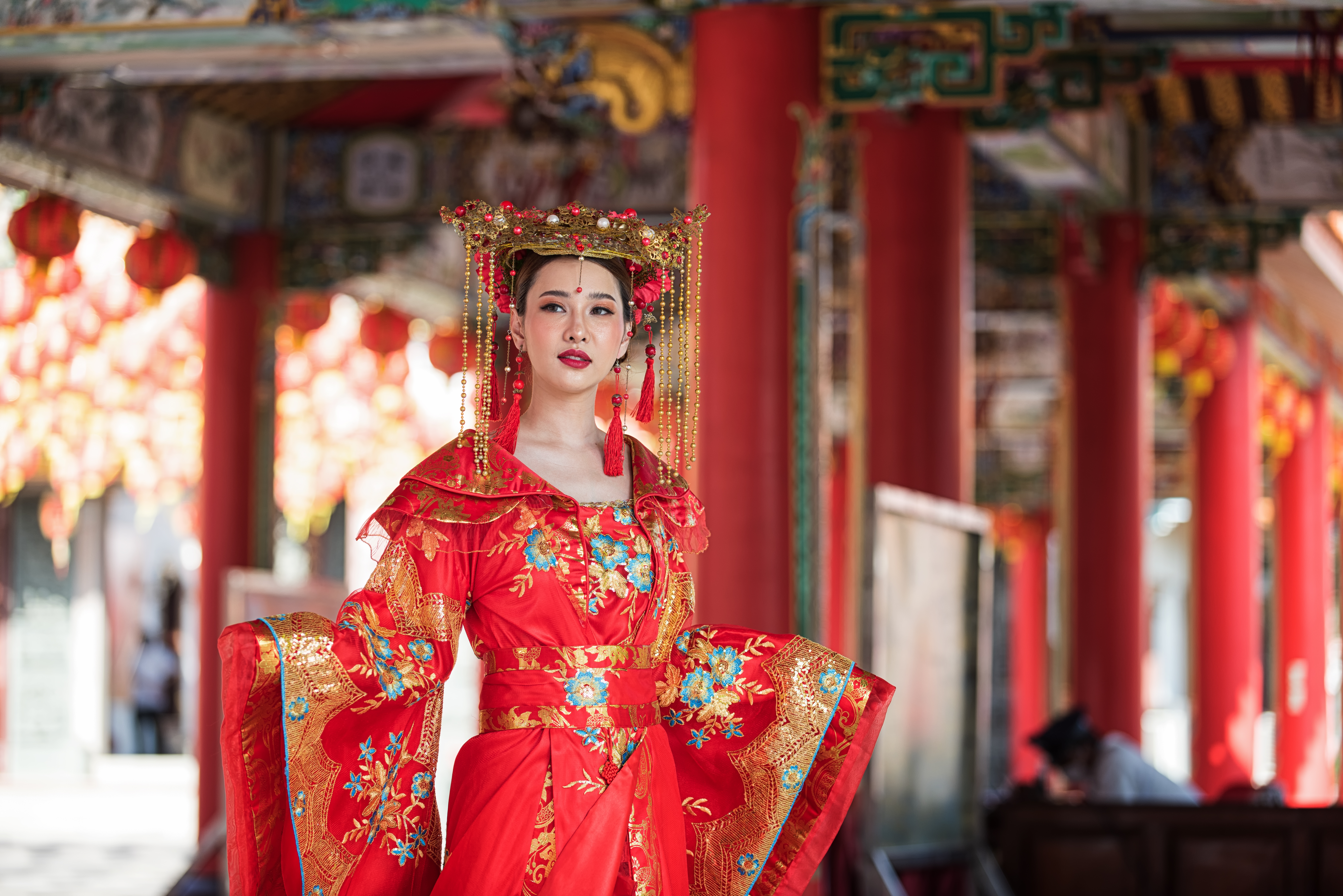
The Chinese Relationship with Fragrances and Scents
China’s relationship with perfumes and scents is deeply rooted in its history, philosophy, and traditional medicine. This relationship goes far beyond mere aesthetic appreciation to encompass cultural, spiritual, and therapeutic dimensions.
In Chinese society, fragrances are not only viewed as a means of personal adornment but also as a path to inner and outer balance and harmony.
Historically, the Chinese have used fragrances in various religious rituals and ceremonies to purify the air, ward off evil spirits, or facilitate meditation. Incense, in particular, plays a central role in Buddhist and Taoist practices, symbolizing transformation and the ascent of prayers to the heavens. These uses reflect a holistic approach to life, in which scents are integrated into the pursuit of spiritual and physical well-being.
In traditional Chinese medicine, scents play a crucial role in diagnosing and treating imbalances in the body. Certain fragrances are used for their healing properties, capable of influencing the flow of energy (Qi) in the body, harmonizing Yin and Yang, or treating specific ailments. This medicinal use of scents underscores the belief in an intrinsic connection between scents and health.
Chinese perfumery, with its rich history and traditions, is based on a range of raw materials that reflect both the country’s natural abundance and its philosophy of harmony. These carefully selected ingredients are at the heart of fragrance creation in China, blending ancestral heritage with contemporary aspirations.
In medieval China, the Tang (616–907) and Song (960–1279) dynasties enjoyed immersing themselves in a fragrant atmosphere. In addition to purifying incense, people took baths in scented waters (lemongrass, peach blossoms) and perfumed their clothing using fumigations and scented sachets tucked into the folds of their sleeves (Borneo camphor). They absorbed scented preparations that the skin exuded, which were then transmitted through touch.
Buildings are also scented by incorporating scented wood (sandalwood) and mixing fragrant substances (camphor, musk) into the mortar.
Traditional medicine incorporates numerous aromatic plants with healing properties: jasmine is invigorating, rose aids digestion, and ginger cures everything!
The Chinese Empire also used cinnamon, camphor, basil, lemongrass, styrax, civet, and musk.
While some of these ingredients have stood the test of time, today the key ingredients in perfumes from this region are as follows:
Sandalwood, with its rich, woody, and sweet scent, is a cornerstone of Chinese perfumery. Used in both spiritual practices and as a component in perfumes, it is renowned for its soothing and meditative properties.
Musk, historically prized for its depth and intensity, plays a significant role in the creation of complex and long-lasting fragrances. Although the use of natural musk is now restricted for ethical reasons, synthetic alternatives seek to recreate its warm and enveloping nuances.
Sambac jasmine, with its floral scent featuring exquisite, sweet, and fruity facets, is a prized essence in China, often symbolizing beauty and sensuality. It is frequently used in floral compositions, adding a touch of softness and elegance. It is also used to flavor tea and rice.
Notes of green tea (often reproduced synthetically) bring a vegetal freshness and a slight astringency to fragrances. This characteristic note is appreciated for its ability to evoke tranquility and purity.
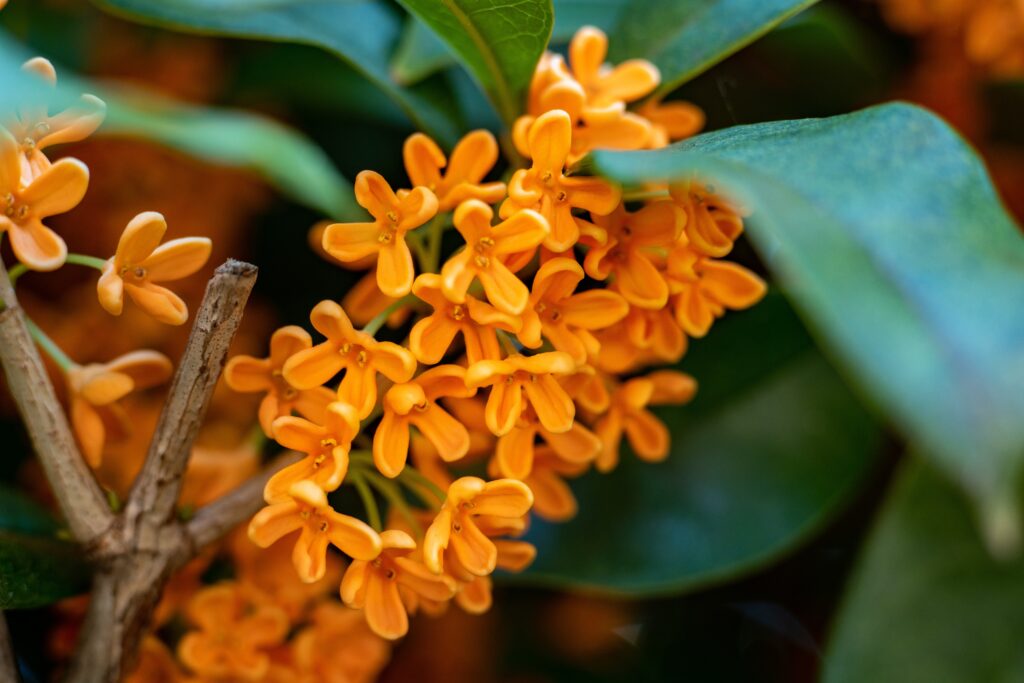
Osmanthus, with its delicate and slightly fruity scent, is a symbol of finesse and sophistication. Its floral, apricot-like, and leathery notes give it a prominent place in many fragrance compositions.
Chinese Perfume Brands
The fragrance industry in China has experienced exponential growth in recent years, with the emergence of local brands that now compete on the international stage. These brands draw on China’s cultural heritage while adopting modern approaches to create unique fragrances that captivate both local and global consumers. Here are some of the most influential and innovative Chinese fragrance brands:
A collaboration between Hermès and Chinese designer Jiang Qiong Er, Shang Xia is a brand that embodies the harmony between tradition and modernity. Although primarily known for its luxury goods and craftsmanship, Shang Xia has also developed a line of fragrances that reflects the brand’s aesthetic and philosophy. Their fragrances celebrate Chinese culture and craftsmanship, offering scent compositions that evoke the landscapes, stories, and emotions of China.
Scent Library is a cutting-edge brand that stands out for its innovative approach to fragrance creation. With uniquely designed boutiques that resemble contemporary libraries, it offers a vast collection of fragrances inspired by unexpected elements, such as childhood memories, abstract concepts, or natural phenomena. Scent Library successfully blends the art of perfumery with pop culture, making fragrance accessible and playful.
Herborist, a brand that draws its essence from traditional Chinese medicine, perfectly illustrates how ancestral knowledge can be applied to the realm of contemporary beauty and perfumery. Its products, including its fragrances, are formulated using natural ingredients from the Chinese pharmacopoeia, aiming to create harmony between body and mind. Herborist, in collaboration with Centdegrés, has launched Mon Instant, a fragrance centered on well-being.
Cha Ling is a brand that embodies the spirit of Yunnan’s tea culture and its connection to nature. Owned by the LVMH Group, Cha Ling specializes in beauty products but has recently expanded its line to include fragrances that capture the delicate and invigorating aromas of Pu’er tea. Cha Ling’s fragrances are an ode to simplicity, purity, and elegance, highlighting the subtle nuances of tea and the botanical riches of Yunnan.
Trending Fragrance Categories in China
Perfume culture in China, much like the country’s culture itself, is a blend of tradition and modernity, reflecting the nation’s preferences and aesthetic values. The popular fragrance categories in China reflect an appreciation for scents that subtly harmonize the senses, evoking both the richness of Chinese heritage and contemporary trends. Here is an overview of the most sought-after fragrance categories in China:
Floral
Floral fragrances hold a prominent place in Chinese fragrance preferences, prized for their ability to evoke natural beauty and delicacy. Notes of jasmine, rose, cherry blossom, and osmanthus are particularly sought after, offering a range of scents that span from subtle sweetness to intoxicating richness. These fragrances are often perceived as an expression of femininity and elegance, establishing a deep connection with the country’s lush and diverse flora.
Woody
Woody fragrances, with their notes of sandalwood, cedar, and vetiver, are also highly prized for their warmth and depth. These fragrances evoke strength, stability, and serenity, reminiscent of ancient forests and traditional Chinese gardens. Woody fragrances are often sought after for their unisex appeal, offering a sophisticated and down-to-earth alternative to lighter floral notes.
Fresh
Fresh fragrance categories—including aquatic, citrus, and green notes—are particularly prized for their ability to revitalize and evoke a sense of purity. Fresh fragrances are often associated with youth and vitality, offering a sensation of cleanliness and renewal. Notes of green tea, mint, bamboo, and lemon are frequently used, reflecting an appreciation for simplicity and harmony with nature.
Spicy
Although perhaps less dominant than other categories, spicy fragrances have their place in the Chinese olfactory landscape, offering warmth and exoticism. Notes of ginger, cinnamon, pepper, and cardamom bring a richness and complexity that can be both invigorating and comforting. These scents evoke spice markets, traditional kitchens, and ancient ceremonies, playing on the contrast between the familiar and the exotic.
Gourmand
Gourmand fragrances, though relatively new to the Chinese market, are gaining popularity, especially among young consumers. These fragrances, with their sweet, almost edible notes—such as vanilla, caramel, and fruit—bring a touch of joy and playfulness. They evoke the delights of Chinese cuisine and traditional festivals, creating a strong, nostalgic emotional connection.
The fragrance industry in China reflects its culture: rich, diverse, and constantly evolving. As the Chinese market continues to open up to global influences, it remains true to its roots, providing fertile ground for innovation and creativity. The future of perfumery in China promises to be as fragrant and vibrant as its past, with new olfactory discoveries and exciting trends on the horizon.
Want to continue this olfactory journey around the world?
The new Pocket Quiz by Master Parfums, “Around the World in Perfumes,” features 120 questions and answers that invite you on a captivating journey through the fragrance traditions and cutting-edge techniques of the world.
The integration of AI into our lives is now an indisputable reality, and the perfumery sector, rich in traditions, also finds itself at a technological crossroads. From algorithms capable of defining olfactory profiles to tools for researching unprecedented combinations, AI is establishing itself as an agent of change. This article proposes to draw up an overview of these advances while opening the debate on the future impact of AI on the ancestral profession of the perfumer. Is artificial intelligence a revolution or the beginning of a replacement in the art of perfumery?
AI in Perfumery: a Portrait of Current Uses
Artificial Intelligence, commonly called AI, with its capacities for analysing and processing massive data, is revolutionising the search for new olfactory harmonies. It assists perfumers by proposing unexplored olfactory accords, optimises formulations according to consumer preferences and even anticipates olfactory trends. From the selection of essences to the prediction of their success on the market, AI proves to be a precious tool for perfumery houses.
This artificial intelligence is weaving a complex, rich web in the olfactory field, profoundly modifying the way perfumes are designed, produced and marketed. Today, its application extends across several main axes.
Creation and Formulation
Intelligent systems are now capable of analysing thousands of compounds and creating formulas that could have taken years to develop by traditional methods. AI can predict the interactions between molecules, suggest improvements to increase the stability and longevity of perfumes, and even generate less costly and more sustainable alternatives.
Personalisation
AI opens the door to unprecedented levels of personalisation. By analysing consumer data, from personal preferences to global consumption trends, it enables the creation of perfumes that respond to specific tastes, transforming perfume into a highly individual experience.
Trend Prediction
Algorithms can now detect patterns of consumer preferences and anticipate future olfactory trends. This allows perfumery brands to stay ahead of the market, developing fragrances that will capture consumers’ interest even before they know they desire them.
Production Optimisation
On the production side, AI helps to optimise supply chains and manage stocks more efficiently, reducing waste and improving the yield of precious ingredients.
Evaluation and Testing
AI is also used for the evaluation of perfumes, where sensors and smell machines can assess the quality of a perfume, its strength, its longevity and other important parameters, often more quickly and more objectively than human tests.
These current uses of AI in perfumery are only the tip of the iceberg. As the technology continues to progress, we can expect its role in the creation and distribution of perfumes to broaden, taking us towards unexplored, fascinating olfactory territories.
The Perfumer-AI Symbiosis: Collaboration or Competition?
Can AI replace the perfumer? The question is sensitive and opens up many avenues of reflection. While AI excels at managing data and detecting patterns, creativity and emotion remain the undisputed domain of the perfumer, who draws on their experience, their olfactory memory and their intuition to create perfumes that tell a story, evoke memories, arouse emotions—subtle nuances that escape AI.
In the contemporary olfactory arena, artificial intelligence has joined perfumers, giving rise to a passionate debate: are we witnessing an enriching collaboration or a competition for creative supremacy?
AI, with its ability to process voluminous, complex data, serves as a tool for perfumers to broaden their creative palette. It offers logistical support, suggesting combinations of molecules that even the most experienced perfumers might not consider. These suggestions can lead to unexpected discoveries, propelling perfume creation in bold new directions.
However, the rapid evolution of AI algorithms raises the question of their potential to surpass human capacities. With AI developing its own ‘intuition’ based on data patterns, perfumers might feel themselves in competition with a force that works 24/7, without rest or need for inspiration.
The symbiosis between perfumers and AI should not be seen as a competition, but rather as a cooperation. Perfumers bring their artistic sensitivity and their emotional understanding, while AI offers precision and innovation. Together, they can push back the frontiers of creativity, generating fragrances that are not only new, but also deeply resonant on an emotional level.
The roles within this symbiosis are clear: AI is a powerful research and development assistant, while the perfumer remains the final decision-maker, the soul behind the perfume, the one who gives the green light to transform a formula into a marketable fragrance.
It is essential to view this relationship while keeping in mind the ethical implications. Transparency about the use of AI in perfume creation is crucial to maintaining consumer trust. Moreover, the industry must consider the impact on employment and traditional artisanal skills. Finding a balance between technology and craftsmanship is imperative.
AI should not be perceived as a replacement, but rather as an additional tool in the perfumer’s arsenal. It is important that the perfume industry maintains a harmony between the efficiency of AI and the personal touch and expertise that only a perfumer can bring to a fragrance.
The future of AI in perfumery is not to replace the perfumer, but rather to become their most faithful ally, a tool harnessing their creative and analytical capacities.
Technological Avant-Garde and AI-Assisted Creation
Symrise¹ and Givaudan² show how AI can be used to innovate in the field of perfumery. These creation houses use AI to personalise experiences, optimise production processes, and push back the frontiers of creativity.
Symrise and IBM
Symrise, a world leader in flavours and fragrances, continues to push innovation in the industry, emphasising that AI represents the next great innovation since the introduction of synthetic materials into perfumery at the end of the 19th century.
In collaboration with IBM, Symrise developed an AI perfumer assistant named Philyra that can generate perfumed compositions by analysing millions of formulas, raw materials and consumer preferences. This project makes it possible to quickly create adapted, personalised perfumes for specific markets. Philyra was used by the perfumer Dave Apel to create two distinct perfumes for the Brazilian brand Egeo by O Boticário, targeting Brazilian millennials. These creations were launched at the beginning of 2019.
By harnessing machine-learning algorithms, Symrise is able to analyse consumption trends and individual preferences to offer bespoke creations. Their approach combines data science with olfactory expertise, enabling the creation of unique perfumes that meet the specific expectations of each consumer.
Givaudan and Carto
Givaudan, another giant of the industry, integrates AI not only to analyse trends, but also to assist perfumers in the creative process. Their AI system can suggest innovative ingredient combinations, helping perfumers to explore new olfactory possibilities.
Givaudan launched Carto, an artificial-intelligence tool intended to revolutionise the perfumers’ creation process. This interactive platform is designed to maximise the olfactory performance of creations using a unique “Odour Value Map” and aims to integrate consumer understanding to refine creations. Carto encourages perfumers to explore new accords in a playful way with a touchscreen and an instant-sampling robot, which allows faster trial production than traditional methods. The system has been deployed in Givaudan’s creation centres and is being tested by perfumers for its integration into the creative process, showing promising results.
Calice Becker, perfumer and director of the Givaudan Perfumery School, emphasises that “Carto” helps perfumers to experiment more and with greater efficiency, while affirming that the human creative touch remains irreplaceable.
The perfume “She was an Anomaly” by Etat Libre d’Orange was born of an inspiration developed using Givaudan’s “Carto” artificial-intelligence tool. The AI made it possible to suggest an overdose of two ingredients: iris and white musk, with the rest of the formulation managed, considered and mastered by the perfumer Daniela Andrier. This process illustrates the integration of AI technology into the traditional art of perfume creation, marking a distinctive moment of innovation and singularity in the industry.
“This perfume is the fruit of the unexpected. I played with Carto, entrusting it with loved, familiar materials. Carto suggested an overdose of two ingredients. I took care of the rest.” – Daniela Andrier, perfumer (Givaudan)
The rise of artificial intelligence in perfumery symbolises a true revolution, redefining the frontiers of olfactory creation. These tools illustrate how AI can enrich the creative process, offering perfumers new perspectives to explore innovative, unexpected accords. This technology, complementing human intuition and all its expertise, opens the way to an era of unprecedented personalisation and innovation. However, it also raises ethical questions and challenges linked to the balance between tradition and technological progress.
As AI continues to develop, it will be fascinating to see how it shapes the future of perfumery, broadening the horizons of what we can create and feel through the sense of smell.
On the occasion of the commemoration of 11 November, the day marking the end of the First World War, our olfactory reflection leads us to explore an unexpected angle: the relationship between perfumery and war. These two worlds seem far apart, and yet history reveals to us an intimate link, rich in creations and symbolism. It is an olfactory journey between resilience and renewal that we propose you discover.
The Olfactory Correlations Between Perfume and War
War, with its conflicts and its turmoil, seems at first sight antithetical to the finesse and the harmony that perfumery represents. Yet the history of the olfactory art and of the great world confrontations are surprisingly intertwined, weaving deep, complex links that deserve to be explored.
Cross Influences: Raw Materials and Economy
The first correlation between perfume and war is at the level of raw materials. World conflicts have often disrupted trade routes and the availability of certain precious essences. The Second World War forced perfumers to reinvent themselves, because of the shortage of natural raw materials, giving rise to the increased use of synthetic molecules.
The shortages due to the blockade of wars are also at the origin of new ways of creating and wearing perfume: in the United States during the Second World War, faced with the shortage of perfume alcohol needed for making eaux de toilette, American manufacturers adapted by creating innovative alternatives: more concentrated extracts (therefore containing less alcohol), perfumed creams and powders, solid perfumes and bath oils.
In Spain, during the civil war (1936–39) and the years that followed, it was impossible to import raw materials for perfumes. Self-sufficiency was the order of the day. This is how Agua Lavanda, Puig’s first flagship product launched in 1940, was created with local Mediterranean materials: lavandin, sage, rosemary, thyme, lavender, cistus labdanum… An eau de cologne which, moreover, fitted perfectly with the traditional values carried by the Franco regime.
Beyond the economy, there is the symbolism. Perfumes born during or just after periods of war often carry within them the spirit of their era. They become emblems, acts of resilience, conveying that spirit of renewal and optimism, and marking the return to life and reconstruction.
Perfume as Memory: Conservation and Transmission
Perfume has this unique faculty of capturing and preserving memory. The olfactory creations inspired by periods of war are vectors of historical transmission, evoking not only collective memory but also personal stories. They make it possible not to forget, to teach, and to continue telling the story through the senses.
Olfactory Notes: Echoes of War in the Art of Perfumery
At the heart of perfumery, the olfactory notes associated with war evoke powerful, complex memories.
Take the gunpowder note, for example, whose metallic, sulphurous smell instantly recalls battlefields and distant detonations. This note, used sparingly, confers on fragrances a dimension that is both mineral and bold.

Smoke, for its part, evokes campfires and landscapes after the confrontation, its woody, burnt character increasing depth and mystery. When it enters the composition of a perfume, smoke brings a dimension that is both airy and dark, like a phoenix rising from the ashes of devastation.
Leather is another note that finds its roots in military equipment: boots, belts and harnesses. Let us recall that the first leather notes in perfumery were brought by birch wood, with which the Cossacks maintained their boots and which gave leather a very specific smell. This note embodies robustness and strength, but also a form of nobility and refinement. In perfumery, leather often reveals itself as warm and sensual, a subtle allusion to the armour that one dons to face ordeals.
Fog is more abstract but just as evocative: it recalls the unknown and uncertainty, the concealment of movements and strategies. It is often suggested by aqueous or ozonic notes, bringing a freshness that plays with clarity and sharp outlines, evoking the ambiguity of troubled times.
Finally, earth—damp, fertile, turned over by the trenches—is particularly evocative. It speaks of death and of life, of the inescapable cycle that war highlights with brutality. In olfactory compositions, earth reconnects us with nature and with the basis of our existence, with chypre accords or notes of vetiver, oakmoss and patchouli that anchor perfumes and give them a unique resonance.
These olfactory notes do not simply tell a story of war; they also tell a story of human resilience, of adaptability and, ultimately, of hope.
A Few Symbolic Perfumes
Chanel N°5: a Legend in Wartime
N°5 is a pillar of perfumery, a perfume that has defied eras and trends since its creation in 1921 by Ernest Beaux for Gabrielle Chanel. Its composition, a complex alchemy of floral notes with an overdose of aldehydes, brought an olfactory revolution with an exceptionally modern, abstract bouquet. During the Occupation of the Rhineland, when France was marked by war, Chanel N°5 continued to be an emblem of French elegance. Its ability to remain in production offered a form of cultural resistance, a reminder of beauty and refinement in contrast with the dark times. The perfume transcended its era to become a symbol of survival and continuity, offering a touch of luxury and normality in an otherwise chaotic world. A French luxury that was also exported across the Atlantic thanks to the American soldiers who, on returning from the war, brought back to their wives this chic souvenir of Paris…
Vent Vert: an Ode to Freedom
Vent Vert, launched by Balmain in 1947, is often celebrated as the first perfume to capture the essence of post-war renewal. Designed by the legendary nose of Germaine Cellier, this perfume is a true pioneer in the world of perfumery, introducing a wind of freshness into an era dominated by heavy, opulent scents. The name itself, “Vent Vert” (Green Wind), is evocative of the liberation and the breath of freedom so awaited after the dark years of the war. Its top notes are a burst of greenery, an innovative blend of galbanum, basil and lemon that signified a bold departure from the conventions of the time. The floral heart opens on aromas of rose, jasmine and ylang-ylang, evoking the rebirth of nature in spring. The woody base with touches of vetiver and musk anchors the perfume in a sensation of quiet strength. Vent Vert is not simply a perfume, it is a declaration of hope and a hymn to life reclaiming its rights.
L’Air du Temps: a Symphony of Peace
L’Air du Temps by Nina Ricci, created in 1948, is another olfactory treasure that captured the spirit of the post-war era. Designed by the perfumer Francis Fabron, this perfume embodies the universal aspiration to peace and harmony in a world that was barely emerging from the shadow of war. The bottle, topped with two entwined doves, is a powerful symbol of peace and purity. The fragrance itself is a delicate, feminine blend, opening on sparkling notes of spices and bergamot that introduce a flowered heart of rose and jasmine. The addition of iris brings a touch of powder, a reminder of rediscovered softness and innocence. The base blends sandalwood and musk, creating a sillage that speaks of calm and comfort. L’Air du Temps is more than a perfume, it is a message encapsulated in a bottle, a promise of a new era charged with optimism and joy.
L’Art de la Guerre: a Modern Olfactory Reflection
“L’Art de la Guerre” by Jovoy, created by Vanina Muracciole, although more recent in the world of perfumery, establishes a conceptual link with the Chinese strategy of Sun Tzu, whose writings are known for their deep understanding of the dynamics of conflict and peace. Launched in 2014, this perfume is an olfactory interpretation of strategy and tactics, reflecting the complexity and the depth of Sun Tzu’s work. The fragrance opens on citrus and fresh notes, symbolising the clarity of mind necessary for strategy. The spicy heart represents the manoeuvres and the unpredictable movements of battle, while the leathery base evokes the warriors’ armour. The presence of vetiver and patchouli in the sillage brings an earthy, robust dimension, recalling that all strategies are ultimately anchored in the terrain, in the reality of the world. “L’Art de la Guerre” is a tribute to the principles of discipline, patience and tactical intelligence.
Perfumery, like the flowers that grow back on the battlefields, is a resilient art that not only survives dark times but draws inspiration from them to create. These historic perfumes are not only olfactory witnesses of a bygone era, but bridges to the future. On this 11 November, let us remember that each note of these perfumes carries within it the spirit of an era, the memory of a struggle and the hope of a world at peace.
In the ethereal world of perfumes, creators constantly seek to translate emotions and experiences into captivating fragrances. One of the most eloquent and poetic associations of this field is that uniting music to perfumery. Through this olfactory journey, let us explore how music, with its melodies, its harmonies and its frequencies, influences and inspires the art of olfaction, pausing on brands that have made this symbiosis their signature: Art Meets Art, L’Orchestre Parfum, ROOM 1015, Musicology and Jusbox.
The Scientific Convergences Between Music and Perfume
At first sight, olfaction and hearing may seem to be radically different senses, but scientific discoveries reveal fascinating parallels and complex interactions between the world of smells and that of melodies. Researchers are gradually publishing how these two sensory universes are interconnected, offering a captivating glimpse of the internal symphony that plays out within us.
Sensory Synaesthesia

Synaesthesia is a phenomenon where the stimulation of one sense automatically and involuntarily triggers an experience in another. In the case of music and perfume, some individuals report being able to “smell” melodies or “hear” smells. Although this may seem unusual, synaesthesia illustrates the way our sensory systems are closely linked and can mutually influence our perceptions.
The Brain in Harmony
Studies in neuroscience have shown that listening to music and experiencing smells activate similar regions of the brain, in particular those linked to memory and emotions. Olfactory memories are known to be among the most powerful and the most persistent, and music also has the capacity to trigger deep memories and provoke intense emotions. These two senses seem to have direct access to the most primitive and emotional parts of our brain, creating indelible links between sensory experiences, memories and emotions.
Frequencies and Vibrations
From a physical point of view, both odorous molecules and sound waves propagate through the air in the form of vibrations. Although our senses perceive them differently, they both react to specific frequencies—sound frequencies for hearing and molecular frequencies for olfaction. Some research even suggests that our perception of smells could be influenced by sound frequencies, opening the way to multi-sensory experiences where music and perfume are carefully tuned to enrich and intensify the overall experience.
Learning and Creating Through the Senses
Research continues to explore these fascinating connections, offering new perspectives for perfumers and musicians. By better understanding how music can influence our perception of smells, and vice versa, creators can harness this knowledge to generate richer, more immersive multi-sensory experiences.
The link between music and perfume is far more than metaphorical. Both disciplines call upon our senses and our ability to perceive, feel and recall emotions. Is not the act of composing a perfume similar to that of composing a melody, where each note, whether olfactory or auditory, must harmonise perfectly in a precise accord? Sound frequencies, just like smells, have the power to make our inner being vibrate, awakening memories, images and sensations that often transcend consciousness.
The Echo of Musical Vocabulary in Perfumery
The world of perfume and that of music share a surprising symphony of terminology, illustrating a deep interconnection between these two sensory arts. Not only do they touch our souls in a similar way, but they also use a strikingly similar vocabulary to describe their nuances and their complexities.
Notes and Accords
Just as a melody is composed of individual notes that harmonise to create a song, a perfume is also built around distinct notes.
As the musician’s notes can be high or low, perfumed notes can also give this impression of lightness or depth: one could say that citrus notes give a high sensation of vivacity, while woody notes “sound” lower, and seem deeper.
These notes, when combined, form olfactory “accords,” a term directly borrowed from the musical world. In music, a chord is a harmonious combination of different notes played simultaneously, and in perfumery, it is the union of different essences that creates a unique smell.
Organ
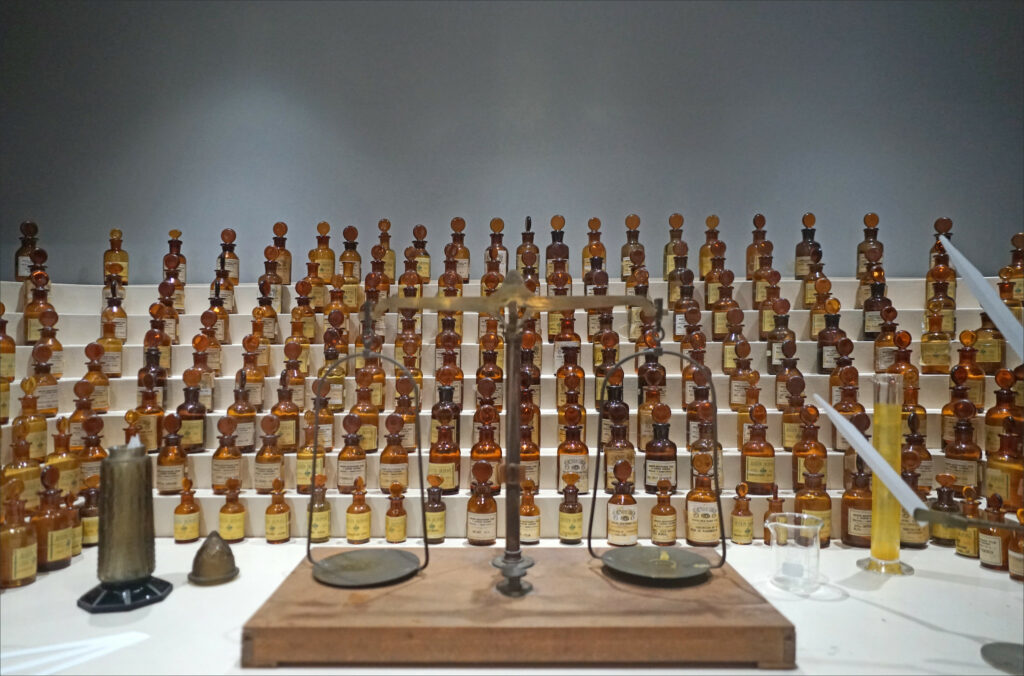
One of the most essential and iconic tools of a perfumer is the “perfume organ.” Just as a musical organ with its multiple pipes and keyboards makes it possible to produce a rich variety of sounds, the perfume organ is a specially designed piece of furniture containing a multitude of niches, each filled with bottles of different essences. The perfumer, like a musician, composes their olfactory symphony using this instrument, a desk essential to optimal organisation.
Symphony
A musical symphony is a grandiose work, generally structured in several movements, where each part contributes to a coherent whole. A perfume can also be considered a symphony, where each note plays its role, intertwining and evolving to create a complex, harmonious olfactory experience.
Composition
The process of creation, whether of a musical piece or a perfume, is often called “composition.” In both fields, this goes through the writing of the score that will bring the composition to life. It refers to the know-how of assembling different elements to create a unique, memorable work of art. Just as the musician who writes their composition mentally before transcribing it onto a score, the perfumer imagines their perfume and its accords first in their head and then materialises it into a formula. Trials will make it possible to refine their creation. As Jean-Claude Ellena emphasises in his Que Sais-je “Le Parfum,” just like the musician’s ear, the perfumer’s nose is nothing other than a tool of control and learning.
This rich exchange of vocabulary between music and perfumery testifies to the way these two worlds, although distinct, come together in their quest to express and evoke emotions. These shared terms remind us that we are touched in a deep, intangible way, transported by the magic of sensory art.
The Perfumery Houses That Draw Inspiration from Music
Art Meets Art: The brand created by Tanguy Le Baud uses the prism of culture and, more precisely, of music to make highly artistic perfumes. The perfumes then become works where the perfumers draw on the refrains of the great musical icons to create essences that tell a story, that of an era, an artist or a musical genre. The result? Perfumes that are so many olfactory tributes to the musical works that inspired them, offering art lovers a new way to explore and appreciate the musical classics.
L’Orchestre Parfum, created by Pierre Guguen, is a perfume house that transcends music into fragrance. The perfumes created here are compositions where each perfumed note is inspired by a musical instrument or a specific melody. The wearer of the perfume is invited to an immersive experience, where olfaction and hearing intertwine in a dazzling sensory dance, generating a third work of art that is none other than the emotion felt.
Room 1015, created by Michael Partouche alias Dr Mike: the echo of rock’n’roll.
With Room 1015, the world of rock’n’roll is sublimated into bottles emanating the rebellious, electric spirit of this music. The perfumes, with their woody, spicy and sometimes flowered notes, transport us into the world of hotels and dressing rooms, where the rock legends left an indelible trace of their passage. It is an olfaction tinged with nostalgia, freedom and non-conformism that unfolds with each waft of the perfume. Each perfume is accompanied by an original piece of music that describes the fragrance and by a specific playlist of the same style.
Musicology, founded by Fabien Boukobza, represents the essence of melodies in a bottle. The Musicology brand invites us to explore our own internal musical library through its perfumes. The idea here is to transcribe the essence of various musical genres into olfactory creations, thus making it possible to explore jazz, blues or rock through the prism of perfume. Musicology thus offers a journey where olfactory memory and auditory memory dialogue, making it possible to rediscover melodies through a new sense.
Jusbox, founded by Chiara and Andrea Valdo, the brand explores the world where musical and olfactory memories overlap, each perfume seeking to immortalise an emblematic moment of musical history. Their perfumes, like encapsulated melodies, offer a nostalgic olfactory experience, where scents trigger reminiscences of past melodies.
L’Oréal Paris collaborated with Ircam Amplify to create an innovative sound experience olfactorily translating the perfume Spicebomb Infrared by Viktor & Rolf, released in 2023. This initiative aims to produce a sound that reproduces the sensations and emotions provoked by the perfume. The perfumers Jean-Christophe Hérault, Nicolas Beaulieu and Carlos Benaïm, at the origin of the fragrance, worked with the Ircam Amplify team, including the sound designer Romain Barthélémy, to translate the olfactory notes of the perfume into a sound lexical field. Using Ircam Amplify’s SpeaK method, they developed and tested various sound drafts with consumers. The final result is a 26-second sound experience, capturing the evolution and the intensity of the fragrance and provoking a tangible increase in body temperature! This unique collaboration merges science, the art of perfume and marketing, offering a new perspective on the perception of perfumes.
Music and perfume, two art forms that transcend words and languages, merge in a surprising, exquisite way within these perfumery houses. Far from being a simple source of inspiration, music becomes an ingredient, a note, that resonates in each olfactory creation. And what if this interweaving of the arts were an open door towards new ways of apprehending and creating perfume? Could the multi-sensory experience be the future of perfumery, offering creations where seeing, touching and tasting will also be an integral part of the creative process and the user experience?
Sources
Nez, la revue olfactive n°14 – Musique et Parfum; Le parfum et la voix – Annick Le Guérer