
What Is the Floral Olfactory Family?
This year, 20 March marks the start of spring. What is less well known is that the following day is World Perfume Day! A perfect pairing, because spring marks the return of many flowers—and is there any olfactory family more celebrated in perfumery than that of floral fragrances? To kick off the season in style, Master Parfums takes you on a discovery of this olfactory family that seems impossible to dethrone.
The Floral Olfactory Family, the Queen of Perfumery
Hesperidic, floral, fougère, chypre, woody, amber-oriental and leather: these are the seven olfactory families established by the Société Française des Parfumeurs. Although this classification, devised at the beginning of the 20th century by perfumers, has evolved over the eras and with the developments of perfumery, distinguishing fragrances according to their olfactory characteristics revolutionised the sector, making it possible to navigate more easily a market overflowing with creativity and ever more competitive.
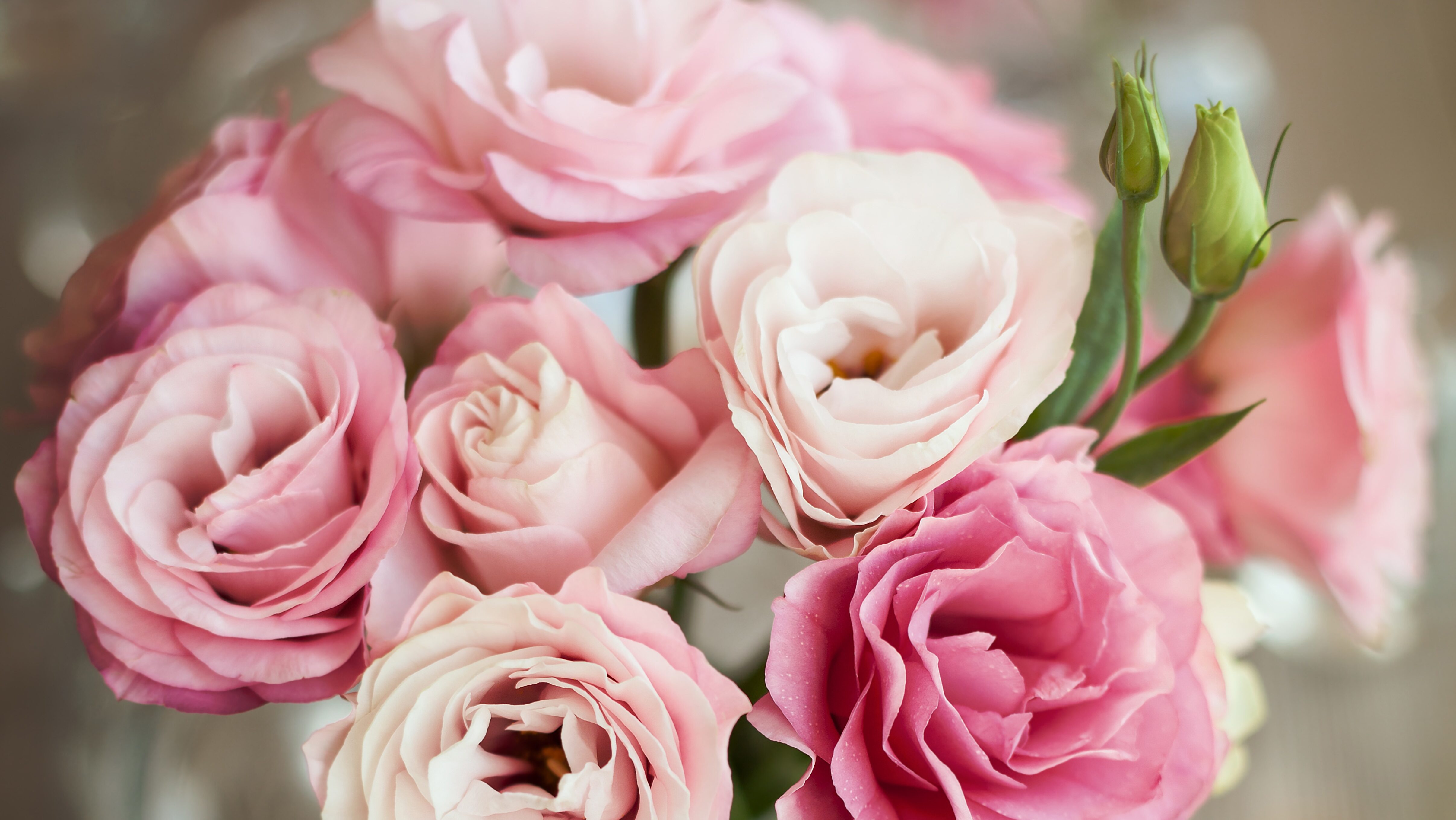
If there is one perfume family that continues to make a splash decade after decade, it is the floral family. It has sometimes suffered from being perceived as a little has-been, and has never stopped fighting back by continually reinventing itself, to the point of becoming timeless. Since flowers have historically long been seen as the embodiment of femininity in its purest state, it is unsurprising that the family celebrating them dominates the women’s perfume market. But no matter—flowers also make their way into masculine perfumes and gender-neutral perfumes. After all, why arbitrarily deprive ourselves of an olfactory richness like the one the floral family has to offer?
Ingredients and Facets in Abundance
Flower species number in the hundreds of thousands—so it is difficult to name all the notes that populate the floral perfume family! We can, however, highlight those that often play the leading role.
You have no doubt guessed it: the top prize goes hands down to the rose, that delicate flower, the ultimate symbol of love, capable of taking on a thousand faces. Orange blossom also demonstrates astonishing versatility, as do its fellow white flowers jasmine and tuberose, by turns delicate and carnal. In the powdery register, violet, iris, heliotrope or mimosa often make eyes at us; ylang-ylang, frangipani and tiaré are the best allies of perfumers venturing into solar territory.
A fragrance in which one flower in particular is treated as the main character of the work is called a soliflore, and conversely, we speak of a “bouquet” when a whole host of flowers make their way into a perfume. Within each olfactory family, we also distinguish facets, a kind of olfactory sub-category that refines the identity of a perfume, because a fragrance is rarely purely floral, purely woody or 100% gourmand!
Some of the facets that dress up the floral family are…
- The fruity facet: plump cherry, yellow apricot or juicy pear—synthesis allows fruits to bring or emphasise a sweet touch in a floral perfume;
- The aldehydic facet: it is embodied to perfection in the sumptuous Chanel No. 5, a marriage of jasmine, rose, ylang-ylang and those famous aldehydes, synthetic molecules with a cold, metallic smell that have the power to sublimate a bouquet;
- The woody facet: sandalwood, cedar or patchouli allow the composition to be enveloped in warmth and to underscore its elegance and character;
- The spicy facet: it plays with so-called spicy flowers such as immortelle, lily or carnation, or with notes such as pepper (a fresh spice) or clove (a warm spice).
…And much more besides! A floral perfume can also exhibit more aquatic, green, powdery, ambery, leathery and even gourmand facets.
To welcome spring as it deserves, let us take a closer look at a few flowers that will soon be poking out their noses…
A Small Selection of Spring Flowers
The Rose
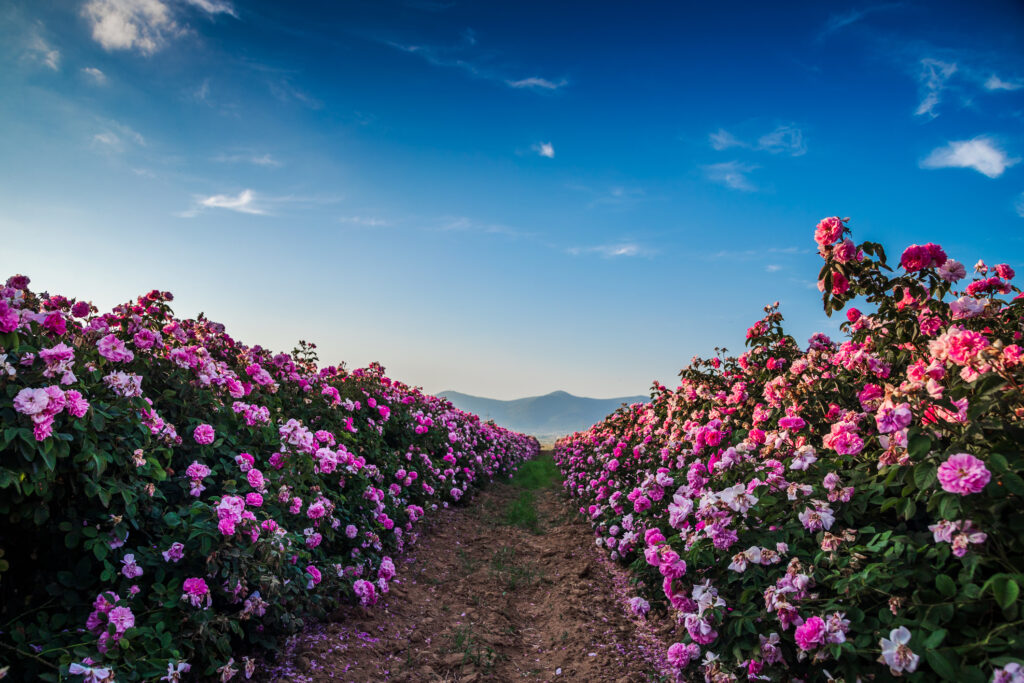
It would be almost sacrilege to speak of the flower family without pausing on the rose. Having become one of the emblems of the Grasse region, the Rosa Centifolia or May rose (one of the two roses predominantly used in perfumery, along with Rosa Damascena, the Damask rose) gives off a scent as subtle as it is majestic, green and rich, with occasional surprising accents of lychee.
When it comes to capturing the sweet aromas of Rosa Centifolia for perfumery, the hydrodistillation method—which yields an essence—offers too low a return for what it costs. One must therefore opt for volatile solvent extraction, which makes it possible to obtain a beautiful rose absolute blending earthy and honeyed facets, fruity, even a little spicy.
In Rose Centifolia Extrait by Guerlain (2023), Delphine Jelk and Thierry Wasser reveal the brilliance of the majestic Grasse rose, so delicate and so powerful.
The Narcissus
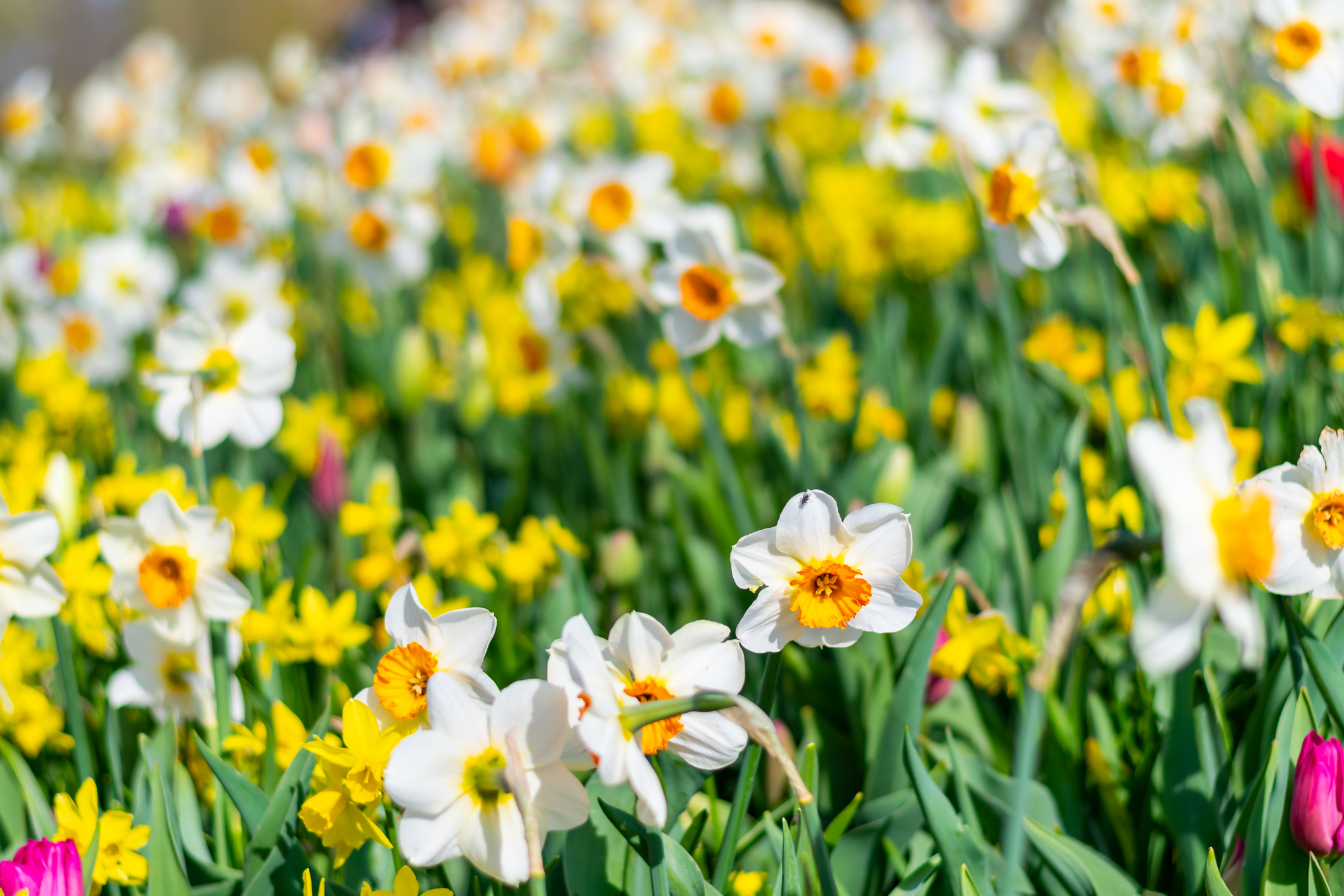
There are 22 varieties of this pretty two-toned flower. The wild field narcissus remains the favourite of perfumers. It is one of the rare wild flowers to be used in perfumery! The narcissus is a regular of the floral olfactory family, but also of the chypre family. From its flowers, it is possible to extract an absolute with a floral, spicy heart, with herbaceous and earthy facets, resting on an animalic and honeyed base. In Narcisse Noir by Caron (1911), Ernest Daltroff had the genius and the audacity to create an ode to this flower without any narcissus in the formula! Powerful and animalic, it became an olfactory icon. More recently (2018), Anne Flipo admirably rendered the wild side of the flower in Mont de Narcisse, for L’Artisan Parfumeur.
The Magnolia
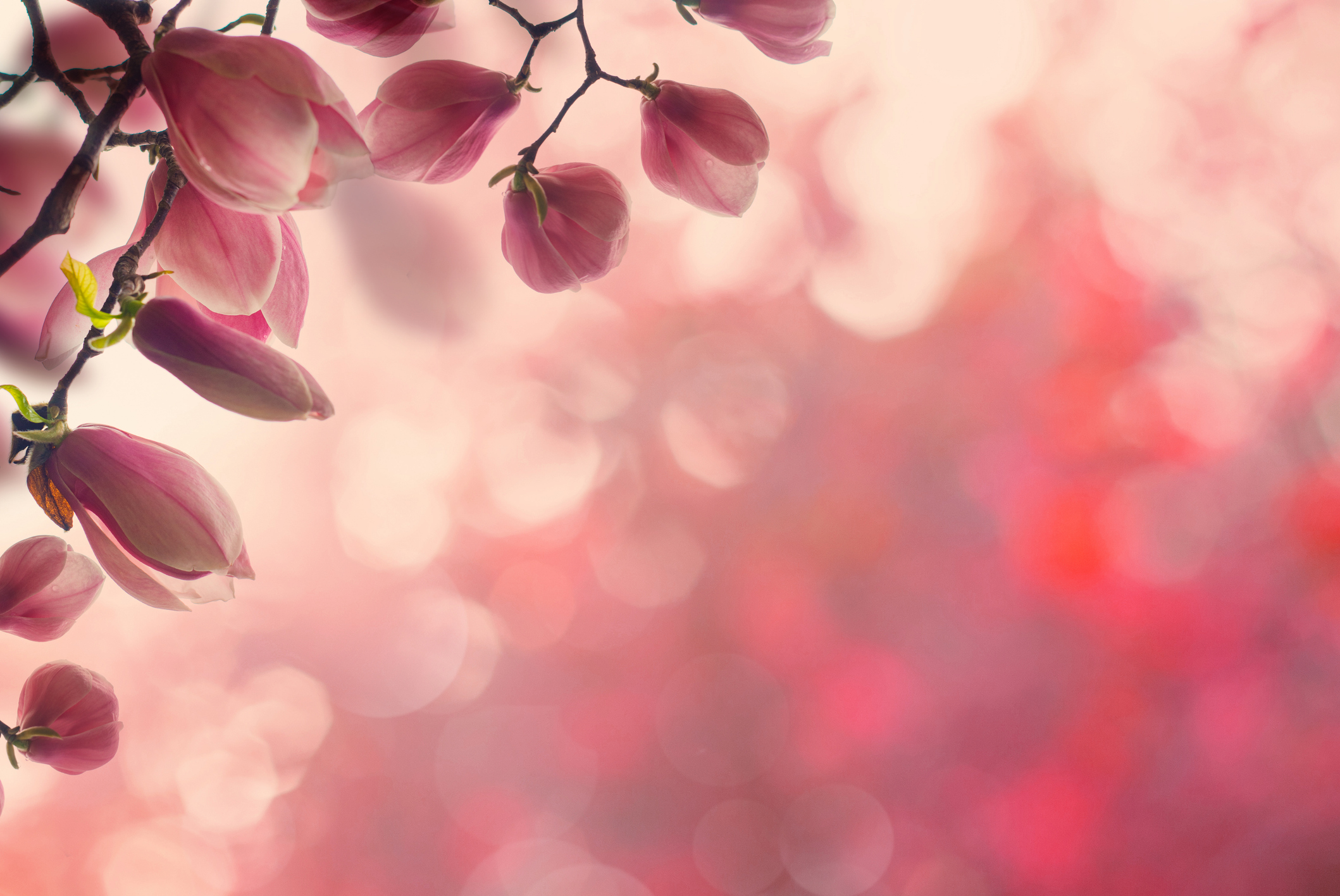
This flower from China is one of the oldest plants on the planet. It gives off a green, floral and very refined scent, recalling that of jasmine. Magnolia is light and luminous, to be sure, but it does not deny itself the possibility of being more sensual by playing on its creamy side. It can also call to mind a waxy, lemony, slightly vanilla-tinged fruit!
In short, here is a complex scent, often recreated in perfumery through accords of natural materials and synthetic ingredients. For although it is possible to extract an essential oil from magnolia by distillation, the yield is very low, and therefore very costly. One can also extract an essential oil from its leaves and stem: the resulting scent will then be more herbaceous and aromatic.
In Blanc de Chine, by Parfumeurs du Monde, Patrice Revillard pays tribute to the beautiful white flower, glorifying its facets without a single ounce of magnolia, and achieving the feat of composing only with 100% natural materials! A magnificent result of a disturbing sensuality.
The Lilac
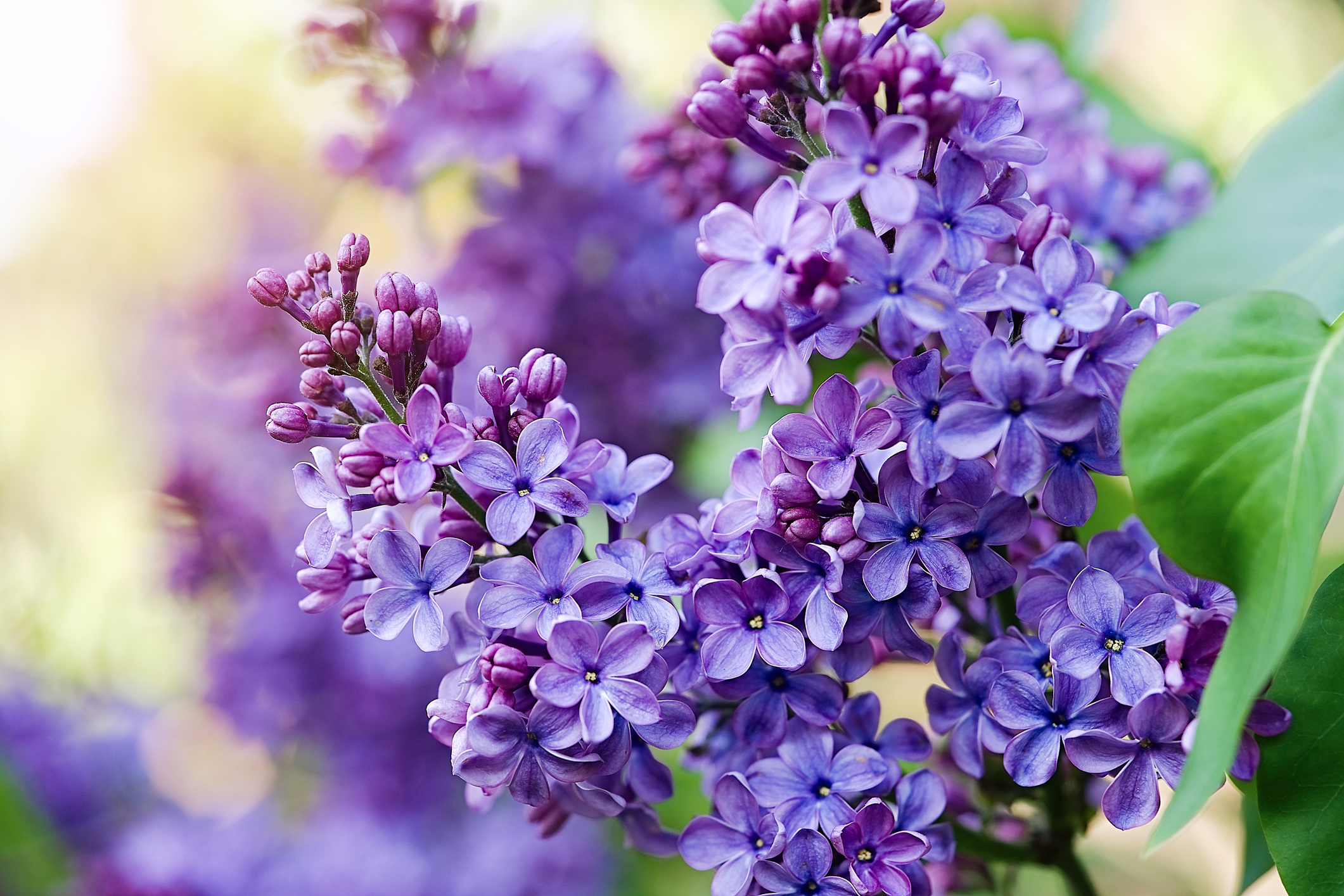
On reading the name of this spring flower, you have no doubt pictured pretty mauve petals in pastel tones… Pastel is also how one might describe the smell of lilac: its scent is powdery and anisic, very romantic, and calls to mind mimosa (another powdery flower) or lily of the valley.
When the time comes to capture the scent of lilac for perfumery, things get complicated, because it is a mute flower, a flower that refuses to give up its scent through distillation or volatile solvent extraction! With these flowers, the enfleurage technique is sometimes used, as is that of headspace: this method aims to capture the odorant molecules of a raw material by placing it under a bell filled with a gas that collects the molecules in question, in order to identify and reproduce them. Most often, we rely on combinations of other raw materials and on the use of synthetic molecules to bring to life the smell of these flowers which, like lilac, keep us waiting.
In En Passant (2000) by Editions de Parfums Frédéric Malle, Olivia Giacobetti revives the sensations of spring brought by a great gust of lilac.
The Violet
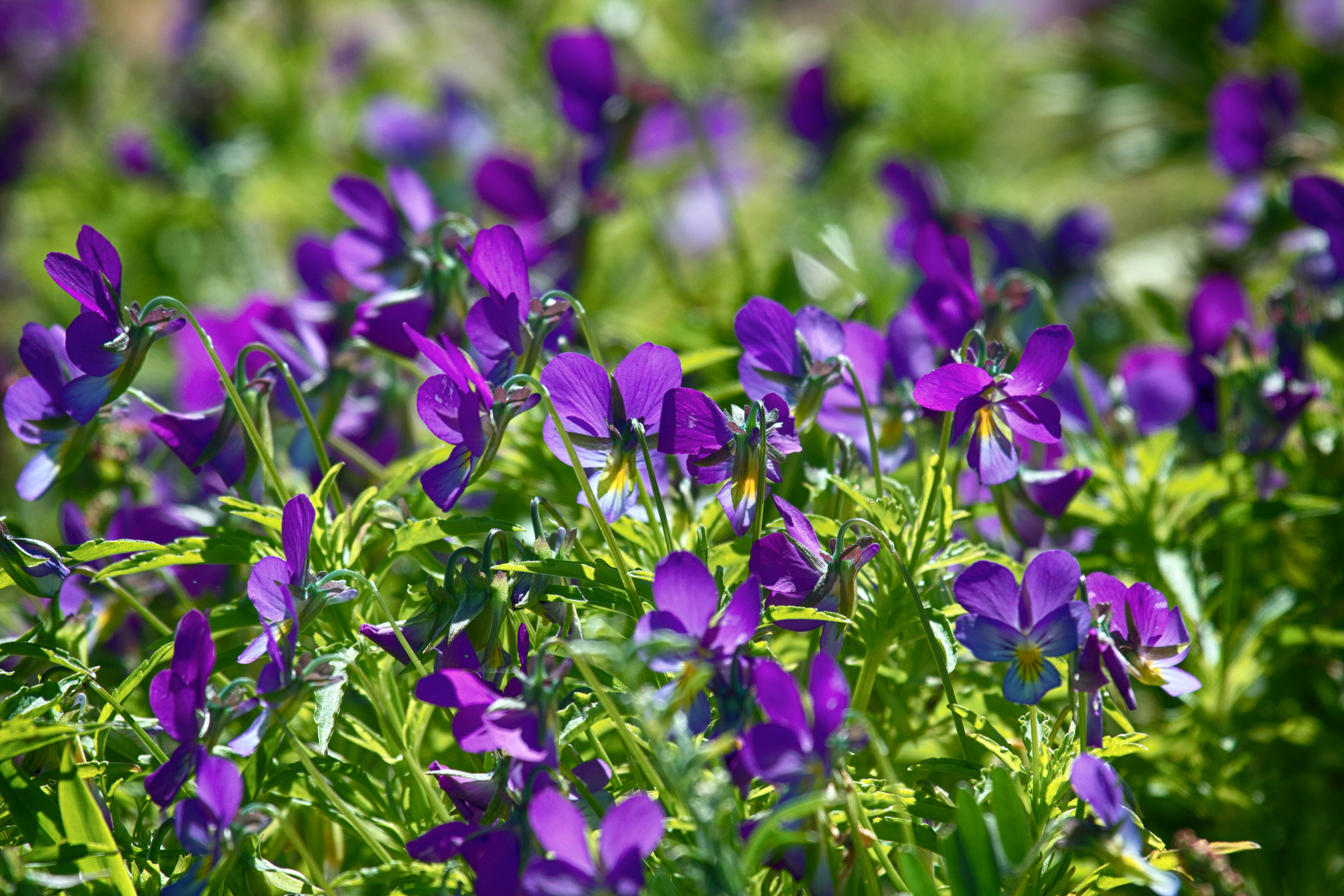
In perfumery, it is the Parma violet that is the most used. It is a flower with a very soft, subtly green scent… but it too gives itself up only reluctantly to perfumers, for whom synthesis is then the best ally. To recreate the scent of violet, two types of molecule are frequently used: ionones and methylionones. Soft and reassuring, it turns to candy in La Violette by Goutal (2001) by Isabelle Doyen and Camille Goutal, bolder and more sensual in Insolence by Guerlain, and delicate and romantic in Paris by Yves Saint Laurent.
In perfumery, the leaves of the violet are worked far more than its flowers: it is possible to extract from them an intense absolute, green and aqueous, a little earthy, evoking the fresh morning dew or the flavour of a freshly peeled cucumber.
The violet leaf caused a surprise by bringing its carefree quality and its freshness to the masculine Fahrenheit by Dior (1988) by Jean-Louis Sieuzac, Michel Almairac and Maurice Roger.
A Few Other Iconic Floral Perfumes
- With the opulent Chanel No. 5 (1921), Ernest Beaux created a revolutionary perfume. The dance between May rose, ylang-ylang and jasmine is magnified by a burst of aldehydes, the olfactory signature of this now iconic fragrance.
- Hyacinth, Bulgarian rose and lilac are some of the flowers populating the exuberant Nahéma (1979) by Guerlain, between an opening of aldehydes and a base of warm, sensual vanilla.
- Paris (1983) by Yves Saint Laurent seals the sumptuous marriage of rose and violet. A string of other flowers, a spicy touch of clove and a woody base come to sublimate this masterpiece by the perfumer Sophia Grojsman.
- The elegant J’Adore (1999) by Dior is a floral bouquet built around an accord of tuberose and jasmine, rose and violet, all accompanied by a delicious note of candied plum as well as sandalwood and enveloping musks.
- L’Air du Temps (1948) by Nina Ricci sounded the starting signal for floral-spicy perfumes: Rosa Centifolia, Grasse jasmine and powdery violet make us vibrate, but it is the carnation-gardenia accord of the fragrance that gives it all its strength.
- On the niche perfumery side, Annick Goutal also offers us Le Chèvrefeuille (2002): the eponymous flower (honeysuckle) meets narcissus in this soft green perfume punctuated with petitgrain, created by Camille Goutal and Isabelle Doyen.
- In L’Instant by Guerlain (2003), ylang-ylang, creamy magnolia and sweet orange honey bring to life a sublime floral, ambery fragrance reinterpreting the Guerlinade, the house’s famous perfume base and olfactory signature.
Fancy continuing your stroll through this springtime garden? The Master Parfums Game-Book has prepared 120 questions about perfume for you, as well as 12 scented pencils to tickle your fifth sense—including pencil no. 6, illustrating a floral bouquet centred on rose and peony.
Happy spring to all 🌸