Smells are part of our daily life. They can evoke memories, emotions and sensations. It is not surprising, over time, to recognise smells that made an impression on us and to associate them with particular moments of our life. But did you know that the recognition of a smell involves a complex process that takes place both in the nose and the brain? In this article, we are going to explore how our olfactory system works and discover how long our brain takes to recognise a smell.
What Is a Smell?
A smell is a sensation that is perceived when volatile molecules from a substance bind to the olfactory receptors in the nasal mucous membrane.
Smells are complex sensations that can be influenced by a multitude of factors. They can be divided into several components, notably quality, intensity and duration.
The quality of a smell represents the very nature of the smell: fruity, floral, woody, earthy, etc. This component is often associated with the chemical structure of the odorant molecules.
The intensity of a smell refers to its strength or its concentration. Smells can vary considerably in intensity, from very weak to very strong, and can also be modulated by factors such as the distance from the source of the smell and the duration of exposure.
There is also the duration of the olfactory sensation. Some smells can be short-lived, while others can persist for a long time. It is notably this concept that is used in perfumery in the composition of a perfume with the top note, heart note and base note.
It is important to note that the sense of smell is closely linked to emotions and memories. Smells can trigger emotional memories and associations particular to each individual.
How Does Our Brain Perceive and Recognise Smells?

Smells can have a great influence on our mood, our appetite and even our behaviour. A complex journey through the brain takes place to give meaning to smells.
Unlike the perception of colours, which involves three types of receptor cells located in the retina, the perception of smells relies on about 400 receptors present in the neurons at the back of the nasal cavity. Each receptor can recognise several molecules and each molecule can activate several receptors, thus creating many possible combinations.
For Jérôme Golebiowski, professor and co-director of the transdisciplinary research group Odorants-Odeurs-Olfaction at the Institute of Chemistry: “Perceiving a smell amounts to perceiving a musical chord produced on an organ with 400 keys: the olfactory system is thus formidably complex, since there is virtually an infinity of chords.”
Odorant Molecules
As we have seen, smells are made up of odorant molecules that float in the air.
These molecules are captured by our nose when we inhale, and bind to the olfactory receptors located in the nasal cavity. This is what is called orthonasal olfaction.
But odorant molecules can also come from what we eat or drink. The odorous products of foods and drinks pass through the back of the throat (pharynx) and rise up to the nasal cavity, where they are intercepted by the olfactory receptors. This is what is called retronasal olfaction. This is why, when we have a blocked nose, or when we suffer from anosmia, we cannot perceive the aromas of what we eat or drink.
The Interception of Smells
Right at the top of our nasal cavity (between the two eyes) is the olfactory epithelium, a thin membrane covered with mucus, also called the olfactory mucous membrane. It contains the olfactory neurons whose role is to:
- capture the odorant molecules thanks to their olfactory cilia (small filaments onto which the molecules attach)
- recognise the olfactory molecules, thanks to their olfactory receptors
- translate the chemical message of the odorant molecules into a nervous message comprehensible to the brain
- send these messages to the olfactory bulb in the brain
There are nearly 5 million olfactory neurons in the human olfactory mucous membrane!
The Transmission of Information
The nervous message is then sent to the olfactory bulb, which is located at the base of the brain, and which is responsible for transmitting olfactory information to the olfactory cortex, found in the temporal lobe: this is encoding, the creation of a kind of identity card for the smell.
The Processing of Information
The olfactory cortex processes the olfactory information and links it to our experiences and memories. It is part of the limbic system, the seat of our emotions and instinctive behaviours. This explains why certain smells can generate strong sensations in us, emotions—often unconscious, moreover—because they relate to specific moments of our life that we cannot immediately identify.
Conscious Recognition
It is when the information reaches the orbitofrontal cortex that we become aware of our sensations, analyse them and give them a name. It is this part of the brain that allows us to recognise and identify smells. In perfumers, this part of the brain is very often more developed than in the majority of us, owing to their intensive training in recognising smells.
In general, the olfactory sensation occurs almost instantly, because the nervous message is transmitted very quickly from the olfactory bulb to the olfactory cortex.
How Long Does the Recognition of a Smell Take?
The time the brain takes to recognise a smell depends on several factors, such as the concentration of the odorant molecule, the sensitivity of the olfactory receptors and the speed of transmission of the nervous information.
In general, the recognition of a smell occurs fairly quickly, in just a few milliseconds.
Indeed, the olfactory bulb is capable of recognising thousands of different odorant molecules and differentiating them from one another according to their structure; this recognition is extremely fast since it occurs almost instantly.
Once the olfactory message is processed by the olfactory bulb, it is transmitted to the olfactory cortex where it is analysed and interpreted. This analysis takes a little more time than the simple recognition of the smell, but the delay is of the order of only a thousandth of a second.
The same pattern occurs with the orbitofrontal cortex, which is responsible for decision-making and the analysis of sensory information; it processes the olfactory information according to our experiences and memories. It happens, however, that over time a familiar smell such as one’s own perfume is no longer “recognised” by our nose when we wear it, and that we no longer smell it.
The recognition of a smell is a relatively fast process that occurs in just a few milliseconds. However, the analysis and interpretation of olfactory information can take a little more time and depend on our experiences and memories.
By understanding how our olfactory system works, we can better appreciate the complexity of this fascinating sensation that is an integral part of our daily life. Furthermore, understanding how olfactory memory works can help perfumers, scientists and therapists to create perfumes, to study diseases and to treat mental disorders using smells (olfactotherapy).
If you want to learn more about the fascinating world of smells, discover our Pocket Quiz game, 120 questions about perfume and smells to learn while having fun, and stimulate your sense of smell with the scented pencils of the Olfactory Game-Book!

Collaborative article written by Elfa Jouini & Anne-Laure Hennequin
Perfume plays an important role in Islamic culture and practice. Natural perfumes are often used on clothing and the body. The burning of incense and wood to perfume places of worship—as well as clothing—is highly valued.
In Islam, perfume is considered a form of purification and beautification.
Perfume in Islam
In Islam, perfume is often associated with purification and piety, and it is considered a means of enhancing one’s physical appearance and pleasing Allah.
Ibn al-Qayyim, a renowned 14th-century Muslim scholar, wrote: “Perfume is the best and most compatible of things for the soul, and there is a close connection between perfume and a good soul”1.
He also explains that perfumes have healing effects on mental and emotional illnesses such as depression, anxiety, and stress. He recommended the use of natural perfumes such as musk to improve mood and relieve mental tension.
He regarded perfume as a remedy for the soul that strengthens the body, gladdens the heart, brightens the mind, and pleases the soul.
The Prophet Muhammad was known for his love of perfume and often recommended its use. He also encouraged believers to use perfume before going to prayer or during religious festivals.
Still and distillation
The use of the still is an ancient distillation technique that was widely employed in Islamic science during the Middle Ages. The earliest stills were used in ancient Greece for the production of perfumes, essential oils, and other aromatic substances.
Muslim alchemists and scholars perfected the technique of distillation to the point that it became a standard method for producing perfumes.
Over time, many Arab and Persian societies specialized in the production of perfumes using this technique. Even today, the distillation technique is used to produce attar, traditional natural perfumes made from essential oils and containing no alcohol.
Fragrant Rituals in Islamic Worship
In Muslim culture, perfume is often used on special occasions, such as weddings and religious holidays, and is considered a cherished gift.
Perfume is also present in Islamic funeral practices, where the body of the deceased is washed and perfumed before burial. The purpose is to ensure the body is thoroughly purified before burial, and also to allow family members to remember their loved one by wearing the same fragrance.
A ritual of hospitality prescribed by Islam recommends perfuming guests with rose or jasmine water using a special sprinkler called a qumqum.
There is also a tradition of perfuming mosques with specific oils and burning incense during prayers to create a spiritual and purifying atmosphere.
It is recommended to apply perfume after Islamic purification rituals, known as ablutions, which involve washing the hands, face, and feet.
The use of siwak—a wooden stick made from the arak shrub, which is widespread in Africa and Asia—is valued for its antibacterial properties in oral hygiene within Muslim culture and is encouraged as a purification practice that cleans the mouth and freshens breath. The Prophet Muhammad used the siwak regularly and also recommended its use before prayer.
Musk and Amber in Muslim Culture
In addition to the importance of floral waters and incense, musk and amber formed a key foundation of perfumery in the Islamic Middle Ages.
Musk is a fragrant substance derived from the musk gland of the male deer, the chevrotain, or the beaver. It has a powerful scent and is used in perfumery to add an animalic or warm note to a fragrance.
Musk is considered a luxurious and rare ingredient and is often used in the most precious and refined perfumes. Musk is also mentioned in the sacred texts of Islam; the Prophet Muhammad is known to have used musk to perfume his beard and hair.
Ambergris, on the other hand, is an organic substance derived from the sperm whale, often used in perfumery to add a warm, animalic note to a fragrance and to ensure its long-lasting scent. Muslim scholars have written treatises on ambergris and discussed its medicinal properties and its use in perfumery.
The Role of Attars and Layering in Muslim Culture
An attar, also known as ittar, is a type of traditional natural perfume originating in Indian culture and widely used in Muslim culture. It is made from natural essential oils, primarily extracted from plants, flowers, and other natural materials, which are added to a “base” essential oil—traditionally sandalwood oil.
Attar is produced through a process of steam distillation or distillation using volatile solvents (for more delicate materials), in which essential oils are extracted from natural raw materials. The result is a pure, concentrated natural fragrance.
The use of attar is widespread in Muslim culture, where it is often used for special occasions such as wedding celebrations and other religious events. It is also used for medicinal purposes, as the natural essential oils used in its production are said to have healing properties.
Layering—that is, combining different fragrances (incense, oils, attar, perfume) to create a unique scent—is common in Muslim culture. However, it is important to note that attar should be layered with care and sparingly so as not to disturb others.
Indeed, the teachings of Islam recommend moderation and simplicity in all aspects of life, including the use of perfumes.
As we’ve seen, perfume plays an important role in the daily lives of Muslims.
The Prophet said: “Allah is Good and loves perfume; He is Pure and loves purity; He is Generous and loves generosity; He is Munificent and loves munificence.” 2
Want to learn more about the role of perfume across different eras and cultures? Check out our Pocket Quiz: Master of Perfumes to test your olfactory knowledge while having fun!
1 – Taken from “The Authentic Book of Prophetic Medicine” by Ibn al-Qayyim, pages 221–222
2 – Sahih In Khuzaymah No. 1761
The term “petrichor” refers to the characteristic smell of the earth after rain. It is a complex phenomenon that gives off a fresh, earthy smell often associated with nature. How is petrichor created? How do perfumers showcase this smell? Master Parfums tells you everything!
What Is Petrichor?
The term “petrichor” was coined in 1964 by Isabel Joy Bear and Richard Grenfell Thomas, both Australian mineralogists. They combined the Greek words “petra,” meaning stone, and “ichor,” corresponding to the blood of the gods in Greek mythology. The term petrichor refers to the characteristic smell of the earth after rain. It is a combination of volatile organic compounds released by plants, bacteria and fungi when they are wetted by rain striking the dry ground.
Petrichor refers to several elements:
Plant Oil

The first concerns the oily liquid secreted by plants, which helps protect the seeds and roots of plants by coating them. Indeed, thanks to this plant oil, plants reinforce their natural defences and better withstand periods of drought. This liquid is absorbed by the soil, and during the thermal shock of the cool raindrop falling on the dry, warm ground, a reaction occurs.
Geosmin
The second phenomenon concerns geosmin, a volatile molecule produced by soil bacteria, the actinomycetes, when they reproduce. Humans can detect it at very low concentrations, which means that even a small amount of geosmin can give off a very strong smell.
It has a very particular smell, a bit like wet earth or freshly turned soil. Although some may find the smell of geosmin unpleasant, it is in fact very important for the environment. It plays an important role in regulating plant growth and in the nutrition of the animals that live in lakes and rivers.
When the oily plant liquid comes into contact with geosmin, the two smells can mingle to create a unique smell that is often described as very pleasant and soothing. This smell is often associated with freshness and nature.
Ozone

During thunderstorms, lightning produces ozone, which can remain in the air after the storm, giving the air a fresh, distinctive smell, charged with negative ions. These ions can combine with particles in the air to form aerosols. The combined petrichor molecules are thereby all the more carried through the humid air.
Anne-Laure, creator of the Master Parfums game, tells you more in a dedicated video!
Why Is Petrichor So Pleasant?
It would seem that very few people dislike petrichor. According to some anthropologists, this positive cognitive bias linked to petrichor may be related to our evolution. At the dawn of humanity, we depended on rain to ensure the growth of crops and the survival of the community. When rain fell, it was therefore often good news, and the smell of rain on dry ground could evoke feelings of relief and joy.
Moreover, in many cultures, rain is often seen as a symbol of fertility and renewal. The smell of petrichor can therefore also be associated with these positive ideas and be considered a sign of good omen.
Indeed, it is rain that enriches flora and fauna. It is therefore natural that our collective consciousness associates petrichor with positive events and interprets it as a pleasant smell.
The Petrichor Note in Perfumery
As we have seen, petrichor is the pleasant smell that rises from the earth after rain.
In perfumery, petrichor can be used to add a natural, earthy note to a perfume.
However, petrichor is not often used as is in perfumery, because it is difficult to capture this complex smell. Instead, perfumers often use synthetic ingredients to recreate the smell of petrichor. These ingredients can include notes of earth, moss, wood and foliage.
Petrichor can also be used as inspiration for creating perfumes that evoke rain and landscapes after a shower. These perfumes can include notes of fresh plants, wet flower petals, tea leaves and other ingredients that evoke a damp, refreshing atmosphere.
Petrichor can also be used as a base note or a subtle facet in a more complex perfume. It can add depth and an extra dimension to a perfume, especially when paired with other natural raw materials such as plant and flower essential oils.
In terms of olfactory family, petrichor is often described as having earthy, mineral, vegetal and musky notes. However, there is no specific olfactory family that corresponds exactly to the smell of petrichor.
In general, perfumes that contain earthy and mineral notes, such as perfumes of the chypre or woody families, can evoke certain nuances of petrichor.
TEST YOUR PERFUME KNOWLEDGE
How far does your nose go? 👃
Olfactory notes, raw materials, perfume history, iconic brands…
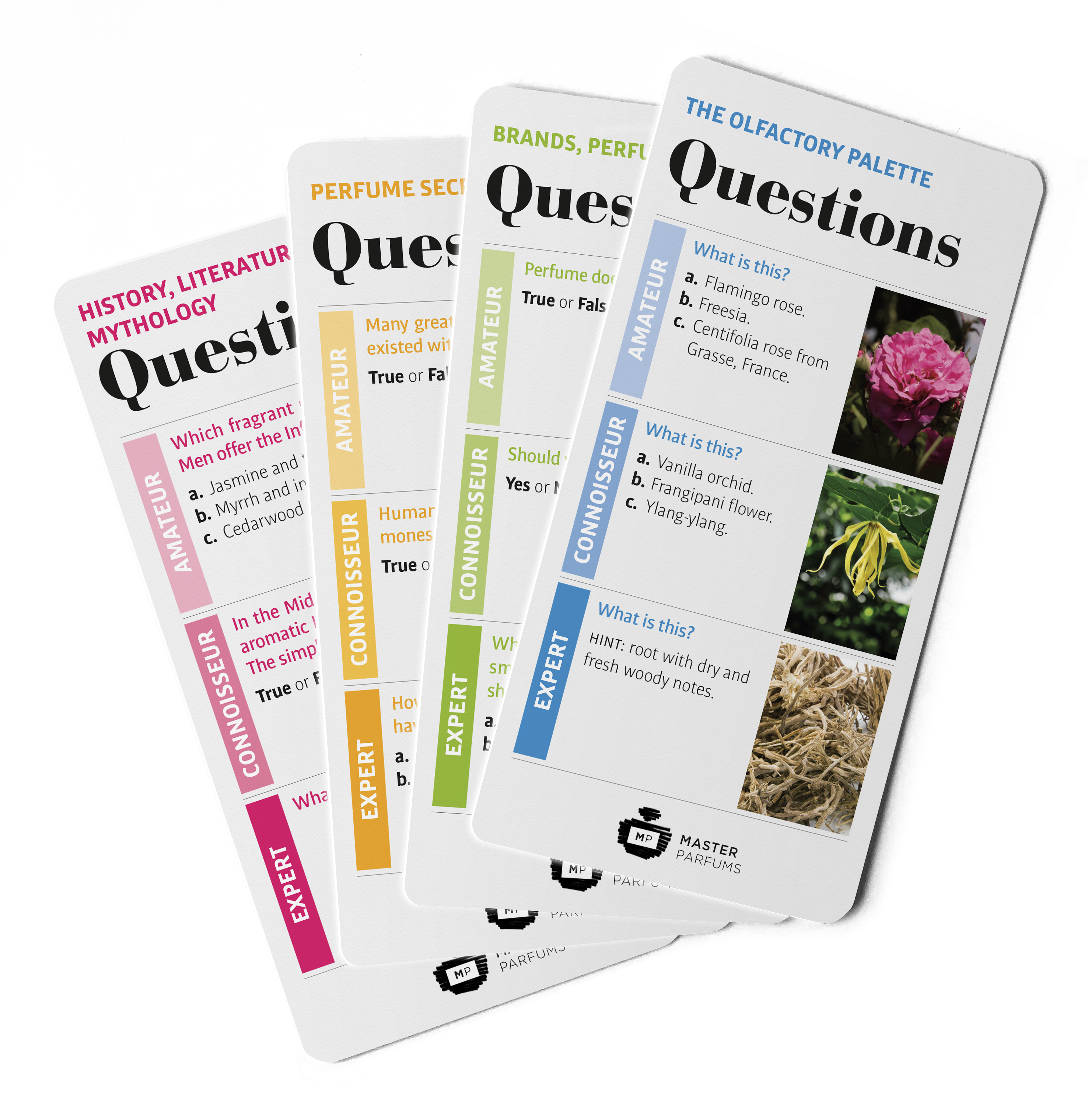
Put your knowledge to the test with the Master Parfums Pocket Quizzes.
A Few Perfume References with the Petrichor Note
There are several perfumes that contain the petrichor note or draw inspiration from it. Here are a few examples:
- Petrichor Plains by Mihan Aromatics: This perfume, created by Josh Mihan and Jules Brown, draws inspiration from the smell of rain on the city, with notes of rain, iris, cardamom, earthy notes and asphalt.
- With When the Rain Stops by Maison Margiela, Fanny Bal evokes the smell of an ozonic rain—it is fresh, green, aqueous and earthy.
- Petrichor by Demeter Fragrance Library: This perfume, created by Christopher Brosius, captures the smell of the earth after rain, with notes of wet earth, green leaves and vetiver.
- Baie 19 by the house of Le Labo contains notes of fig leaves, juniper berries, pink pepper, black pepper, sandalwood and patchouli. Frank Voelkl creates here a fresh, herbaceous and slightly woody fragrance with a spicy touch. A fresh, damp effect of the earth after rain.
- La Pluie by Miller Harris, created by Lyn Harris, evokes the smell of rain in gardens, with notes of bergamot, violet leaves and cedar.
- After the Rain by the house of Solstice Scents, by Angela St. John. The perfume evokes the smell of wet leaves after a summer rain. The floral notes of lotus flower, lilac and violet add a touch of softness and femininity to the perfume, while the earthy notes give it depth.
- Obviously, one immediately thinks of Guerlain’s masterpiece, Après l’Ondée, created by the perfumer Jacques Guerlain; this perfume is a tribute to the light, romantic atmosphere that follows a shower. It is a soft, refreshing perfume that evokes the smell of nature after a summer rain.
These perfumes can vary considerably in terms of notes and intensity, but all seek to capture the essence of the smell of rain and petrichor.
Petrichor is an interesting and unique olfactory note that can be used in different ways in perfumery. Whether used as is or as inspiration, it adds a touch of nature and freshness to any fragrance.