Welcome to an olfactory journey through history, in which we explore the fougère olfactory family. Perhaps you are already a lover of these perfumes, or perhaps you are simply curious to learn more about this olfactory family. Either way, this article will let you discover the history and the secrets of the fougère accord.
History of the Fougère Olfactory Family
Origins

The fougère olfactory family owes its name to the perennial plant of the same name (fern), even though the plant is not present in the composition of these perfumes.
This family has its origin in the Victorian era, with a fragrance that shook up the world of perfumery and is still in production more than a century after its creation: Fougère Royale by the house of Houbigant.
Created in 1884 by the perfumer Paul Parquet, this fragrance is often described as the first “fougère” in the history of perfume. This subtle blend of bergamot, lavender, geranium, coumarin and oakmoss set a precedent for masculine perfumes, and thus the fougère olfactory family was born.¹
Coumarin, the Key Molecule of the Fougère Note
Fougère Royale was revolutionary in several respects. Paul Parquet used, for the first time, a freshly discovered synthetic raw material: coumarin, a molecule isolated from the tonka bean. This coumarin, combined with lavender and oakmoss notes, made it possible to create a fragrance that evoked the verdant freshness of a forest—hence the name “fougère” (fern).

It is interesting to note that although the fern itself does not produce an essence usable in perfumery, the accord created by Parquet was so evocative of nature that the name endured. And since ferns are plants that have existed for millions of years, present on every continent (except Antarctica), it is easy to understand why this name has a universal resonance.
After the release of Fougère Royale, the fougère accord became a pillar of perfumery, notably for masculine perfumes. Indeed, the balance of the accord thus formed creates a base that lends itself perfectly to the characteristic masculine notes of the era, such as spices, citrus and woody notes.
The Evolution of the Fougère Family
Jicky by Guerlain, created in 1889, marks an even sharper break, paving the way for abstract perfumes. This perfume, which generously incorporates synthetic ingredients such as coumarin and vanillin, marks a turning point in the history of perfumery. However, the avant-garde nature of Jicky was too bold for the women of the time. It was rather in masculine artistic and intellectual circles that it would find its audience,² the clean, lavender notes evoking the products used at the barber’s. Indeed, lavender was used by barbers after shaving, for its antiseptic and soothing properties.
Throughout the 20th century, many perfume houses created their own interpretations of the fougère accord. Perfume houses that all followed the example of Fougère Royale, adding their own twists, interpreting and modernising the fougère base.
Thus, the history of the fougère olfactory family is in reality the history of constant innovation and evolution, from the first use of coumarin to the diversity of fougère perfumes available today. It is a history that demonstrates the power of perfumery to evoke nature and to create perfumes that, while deeply rooted in the past, can still claim to be contemporary.
Characteristics of the Fougère Accord
Perfumes of the fougère family are characterised by a harmonious composition that combines aromatic notes, floral heart notes, and woody, musky base notes.
This abstract accord is generally composed of four main elements:
Top Note
Lavender: This aromatic plant, with its fresh, clean scent, serves as the top note in the fougère accord. It delivers the first burst that catches the attention and often invites aromatic notes (sage, rosemary, mint, etc.) and hesperidic notes (citrus) into its invigorating whirlwind.
Heart Note
Rose geranium: with its characteristic rosy, green and bursting note.
Base Note
Coumarin. This molecule is naturally present in several plants such as cut hay, the tonka bean or sweet clover (melilot). Its scent is soft, slightly herbaceous and vanilla-tinged, sometimes almondy, and it gives fougère perfumes their soft, rounded character.
It is enveloped in woody notes such as oakmoss, vetiver, patchouli, and leathery notes that give the fragrance depth and longevity.
All these elements create an accord that is at once dynamic and woody, soft and robust. A complexity that evokes the freshness of the undergrowth and the softness of verdant mosses.
It is this balance that makes the fougère accord such a precious component in perfumery. It has a complexity that allows it to stand alone, but it also has the flexibility to marry with other olfactory families, allowing perfumers to create fragrances that are at once familiar and surprising.
The Use of the Fougère Olfactory Family in Perfumery
The fougère accord has often been used for men’s perfumes; it is, moreover, the olfactory signature of shaving products and other typically masculine aftershaves. However, many perfumers are making this fougère base increasingly universal.
It is a versatile family in perfumery, which makes it particularly attractive for a multitude of fragrant compositions. At once classic and innovative, it occupies an important place in masculine perfumes, and also appears in a few feminine perfumes.
In masculine perfumes, the fougère accord offers a herbaceous freshness and a woody depth, while conferring a touch of sophistication and refinement. It is often accentuated by spicy or woody notes, such as sandalwood, cedar or black pepper.
For feminine perfumes, the fougère accord is often softened by floral notes such as rose, jasmine or iris, or by fruity notes such as peach, pear or raspberry. These perfumes can be at once deep and mysterious, but also soft and romantic, depending on the other notes used in the composition.
In general, the fougère accord allows great freedom of expression. It can be paired with aquatic notes to create fresh, invigorating perfumes, or with ambery notes for oriental, sensual perfumes.
The use of the fougère olfactory family demonstrates its ability to transcend genders, eras and styles. Whether for fresh, revitalising perfumes, romantic, seductive perfumes, or mysterious, sophisticated perfumes, the fougère olfactory family always has its place in the modern perfume market.
Examples of Perfumes from the Fougère Family
Fougère Royale by Houbigant, 1882, by Paul Parquet, as mentioned earlier, is the patriarch of this family. With its combination of lavender, geraniol and oakmoss, it defined the basic structure of the fougère accord.
Jicky by Guerlain arrives in 1889; in addition to its traditional fougère structure, the vanillin answering the coumarin makes the whole rounder and more almondy. One of the first unisex perfumes of the era, it highlights so-called “abstract” perfumes.
Pour Un Homme by Caron was created by Ernest Daltroff in 1934. With a fresh lavender, it is a consensual opening; however, instead of opting for a traditional coumarin and oakmoss base, Daltroff chose to use a warm, sensual vanilla, creating an unexpected contrast that made “Pour Un Homme” a one-of-a-kind perfume: masculine and enveloping. A duality between an aromatic freshness that gives way to an ambery, vanilla-tinged, almost powdery base. A perfume that spans the ages.
Brut by Fabergé was created in 1964 by Karl Mann. It opens on fresh, aromatic top notes with lemon, bergamot, basil and anise. The heart is composed of floral notes of jasmine, geranium and ylang-ylang, typical of the fougère accord. The base notes are warm and woody, with vanilla, sandalwood, vetiver, oakmoss and tonka bean. What makes “Brut” so special is its distinctive, unforgettable character. It embodies the image of virility with its robust, hyper-masculine fougère accord.
Drakkar Noir by Guy Laroche, by Pierre Wargnye, was launched in 1982. It modernises the fougère base with a new material in perfumery: dihydromyrcenol. Until then used in detergents, its powerful clean freshness evokes the smell of a well-ironed white shirt that the exaggeratedly muscular, tanned man of the era slips on as he steps out of the shower. It adds a zesty, fruity note of citrus and pineapple and a base of resin, spices and wood to create this enigmatic, charismatic perfume.
Fougère Bengale by Parfum d’Empire: In 2007, Marc-Antoine Corticchiato created this spicy, sweet perfume with notes of tobacco, resin, ginger and vanilla. The start is composed of lavender, ginger, tea notes and mint, bringing freshness and light. The dry notes of tobacco and hay bridge towards a woody, ambery, balmy base carried by oakmoss, tonka bean, patchouli and vanilla, giving a feline, hyper-sensual dimension.
Fougère Furieuse by Mugler, created by Jean-Christophe Hérault and Olivier Polge in 2014, is considered an aromatic fougère. The opening is more herbaceous; at the heart, neroli is added to the traditional geranium; the base is driven by an ambery accord in addition to the tonka bean and oakmoss.
Fougère Émeraude by Les Indémodables, by Florence Fouillet Dubois, in 2016. Although marketed as non-gendered by the brand, it is appreciated by many women owing to its balanced blend of herbaceous and floral notes. Tuberose, lavender and mimosa give the perfume a floral freshness, all on a tonka base.
As we have seen, the fougère olfactory family has a rich history and complex contrasts. It has evolved and adapted over time, but it remains an essential family in perfumery. Perhaps, after reading this article, you will be inspired to try perfumes of the fougère family and perhaps adopt them for good.
¹ Dictionnaire amoureux du Parfum, Elisabeth de Feydeau, page 391
² Une histoire de Parfums, Yohan Cervi, page 15
A few centuries ago, you would have been looked at with round eyes if you had suggested that perfuming oneself could be anything other than a formality intended to camouflage your body odour. If perfumery is today a noble art, we owe this in large part to Catherine de Médicis and her personal perfumer, René le Florentin. Master Parfums goes back in time and tells you how this Italian master marked the history of perfume in France.
The Convent of Santa Maria Novella
In 1221, a group of Dominican brothers founded the convent of Santa Maria Novella in Florence. There they cultivated an orchard, a vegetable garden and a garden of simples (physic garden) overflowing with herbs and plants used to concoct medicines, balms and ointments that they prescribed in their convent apothecary.
Traces of the production of perfumed waters are found at Santa Maria Novella from 1381: during the Black Death, the monks distilled rose water intended both to purify the rooms and for personal consumption.
Quickly, the convent’s preparations met with real success among the aristocracy, and perfumed products became the preserve of the Italian nobility. And René le Florentin, in all this?
Renato Bianco and Catherine de Médicis
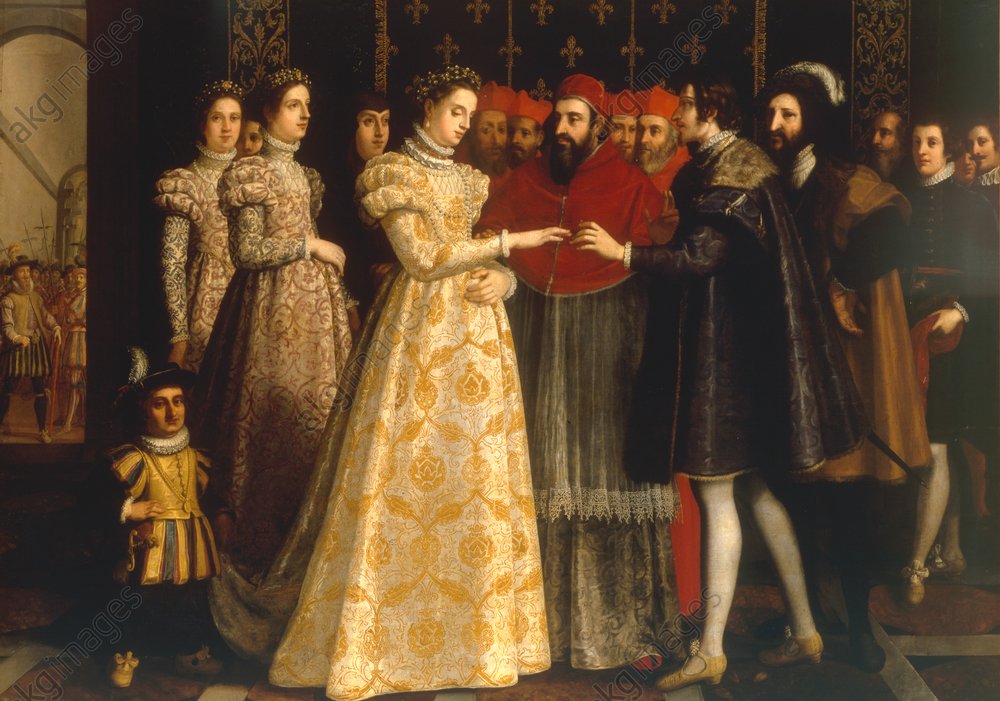
Renato Bianco, by his real name, was abandoned at birth and taken in and raised by the brothers of Santa Maria Novella. It was there that he learned to distil the convent’s herbs alongside the alchemist monks. A good part of the perfumer’s life remains enigmatic; it is above all for his association with Catherine de Médicis that the name René le Florentin still resonates today.
In 1533, the Italian Catherine de Médicis, aged 14, was preparing to join her future husband and the future king of France Henri II. The Italian elites being fond of perfumed products at the time, Catherine de Médicis’s social position naturally turned her towards perfume. She asked the monks of Santa Maria Novella to make her a special fragrance for her forthcoming wedding, but that is not all: as she was going to join the French capital, she demanded that Renato Bianco slip in among her entourage of pages, guards and ladies-in-waiting so that he could continue to supply her with perfumed beauty products.
When they arrived in Paris, Bianco and the future queen witnessed a curious paradox there: while in the Renaissance everyone was outwardly extremely dressed up, hygiene was far from keeping up!
Perfume in the Renaissance, or the “Reign of Perfumed Filth“
On one hand, extreme coquetry was the order of the day. People made use of mirrors, combs, make-up boxes and pomanders made of precious materials. Pomanders were spherical pendants enclosing various odorous substances. In addition to fighting bad smells, they were seen as amulets with the power to protect against illness. Doctors, moreover, considered that odorous materials could cure certain ailments. Besides the pomander, new scent objects flourished, such as the oiselets de Chypre (Cyprus birds—perfumed paste moulded into the shape of a bird) that one threw into the fire and that perfumed and purified the ambient air: rose water, labdanum, civet musk, ambergris, storax, benzoin, cinnamon, clove… so many new odorous materials brought back from Asia by the great explorers of the era.
On the other hand, water frightened people: it was thought to be a vector of illness and contagion. In the 16th century, baths, by opening the pores, were believed to let miasmas into the body. For a real deep wash, the term “se décrasser” (to scrub off the grime) was used. Doctors advocated dry washing, which consisted of rubbing the body with aromatic substances, lotions or vinegars, powdering oneself and dressing in perfumed linen. The word “toilette,” moreover, comes from that little piece of cloth (toile) that was soaked in these vinegars.
Despite everything, the enthusiasm for Greco-Latin Antiquity that characterises the Renaissance, combined with the invention of printing, prepared fertile ground for the dissemination of works containing recipes for odorous waters.
An Italian Master in Paris
In Paris, Catherine de Médicis introduced Renato Bianco to the court of France… and initiated France into the art of perfuming oneself. While in the Italian’s native land the culture of perfume was already in vogue, this was not yet the case in France. In his shop on the Pont-au-Change, he became known under the name René le Florentin and, thanks to his royal connections, the essences he made quickly became indispensable for the city’s nobility.
Perfumed products became a must: wigs, gloves, cushions, fans—everything was perfumed! At a time when hygiene was constantly neglected, perfume played above all a camouflaging role. The fear of water being widespread, it was a matter of masking sometimes nauseating smells; the fragrances therefore had to be as heady as could be. For the nobles who had the means to procure them, musk, amber and tuberose flowed freely.
Perfume certainly continued to be used to conceal the lack of cleanliness, but it gradually earned its credentials and became a symbol of social status. Other Italian perfumers came to settle in Paris, before it was the turn of the French to turn increasingly towards the profession. Whereas it had until then been purely practical, it gradually found itself associated with elegance and luxury. The trade of glover-perfumer had the wind in its sails and little by little replaced that of apothecary for the distribution of perfumes, the Sun King even creating a master glover-perfumer patent in 1651.
Animal materials were highly prized, as were hitherto unknown plant materials brought back by the explorers from their voyages and worked by the Florentine: vanilla and balsam of Peru, cocoa and tobacco, or spices such as cinnamon, ginger and benzoin. With the discovery of new sea routes, it was no longer only Italy that benefited from them!
However, René le Florentin was not famous only for his perfumes…
Sometimes Fatal Fragrances?
It was whispered at the court of France that Catherine de Médicis reputedly charged her personal perfumer with making her poisons concealed in innocent-looking fragrances or fashion accessories…
In 1572, the Protestant Jeanne d’Albret, mother of Henri de Navarre and sworn enemy of Catherine de Médicis, died after being seized by pains and a sudden fever. The rumour incriminating poisoned gloves commissioned by Catherine de Médicis and made by none other than her personal perfumer was not slow to spread.
Let us return to our bottles—in any case, to those that wish us well! So what was this fragrance created specially for the union between Catherine de Médicis and Henri II?
The Acqua della Regina
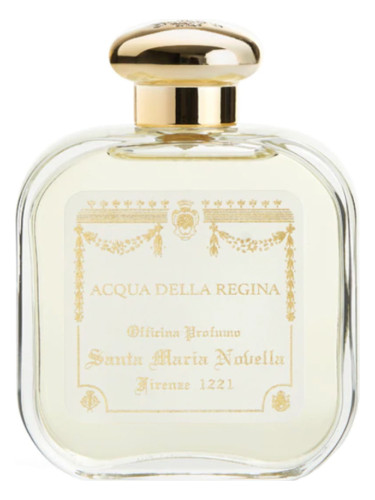
Formulated in 1533, the Acqua della Regina is an essence based on Calabrian bergamot and neroli. One also finds in it clove, rosemary and lavender, all resting on a beautiful musky base. The Santa Maria Novella apothecary still exists in Florence and, to celebrate the brand’s 800th anniversary, it launched the Firenze 1221 edition of the fragrance, today known under the name Acqua di Santa Maria Novella.
It is a hesperidic fragrance, fresh as can be; no wonder that a good number of contemporary colognes fall within its lineage.
- The Aqua Mirabilis (1695) by Giovanni Paolo Feminis could be inspired by the Acqua della Regina.
- With its notes of citrus, lavender and rosemary, the eau de Cologne 4711 (1792) also evokes the fragrance of the one who was called “the black queen.”
- The same goes for the Eau Impériale (1860): Guerlain invites a host of citrus fruits to a meeting with rosemary and cedar.
- Still at Guerlain, one can also name the subtle, tangy Eau de Fleurs de Cédrat (1920).
You will have understood: the passage of René le Florentin through our lands changed the trajectory of perfumery in France, helping it to go beyond its purely functional use and elevating its status, marking in a way the beginning of our modern perfumery.
Want to continue feeding your olfactory culture? Other perfumed anecdotes await you in Master Parfums’ Pocket Quiz game and its 120 questions to learn more about the fascinating history of perfume!
Perfumes are often classified into olfactory families according to their dominant olfactory characteristics. One of the most appreciated and oldest olfactory families is the chypre family. This family is characterised by sophisticated, complex perfumes that present a combination of fresh top notes, floral heart notes and rich, woody base notes.
History of the Chypre Family

The chypre family takes its name in reference to the perfume Chypre by Coty, which is considered the standard-bearer and thus the first modern perfume of this olfactory category in the history of perfumery. Created in 1917 by the French perfumer François Coty, Chypre revolutionised the world of perfumery by introducing an unprecedented composition made up of bergamot, lemon and orange in the top notes, paired with a floral bouquet at the heart such as jasmine, rose, ylang-ylang and carnation, and with deeper base notes: patchouli, incense, civet and oakmoss.
The perfume Chypre by Coty owes its name to the Mediterranean island of Cyprus, a crossroads between East and West. Cyprus is an island known since antiquity for its perfumes and aromatics. Moreover, its geographical situation allowed it to benefit additionally from materials coming from the East. The monks of the time played an important role in the culture of perfumery on the island, using local plants to create scented oils and ointments for medicinal and spiritual purposes, whose recipes have come down to us. The first Eau de Chypre, with its toning virtues, was made by the island’s monks in the Middle Ages. The Poudre de Chypre, with which hair was perfumed in the 18th century, was composed of oakmoss and iris. In 1850 Guerlain released its Eau de Chypre; in 1893 it was Roger et Gallet with its Chypre Tentation, then Lubin in 1898. But it was François Coty who would stand out in 1917 by modernising the chypre formula.
He created Chypre to meet a growing demand for more modern and innovative perfumes. At the time, most perfumes were fairly simple floral compositions, and he sought to create something more complex and sophisticated.
The perfume Chypre therefore directly references that opulent luxury so coveted at the time of its creation. Coty wanted to capture the essence of this island in a perfume. The result was a complex, sophisticated perfume that inspired many others over the years.
Chypre by Coty was also created in a particular historical context, marked by the First World War and the social and cultural changes that followed. Coty sought to create a perfume that reflected the new trends and aspirations of the modern women of the time, offering them a bolder, more sophisticated perfume than what was available then. The success of Chypre thus helped to change the norms of perfumery and to open the way to new styles and genres of perfume.
The Chypre: A Complex, Timeless Accord
Chypres are often described as complex, refined and elegant, with a strong presence of woody, musky base notes. They tend to be more opulent perfumes, which generally makes them more suited to more formal occasions or to evenings.
The chypre olfactory family is a category of perfumes that present an accord of fresh hesperidic top notes, floral heart notes and rich, woody base notes with patchouli, oakmoss and labdanum (cistus).
Chypres are also known and sought after for their staying power—that is, their ability to remain on the skin for a long period, up to 24 hours on the skin. This is due in part to the rich, complex ingredients used in their composition, such as patchouli, oakmoss and cistus.
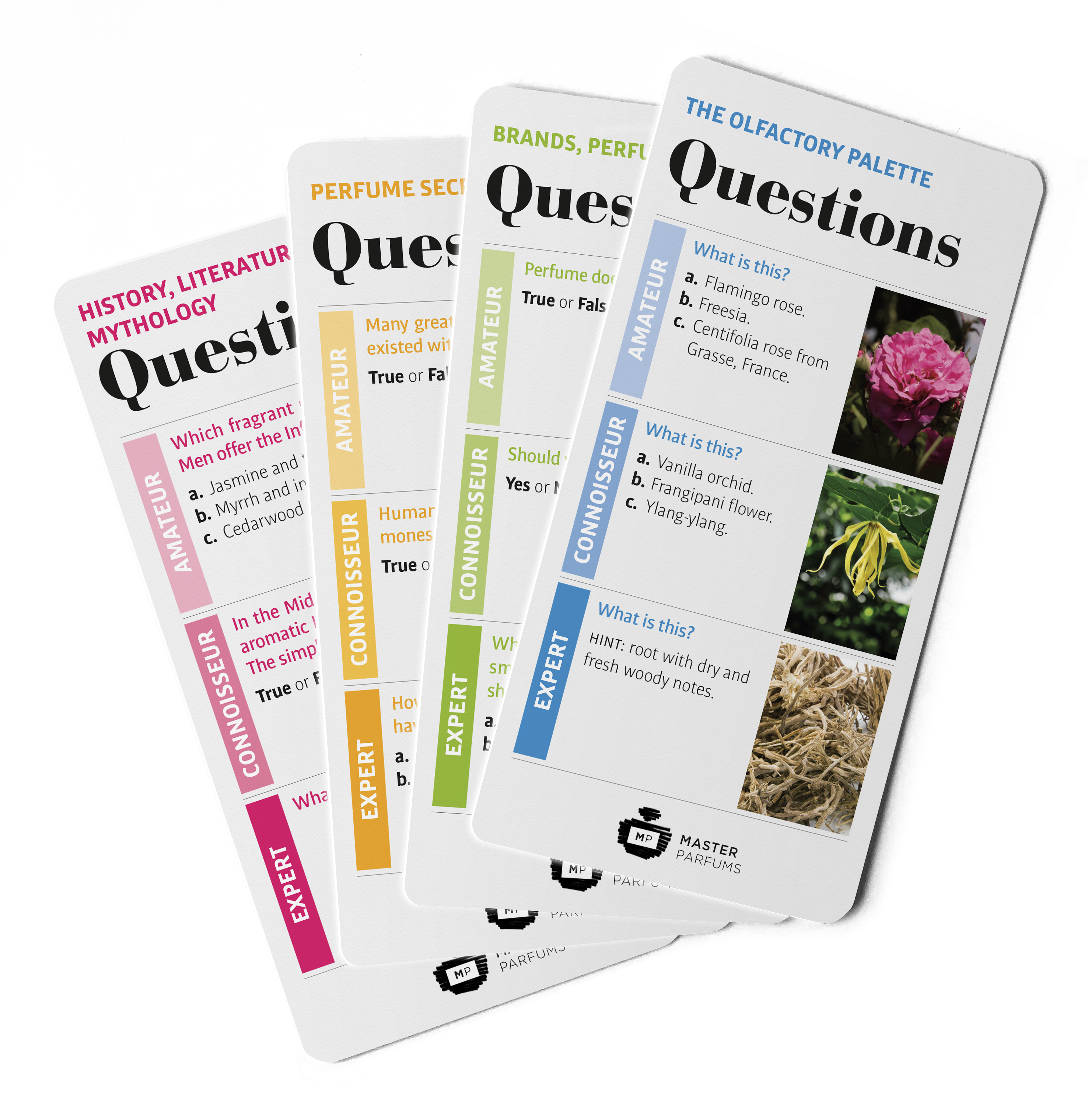
TEST YOUR PERFUME KNOWLEDGE
Would you recognise a chypre?
Olfactory families, raw materials, iconic perfumes, history…
Put your knowledge to the test with the Master Parfums Pocket Quizzes.
Famous Chypre Perfumes
Chypre by Coty was a huge success from its launch, and inspired many other perfumers to explore this new olfactory family. Today, many chypre perfumes exist on the market, and even though it no longer exists, the perfume Chypre by Coty remains an icon of French perfumery. The perfumes of this family give off an enigmatic, mysterious aura. On a woman, the chypre becomes glamorous—for a woman of character, extremely feminine and seductive, a touch androgynous. The perfume of the Femme Fatale of 1940s–50s Hollywood.
Among the most famous chypre perfumes, we can cite the following.
Guerlain – Mitsouko
Created in 1919 by Jacques Guerlain, it is a fruity chypre perfume. It features notes of peach, jasmine, patchouli and oakmoss, creating a complex, mysterious and captivating perfume.
Rochas – Femme
Created in 1944 by Edmond Roudnitska as the first perfume of the house of Rochas. This fruity floral chypre owes its distinctiveness to the note of candied plum, which gives it a gourmandise counterbalanced by spices such as cumin, cinnamon and clove. Notes of peach, rose and jasmine bring freshness, and oakmoss, patchouli and ambery notes accompany this warm, sensual perfume.
Dior – Miss Dior & Eau Sauvage
The famous couture house created two chypre perfumes: Miss Dior for Madame and Eau Sauvage for Monsieur. Miss Dior was created by Jean Carles and Paul Vacher in 1947 and represents the first haute couture collection of the house of Dior. The original perfume opens on green, juicy top notes of galbanum and bergamot, which give way to a floral heart of jasmine, rose, gardenia and lily of the valley. The base notes, which linger and evolve over time, are composed of patchouli, musk and oakmoss. In tribute to his sister Catherine, Christian Dior named this floral chypre Miss Dior.
Eau Sauvage was created in 1966 by Edmond Roudnitska. It represents an aromatic chypre for men. Characterised by notes of bergamot, rosemary, vetiver and oakmoss, a fresh, masculine perfume.
Chanel – Pour Monsieur, Chanel No. 19 and 31 Rue Cambon
The couture and luxury house Chanel has, in its perfume portfolio, three references belonging to the chypre olfactory family: Chanel No. 19, 31 Rue Cambon and Pour Monsieur.
Created in 1955 by Henri Robert, Pour Monsieur is the brand’s first chypre perfume. It is categorised as a woody chypre. The fragrance pairs notes of lemon, coriander, oakmoss and patchouli, creating a classic, timeless perfume.
The second chypre reference, Chanel No. 19, was created in 1971 by Henri Robert. It is a green floral chypre perfume that pairs notes of galbanum, iris, vetiver and oakmoss, creating a fresh, elegant and sophisticated perfume.
31 Rue Cambon is the youngest, created in 2007 by Jacques Polge. It is a classic chypre perfume modernised by vetiver and vanilla, designed to be unisex and refined. On men, these are very distinguished perfumes, often dressed in wood or leather.
Clinique – Aromatics Elixir
Created in 1971 by Bernard Chant, this perfume is a spicy floral chypre. It is composed of notes of rose, jasmine, patchouli and oakmoss, creating a powerful, sensual perfume.
Estée Lauder – Knowing
Created in 1988 by Elie Roge, Knowing is a woody chypre perfume. It brings together notes of aldehydes, white flowers, patchouli and sandalwood, creating a sophisticated, elegant perfume.
Hermès – Bel Ami
Created in 1986 by Jean-Louis Sieuzac, Bel Ami is a leathery chypre perfume for men. It features notes of lemon, cardamom, leather and patchouli, creating a distinguished, sophisticated perfume.
Guerlain – Héritage
Created in 1992 by Jean-Paul Guerlain, it is a woody chypre perfume. It pairs notes of lavender, cedar, patchouli and oakmoss, creating an elegant, sophisticated perfume.
Yves Saint Laurent – Kouros
Created by Pierre Bourdon in 1981, “Kouros” is an aromatic chypre perfume marked by the freshness of citrus, heightened by aromatic notes of lavender and bay laurel. It evolves towards a contrasting heart blending a floral bouquet and spices. Its woody, leathery, ambery base notes, along with oakmoss and patchouli, give off a warm, charismatic aura.
YOU MAY ALSO LIKE …
In the aftermath of the Second World War, France and Europe dreamed of only one thing: to rise again. With the arrival of L’Air du Temps, the new lightheartedness the world thirsted for no longer merely inhabited hearts and minds—it was now also on every skin. Master Parfums looks back on this Nina Ricci perfume that became mythical, which was and continues to be the olfactory reflection of rediscovered freedom.
Post-War, New Aspirations
In 1948, France had just been crossed by two major conflicts in less than half a century. While the scars of the Second World War, which had ended only three years earlier, were still fresh, an ardent desire for renewal was just as fresh. It was, moreover, the beginning of the Trente Glorieuses, a period of strong economic growth. On the side of mentalities, the desire for a universal peace as an antidote to the horror of war and as a means of building a better world was reflected everywhere… perfumery included.
Nina Ricci in Paris
In 1932, the eponymous fashion house of the Franco-Italian Maria Adélaïde Giuseppa Nielli, known as Nina Ricci, settled in Paris. It was the couturier’s son, Robert Ricci, who founded the house at 20 rue des Capucines in the 1st arrondissement of the capital. The brand quickly positioned itself against the grain of the trends of the time: its ultra-feminine style was the opposite of the boyish fashion in full swing in the 1930s.
Fifteen years later, for many companies, the economic fallout of the war had been heavy. It was then imperative to diversify one’s activities and therefore one’s sources of income. Nina Ricci did not escape this: in 1946, under the tutelage of Robert Ricci, the house inaugurated its perfumery department and launched the same year its very first fragrance, Cœur Joie. While floral perfumes with a springlike look (such as the evocative Vent Vert by Balmain or Ma Griffe at Carven) were nonetheless in favour, the greenery of Cœur Joie unfortunately did not meet with the expected success. Never mind: Nina Ricci released a second fragrance two years later, and this time it had the effect of a small olfactory revolution.
L’Air du Temps, a Perfume of Freedom
In 1948, Francis Fabron composed L’Air du Temps, a magnificent spicy floral perfume, the very first in the history of perfumery. The perfumer would say about his creation: “I imagined the perfume I would want to smell on the shoulders of the woman I love.” The result? A fragrance where tenderness is the watchword and embodying the collective desire to move forward with optimism and a certain nonchalance.
With L’Air du Temps, Fabron delivered a juice that was delicate and solar at once, turning its back on the verdant notes of Cœur Joie, but not only that: the fragrance also went against the grain of the chypre perfumes that were all the rage during the interwar period. Nina Ricci’s perfume fit into a new olfactory context where more luminous fragrances were the reflection of the mentalities of the era.
L’Air du Temps opens its perfumed ball with hesperidic notes of bergamot, then giving way to a sublime floral arrangement: rose centifolia, Grasse jasmine and a powdery violet. It is undoubtedly the carnation-gardenia accord on which a large part of the perfume’s olfactory identity rests: the carnation exalts its charisma with its spicy note of clove, while the gardenia means to be greener and more opulent. Finally, the marriage between a sensual Mysore sandalwood and Florentine iris confers on L’Air du Temps a velvety quality. Amber and cedar coat the fragrance to make it a true olfactory caress.
With only around thirty components, the ingredient list of L’Air du Temps is short, especially for the era in which it came into being. Moreover, an atypical guest slipped in among this small committee…
Benzyl Salicylate: Sunshine in a Bottle
Robert Ricci would say: “There is in L’Air du Temps a little miracle that gives it its strong personality.” This little miracle is benzyl salicylate, a synthetic molecule usually used as a UV filter and used in sunscreens. It is, moreover, the olfactory signature of Garnier’s Ambre Solaire! Green and floral, benzyl salicylate makes Francis Fabron’s sublime bouquet shimmer and airy. While this molecule is nowadays frequently used in perfumery, this was not the case at the time of L’Air du Temps’s release.
Beyond its juice, how can we speak of L’Air du Temps without evoking its bottle, recognisable among a thousand?
The Timeless “Two Doves” Bottle

Did you know that Nina Ricci’s perfume was not always contained in its iconic bottle with intertwined doves? The very first packaging of the fragrance was designed by the Spanish sculptor Joan Rebull: oval, sun-shaped, a gold thread around the cabochon already engraved with the standard-bearer bird of peace.
At the time, the order of the day was sobriety and pared-down lines. The historian Élisabeth de Feydeau describes “the amphora-bottle model,” like the rounded, minimalist curves of a Femme by Rochas or the sober elegance of Diorissimo. But in 1951, an air of renewal was in the wind… The bottle of L’Air du Temps reinvented itself! Two doves entwined in their flight are now sculpted and set on a twisted bottle by Marc Lalique (who was already behind the Cœur Joie bottle). The meeting of the birds appears as a celebration of love, peace and freedom: the values embodied by the fragrance are now no longer carried only by the juice itself—they are also reflected by its bottle and its box of a luminous, solar yellow.
For Robert Ricci, “a perfume is a work of art, the object that contains it must be a masterpiece.” Many will agree that the bottle of L’Air du Temps is well up to this ambition. This little jewel won hearts to the point of being voted “Perfume Bottle of the Century” in 2000 and being revisited countless times over the years. In the 1990s, the doves were by turns blue, amber or emerald. In 2010, the designer Philippe Starck rehoused the fragrance in a single wing of frosted glass with a metallic tip. There is also the designer Olivia Putman who repainted the bottle in Klein blue in 2013, “like the sky and the sea that evoke the infinite and freedom”…
A Perfume That Passed Into Posterity
L’Air du Temps served as inspiration for many other perfumes.
- With L’Interdit (1957), Givenchy put into a bottle a luminous flowerbed dressed with a note of coriander.
- The bucolic Anaïs Anaïs (1979) by Cacharel is not unlike the absolute tenderness of the perfume with doves.
- Bvlgari pour Femme (1994), for its part, is a bouquet of lily of the valley, iris and rose, again enhanced with coriander, but also with Sichuan pepper.
Another common point between these examples? The presence of the characteristic carnation accord of L’Air du Temps!
But let us set aside its successors, its re-editions and its reinterpretations: Francis Fabron’s original remains cult today. It is not only its airy fragrance that was and continues to be celebrated; it is also the lightheartedness of happy days and the rediscovered peace that it and its case represent.
Want to learn more about the history of your favourite perfume brands? Other exclusive anecdotes await you in the Master Parfums game: its questions and its olfactory challenges will plunge you into the world of perfume while having fun!
Photo credits: Nina Ricci Officiel