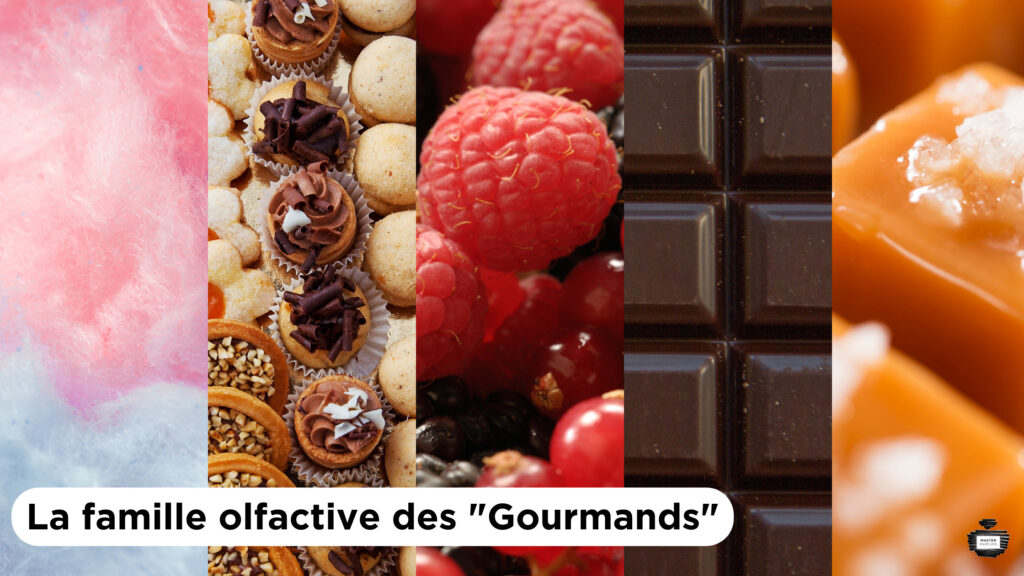
A treat or a trick? Halloween is approaching, and soon the little pumpkin-shaped baskets of the youngest children will be filling up with multicolored candy. Calling all sweet tooths craving treats: Master Parfums invites you to explore the gourmand fragrance family and its most iconic sweet notes, each one more tempting than the last.
Olfactory Families in Perfumery
In 1984, the Société Française des Parfumeurs unveiled a classification of perfumes into different families based on the raw materials used in their composition. Various facets can also be distinguished within these families themselves—facets that add nuance to a fragrance’s identity. For example, a fragrance that highlights sandalwood would undoubtedly be classified as part of the woody family. Is it sprinkled with cardamom, nutmeg, or even pepper? Then we’d call it woody-spicy. Do lavender, rosemary, or thyme make an appearance? Bingo—we’re dealing with a woody-aromatic.
As early as the beginning of the 20th century, certain molecules with vanilla notes (vanillin) or fruity notes such as peach (C14 aldehyde) or plum (De Laire’s prunol) added a new sense of roundness to fragrances, but the term “gourmand” as we know it today had not yet been coined. The term “gourmand” initially referred to an olfactory facet, but with the wave of delightfully sweet fragrances launched in the 1990s, it is now used to designate a distinct fragrance family in its own right.
The gourmand fragrance family
While the 1970s saw a trend toward floral, green, and chypre compositions synonymous with freshness and elegance, vanilla-based fragrances began to quietly breathe a warm breath of renewal into the olfactory landscape of the time. This was particularly true of Guerlain’s creations, as the brand was a pioneer in the creation of gourmand perfumes. It’s impossible not to mention La Guerlinade: this fragrance base, created in 1921 and composed of vanilla, bergamot, iris, rose, tonka bean, and jasmine, would become the signature scent of many of the brand’s perfumes.
The gourmand revolution of the 1990s began with Thierry Mugler’s Angel. When it was released in 1992, this bewildering fragrance—the likes of which had never been smelled before—struggled to find its place. People weren’t used to putting so much “sugar” on their skin.
But these indulgent scents eventually become addictive, and as the new millennium approaches, we love to wrap ourselves in fragrances with nostalgic notes.
Its overdose of patchouli, red berries, and caramelized vanilla—along with its famous ethyl maltol molecule evoking cotton candy and praline—cast a spell, and in its wake, an ever-growing number of sweet fragrances emerged, with notes so tempting you just want to take a bite. And this groundbreaking fragrance, now a classic, has become the leader of a new olfactory family: the gourmand fragrances. A wave of fragrances with mouthwatering notes—both nostalgic and sexy—is sweeping through our perfume shops…
In the gourmand family, I’d like…
Vanilla
If there’s one note that could truly be called timeless, it’s vanilla. There may be over a hundred varieties of vanilla, but nothing changes the fact that perfumers’ favorite remains Bourbon vanilla, because its aromas are both incredibly rich and refined. In perfumery, it can be as creamy and balsamic as it is ethereal and powdery, often coming across as sensual and almost animalic, while other versions are filled with tenderness, like a caress.
While perfumers may use a fine vanilla absolute, the high cost of vanilla beans has made the use of synthetic notes such as vanillin and ethylvanillin more widespread (although vanillin can be obtained naturally). Synthetic vanillin was used for the very first time amid the multitude of aromatic notes in Jicky (1889). Also from Guerlain, the voluptuous Shalimar (1925) marked the beginning of the “Guerlinade”… which, incidentally, is said to have been created after reworking Jicky by adding ethylvanillin! Of course, vanilla also shines in Angel.
Marshmallow
Did you know that before becoming Haribo’s “Chamallows” candy, the marshmallow plant is native to the wetlands of China, Russia, and Europe? It’s not its leaves or flowers that interest us here… it’s its roots! In fact, marshmallow roots are rich in mucilage, a viscous substance used to make the famous confection that looks like a little powdery cloud.
Marshmallow, in both confectionery and perfumery, is light and fluffy, with a hint of vanilla. To capture this scent in a bottle, one can turn to synthetic notes or to a vanilla-orange blossom accord, found notably in Guerlain’s magnificent, powdery L’Heure Bleue (1912). Also worth mentioning is the cozy Mademoiselle Guerlain (2014) with its iris and white musks, Boucheron’s Quatre en Rouge (2019), a fruity fragrance reminiscent of a candy apple, or État Libre d’Orange’s Divin’Enfant (2006), where marshmallow flirts with the bitterness of coffee, leather, and tobacco.
Almond
In perfumery, almond is reminiscent of marzipan and frangipane, and can evoke cherry or amaretto. While it is impossible to extract an essence from the almond itself, hydrodistillation of apricot or plum pits can yield an essential oil containing benzaldehyde, an olfactory component with a bitter almond scent… but be careful: it is a delicate raw material to work with due to the hydrocyanic acid it contains, a highly toxic compound that must be removed.
That’s where the tonka bean comes to the rescue: it’s a small seed whose main aromatic component, coumarin, exhibits notes of tobacco, gingerbread… and almond! When it comes to synthetic molecules, perfumers can rely on synthetic coumarin, of course, but also on benzoic aldehyde, anisic aldehyde, and heliotropin—the latter being naturally present in small quantities in violet flowers.
In 2007, Guerlain’s L’Instant Magic was one of the first fragrances to feature bitter almond essence prominently, blending it with vanilla, musks, and woody notes. The presence of almond lends Christian Dior’s sensual Hypnotic Poison (1998) a touch of sweetness, while in La Petite Robe Noire (2012), it reveals its most elegant cherry facet, already hinted at by the morello cherry in its top notes. It also appears in Yves Saint-Laurent’s scandalous Black Opium (2014), La Vie est Belle (2012) with its gourmand iris, and Serge Lutens’ Un Bois Vanille (2003) in the niche perfume sector. Prada dedicates one of its beautiful infusions to it.
Caramel
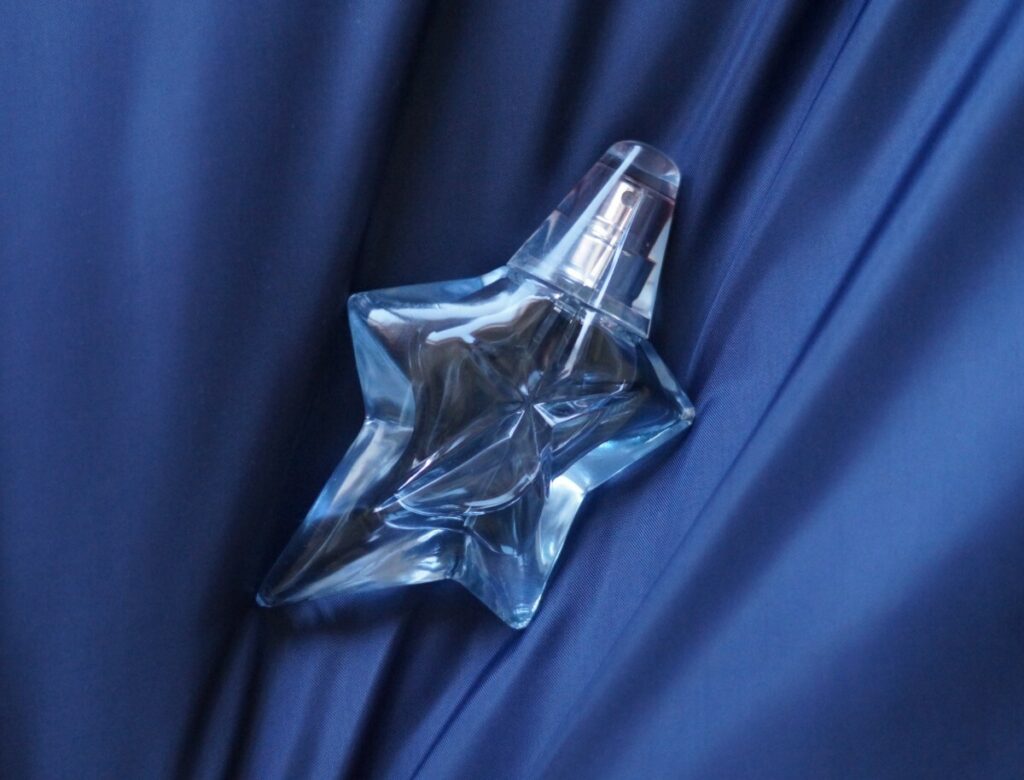
Whether it’s crunchy to the bite or, on the contrary, sticks to our teeth, this iconic treat from Brittany has also made its way into the world of perfumery with the release of Angel. The warm, syrupy scent of caramel must be created synthetically: ethyl maltol, furanol, sacrasol, or coumarin—these molecules jostle to recreate the characteristic aroma of burnt sugar, vanilla, and milk found in golden caramel. Sweet and balsamic, caramel is an incredibly nostalgic note.
To experience it in a bottle, aside from Mugler’s iconic Angel, consider Jean-Paul Gaultier’s Scandal (2017) and its honey-coated salted caramel; Nina Ricci’s Luna (2016), where it weaves its way through red berries and pear; or Thierry Mugler’s Alien Le Goût du Parfum (2011) by Thierry Mugler—a supremely sensual reinterpretation of the 2005 original, where the sweet note reveals a magnificent heart of cashmere wood.
Cocoa
Cacao beans are truly everywhere: we can enjoy them in our chocolate bars, but also on our skin! Highly versatile, cacao can be just as much a comforting, milky note as it is an animalic, sensual one. It’s a staple in base notes, pairing perfectly with vanilla, musks, and woods for guaranteed sensuality. Its rich aromas can be captured naturally with a cocoa powder absolute, but they can also be evoked—for example, through musks, patchouli, and tonka bean—or achieved using synthetic bases such as chocovan and pyrazines.
In Pure Poison Élixir (2006) by Christian Dior, an amber cocoa absolute is blended with jasmine and orange blossom. In L’Instant de Guerlain for men (2015), cocoa is paired with a surprising blend of tea, resin, and spices. Dark (2018) by Akro, the brand of perfumer Olivier Cresp, pairs its cocoa with cinnamon and hazelnut, and in Vanilla Diorama (2021), it is steeped in rum and enhanced with a hint of pink pepper.
The Tonka Bean
We’ve already mentioned it several times in this article: the tonka bean is a small black seed that comes from a South American tree. Once they fall from the tree, the fruits are left to dry for a year, then cracked open to extract the seeds… which are actually the tonka beans. These are then macerated in rum for a full day before being dried. It is during this process that small crystals form on the surface of the tonka bean: this is coumarin, its main component and the substance that gives it its characteristic almond-like scent with hints of hay. Once the beans have been transformed into an absolute, they take on a warmer, balmy quality, reminiscent of tobacco.
One of the very first fragrances to introduce the tonka bean in the form of synthetic coumarin was Jicky—synthetic vanillin alone wasn’t enough for it! It’s also worth noting that the tonka bean is one of the ingredients in the Guerlinade. Over time, it has become a signature note for the House of Guerlain: there’s Shalimar, but also Samsara (1989), Insolence (2006), and the magnetic Tonka Impériale (2010)… Van Cleef & Arpels’ Bois Doré (2017) and Tom Ford’s Tobacco Vanille (2007) combine their tonka bean with the woody aroma of tobacco, and Tonka Blanc (2022) by L’Artisan Parfumeur is surprising to say the least, because amidst an almondy tonka bean refreshed with citrus, what suddenly intrudes is… cauliflower!
A Word on Hunger
It’s impossible to list them all: honey, sugared almonds, dulce de leche, licorice… These indulgent notes continue to tantalize both our taste buds and our sense of smell. Ever since Angel, cotton candy has continued to melt on our skin; this is the case, for example, in Byredo’s Sundazed (2019). Lactones, meanwhile, are a family of molecules capable of recreating the sweet, comforting vanilla scent of warm milk; Issey Miyake’s Le Feu d’Issey was the first fragrance to use them in 1998. Fruity notes, mostly obtained through synthesis, are also abundant in gourmand perfumes.
Speaking of fruit, with Halloween just around the corner, why not dare to try… pumpkin? No need to be scared: its gently fruity and creamy character makes it a perfect match for white flowers, while its woody undertones pair beautifully with spices. Paco Rabanne’s Fabulous Me (2019) eau de parfum pairs pumpkin with rhubarb in a cocoon of almond-vanilla, while État Libre d’Orange complements the velvety pumpkin accord in Like This (2010) with immortelle and spices.
Want to keep feeding your appetite for the world of perfumery? You’re in luck: the Master Parfums game book has prepared 120 questions about perfume, a shower of olfactory challenges, and scented pencils to help you sketch out your own fragrance… perhaps a gourmand fragrance?
For this Pink October, Master Parfums has undertaken to write a series of informative and thoughtful articles addressing the theme of cancer and the sense of smell. Through these publications, our aim is to shed light on the olfactory alterations induced by chemotherapy, as well as to inform about the use of new smell-related technologies for cancer detection. We seek to educate and raise awareness about these changes, while offering support and an in-depth understanding of the challenges that result from them.
Chemotherapy, although essential for treating certain forms of cancer, can have a major impact on quality of life, notably because it can lead to disturbances of taste and smell. This article explores these sensory changes, while touching on solutions such as aromatherapy and olfactotherapy.
Changes in the Perception of Flavours
Dysgeusia
Cancer treatment, notably by chemotherapy, is often synonymous with various side effects that can profoundly alter patients’ quality of life.
One of these effects, widely reported, is an unpleasant sensation of a metallic taste in the mouth, also perceptible through retronasal olfaction, changing the way foods and drinks are perceived and enjoyed.
A metallic taste, often described as a sensation of having metal in the mouth or as if the saliva tasted of iron, is an alteration of the sense of taste, also called dysgeusia. This phenomenon can make foods and drinks less appetising, negatively influence the patient’s appetite, and significantly impact quality of life and nutritional well-being.
During retronasal olfaction—that is, when air passes through the oral cavity towards the olfactory receptors at the top of the nose during chewing or swallowing—this metallic taste, having become a smell, is all the more perceptible. This modifies the flavour of foods, or even creates an aversion to food.
The exact mechanisms behind chemotherapy-induced metallic taste are not fully understood. However, it is generally suggested that chemotherapy drugs laden with metallic molecules, which aim to eliminate fast-growing cancer cells, also affect healthy cells, notably those of the taste buds and the nasal cavity. This disrupts the normal functioning of the taste and smell receptors, leading to altered perceptions, such as the famous metallic taste.
Anosmia
Another of the side effects of chemotherapy is anosmia.
A temporary or permanent loss of smell, anosmia poses an invisible but deeply disturbing obstacle. Smells form a backdrop to our lives, awakening memories and important moments. The sudden disappearance of this sense can plunge individuals into a world devoid of these olfactory nuances, affecting not only their ability to perceive the subtle pleasures of everyday life, but also to detect potential dangers, such as spoiled food, the smell of smoke, or gas leaks.
For patients undergoing chemotherapy, anosmia adds an extra layer of challenge, disconnecting not only their inner world from these olfactory stimuli, but also affecting taste and, consequently, appetite and nutrition.
Furthermore, the emotional and psychological impact of anosmia should not be underestimated, since smells are intimately linked to our memories and experiences. The absence of this olfactory connection with happy or reassuring memories can also be fertile ground for feelings of melancholy or isolation. In this context, emotional support, recognition of the phenomenon, and the exploration of alternative or complementary therapies to compensate for this loss become key pillars in the holistic support of the patient throughout their care journey.
Olfactory Therapies to Relieve Patients Undergoing Cancer Treatment
Aromatherapy

Aromatherapy uses essential oils to stimulate the senses and promote well-being. Although research is limited, some studies suggest that aromatherapy can help improve mood and reduce anxiety in chemotherapy patients.
How does it work?
Essential oils such as lavender, rosemary and sweet orange can be diffused into the air or applied to the skin. The aim is to stimulate the remaining olfactory receptors and create a pleasant sensory experience.
Aromatherapy uses essential oils extracted from plants with the aim of promoting physical and psychological health and well-being.
It involves the use of essential oils via diffusion, inhalation, or topical application to address various issues such as stress, anxiety, pain, and other health problems.
Although the exact mechanism remains a subject of research, it is thought that the smells of the oils can influence physiological and psychological responses through their interactions with the limbic system in the brain.
Aromatherapy is widely used to manage stress, improve sleep quality, reduce pain symptoms, and for various other well-being-related applications.
Olfactotherapy: A World of Emotional Fragrances
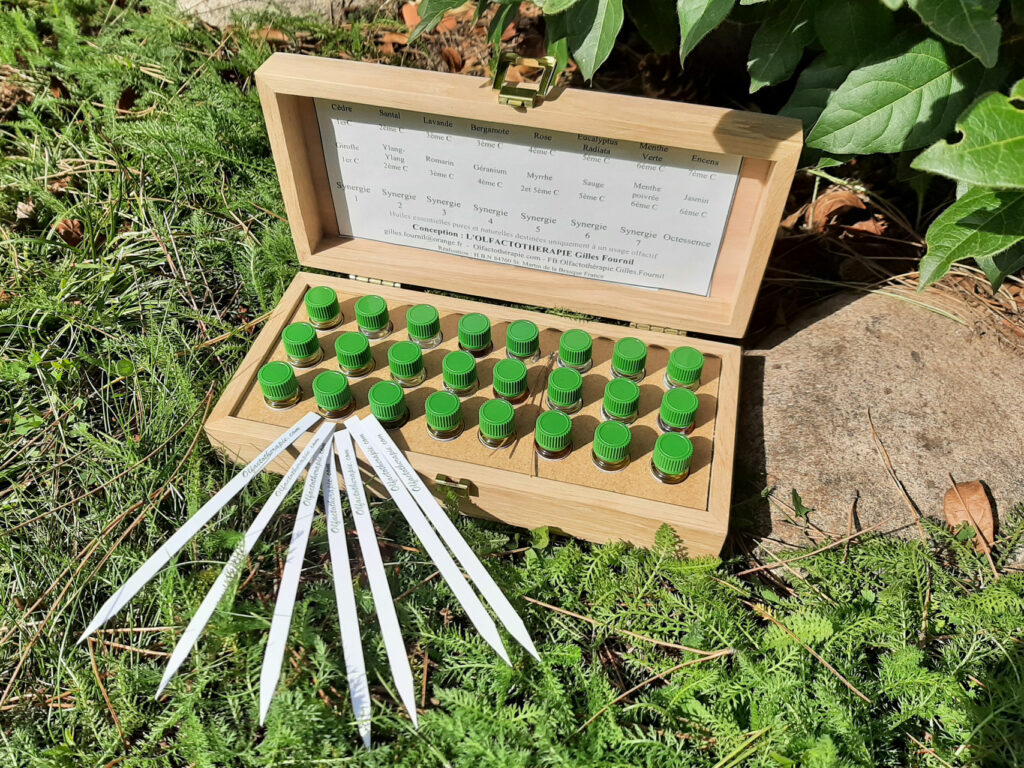
Olfactotherapy is an approach that also uses smells but focuses more on emotional balance and psychotherapy. It explores the links between smells and memories to trigger specific emotional reactions, help release emotional blockages, or work on traumas and memories.
Olfactotherapy is based on the idea that smells can directly access the emotional brain (the limbic system) and thus trigger, explore, and potentially reprogram emotional responses.
It is used above all in the context of emotional management, the treatment of trauma, and from a psychotherapeutic perspective to work on behavioural and emotional patterns.
The choice of fragrances for chemotherapy patients must be made with care, taking into account their new olfactory sensitivities. This can involve a process of trial, exploring different smells until identifying those that provide comfort or evoke pleasant memories without causing nausea or discomfort.
This therapy can offer a space of mental escape, allowing patients to momentarily step away from the intensity of the treatment journey.
Being Attentive to Individual Needs
It is imperative to approach olfactotherapy in a personalised way, being attentive to individual responses to different smells and adjusting the practice accordingly.
The implementation of olfactotherapy in the overall care plan should be done in collaboration with the patient’s medical team, in order to ensure the safety and effectiveness of the approach.
Although olfactotherapy is not a cure, it can offer a gentle, soothing complementary method to improve the quality of life of chemotherapy patients. Through the reconquest of the olfactory space, it aims to reintroduce moments of well-being and comfort into the tumult of the medical journey.
Olfactotherapy and Aromatherapy: Two Different Approaches
These two approaches use smells and aromas in a therapeutic context, but they are distinguished by their objectives, methodologies and founding principles.
Both therapies recognise the power of smells to influence state of mind and emotions, and harness the deep connection between smell and the brain’s limbic system.
There are nonetheless differences between the two approaches: aromatherapy has a broader application and can target physical and mental well-being, whereas olfactotherapy focuses more precisely on the psychological and emotional aspects, often by exploring in depth the memories and emotions linked to smells.
While aromatherapy is more widely recognised and used in various healthcare and well-being settings, olfactotherapy, although less widespread, offers a fascinating path in the field of psychotherapy and personal development, exploring the depth of the emotional responses linked to smells.
The olfactory and gustatory modifications caused by chemotherapy trace a unique sensory path for each patient, where aromatherapy and olfactotherapy prove to be potential allies in managing the physical and emotional dimensions of this journey.
These aromatic therapies, by combining science and well-being, reveal a panorama where smells become instruments of support and comfort, weaving narratives of resilience and hope at every stage of treatment.
In the end, they remind us that the path to healing is a richly multidimensional experience, deserving exploration and appreciation in all its forms.
In a heart-shaped box for Valentine’s Day, a warm cake for an afternoon snack, a cup we drink after getting out of bed, or a bar we devour in search of comfort… Whether milk chocolate, extra-dark, roasted, raw, enhanced with dried fruit, or refreshed with mint or chili, or even accented with a pinch of salt—all to the delight of our taste buds—cocoa has carved out a special place in our lives. Since the 1990s, it has also found its way into our perfume bottles.
To celebrate World Chocolate Day, Master Parfums invites you to discover the essential raw material used in its production, known as “brown gold”: cocoa.
The Origins of Cocoa
Let’s head to South America: cocoa beans come from a tree, the cacao tree, whose very first cultivators were the Olmecs, followed by the Maya of Mexico’s Yucatán region. For both the Maya and the Aztecs, these beans were a symbol of opulence and luxury reserved for royalty and the gods. For a long time, they were used as currency to trade for food, clothing, and precious goods.
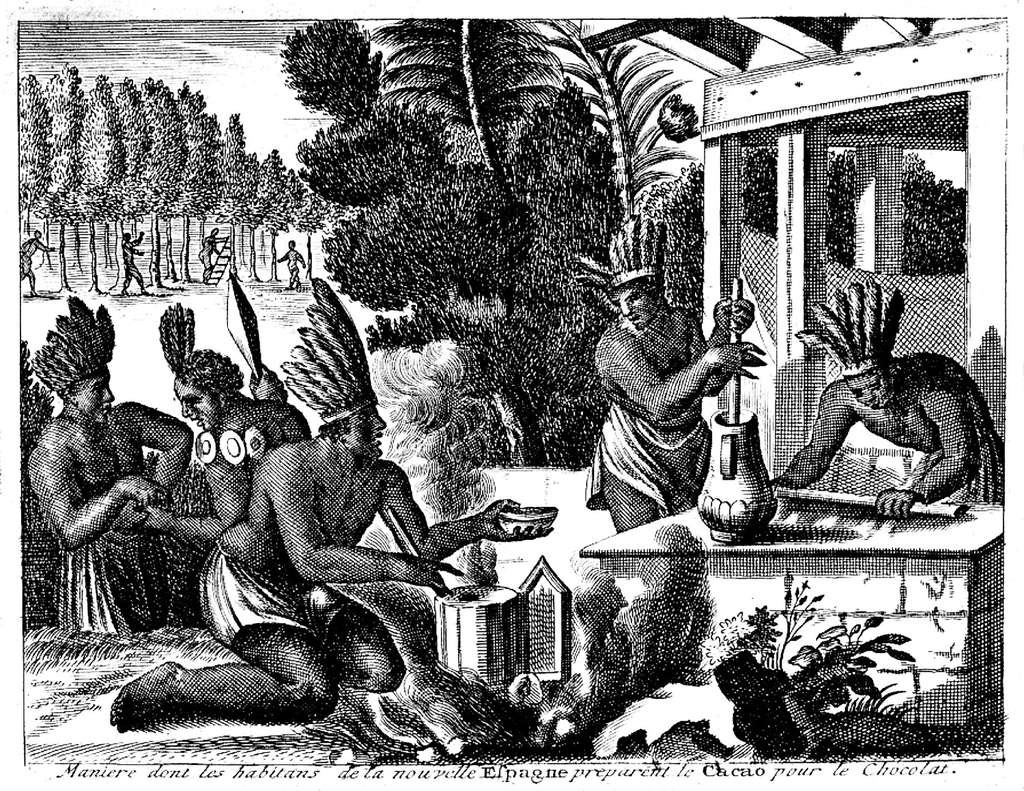
The Maya used the beans to make a very popular bitter drink called xocoatl. As you may have guessed, this is the precursor to the hot chocolate we enjoy today: cocoa beans ground in hot water, transformed into a drink colored red by annatto, and flavored with chili pepper and sometimes vanilla and tuberose. In 1502, Christopher Columbus became the first European to taste it on the island of Guanaja, near Honduras, where he was offered the famous beverage; however, Columbus was not impressed by this overly bitter xocoatl and paid little attention to the bag of beans the Native Americans gave him.
The Olmecs, Toltecs, and Maya worshipped Quetzalcóatl, the feathered serpent god who came to Earth to bestow agriculture, science, and art upon humankind. He reigned over Tula, which had become a lush city thanks to the cotton and cacao trees he had planted to protect the inhabitants from famine. But by giving them cacao—the food of the gods—he provoked their wrath. Several legends differ as to how he was punished, but in the end he fled by sea and promised he would return in the “Year of the Reed.” That year was 1519, when the Spaniards set foot on the continent. Believing he was witnessing the return of their god in the form of Hernán Cortés, the Aztec emperor Moctezuma offered him the famous xocoatl, a sacred drink, to welcome him.
Captivated by this energizing and euphoric beverage—thanks to its theobromine content—Hernán Cortés brought the recipe back to Europe, where sugar was added to mitigate its bitterness, eventually enchanting all the courts of Europe. Centuries later, in 1828, the Dutchman Van Houten discovered a process for turning cocoa into a powder that could be mixed with liquid, and it was the Englishman Joseph Fry who, in 1847, developed the first chocolate bar at his chocolate factory in Bristol. If Christopher Columbus could see the place that cocoa, in all its forms, occupies today throughout the world, he would surely be kicking himself!
The Cocoa Bean: A Botanical Overview
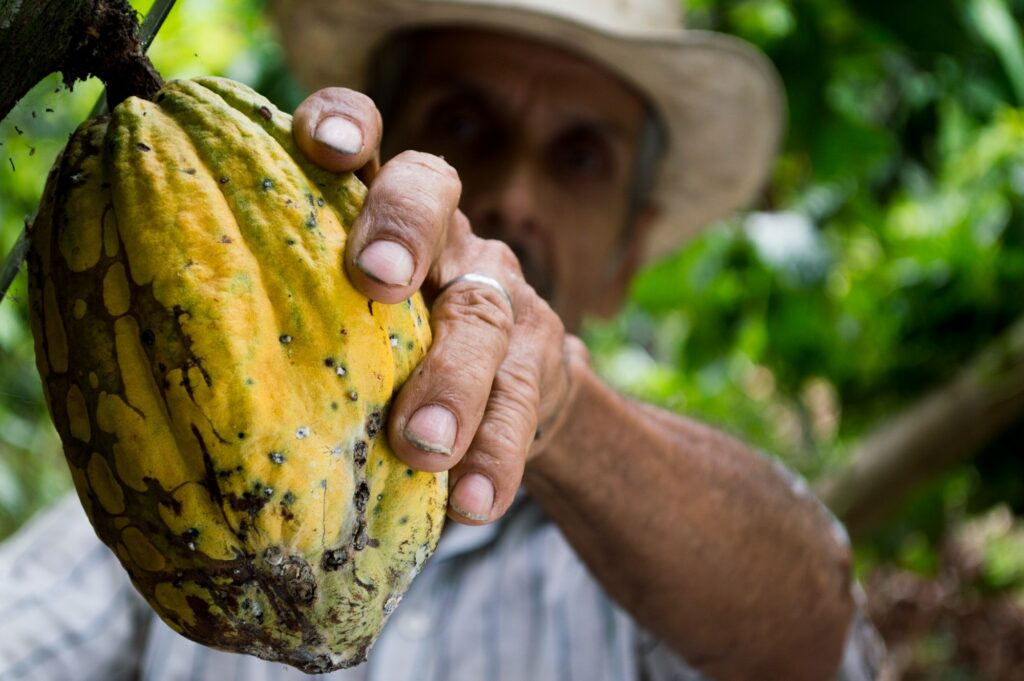
The cocoa bean comes from the cacao tree, the most widely cultivated species in the Theobroma family of trees. The cacao tree is native to the tropical forests of Central America and West Africa, and today, Africa accounts for two-thirds of global cacao production, particularly Ghana and Côte d’Ivoire. South America ranks second, primarily due to Brazil and Ecuador.
After four years, small yellow flowers appear on the trunk and branches of the cacao tree. After being pollinated, a few lucky ones out of thousands produce a fruit called a pod—a cacao tree yields an average of 80 pods per year. Inside these pods lies a sweet, viscous pulp containing between 25 and 50 seeds: the precious cacao beans.
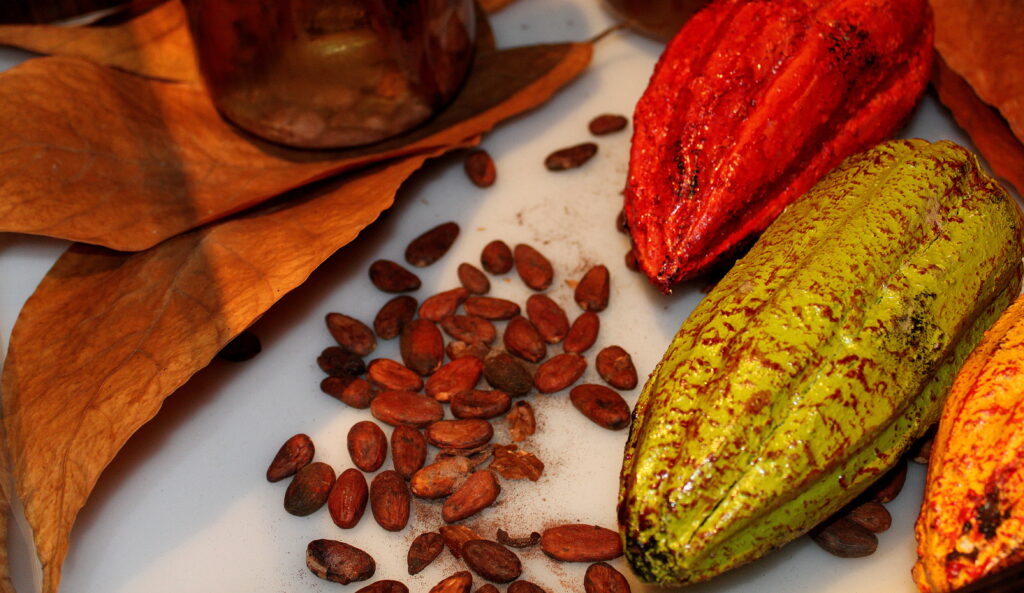
It takes 4 to 6 months for them to reach maturity. Once harvested, they are fermented for a few days before being dried in the sun. Next, they are roasted, a process that increases the amount of aromatic compounds they contain tenfold, thereby enhancing their aroma. This is also what gives them their bitterness. Finally, the beans are ground into cocoa powder, which is used in a wide variety of food products, each more delicious than the last.
Cocoa and Chocolate Notes in Perfumery
In perfumery, cocoa is primarily used to evoke a rich, warm, and sweet chocolate—even caramelized—but it can also be soft, powdery, or bitter, with a hint of woodiness. It has the potential to be alternately sensual and comforting, spicy and milky.
In our perfumes, cocoa is often found as a base note, blending with vanilla, musks, and a host of woody notes to create a guaranteed sensuality, particularly in oriental fragrances. When paired with floral notes, the cocoa note’s seductive quality is accentuated, but be aware that it is by no means out of place in woody, fruity, or even aromatic compositions. Generally speaking, cocoa is a highly versatile note: no matter which olfactory family it is incorporated into, it will bring a richness all its own.
Extracting Cocoa and Chocolate Notes in Perfumery
It is possible to obtain a beautiful cocoa powder absolute—dense, balsamic, and almost animalic. While alcoholates and CO₂ extractions are more faithful to the aromas of chocolate in bar form or in a cake fresh from the oven, they are also costly and lack intensity. They are therefore more commonly used in compositions to complement accords that recreate the familiar scents of cocoa.
Patchouli and tonka bean are popular choices for evoking chocolate—especially almond-flavored chocolate in the case of tonka bean. Musk notes, especially habanolide musk, help evoke the sweetness of white chocolate. There’s also Chocovan, a synthetic base developed by Givaudan that’s primarily composed of vanillin and brings to mind a morning cup of hot chocolate. Pyrazines are another reliable option—molecules that evoke dark chocolate in all its refined yet raw complexity.
A Few Fragrances Centered on Cocoa
The 1990s saw cocoa become increasingly prominent in perfumery. In 1992, Thierry Mugler incorporated it into his fragrance Angel: a fruity heart note set against a base of vanilla, patchouli, and cocoa, evoking caramelized chocolate. It also showcased the power of the ethyl-maltol molecule, with its sweet, cotton-candy scent… and caused a huge sensation in the world of perfumery! Today, it is considered the pioneer of the gourmand fragrance family.
Annick Goutal’s Eau de Charlotte (1982) is an elegant fragrance blending lily of the valley and mimosa. While the chocolate note is more subtle here, it beautifully enhances that of blackcurrant bud.
Christian Dior’s Pure Poison Élixir (2006) marks the enchanting encounter between orange blossom, jasmine, and an amber cocoa absolute.
In Calvin Klein’s surprising aromatic fougère fragrance CK IN2U for Him (2007), cocoa reunites with an old friend from South America: chili pepper!
L’Instant de Guerlain for Men (2015): This oriental fragrance combines cocoa with notes of tea, jasmine, resin, and spices… A surprising blend.
Yes I Do (2016) by État Libre d’Orange offers delightfully nostalgic notes of sugarcane and marshmallow and leaves a cocoa-scented trail with hints of sun-kissed amber.
Cacao Porcelana (2019) from the niche house Atelier Materi features a surprising variety of white cacao from Peru, evoking both the creaminess of milk and the bitterness of nuts. After a rich, syrupy opening, notes of blond tobacco and sandalwood transform it into a powdery fragrance that is utterly sensual.
At Dior, Vanilla Diorama (2021) opens with the piquancy of pink pepper before delighting us with cocoa, cardamom, and rum—creating a warm, slightly animalic fragrance—all wrapped in a veil of Bourbon vanilla.
Naturally, it made perfect sense for the Akro brand, created by perfumer Olivier Cresp, to celebrate chocolate addiction in Dark, a bittersweet fragrance where cocoa flirts with vanilla and cinnamon, and succumbs to the indulgent allure of hazelnut.
Want to have fun creating gourmand accords? With the Master Parfums olfactory game-book and its scented pencils, you can sketch on scent strips to inspire your own sweet treats!