The cocottes were women of mysterious charm who occupied a singular place in French society. These renowned courtesans played a crucial role in the influential circles of the 19th century, being by turns admired and criticised. Besides their presence in the upmarket salons and their influence on political decisions, they were also linked to the flourishing perfume industry.
Let us see who these cocottes of 19th-century France are from a socio-cultural point of view, their relationship with perfumery and how the brand Les Cocottes de Paris celebrates their legacy.
The Cocottes: Who Are They?
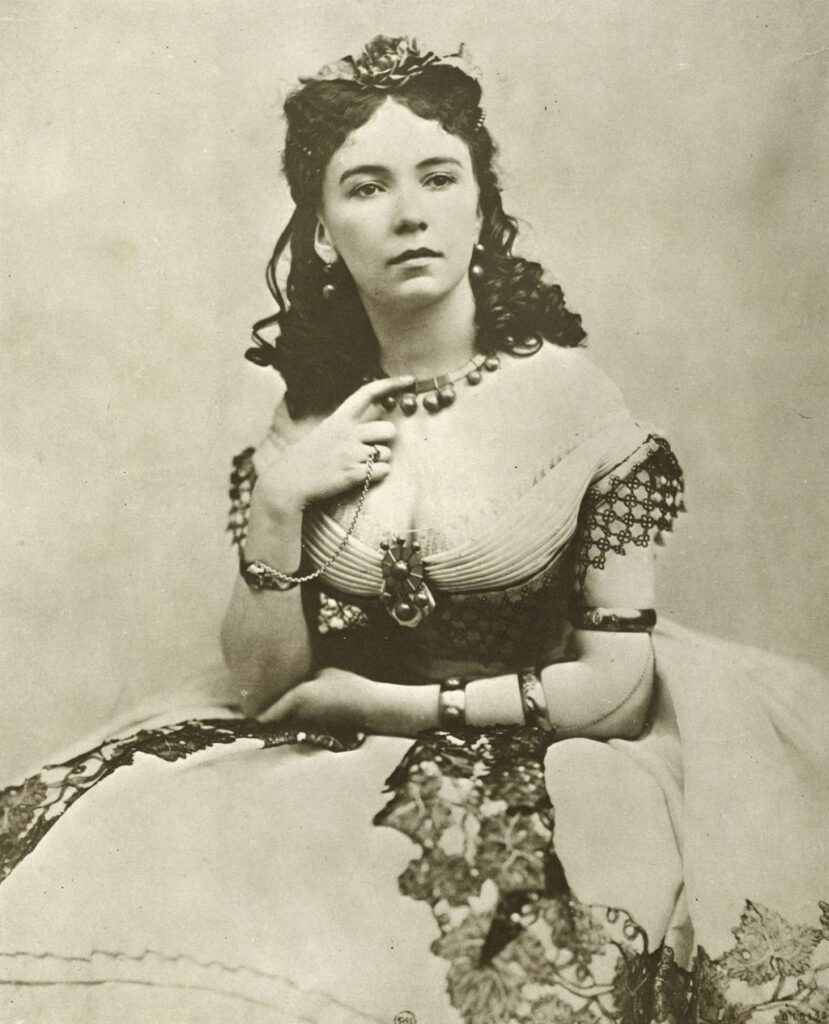
The demi-mondaines, the “does,” the scandalous women, the courtesans, or the cocottes: this is how the so-called women of easy virtue were nicknamed.
Women of great beauty, often from modest backgrounds, they engaged in prostitution in order to raise themselves into the highest spheres of society thanks to their charm, their intelligence and their talent as artists, singers or dancers, to seduce the influential men of the late 19th and early 20th centuries.
They were courted by powerful figures such as writers, artists, politicians, aristocrats and even crowned heads. But it was indeed they who chose their lovers!
Their charisma was not limited only to their ability to charm men—they were also important social actors. Some of them became the confidantes and advisers of powerful politicians, allowing them to have an indirect influence on the country’s decisions. However, this privileged position also aroused controversy and moral criticism, as they were often associated with behaviours interpreted as immoral.
Why Are They Called Cocottes?
The nickname “cocotte” has several possible origins.
It could come from the word “coquille” (shell), referring to their beauty and their outward charm.
The most likely origin would lie in the fact that they adorned themselves with luxurious outfits, and liked to add feathers to hats, fans, hairstyles, or even directly to their dresses and bodices. These feathers added a touch of lightness, elegance and theatricality to their clothes, in keeping with their status as free, independent women. Through these feathers, they came to be nicknamed cocottes.
Moreover, the term “cocotter” derives from it, since these women of easy morals perfumed themselves generously with opulent fragrances. This colloquial expression, somewhat old-fashioned and disparaging, refers to someone who has sprayed themselves with perfume excessively.
It is said that the wives of unfaithful men sometimes unmasked them by smelling this strong “cocotte” odour on them.
The Cocottes and the Link with the Perfumery of the Era
In the 19th century, the cocottes did not merely attract men through their charm and their brilliant wit—they were also recognised for their sartorial elegance. They sported clothes from Asia, such as shawls, fans and richly ornamented exotic dresses. These clothes, often imported from India and other Asian countries, were impregnated with perfumes emanating notably from dried patchouli leaves, a natural moth repellent, to protect them from insects during the long sea voyage from the East.
Patchouli, which is a plant whose essential oil gives off a powerful woody, earthy, intoxicating smell, quickly won over the cocottes, who adopted it as an olfactory signature, thus contributing to popularising its use in the perfumery of the era.
Patchouli was a symbol of exotic elegance and audacity, capturing the adventurous spirit of these mysterious women.
Besides patchouli, in their olfactory wardrobe one found fragrances with powerful, animalic musk notes. Musk evokes both passion and mystery, reinforcing their aura of enigmatic charmers.
Narcotic flowers such as tuberose, datura and narcissus also mark a turning point in the cocottes’ choice of perfumes—heady, captivating scents that become an olfactory hallmark of these women of character.
Amber, for its part, harmoniously completed this olfactory composition. With its warm, ambery, mellow notes, amber brought an opulent, magnetic, refined dimension to the fragrances.
They appropriated these unique, sensual perfumes to mark their presence and leave a memorable imprint in the minds of those they met.
The perfumery houses quickly took note of this trend and began to insert patchouli and other oriental notes into their creations. These perfumes were specially designed for the cocottes and the elegant women of high society who sought to distinguish themselves through unique, sensual fragrances at a time when eaux de cologne and floral eaux de toilette were prized for their romantic naturalness.
Thus, the close link between the cocottes and the perfume industry strengthened, shaping the evolution of olfactory tastes.
The Cocottes Honoured with the Les Cocottes de Paris Perfume Collection
Among the famous cocottes of the 19th century are emblematic figures.
These women left an indelible imprint on history and marked the society of their era.
Today, the brand Les Cocottes de Paris, created in 2015 by Anaïs Biguine, pays tribute to 5 of these legendary cocottes by offering perfumes dedicated to them. Each perfume is inspired by the personality and the unique character of these remarkable women, capturing their essence and their story in a bottle.
La Castiglione refers to Virginia Oldoïni, Countess of Castiglione, a woman described as the most beautiful of her century. Enigmatic, La Castiglione is a captivating, balmy woody amber perfume. Mugwort, cade, patchouli, ambergris and myrrh reflect the personality of one of the most desired cocottes.
Caroline Otero, a cabaret dancer and singer, is represented through La Belle Otero (the nickname she was given at the time). It is an aromatic, powdery, novelistic perfume in the image of this great courtesan. Absinthe, ginger and lavender adorn themselves with powdery, powerful notes between narcissus, musk and violet to become, thanks to sandalwood, infinitely sensual.
Mlle Cléo is Cléopâtre-Diane, known as Cléo, de Mérode. A muse and model, she posed for sculptors and painters. Of a delicate beauty, she is nonetheless an untamed cocotte.
Mlle Cléo is a fruity floral perfume where bergamot and lychee answer the delicate rose and the captivating ylang-ylang, and a falsely demure cotton flower.
Cora Pearl is a floral chypre evoking the demi-mondaine Emma Crouch. A proven seductress, she quickly grew rich thanks to her numerous carnal relationships with men of the high aristocracy. Cora Pearl is articulated around cardamom, violet and amber with a chypre accord of bergamot, jasmine, oakmoss and vetiver. It is a fragrance in which the nonchalant, seductive femininity of this cocotte is highlighted.
La Dame aux Camélias is the perfume reflecting the courtesan Marie Duplessis, who inspired Alexandre Dumas (fils) in the eponymous novel. She who added a white camellia to her neckline to signal her availability is represented by a powdery, musky floral fragrance. Violet, bergamot and grapefruit merge into a honeyed rose bouquet that stretches out into notes of ambergris and musk—gourmand, sensual and addictive.
The cocottes of the 19th century were much more than mere courtesans; they were influential, fascinating women who left an indelible mark on history.
Their close link with the flourishing perfume industry of the era helped to shape the world of perfumes as we know it today.
The legacy of the cocottes, although controversial, has continued to intrigue and inspire a great number of writers, and these singular women are forever engraved in French literature.
Banner photo credits: Loge im Sofiensaal, Josef Engelhart (1903). Vienna Museum, Austria. File licensed under the Creative Commons Attribution-Share Alike 3.0 Unported
A few centuries ago, you would have been looked at with round eyes if you had suggested that perfuming oneself could be anything other than a formality intended to camouflage your body odour. If perfumery is today a noble art, we owe this in large part to Catherine de Médicis and her personal perfumer, René le Florentin. Master Parfums goes back in time and tells you how this Italian master marked the history of perfume in France.
The Convent of Santa Maria Novella
In 1221, a group of Dominican brothers founded the convent of Santa Maria Novella in Florence. There they cultivated an orchard, a vegetable garden and a garden of simples (physic garden) overflowing with herbs and plants used to concoct medicines, balms and ointments that they prescribed in their convent apothecary.
Traces of the production of perfumed waters are found at Santa Maria Novella from 1381: during the Black Death, the monks distilled rose water intended both to purify the rooms and for personal consumption.
Quickly, the convent’s preparations met with real success among the aristocracy, and perfumed products became the preserve of the Italian nobility. And René le Florentin, in all this?
Renato Bianco and Catherine de Médicis
Renato Bianco, by his real name, was abandoned at birth and taken in and raised by the brothers of Santa Maria Novella. It was there that he learned to distil the convent’s herbs alongside the alchemist monks. A good part of the perfumer’s life remains enigmatic; it is above all for his association with Catherine de Médicis that the name René le Florentin still resonates today.
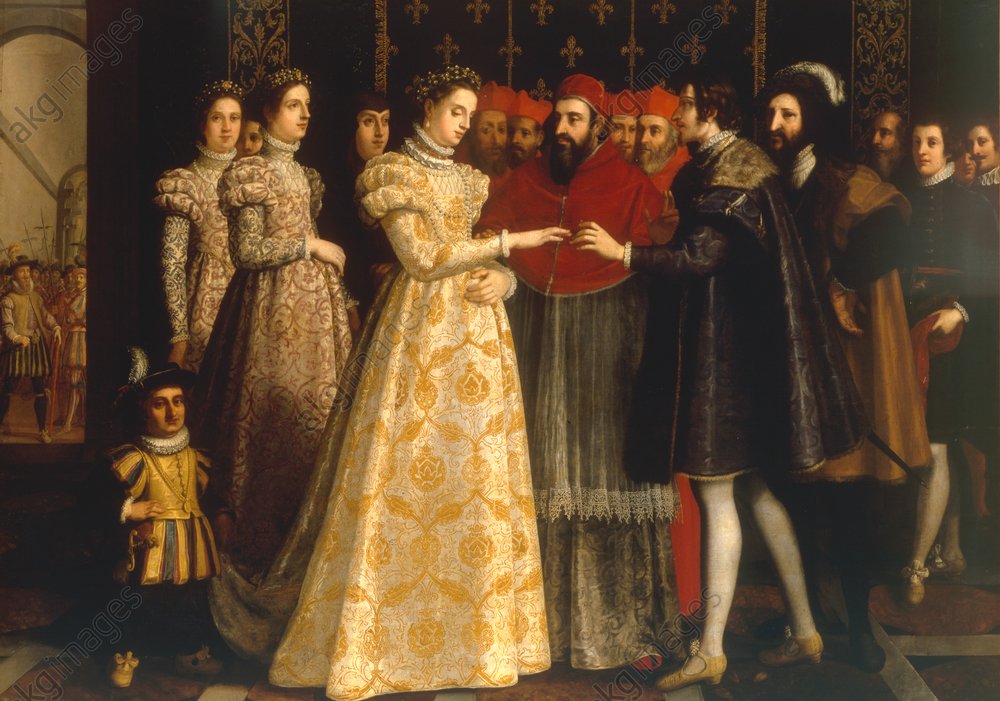
In 1533, the Italian Catherine de Médicis, aged 14, was preparing to join her future husband and the future king of France Henri II. The Italian elites being fond of perfumed products at the time, Catherine de Médicis’s social position naturally turned her towards perfume. She asked the monks of Santa Maria Novella to make her a special fragrance for her forthcoming wedding, but that is not all: as she was going to join the French capital, she demanded that Renato Bianco slip in among her entourage of pages, guards and ladies-in-waiting so that he could continue to supply her with perfumed beauty products.
When they arrived in Paris, Bianco and the future queen witnessed a curious paradox there: while in the Renaissance everyone was outwardly extremely dressed up, hygiene was far from keeping up!
Perfume in the Renaissance, or the “Reign of Perfumed Filth“
On one hand, extreme coquetry was the order of the day. People made use of mirrors, combs, make-up boxes and pomanders made of precious materials. Pomanders were spherical pendants enclosing various odorous substances. In addition to fighting bad smells, they were seen as amulets with the power to protect against illness. Doctors, moreover, considered that odorous materials could cure certain ailments. Besides the pomander, new scent objects flourished, such as the oiselets de Chypre (Cyprus birds—perfumed paste moulded into the shape of a bird) that one threw into the fire and that perfumed and purified the ambient air: rose water, labdanum, civet musk, ambergris, storax, benzoin, cinnamon, clove… so many new odorous materials brought back from Asia by the great explorers of the era.
On the other hand, water frightened people: it was thought to be a vector of illness and contagion. In the 16th century, baths, by opening the pores, were believed to let miasmas into the body. For a real deep wash, the term “se décrasser” (to scrub off the grime) was used. Doctors advocated dry washing, which consisted of rubbing the body with aromatic substances, lotions or vinegars, powdering oneself and dressing in perfumed linen. The word “toilette,” moreover, comes from that little piece of cloth (toile) that was soaked in these vinegars.
Despite everything, the enthusiasm for Greco-Latin Antiquity that characterises the Renaissance, combined with the invention of printing, prepared fertile ground for the dissemination of works containing recipes for odorous waters.
An Italian Master in Paris
In Paris, Catherine de Médicis introduced Renato Bianco to the court of France… and initiated France into the art of perfuming oneself. While in the Italian’s native land the culture of perfume was already in vogue, this was not yet the case in France. In his shop on the Pont-au-Change, he became known under the name René le Florentin and, thanks to his royal connections, the essences he made quickly became indispensable for the city’s nobility.
Perfumed products became a must: wigs, gloves, cushions, fans—everything was perfumed! At a time when hygiene was constantly neglected, perfume played above all a camouflaging role. The fear of water being widespread, it was a matter of masking sometimes nauseating smells; the fragrances therefore had to be as heady as could be. For the nobles who had the means to procure them, musk, amber and tuberose flowed freely.
Perfume certainly continued to be used to conceal the lack of cleanliness, but it gradually earned its credentials and became a symbol of social status. Other Italian perfumers came to settle in Paris, before it was the turn of the French to turn increasingly towards the profession. Whereas it had until then been purely practical, it gradually found itself associated with elegance and luxury. The trade of glover-perfumer had the wind in its sails and little by little replaced that of apothecary for the distribution of perfumes, the Sun King even creating a master glover-perfumer patent in 1651.
Animal materials were highly prized, as were hitherto unknown plant materials brought back by the explorers from their voyages and worked by the Florentine: vanilla and balsam of Peru, cocoa and tobacco, or spices such as cinnamon, ginger and benzoin. With the discovery of new sea routes, it was no longer only Italy that benefited from them!
However, René le Florentin was not famous only for his perfumes…
Sometimes Fatal Fragrances?
It was whispered at the court of France that Catherine de Médicis reputedly charged her personal perfumer with making her poisons concealed in innocent-looking fragrances or fashion accessories…
In 1572, the Protestant Jeanne d’Albret, mother of Henri de Navarre and sworn enemy of Catherine de Médicis, died after being seized by pains and a sudden fever. The rumour incriminating poisoned gloves commissioned by Catherine de Médicis and made by none other than her personal perfumer was not slow to spread.
Let us return to our bottles—in any case, to those that wish us well! So what was this fragrance created specially for the union between Catherine de Médicis and Henri II?
The Acqua della Regina
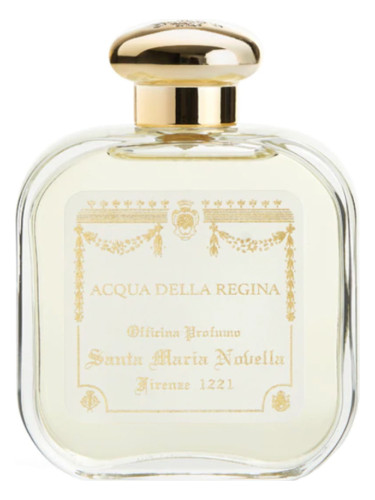
Formulated in 1533, the Acqua della Regina is an essence based on Calabrian bergamot and neroli. One also finds in it clove, rosemary and lavender, all resting on a beautiful musky base. The Santa Maria Novella apothecary still exists in Florence and, to celebrate the brand’s 800th anniversary, it launched the Firenze 1221 edition of the fragrance, today known under the name Acqua di Santa Maria Novella.
It is a hesperidic fragrance, fresh as can be; no wonder that a good number of contemporary colognes fall within its lineage.
- The Aqua Mirabilis (1695) by Giovanni Paolo Feminis could be inspired by the Acqua della Regina.
- With its notes of citrus, lavender and rosemary, the eau de Cologne 4711 (1792) also evokes the fragrance of the one who was called “the black queen.”
- The same goes for the Eau Impériale (1860): Guerlain invites a host of citrus fruits to a meeting with rosemary and cedar.
- Still at Guerlain, one can also name the subtle, tangy Eau de Fleurs de Cédrat (1920).
You will have understood: the passage of René le Florentin through our lands changed the trajectory of perfumery in France, helping it to go beyond its purely functional use and elevating its status, marking in a way the beginning of our modern perfumery.
Want to continue feeding your olfactory culture? Other perfumed anecdotes await you in Master Parfums’ Pocket Quiz game and its 120 questions to learn more about the fascinating history of perfume!
Lily of the valley long refused to lend its fragrance to perfumers. But is it really a “mute flower”? Some took up the challenge of making it spill the beans… A successful bet for the Nantes-based house AB 1882 and the essential-oils company Le Sourceur. On 25 May 2022, for the first time, a lily-of-the-valley absolute was obtained naturally in Saint-Philbert-de-Grand-Lieu.
It is a true revolution for perfumery and for the market-gardening world simultaneously, because on a large scale, this use of lily of the valley would make it possible to give it value so that it is no longer only the star of a single day, each 1st of May.
To harvest the precious essence, the ancestral process of enfleurage was brought back up to date. Demanding in time and resources, it had ceased to be used around 1930.
Enfleurage, What’s That?
The delicate bells of the market gardeners Jean-François and Charles Vinet were meticulously selected, cut and arranged by volunteers on frames coated with vegetable fat. For eleven days, the flowers were replaced daily to guarantee their freshness. Result: the vegetable fats found themselves saturated with odorous molecules. “It’s like butter in the fridge, which can take on the smell of certain foods,” explains Marielle Ravily, chemical engineer and co-founder of AB 1882.
Then the fats went through a bain-marie, being liquefied and enhanced with essential oils and alcohol, the latter making it possible to hold the perfumed molecules. Once the alcohol was distilled, a rare lily-of-the-valley absolute revealed itself for the first time.
Making Lily of the Valley Shine Through Craftsmanship
While this process is much longer and more costly than that of the chemical synthesis of lily of the valley (no fewer than 50,000 sprigs of the flower were used!), it is also a form of craftsmanship that does far more honour to the scent of the little bell. For while the perfumers have the hope of creating a very real lily-of-the-valley perfume, they do not for all that want to denature the flower—quite the contrary: it is a matter of magnifying its soft natural fragrance.
Not without having greatly awakened the interest of other perfumers at the idea of finally being able to work with this beautiful raw material, AB 1882 and Le Sourceur are now trying to get their hands on the best lily-of-the-valley absolute in order to multiply its production tenfold.
And Then?
The Nantes house wishes to market its first lily-of-the-valley perfume in the course of 2024. Moreover, it is decided: it is to Bel Été, a perfume formulated in 1926 by Alexis Biette (the great-grandfather of Marie Giffo, director and co-founder of the house), that the honour will fall of being the brand’s—and the market’s—first natural lily-of-the-valley perfume!
If the May flower long held its tongue, this is in all likelihood no longer for long: the heyday of natural lily of the valley in perfumery is only beginning.
Perfumed baths were a common practice in many cultures throughout history. In the Middle Ages, these baths were far more than a simple beauty ritual. Let us discover together their history, their relationship with the Church and the doctors of the era, their therapeutic benefits and their social role.
The Origins of Perfumed Baths in the Middle Ages
Perfumed baths in the Middle Ages drew their inspiration from the practices of Greco-Roman Antiquity. The Greeks and the Romans were known for their love of baths and of body hygiene. They developed elaborate techniques to perfume the water of their baths, which were often the centre of social life.
The Greco-Roman Influence
Ancient Greece greatly contributed to the culture of the bath in the Middle Ages. The Greeks were particularly fond of essential oils and aromatics to perfume their baths. They used oils extracted from Mediterranean plants such as rosemary, lavender and thyme. The Greeks also took therapeutic baths with plant infusions for various ailments.
The Romans, for their part, perfected the art of the perfumed bath by building sumptuous thermal baths and elaborating complex rituals. The Roman baths were equipped with heating systems and aqueducts to provide clean, hot water permanently. The Romans used perfumes and essential oils to create a pleasant, relaxing atmosphere in their public and private baths.

The Arab-Ottoman Culture
The tradition of perfumed baths in the Middle Ages was also enriched by the contributions of Arab and Turkish cultures. These civilisations brought their own techniques and know-how, thus influencing European bath culture.
The Arabs played a major role in the transmission of ancient knowledge, including in matters of perfumed baths. During the medieval period, Arab scholars translated many Greek and Roman texts on the art of the bath. They also developed their own perfuming techniques, using ingredients such as sandalwood, jasmine and musk.
The Turks, notably the Ottomans, were also known for their bath culture. The hammams, or Turkish baths, were places of relaxation and purification, where the water was perfumed with the help of essential oils and aromatics. Turkish baths were characterised by a unique architecture, with distinct spaces for hot and cold baths, as well as rest rooms.
The Turks used local ingredients to perfume their baths, such as eucalyptus, rose and mint. They were also renowned for their know-how in perfumed soaps, which were used to clean and exfoliate the skin during bathing sessions.
The Transmission of Knowledge and the Fusion of Traditions
Over the centuries, commercial and cultural exchanges between East and West allowed the diffusion of the perfumed-bath techniques of the Arabs and the Turks in Europe. These influences enriched medieval bath culture, which thus developed by integrating elements coming from different civilisations. Perfumed baths in the Middle Ages were therefore the fruit of a cultural mixing, testifying to the richness and the diversity of ancestral traditions.
The Church and Perfumed Baths: Between Purification and Reticence
In the Middle Ages, the Church was an omnipresent institution that influenced the daily life and the behaviours of individuals. Perfumed baths were thus subject to a dual perception: on one hand, that of spiritual purification, and on the other, that of the reticence and fears linked to debauchery.
Spiritual Purification
In certain contexts, the Church encouraged perfumed baths as a ritual of purification. Baths were then associated with religious rites, such as baptisms, preparation for communion or ablutions before prayer. Perfumed water was then a symbol of cleanliness and spiritual purity, and baths were perceived as a means of drawing closer to God.
The Church’s Reticence
However, the Church also had reservations about perfumed baths, in particular public baths, which it considered as places of debauchery and sin. Baths were often associated with lust, which was in contradiction with the Christian values of asceticism. Mixed baths were perceived as a source of temptation and a risk to morality.
Over time, the Church strengthened its grip on medieval society, and public baths gradually lost their popularity. Ecclesiastical authorities even sometimes prohibited or restricted access to public baths, considering them immoral and harmful to the soul.
Medieval Medicine and Baths: Between Benefits and Controversies

In the Middle Ages, doctors had diverse opinions on perfumed baths. While some recognised their therapeutic benefits, others warned against the potential risks they might represent to health.
Recognised Therapeutic Benefits
Many medieval doctors were convinced of the medicinal virtues of perfumed baths. They considered that the essential oils and plants used in these baths had curative properties and could help treat various ailments.
Perfumed baths had several therapeutic benefits. The essential oils and aromatic plants used had soothing, relaxing and anti-inflammatory properties.
The doctors of the era prescribed perfumed baths to treat various ailments and improve the general well-being of their patients, such as:
- Soothing of muscular and joint pains
- Improvement of skin health
- Promoting relaxation and reducing stress
- Improvement of blood circulation and breathing
- Strengthening of the immune system
Points of Divergence and Controversies
However, some doctors of the Middle Ages were more sceptical of perfumed baths and highlighted the risks they might present. Among the concerns was the fear that hot baths weakened the body by dilating the blood vessels and causing an excessive loss of vital energy. Moreover, doctors feared that the use of certain essential oils or plants could provoke allergic reactions or skin irritations in certain patients.
Other doctors also warned against the risks of infections in public baths, where the water was sometimes contaminated by bacteria or parasites. Worse, hot water was said to be a source of the spread of fatal diseases, even pandemics. They therefore advocated private baths, where hygiene and cleanliness could be better controlled.
The Social Viewpoint of Perfumed Baths
There was also an important social dimension, serving as a place of meeting and exchange between individuals of different social classes.
Places of Conviviality and Relaxation
Public baths were places of conviviality where people gathered to relax and chat. Bathers could unwind in the perfumed waters, while exchanging news, gossip and ideas. Public baths were thus spaces of socialisation where individuals wove bonds and reinforced their belonging to a community.
Baths were accessible to individuals of different social classes, including nobles, merchants and artisans. Although some baths were reserved for the elite, many establishments were open to a wider public, allowing various strata of society to enjoy their benefits. This social mixing contributed to the richness of the exchanges and encounters in these places.
Baths as Markers of Social Status
In certain cases, perfumed baths could also serve as markers of social status. The wealthiest and most influential individuals could afford private baths, often richly decorated, where they received distinguished guests for exclusive perfumed baths. These baths were the occasion to display one’s wealth and one’s refinement, by offering one’s guests rare, precious perfumes.
Perfumed baths were also associated with rituals of seduction. Bathers took care of their appearance and their hygiene, using perfumes and soaps to clean and perfume themselves. Perfumed baths were thus a means of presenting oneself in one’s best light and arousing the admiration of others.
Perfume plays an important role in Islamic culture and practice. Natural perfumes are often used on clothing and the body. The burning of incense and wood to perfume places of worship—as well as clothing—is highly valued.
In Islam, perfume is considered a form of purification and beautification.
Perfume in Islam
In Islam, perfume is often associated with purification and piety, and it is considered a means of enhancing one’s physical appearance and pleasing Allah.
Ibn al-Qayyim, a renowned 14th-century Muslim scholar, wrote: “Perfume is the best and most compatible of things for the soul, and there is a close connection between perfume and a good soul”1.
He also explains that perfumes have healing effects on mental and emotional illnesses such as depression, anxiety, and stress. He recommended the use of natural perfumes such as musk to improve mood and relieve mental tension.
He regarded perfume as a remedy for the soul that strengthens the body, gladdens the heart, brightens the mind, and pleases the soul.
The Prophet Muhammad was known for his love of perfume and often recommended its use. He also encouraged believers to use perfume before going to prayer or during religious festivals.
Still and distillation
The use of the still is an ancient distillation technique that was widely employed in Islamic science during the Middle Ages. The earliest stills were used in ancient Greece for the production of perfumes, essential oils, and other aromatic substances.
Muslim alchemists and scholars perfected the technique of distillation to the point that it became a standard method for producing perfumes.
Over time, many Arab and Persian societies specialized in the production of perfumes using this technique. Even today, the distillation technique is used to produce attar, traditional natural perfumes made from essential oils and containing no alcohol.
Fragrant Rituals in Islamic Worship
In Muslim culture, perfume is often used on special occasions, such as weddings and religious holidays, and is considered a cherished gift.
Perfume is also present in Islamic funeral practices, where the body of the deceased is washed and perfumed before burial. The purpose is to ensure the body is thoroughly purified before burial, and also to allow family members to remember their loved one by wearing the same fragrance.
A ritual of hospitality prescribed by Islam recommends perfuming guests with rose or jasmine water using a special sprinkler called a qumqum.
There is also a tradition of perfuming mosques with specific oils and burning incense during prayers to create a spiritual and purifying atmosphere.
It is recommended to apply perfume after Islamic purification rituals, known as ablutions, which involve washing the hands, face, and feet.
The use of siwak—a wooden stick made from the arak shrub, which is widespread in Africa and Asia—is valued for its antibacterial properties in oral hygiene within Muslim culture and is encouraged as a purification practice that cleans the mouth and freshens breath. The Prophet Muhammad used the siwak regularly and also recommended its use before prayer.
Musk and Amber in Muslim Culture
In addition to the importance of floral waters and incense, musk and amber formed a key foundation of perfumery in the Islamic Middle Ages.
Musk is a fragrant substance derived from the musk gland of the male deer, the chevrotain, or the beaver. It has a powerful scent and is used in perfumery to add an animalic or warm note to a fragrance.
Musk is considered a luxurious and rare ingredient and is often used in the most precious and refined perfumes. Musk is also mentioned in the sacred texts of Islam; the Prophet Muhammad is known to have used musk to perfume his beard and hair.
Ambergris, on the other hand, is an organic substance derived from the sperm whale, often used in perfumery to add a warm, animalic note to a fragrance and to ensure its long-lasting scent. Muslim scholars have written treatises on ambergris and discussed its medicinal properties and its use in perfumery.
The Role of Attars and Layering in Muslim Culture
An attar, also known as ittar, is a type of traditional natural perfume originating in Indian culture and widely used in Muslim culture. It is made from natural essential oils, primarily extracted from plants, flowers, and other natural materials, which are added to a “base” essential oil—traditionally sandalwood oil.
Attar is produced through a process of steam distillation or distillation using volatile solvents (for more delicate materials), in which essential oils are extracted from natural raw materials. The result is a pure, concentrated natural fragrance.
The use of attar is widespread in Muslim culture, where it is often used for special occasions such as wedding celebrations and other religious events. It is also used for medicinal purposes, as the natural essential oils used in its production are said to have healing properties.
Layering—that is, combining different fragrances (incense, oils, attar, perfume) to create a unique scent—is common in Muslim culture. However, it is important to note that attar should be layered with care and sparingly so as not to disturb others.
Indeed, the teachings of Islam recommend moderation and simplicity in all aspects of life, including the use of perfumes.
As we’ve seen, perfume plays an important role in the daily lives of Muslims.
The Prophet said: “Allah is Good and loves perfume; He is Pure and loves purity; He is Generous and loves generosity; He is Munificent and loves munificence.” 2
Want to learn more about the role of perfume across different eras and cultures? Check out our Pocket Quiz: Master of Perfumes to test your olfactory knowledge while having fun!
1 – Taken from “The Authentic Book of Prophetic Medicine” by Ibn al-Qayyim, pages 221–222
2 – Sahih In Khuzaymah No. 1761
In the category of incense, myrrh and frankincense are the best known, both for their medicinal properties and for the legends and religious significance associated with them.
But where do these pieces of resin come from, and what is their spiritual significance? Are they used the same way all over the world?
In our Master Parfums game, a quiz card is dedicated to these very special resins. Today, we’re delving into the origins and mysteries of these incenses for you!
Myrrh and Frankincense: Botanical Origins
Olibanum
Olibanum resin, commonly known as “incense,” is derived from Boswellia, a small tree found in northeastern Africa and on the Arabian Peninsula. It is obtained by cutting into the tree’s bark, allowing the sap to flow. As it dries, it turns whitish and opaque, hardening into a solid gum—an exudate. This is frankincense, also known as “Tears of Somalia.”
Frankincense (Boswellia serrata) is native to India but is also found in the Middle East and North Africa. Its resin has been used for thousands of years in India, China, and various African countries for its health benefits and medicinal properties.
The color of this small aromatic gum varies depending on the season in which it is harvested. Boswellia that is incised in the summer and harvested in the fall yields the finest quality incense. Milky in color, it is called white incense, or olibanum, as opposed to red incense.
Olibanum reveals notes that are at once fresh, aromatic, rounded, and warm, with balsamic (resinous, amber), mineral, and dry woody facets. It is a material particularly prized in niche perfumery.
Myrrh

Commiphora myrrha is found primarily in East Africa, particularly in Somalia; it is a tree that does not exceed 3 meters in height, from which myrrh is harvested.
Its large, twisted trunk is covered with gray or brown bark. Highly branched, it bears small leaves and flowers. Swellings form on the trunk, from which a resinous sap naturally exudes. Upon contact with the air, it hardens to form reddish-brown, highly fragrant solidifications: this aromatic oleoresin is known as fragrant myrrh.
Its warm, balsamic scent makes myrrh a prized raw material in the base notes of oriental perfumes. Rich and heady, myrrh lends a warm, sweet, dark, and sensual quality to the fragrance.
History and Religions
What gifts did the Three Wise Men offer?
According to tradition, the three Wise Men came from the East to pay homage to the infant Jesus and offer him gifts: gold, frankincense, and myrrh. These gifts were highly symbolic:

Balthazar offered gold to represent power and kingship, but also because gold symbolizes light and the sun, signs of hope.
Melchior offered frankincense, symbolizing the divine nature of Jesus: incense is a way to honor God.
Gaspard offered myrrh, which is said to have euphoric and analgesic properties. A gift reminding us that despite the divine nature he might have projected, he was nonetheless truly human and, above all, mortal.
Traditional Uses of Myrrh and Frankincense
Frankincense was traditionally used by burning the resin during religious ceremonies, hence the name “Indian incense.” According to tradition, the smoke from the resin induces a state conducive to prayer, meditation, and spiritual experience. Furthermore, the burning of incense is the origin of the word “perfume,” as the rising smoke was believed to facilitate communication with the gods—“Per Fumum” (through smoke) in Latin.
The Egyptians used myrrh daily in their sacred rituals and to embalm their pharaohs. In battle, Greek soldiers always carried it with them because they knew it had antiseptic and anti-inflammatory properties.
Frankincense is a type of incense known as “male incense” or “pure incense.” It was originally considered a powerful anti-inflammatory that also promotes tranquility and calm, which can lead to restful sleep and help relax the body and mind. It also purifies the atmosphere and eliminates negative energy. This is why frankincense is still used as incense for fumigation.
Today, it is often used as an essential oil as well as for fumigation and offers many other benefits: as an antiseptic, it promotes wound healing and stimulates the immune and nervous systems. It is antibacterial, cleanses the mouth, relieves muscle pain and osteoarthritis, and helps combat seasonal depression.
In the Middle East, myrrh has been used in traditional Arab-Islamic medicine for thousands of years. For example, it is used as an anti-inflammatory agent and to relieve rheumatic pain. It is recommended for cleaning wounds and preventing the spread of infection and gangrene once an infection has already set in.
The use of myrrh in traditional medicine also continues in India within Ayurvedic medicine, particularly for the treatment of canker sores, gingivitis, and pharyngitis.
In traditional Chinese medicine, myrrh is often combined with other herbs. When used together, they treat injuries and improve circulation—for example, during menstrual cramps.
Myrrh and frankincense have stood the test of time and crossed continents, not only for their medicinal properties recognized throughout the centuries, but also because of their profound spiritual and religious symbolism, which is imbued with mystical power and a divine aura.
Myrrh and Frankincense: Prized Raw Materials in Perfumery
Furthermore, their use in perfumery is becoming increasingly sophisticated, and some perfumers do not hesitate to showcase them.
Well-Known Fragrances Featuring Frankincense
Frankincense is used to reveal its woody, aromatic, balsamic, mineral, and spicy notes.
Histoires de Parfums created Encens Roi, where olibanum resin is carried by spices, precious woods, and vanilla. The result is majestic and deep.
Guerlain has chosen an oriental fragrance with floral and woody notes that takes on a deeper tone thanks to notes of incense and amber, creating Encens Mythique. It’s a fragrance that many women have embraced.
With Encens Asakusa, L’Orchestre Parfum transports us to a neighborhood in Tokyo, carried along by the sound of a koto. The incense from a sacred temple envelops powdery notes of iris and violet in its swirls, accented by the freshness of pink peppercorns.
In a natural vein, Les Parfumeurs du Monde olfactorily illustrates the incense route in Les Larmes d’Aden. A honeyed, citrusy trail carried by a sirocco of myrrh and incense.
Well-known perfumes featuring myrrh
Its warm, balsamic scent makes myrrh a raw material of choice in the base notes of oriental perfumes. Myrrh, rich and heady, lends a warm, sweet, dark, and sensual quality to the fragrance.
Annick Goutal’s Myrrhe Ardente is a woody amber fragrance that stands out for featuring myrrh alone as its top note. Myrrh reappears in the base notes, alongside benzoin and tonka bean. The blend is voluptuous and captivating.
Myrrhe et Tonka by Jo Malone is an intense amber fragrance where myrrh is paired with tonka bean, vanilla, and almond for a sensual and captivating result.
And a surprising duo from the Hermessences collection (Hermès) with Myrrhe Eglantine
Enough to keep the craze for these resins going for a long time to come!
“Simples”… but what are they?
Since ancient times, “simples” have been plants used for their medicinal properties. They were believed to possess divine powers.
But it was during the Middle Ages that what are known as “herbal gardens” began to be established in convents and monasteries.
The herbal garden included not only medicinal plants but also a carefully arranged blend of aromatic and culinary herbs, which were also believed to possess therapeutic properties.
These plants were cultivated by monk herbalists, who possessed a deep knowledge of pharmacology, plants, and their medicinal properties. The monk herbalist, who had studied the properties of all these plants, was highly respected. He served as both the village apothecary and physician. He advocated the use of plants in the form of powders, poultices, herbal teas, and other decoctions to heal and purify. Belief in the protective and purifying powers of aromatic plants was so strong that they were burned at the entrances to villages to ward off epidemics such as the plague.
These aromatic herbs were called “simples” to indicate that a single plant, used on its own, could treat a specific ailment.
For example, white mallow was recommended for coughs. Mugwort for menstrual cramps. Thyme as an antiseptic. Chamomile to soothe, mint for stomachaches, and so on.
These were referred to as “simple medicines” as opposed to “compound medicines,” which involved mixing several plants to create potions or elixirs.
At the time, every convent or monastery had its own secret recipe. Some are still used today, such as the Carmelites’ Lemon Balm Water or Chartreuse.
The Spiritual Dimension of the Herb Garden

Plants have always fascinated and healed people.
For a long time, this knowledge of therapeutic properties was the exclusive domain of monks, who used them for their medical practices.
This is why a “medicinal herb garden” is organized in the same way as in a monastery or convent: with thematic and geometric spaces, arranged in regular, square, or rectangular beds of trimmed boxwood…
Between the squares, paths are laid out in a cross pattern (and this is no coincidence) to allow the gardener to move about and to facilitate drainage and irrigation.
These gardens were meant to symbolize the perfection inherent in God. References to Christianity are everywhere: boxwood symbolizes immortality, a well or fountain in the center of the garden symbolizes the resurrection, and sometimes a bench provided a place for contemplation and meditation.
Cultivated Aromatic Plants and Their Properties
It’s easy to see that the cultivation of these plants has returned to the forefront of wellness.
In private and community gardens, as well as on balconies, the French have developed a passion for creating and maintaining herb gardens since the multiple lockdowns caused by the recent pandemic.
Of course, it has become more of a hobby than a practice for medicinal purposes; however, in the collective unconscious, it’s always a good idea to nurture a little piece of nature at home—whether from a religious perspective or not!
| Plants | Properties |
| Lavender | For better sleep |
| Rosemary | Stimulates and regulates liver function |
| Thyme | An antiseptic for colds |
| Lemon balm | For nervous sleep disorders |
| Sage | For digestive discomfort |
Check out our full video on the Jardin des Simples!
The Principles of Aromatherapy
Aromatherapy is the use of aromatic compounds—essential oils extracted from plants—for medicinal purposes. These include, among others, plants from the medicinal herb garden.
Aromatherapy is sometimes used as complementary or alternative medicine. Originally practiced using traditional methods, it is now considered a form of unconventional medicine.
Nevertheless, aromatherapy is effective against certain infections, and the antibacterial and anti-infective effects of essential oils are now scientifically proven. However, it is still difficult to study its effects clearly and precisely.
And what about perfumery?
We can, of course, mention the famous Queen of Hungary’s Water, presented in 1378 by Charles V. A true elixir of youth made from rosemary flower alcoholate, when used in daily rubs, it restored this 72-year-old woman’s youth and beauty so effectively that the King of Poland fell in love with her and asked for her hand in marriage! Fact or fiction concocted by a clever apothecary…?!
In the world of modern perfumery, medicinal plants are mostly associated with the “aromatic” olfactory profile.
This is one of the most expressive olfactory facets, since aromatic fragrances are composed of well-known herbs such as clary sage, and aromatic bouquets featuring thyme, rosemary, and, of course, lavender.
From an olfactory perspective, these scents evoke sensations of freshness and purity—crisp, green, and sometimes airy or camphor-like and spicy notes. Some are soothing, while others are invigorating.
For a very long time, aromatic fragrances—often referred to as “masculine”—were associated with a virile character. In fact, the aromatic facet was first introduced into perfumery in aftershaves due to the antiseptic and soothing properties of its ingredients. It is therefore only natural that it became a classic foundation of men’s fragrances.
It is the dominant facet of the Fougère olfactory family, the archetype of men’s fragrances since the late 19th century.
It is most often paired with these other notes:
MARINE: Aromatic fragrances with marine notes are a true breath of fresh air, perfect when temperatures rise.
CITRUS: Fresh aromatic scents are also pleasant to wear in the summer. This fragrance accord complements citrus or floral notes for a splash of freshness and elegance.
GREEN: Here, the predominant aromatic scents are plant-based, such as freshly cut grass, stems, crumpled leaves, or galbanum…
WOODY: Aromatic notes also blend with woody notes or those of the forest floor (oak moss)
AMBER: Softened by amber notes, the aromatic facet retains its masculinity while revealing a sensual and charming side.
If you’d like to learn more about the major olfactory families in perfumery, we recommend our Pocket Quiz perfume trivia game!
Today, we’re delighted to see unisex, gender-neutral fragrances becoming more widespread. This also allows women to embrace greener and more aromatic fragrances without falling into clichés.
Ultimately, these aromatic plants are no longer reserved exclusively for monks and the pharmacopoeia but are also used in modern perfumery… much to our delight!
Did you know that the world of perfume is linked to Hindu mythology? Indeed, just as in many polytheistic religions venerating several deities, Hinduism is very connected to the plant world and to nature as a whole.
Certain myths and legends have inspired the world of perfume. If you follow the Master Parfums game on Instagram or Facebook, perhaps you have already seen the video on this question, which concerns an Indian legend.
In Hindu Mythology, How Is Kush, Son of Rama, Named?
Do you know the answer to this question? On this expert-level Master Parfums card, three alternatives are offered:
- The son of Sandalwood,
- The son of Vetiver,
- The son of Jasmine.
Discover without further delay the answer, along with the reference to a beautiful Indian legend, and discover many other questions within our Pocket Quiz and our Olfactory Game-Book.
Discover the Story of Kush, Son of Vetiver

While Sita, the wife of King Rama, was pregnant, she was forced into exile. She found refuge in the ashram of the sage Valmiki.
There she gave birth to a boy. A few years later, going into the forest to look for wood, she entrusted her child to Valmiki. But the young boy escaped, taking advantage of the inattention of Valmiki, who was saying his prayers, to find his mother in the forest.
Valmiki, realising the child’s absence, decided to grab vetiver roots, also called “kush grass,” to create a clone of the latter by chanting mantras.
Sita, having been rejoined by her son, returned to the sanctuary and there discovered the second boy. She decided to keep him and raise him as her own. His name, Kush, comes from the name of the grass that served to conceive him.
That is why Kush is also named “the son of Vetiver.” Had you found the right answer?
The Variant of This Indian Legend’s Story
As is often the case in the stories of Hindu mythology, there are variants. One of them recounts that Sita in fact gave birth to twins at Valmiki’s sanctuary.
To bless them, the latter reputedly grabbed a stalk of vetiver that he cut in two. One of the twins was blessed with the top of the leaf (Kush), and the second with the bottom of the leaf (Luv). This is what supposedly inspired their respective first names.
To find out more, discover our video on this subject!
Vetiver in Perfumery Today
Vetiver is a plant much used in the Hindu religion, and is very renowned in Ayurvedic medicine, notably for its healing properties. Even though it comes from India, vetiver also grows in several tropical regions of the world; the most renowned for perfumery vetiver are Haiti and Java, and to a lesser extent, the French island of Réunion.
Its long leaves are very recognisable and can reach up to 2 metres. They serve to feed livestock, and the straw to insulate houses. The roots, for their part, can reach 3 metres. This is why we speak of “excavation” when it comes to digging them up.
Vetiver in Perfumery

It is the vetiver roots, first dried, then distilled, that are used in perfumery.
It is a beautiful, noble, distinguished material, at once fresh and earthy, with multiple facets. Depending on its origin, its aromas can be fleshed out with more leathery nuances (Java), more citrus recalling grapefruit or rhubarb, or dried-fruit nuances evoking peanut or chestnut.
Vetiver in a perfume is considered a material with masculine tonalities, even though famous feminine perfumes have taken hold of it, like those perfumes of the Roaring Twenties such as Habanita by Henri Bénard for Molinard (its formula reputedly contains more than 30% vetiver!), in Chanel N°5 by Ernest Beaux or Arpège by Paul Vacher and André Fraysse for Lanvin.
Before that, world production represented only a single tonne.
At the end of the 1950s and then in the 1960s, vetiver was the trendy scent and almost all the great perfumery houses adopted it. A few feminine perfumes continue to use it, such as Calèche by Guy Robert for Hermès, but it is the first eaux de toilette for men that, after energising lavender, took by storm this material synonymous with elegance.
It is Carven that leads the dance in 1957 with its Vetiver de Carven by Edouard Hache, followed in 1959 by the timeless Vétiver by Guerlain by Jean-Paul Guerlain.
1970 was the year of its consecration, since 250 tonnes were produced.
Vetiver is today one of the emblematic smells among the woody perfumes found on the market.
While it is an iconic material much used in many so-called “mainstream” perfumes, some alternative (“niche”) perfumery brands showcase it as a signature material.
My little favourites are:
- Vétiver Extraordinaire by Dominique Ropion for Les Editions de Parfum Frédéric Malle
- Vétiver Oriental by Christopher Sheldrake for Serge Lutens
- Vétiver Overdrive by Flair Studio for L’Orchestre Parfum
- Vétiver Tonka by Jean-Claude Ellena for Hermès
- Vetiver Moloko by Guillaume Flavigny for Ex Nihilo, with a more gourmand treatment on these last two.
For a vetiver with fresher/cologne accents:
- Infusion de Vetiver by Daniela Andrier for Prada
- Mon Vétiver by Bruno Jovanovic for Essential Parfums.
Vetiver Essential Oil
Vetiver essential oil, in addition to being used in the world of perfumery, possesses virtues for physical and mental well-being.
Regarding its benefits on the body, vetiver essential oil is:
- Immunostimulant: ideal in winter to strengthen the organism,
- Rebalancing for the endocrine system: on the advice of an aromatherapist, it can help resolve hormonal problems,
- Phlebotonic: it tones the walls of the veins and activates blood circulation,
- Emmenagogue: it stimulates the supply of blood to the uterus and eases menstruation,
- Anti-inflammatory: it makes it possible to limit the effects that result from an inflammation.
On well-being, vetiver essential oil possesses the following properties:
- Calming: it soothes stress and the nervous system,
- Grounding aid: this essential oil is ideal to use during a meditation,
- Relaxing: as a complement to a massage, it can accentuate the feeling of serenity.
It was therefore impossible for Master Parfums not to evoke vetiver in one of its questions! If you too wish to test your knowledge of perfumery, discover without further delay our Master Parfums cultural and olfactory games.