When winter sets in and the thermometer plunges, an intriguing phenomenon occurs: smells seem to vanish, leaving an almost palpable olfactory void. This sensation is more than a mere impression: it originates in well-understood physical and biological processes. Odorant molecules, responsible for the diffusion of smells, depend on heat to evaporate and disperse into the air. Cold, however, reduces the energy of these molecules, limiting their ability to reach our nose. This molecular inertia explains why the scents of forests, flowers or soil become scarce in cold weather.

Smell in Winter: A Sense on Standby 👃🏼
In winter, our olfactory faculties are put to a severe test by specific environmental and physiological conditions. Although the sense of smell remains functional, its efficiency drops noticeably for several reasons.
The Volatility of Odorant Molecules
Smell relies on the perception of volatile molecules present in the air. These molecules are released and dispersed thanks to thermal energy, so heat is indispensable. When temperatures drop, the volatility of the molecules decreases: they evaporate less readily, and their concentration in the air becomes insufficient to stimulate our olfactory receptors. For example, a bouquet of flowers left in a cold room will give off little scent compared to a warmer environment.
The Impact of Cold, Dry Air on the Nasal Mucous Membranes
In winter, the air is often dry owing to the fall in temperatures and to indoor heating. This dry air directly affects our nasal mucous membranes, which play a key role in the perception of smells. These mucous membranes, located in the nasal cavities, contain a thin layer of mucus that captures odorant molecules and carries them to the olfactory receptors. When the air is cold and dry, this layer of mucus dries out, thereby limiting its ability to “trap” odorant molecules.
Moreover, cold causes vasoconstriction—that is, a narrowing of the blood vessels in the nose. This phenomenon reduces the blood supply to the mucous membranes and slows their functioning, making the sense of smell less effective.
Human Physiology in the Face of Cold
The human body prioritises thermal regulation in winter, concentrating its efforts on vital functions. Blood circulation is redirected towards the internal organs to maintain body temperature, at the expense of the extremities, including the nose. This phenomenon can reduce olfactory sensitivity even further.
Raw Materials to Evoke Cold 🥶
Perfumery possesses a sophisticated olfactory language that allows it to translate physical sensations and landscapes into fragrances. When the aim is to recreate cold, perfumers choose raw materials capable of conveying a glacial freshness or a sensation of crystalline purity. These ingredients, both natural and synthetic, evoke the bite of the winter wind, the brilliance of snow or the transparency of icy air.
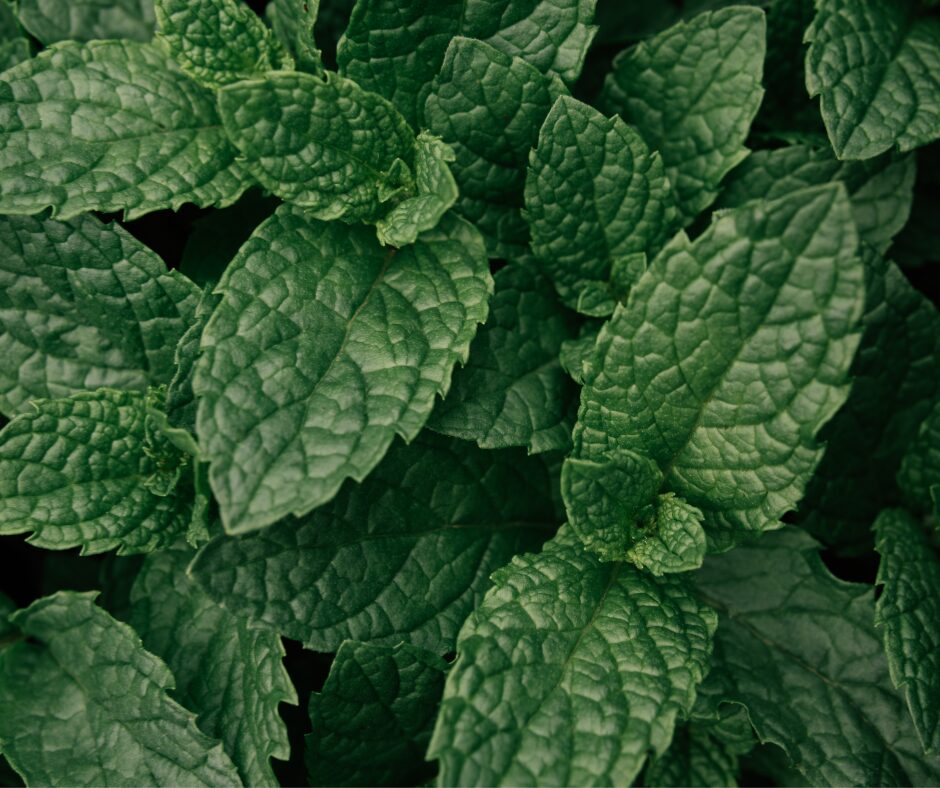
Menthol and Peppermint: Intense Freshness
Menthol, derived from peppermint, is emblematic of cold sensations in perfumery. This molecule, used in small doses, provides an immediate and striking freshness, almost anaesthetising, evoking the bite of frost on the skin. Peppermint, for its part, adds an aromatic and slightly camphoraceous facet, reinforcing the impression of an icy breath. These raw materials are often used in fresh or aromatic perfumes to amplify the frosted effect.
Camphor: Biting Freshness
Camphor, obtained from the camphor tree, is a natural raw material with resinous and medicinal facets. Its penetrating, slightly pungent smell recalls the pure air of snow-covered mountains or high-altitude forests in winter. In perfumery, it is often used to bring a polar, almost medicinal dimension to compositions that seek to capture the essence of cold.
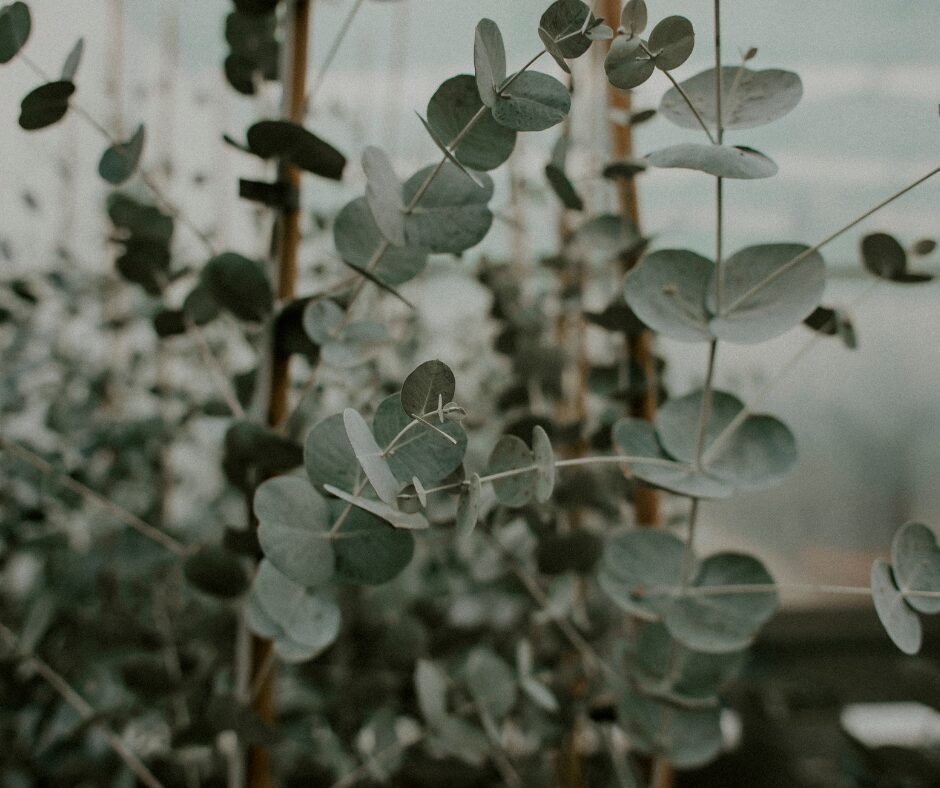
Eucalyptus: An Invigorating Breath
Eucalyptus notes, with their aromatic freshness and pungent vivacity, are ideal for recreating the atmosphere of a harsh winter. Their airy facet evokes cold winds sweeping through coniferous forests. Eucalyptus is often paired with woody and resinous notes to reinforce the impression of frosted nature.

Aldehydic Notes: Snow Crystals
Aldehydes hold a central place in the olfactory evocation of cold and freshness. These synthetic molecules are famous for their metallic, airy and slightly soapy facets. Their particular brilliance recalls the bright, immaculate sparkle of snowflakes. Popularised by Ernest Beaux in Chanel No. 5, aldehydes continue to be a favoured tool for building cold, elegant and crystalline accords. Legend has it that Ernest Beaux had been posted to Siberia beyond the Arctic Circle, and that with aldehydes he wished to render the icy sensation of those vast, immaculate landscapes and the smell of frozen lakes and rivers.
Frosted and Icy Accords: The Alchemy of Sensations
Frosted accords, which simulate the freshness of ice or frost, are often built by combining several families of ingredients. Aldehydes are paired with crystalline musks to bring a sensation of purity. Aquatic or ozonic notes, recalling cold, damp air, are added to give an impression of glacial transparency. Sometimes, touches of menthol, mint or citrus come to reinforce the frosted effect, heightening the illusion of an icy breath.
Aromatic Notes: Snow-Covered Nature
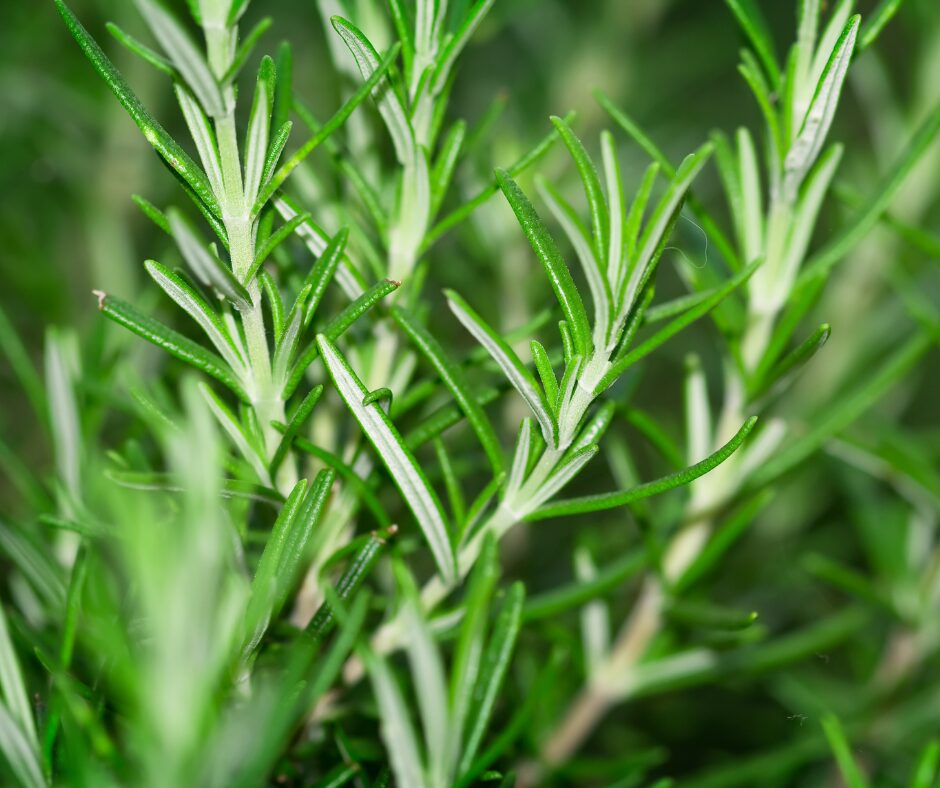
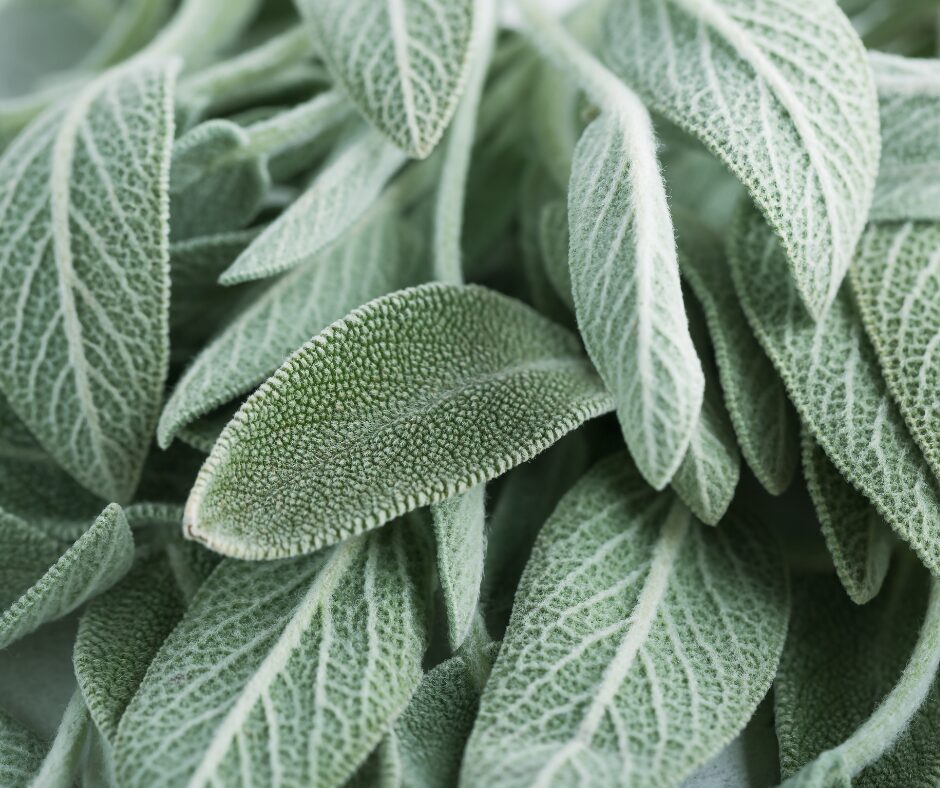
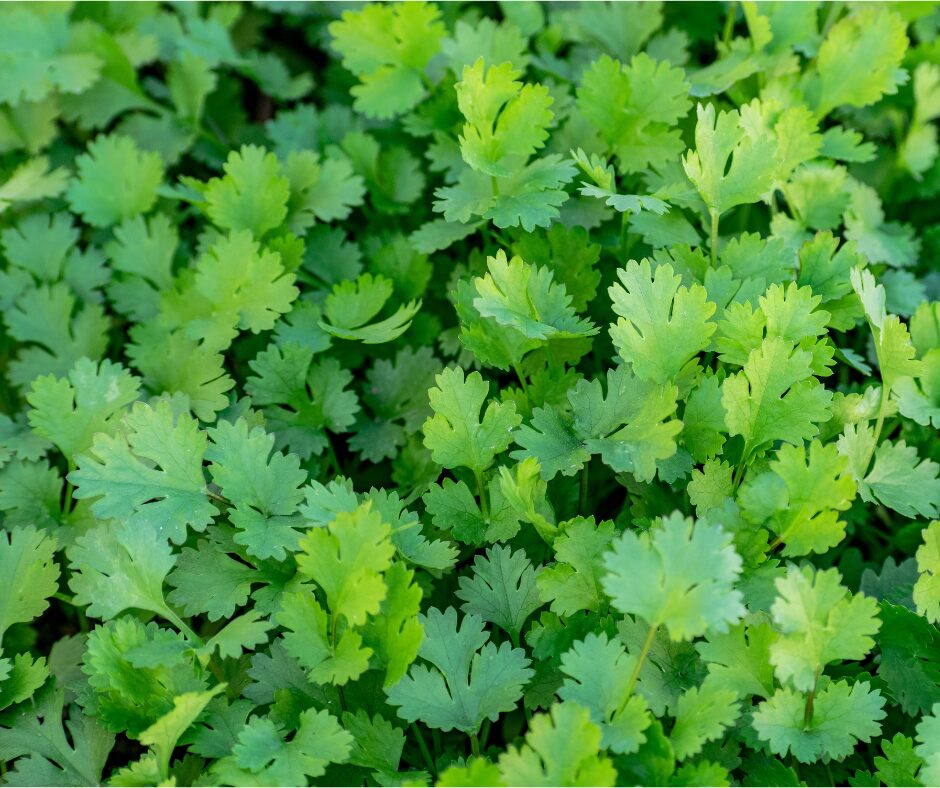
Certain aromatic plants, such as rosemary, sage or coriander—rich in aldehydes—are used to evoke snowy landscapes or wintry forests. Their lively freshness, combined with woody or resinous pine nuances, reinforces the impression of a natural setting frozen in the cold.
Iris: Powdery Coldness
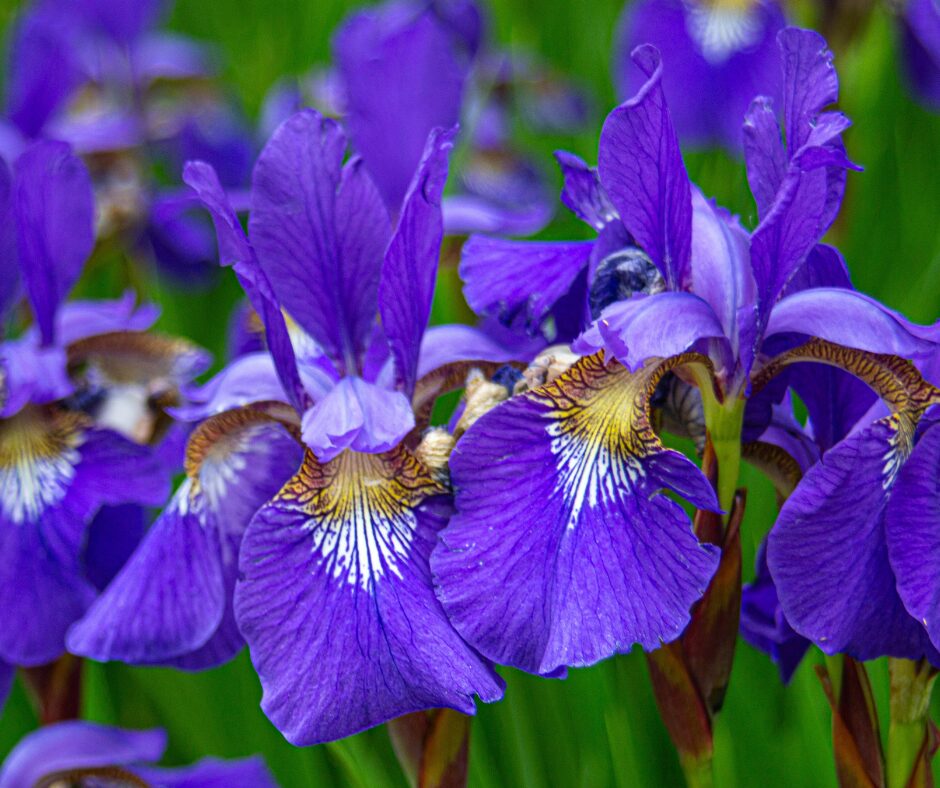
Iris is a flower often used for its absolute or its butter, which confer a powdery, elegant texture. This note has a slightly metallic and rooty aspect, recalling immaculate snow or a muffled cold. Iris is often combined with musks or aldehydes to accentuate this impression of cold purity.
Frosted Rose: A Subtle Freshness
Certain varieties of rose, such as the May rose or the Damascena rose, possess aqueous, petalled facets that can be worked to evoke a cold sensation. Paired with aldehydes or musks, the rose can be transformed into a luminous, glacial element, suggesting a frosted rose in the heart of winter.
Edelweiss: A Mountain Icon
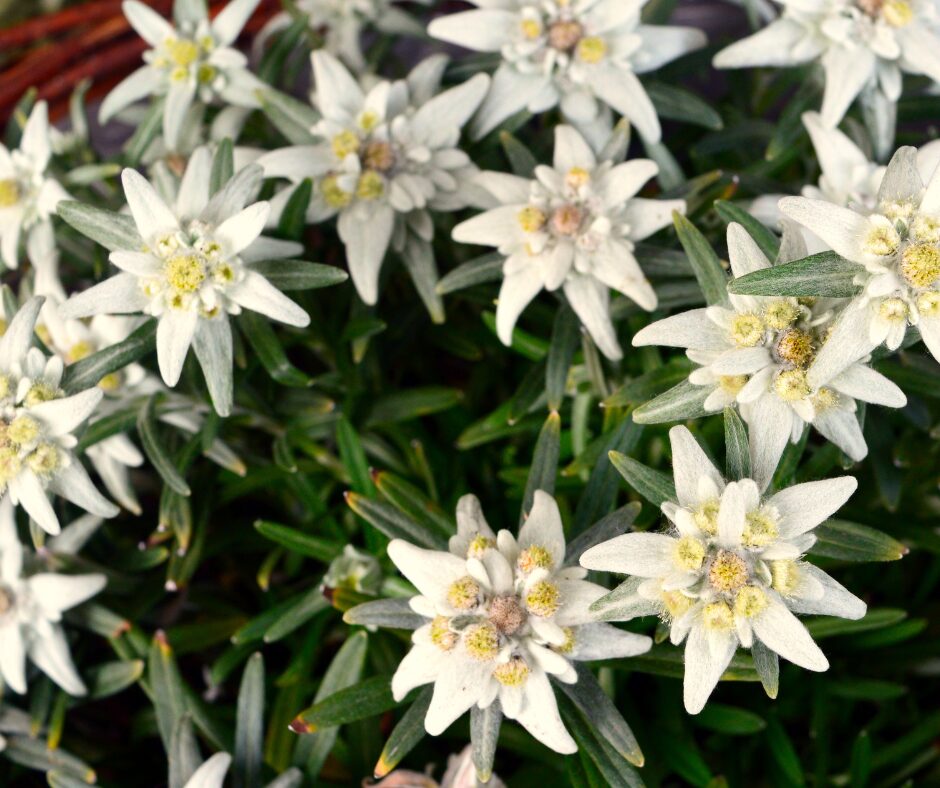
Edelweiss, although rarely used in perfumery owing to its low natural olfactory yield, is often reconstituted to symbolise snowy alpine landscapes. Its soft, powdery and slightly herbaceous facets evoke the purity and cold of the peaks.
These flowers are not enough on their own to recreate cold, but they bring nuances of freshness, purity or clarity that enrich frosted accords. By combining them with raw materials such as menthol, aldehydes or ozonic notes, perfumers can sublimate their glacial potential and offer sophisticated, evocative creations.
Iconic Perfumes That Embody Cold 🥶
Certain olfactory creations stand out for their ability to translate winter into a unique sensory experience. These perfumes, often built around raw materials evoking purity, freshness or glacial light, capture the essence of cold and its many facets.
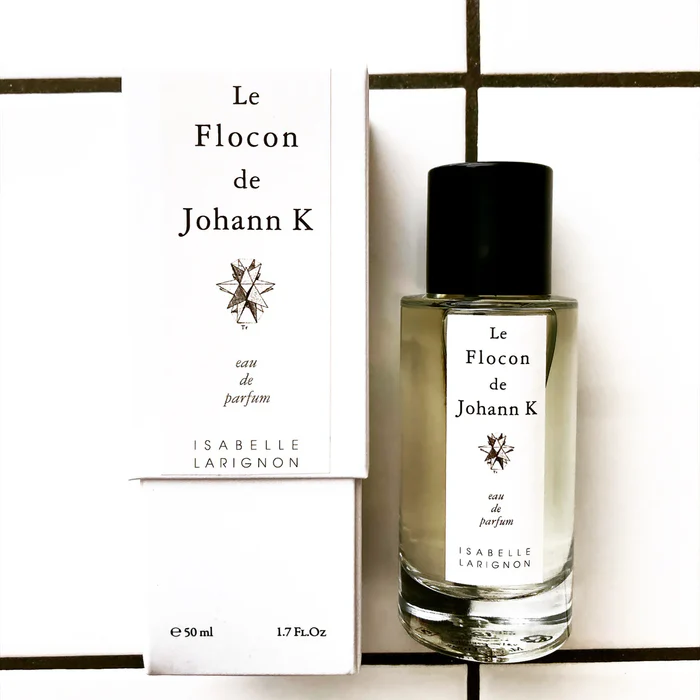
Le Flocon by Johann K., by Isabelle Larignon
An olfactory caress that evokes the delicacy of a snowflake settling gently on the hand. The crystalline freshness of lemon and cyclamen unfolds in an airy heart of ozone and mint notes, subtly softened by mimosa. The base, dominated by white musk, prolongs this sensation of delicate purity. Le Flocon by Johann K. is an evanescent poem, an ode to the fragile, soothing beauty of winter.
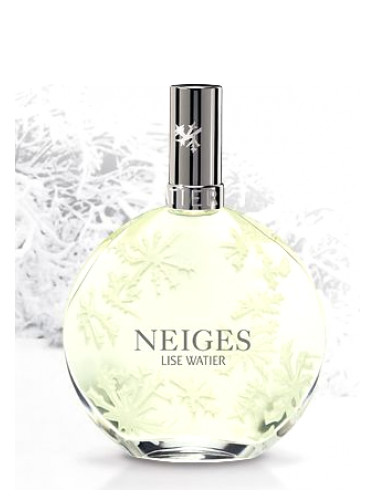
Neiges by Lise Watier
A true Canadian classic, Neiges was created by C. Benaïm. A delicate tribute to winter, in which the lightness of lily of the valley and hyacinth intertwines with the floral elegance of jasmine and rose. At the heart, magnolia brings a luminous softness, while orange blossom adds a subtly solar nuance. The base, enveloping with musk and sandalwood, prolongs this crystalline purity.
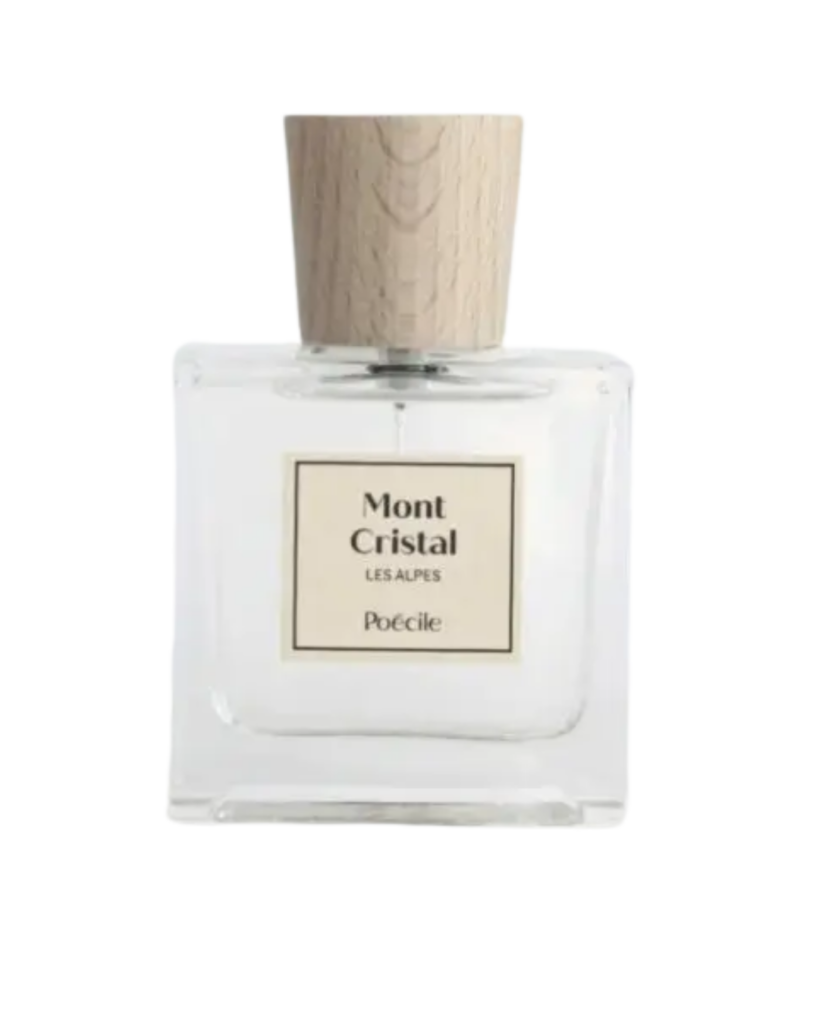
Mont Cristal by Poecile
Mont Cristal, created by P. Revillard, is an interpretation of the bright, cold light of the snow-covered mountain. Its ozonic accord and its notes evoking freshly fallen snow emphasise an underlying floral greenness. Edelweiss and iris bring an impression of immaculate powder, while enveloping musks convey the softness of a snowy landscape where a soothing silence reigns. This perfume is a true ode to cold, an invitation to the serenity and fullness of the wintry peaks.
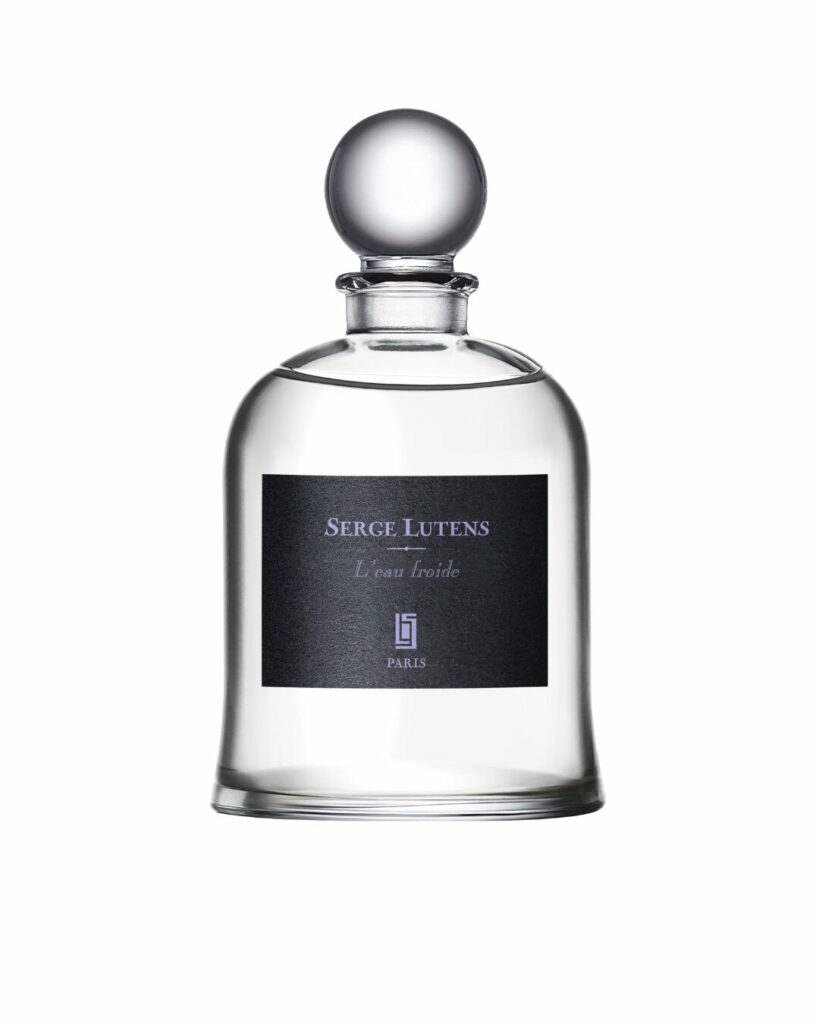
L’Eau Froide by Serge Lutens
Where other perfumes suggest a soft, luminous snow, L’Eau Froide, created by C. Sheldrake, imposes a raw cold, sharp as an icy gust. Incense, usually warm, becomes here crystalline and cutting, almost metallic. Its dry, camphoraceous breath, accentuated by cold resins, evokes a biting purity. No comfort, no warmth: just the bite of frozen air, freezing everything in its path. A radical interpretation of cold, between austerity and brilliance.
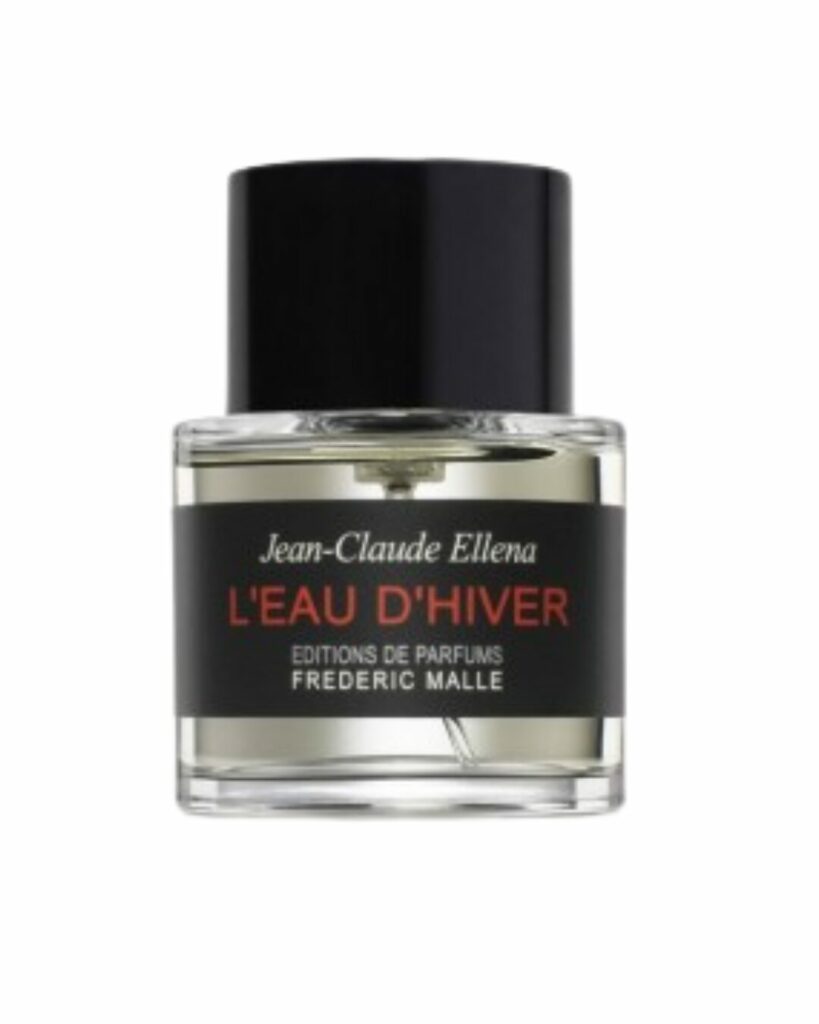
L’Eau d’Hiver by Frédéric Malle
L’Eau d’Hiver reinvents cold as a cottony, comforting caress. All lightness, this perfume plays on a soft, powdery freshness in which heliotrope and musk blend with luminous, airy accents. More than a biting cold, it evokes the diffuse light of a winter morning, enveloping and soothing. An intimate, elegant vision of the cold season, signed by Jean-Claude Ellena.
These iconic perfumes transcend the limits of the season to make winter a captivating olfactory canvas. They render the sensation of cold, at once biting and soothing, testifying to perfumery’s power to play with emotions and memories. They prove that winter, far from freezing our sense of smell, can on the contrary stimulate our imagination.
A Sense on Standby, but Not Extinguished
When winter sets in, the sense of smell seems to pause, odorant molecules becoming more discreet under the effect of the cold. In perfumery, this transformation becomes a fascinating field of exploration, where raw materials and frosted accords transcribe coldness in all its nuances: brutal and biting, cottony and muffled, crystalline and airy.
But cold, far from being an end in itself, also opens the way to a rediscovery of smells, as if the wintry silence were teaching us to listen more closely to our nose. Perhaps, in this pause imposed by nature, there lies an invitation to perceive differently, to feel what ordinarily escapes us. And what if, instead of enduring the cold, we learned to tame it, to breathe it in fully?
Olfactory inspiration springs from many places, but great cities—with their distinctive characters, their teeming cultures and their varied atmospheres—offer perfumers an infinite creative canvas. Through Paris, Tokyo, Dubai, New York and São Paulo, perfumery explores atmospheres as diverse as they are cosmopolitan. Here is a sensory dive into five iconic cities, embodied by accords and notes that reflect their singularity.
The Olfactory Journey: Discovering the World Through Scent
Perfumery has the unique power to transcend borders, allowing each of us to travel without leaving home. Through carefully crafted compositions, perfumers create true olfactory journeys—sensory invitations to explore distant places, fascinating cultures and unique atmospheres. Each fragrance thus becomes a gateway to a particular world, where the scents of nature, exotic spices, urban atmospheres and memories of shared moments take shape. Smelling a perfume inspired by Paris can recall the elegance of a stroll through the Jardin des Tuileries, while a fragrance born of the spirit of Dubai can transport you to spice markets and starry desert nights. The olfactory journey is a deeply intimate experience that, by reviving memory and imagination, takes us around the world in a personal, subjective and poetic way.
Inspiring Cities
Paris: Timeless Elegance and Romance

Paris, the world capital of elegance and romance, is an inexhaustible source of olfactory inspiration. As a symbol of refinement and of a beauty whose classicism is renowned the world over, its perfumes embody this sophistication, often playing on floral and chypre accords emblematic of French perfumery.
The rose lies at the heart of many Parisian perfumes, embodying the femininity and softness for which the city is renowned. By pairing the rose with flowers such as jasmine, lily of the valley or violet, perfumers speak to us of the delicacy and romance of the cobbled streets of Montmartre or of Parisian gardens in bloom. Powdery accords, often based on iris, add a retro and elegant touch, evoking the boudoirs and salons of times past.
The chypre, composed of oakmoss, patchouli and bergamot notes, represents classic French elegance. It gives perfumes a powerful and timeless character. Aldehydes, introduced in iconic creations such as Chanel No. 5, bring a modern and elegant touch, associated with the world of haute couture.
Paris by Yves Saint Laurent
Created by the talented Sophia Grojsman, Paris by Yves Saint Laurent is a vibrant tribute to the City of Light. This fragrance opens on a note of powdery rose, blended with the freshness of mimosa and iris, recalling the romantic softness of the French capital. Its floral heart is supported by touches of violet and lily of the valley, evoking flowering gardens and the springtime freshness of Parisian streets. In the base, sandalwood and musk anchor the perfume in a soft, warm sensuality while remaining sophisticated. “Paris” is a poetic olfactory interpretation of the city’s timeless elegance, a fragrance that breathes romance and delicacy.
Tokyo: Minimalism and Modern Zen

Tokyo is a city where the futuristic sits alongside the traditional, creating a unique atmosphere of contrast and harmony. Inspired by this duality, perfumery pairs elements of Japanese nature with a refined modernity, creating serene and balanced compositions.
Japanese gardens, with their flowering trees, their bamboo and their pebbles, are a source of inspiration. One also frequently finds green tea accords—a key element of Japanese culture—as well as notes of bamboo, moss or cedar that recall forests and zen gardens. The sakura (cherry blossom) is an emblematic flower found in delicate floral compositions, symbolising ephemeral beauty and the quietude of nature.
Japanese temples and their incense are found in woody and resinous accords that evoke the mysticism of Japanese culture. Notes of cedar and sandalwood are often combined with incense to compose peaceful and introspective fragrances, recalling tea ceremonies and spirituality.
Tokyo, as a modern megalopolis, also calls to mind perfumes with ozonic and metallic accords, evoking the city’s technology and neon lights. These modern, abstract notes convey Tokyo’s futuristic architecture, its illuminated skyscrapers and its nocturnal effervescence. This contrast between natural harmony and modern technology creates a unique olfactory dimension.
Encens Asakusa by l’Orchestre Parfum
Inspired by an ancestral temple in the traditional Asakusa district of Tokyo, Encens Asakusa evokes the spiritual serenity of Japan with wafts of incense, recalling the powdery scent of geishas. Notes of cypress, olibanum incense and pink pepper create a sacred ambiance, while iris and violet bring a silky, powdery quality. In the base, myrrh and white musks reinforce the perfume’s mystical, resinous depth. Esoteric and powdery, Encens Asakusa expresses the contemplation of a timeless Japan, enveloping you in an aura of softness and mystery.
Dubai: Opulence and Oriental Mystery

Dubai, the city of luxury par excellence, evokes perfumes with rich and powerful accords that reflect its opulence and its cosmopolitan character. Translating the heat of the desert and the splendour of its palaces, perfumes inspired by Dubai blend Oriental tradition with modern sophistication.
Oud wood, precious and captivating, is an olfactory signature of Dubai and the Middle East. Its deep notes, often paired with amber accords, create compositions that symbolise luxury and exclusivity. These precious materials are frequently accompanied by musk and benzoin to reinforce their powerful, sensual sillage.
These perfumes also use intense flowers such as the Damask rose, often married with Oriental spices such as saffron, cinnamon or black pepper. This blend of flowers and spices creates a captivating olfactory signature, evoking souks brimming with scents and spices. The result is a bold, mysterious perfume that represents the cultural richness and splendour of the city.
Dubai is also a city of modern contrasts. Some perfumes combine traditional accords with fresh, ozonic notes, evoking the luxury of modern shopping centres and skyscrapers. This contemporary touch balances the depth of the woods and spices, offering a lighter, more urban version of Oriental perfumery.
Oud Bouquet by Lancôme
Oud Bouquet by Lancôme is a total immersion in the luxury and opulence of Dubai. The central oud note, a precious and complex resin, is surrounded by rose, adding a floral, feminine touch to the composition. Vanilla in the base brings a sensual, gourmand warmth that intensifies the perfume’s mystical character. This sillage, at once deep and captivating, recalls Oriental palaces and the olfactory richness of Dubai’s markets. Oud Bouquet is a perfume for those seeking a powerful and resolutely sophisticated fragrance, a symbol of the city’s splendour.
New York: Cosmopolitan Energy and Urban Sophistication

For New York, a city of diversity and ambition, perfumes convey its effervescent energy and its cosmopolitan style. Olfactory creations inspired by the city express at once its urban dynamism, its cultural richness and its bold elegance.
New York is a city that never sleeps, and its perfumes often include hesperidic notes such as lemon, orange and bergamot to represent the city’s energy. These sparkling accords recall the ceaseless activity and vibrant light of New York, especially at sunrise.
A city of intertwined cultures, New York also inspires perfumes whose accords of leather, black pepper and incense convey the sophistication of its chic neighbourhoods and iconic landmarks. These urban perfumes are often enriched with contemporary accords, such as musks and modern woods, which symbolise the dynamic luxury of New York.
New York is also its lively districts and its culinary scene. Gourmand accords of coffee, vanilla, caramel or leather recall the city’s chic cafés and restaurants. This gourmand dimension, sometimes subtle, adds a warm and comforting character to New York olfactory creations.
New York Nights by Bond No. 9
The house of Bond No. 9 (named after its headquarters at 9 Bond Street in New York) created the first perfume collection to pay tribute to New York, this many-faceted city, giving each of its neighbourhoods a perfume of its own.
Translating New York nightlife, New York Nights is a rich and opulent composition. Its notes of caramel and wood make it a gourmand, enveloping perfume, recalling the lights and excitement of Manhattan at night. Floral accords add a touch of softness that balances the composition, creating an unforgettable and vibrant sillage, in the image of the city that never sleeps.
Rio de Janeiro: Warmth and Tropical Exuberance

The sunlit beaches and the waves of the Atlantic make Rio a city perfumed by marine, salty scents, evoking the pure air of Copacabana and Ipanema.
Nestled between sea and mountains, surrounded by tropical vegetation, Rio inspires green and woody aromas. Accents of cedar, bamboo and fern recall the Tijuca forest and the slopes of Corcovado, offering a scent of nature and wild adventure.
Rio, finally, vibrates to the rhythm of carnival, embodying a celebration of colours and flavours. Notes of exotic fruits such as passion fruit and pineapple, combined with wafts of tropical flowers, evoke the warmth of the festivities and the conviviality of its inhabitants. This enchanting, rhythmic atmosphere captures the vibrant, warm essence of the Cidade Maravilhosa.
Bossa by Granado
Launched in 2020, Bossa by the Brazilian brand Granado captures the beauty of Rio de Janeiro against a bossa nova backdrop: hesperidic and marine notes evoke the beaches and the joy of the cariocas, and a solar, creamy frangipani-coconut accord warms you like the rays of the Rio sun. A fragrance as radiant as the aura of this colourful metropolis.
These fragrances highlight iconic places with distinct atmospheres. From the luminous sophistication of Paris to the frenetic energy of New York, by way of the captivating warmth of Dubai, each perfume becomes an olfactory passport, an invitation to travel and to sensory discovery. These creations remind us that perfume is far more than a mere scent: it is a story, a reflection of cultures and emotions, capable of transporting us beyond borders.
By exploring the world through olfactory notes, we come to understand that perfumery has the power to translate the soul of cities into true invisible poems. And what if the next fragrance to discover were inspired not only by a place, but by a universal human experience, capable of speaking to everyone, no matter where we find ourselves?
Article written by Elfa and Anne-Laure
Perfumery is a fascinating world where each fragrance tells a story. Among the most appealing olfactory families, the marine note stands out for its immediate evocation of the sea, salt, ocean breeze, sea spray. Appreciated for its invigorating freshness and its singular character, it has found a prime place in the world of contemporary perfumery.

The History of the Marine Note in Perfumery
Before the appearance of marine notes in perfumery, the olfactory world focused mainly on natural, classic raw materials, such as flowers, woods, spices or resins. Recreating a scent evoking the sea then seemed an insurmountable challenge for perfumers, because no natural ingredient could truly capture the saline, invigorating smell of the waves and the sea breezes. While ambergris presented marine inflections through its origin (sperm whale), it was not for this note that it was sought after. However, the evolution of modern chemistry in the 1960s and 1970s opened new perspectives, allowing perfumers to explore unprecedented olfactory horizons.
The real revolution in this field occurred at the end of the 1980s with the first use in perfumery of Calone. This molecule (a ketone) with aqueous notes had been discovered by chance in 1966 in a laboratory of the pharmaceutical group Pfizer while working on anxiolytics. The researchers noticed that one of the molecules they had created gave off an atypical watermelon smell, and they filed a patent under the name “Watermelon Ketone.” Its pharmaceutical efficacy being unsatisfactory, it was the Grasse perfumery house CAMILLI, ALBERT & LALOUE (CAL, acquired by Pfizer in 1963) that took over its production, renaming it Camilli + Albert + Laloue + ketONE = CALONE.
With its facets of water fruits and sea, Calone evokes the invigorating iodised, salty notes of the ocean, with ozonic and slightly metallic nuances sometimes recalling the flavour of oyster. Its subtle fruity accents, sometimes compared to the smell of watermelon, add an unprecedented, vibrant dimension to this revolutionary molecule.
The marine note is not, however, limited to a simple effect of freshness. By integrating this molecule into more complex compositions, perfumers have managed to give rise to sophisticated perfumes, evoking sometimes sunny shores, sometimes raging seas or storms out at sea.
It was the perfumer Yves Tanguy who first launched into the marine adventure in 1989, integrating a strong concentration of Calone into New West for Her by Aramis. The following year it was Escape by Calvin Klein that would carry Americans away in its wave of marine freshness.
In Europe, it was Kenzo pour Homme that launched the trend as early as 1991, followed by L’Eau d’Issey by Issey Miyake in 1992, then Acqua di Gio in 1996—international blockbusters that still diffuse their sea spray today.
This olfactory tsunami of the 1990s corresponded to a need for nature and transparency after the exuberance of the 1980s, and enriched the perfumer’s palette with many new marine and aquatic molecules.
In natural form, we manage today to find a few marine notes, such as absolutes or extracts of seaweed, sea fennel (rock samphire) or blue cypress.
The creative possibilities are infinite, and the marine facet continues to inspire perfumers to push the limits of their art, reproducing the essence of the ocean in all its forms.
The Kind of Perfumes the Marine Note Offers
The marine note immediately evokes the invigorating freshness of the sea air, a sensation of purity and freedom that calls upon the imagination of great open spaces, waves and sun-drenched shores. This distinctive character translates into perfumes often described as refreshing, energising and light—qualities that make them perfect allies for the summer months and warmer climates.
This translates into compositions where the salty air, the sea spray and even the smell of seaweed mingle with mineral and ozonic notes.
Fougères and Hesperidics
Perfumers often pair the marine note with fougère or hesperidic accords, which reinforce the impression of cleanliness and freshness. Citrus fruits, such as lemon, bergamot or grapefruit, bring a luminous, radiant dynamism to these compositions, while the aromatic touches of herbs such as lavender or rosemary bring depth and structure.
Marine perfumes are particularly prized for so-called “sporty” creations, often of the fougère olfactory family. Their immediate freshness and their lightness make them perfect for eaux de toilette or refreshing sprays, often used after effort or for active days. This association between the marine note and the world of sport is today a classic signature of many men’s perfumes.
Florals
Marine perfumes are not limited to masculine creations, even if the latter were long predominant in this field. Thanks to their energetic, revitalising accent, they have won over a wide audience, and many houses today offer unisex or even feminine marine perfumes. In these creations, aquatic notes can be combined with floral or fruity accords, such as rose, lily, or melon, bringing a delicate, more sensual side to the freshness of the ocean.
Orientals
Furthermore, marine perfumes also fit into more oriental or woody compositions, where the saline, ozonic note can be counterbalanced by deep notes of driftwood, cedar, or ambery and musky accords. These associations confer on the fragrance a character that is at once soothing and mysterious, recalling the depth of the sea and its hidden riches. These more complex versions of marine perfumes are ideal for the in-between seasons or for special occasions where a certain sophistication is sought.
The Specificities and Uses of the Marine Note
The specificities of the marine note lie in its iodised, saline and ozonic character.
These accords recreate an impression of cleanliness and freshness that recalls the pure air of coasts swept by sea winds. This freshness is often associated with mineral and sometimes metallic facets, bringing an almost abstract touch that gives marine perfumes a modern, pared-down look.
Marine perfumes are often described as invigorating and energising, providing an immediate sensation of lightness and escape. Their structure is generally transparent and airy, allowing the other ingredients to breathe and evolve freely around the marine notes. This olfactory transparency makes marine perfumes a fairly popular choice for those seeking discreet, non-invasive fragrances that nonetheless leave a fresh, recognisable imprint.
A Backbone in the Olfactory Pyramid
Owing to their tonic freshness, one might think that marine notes are found essentially in the top note of a composition. However, even if they bring a keen breath of sea air from the very first moment the perfume is sprayed, their strength lies in their persistence.
Independent perfumer and professor at the École Supérieure du Parfum, Stéphanie Bakhouche, considers Calone, for example, as “a backbone that will bring freshness at the top but that will last through to the base.” The composer adds that “marine freshness does not mean volatile,” unlike the hesperidic freshness of citrus, for example. “This is also true for other molecules of the aquatic/marine facet.”
This quality makes it an excellent choice for eaux de toilette and colognes, light formats often used in environments where freshness is paramount, such as in summer or after a sports session.
Combined with floral accords in the heart notes, they then evoke the atmosphere of a calm sea, a peaceful beach or coastal vegetation cradled by the sea spray, or even a cascade of fresh water. This combination makes it possible to create tenderer, more soothing compositions, which evolve towards a long-lasting freshness without assaulting the senses.
When they blend with base notes such as woods, mosses, or ambery accords, they plunge us into a more mysterious, mineral depth.
The Practical Uses of Marine Perfumes
Marine perfumes are prized for their versatility. Their natural freshness makes them perfect choices for everyday use, notably in warm or humid environments, where heavier fragrances could become stifling. They are particularly popular in summer, where their lightness and their aquatic character fit with the idea of escape, holidays and moments spent outdoors.
Marine notes are also often used in unisex perfumes, because they transcend genders. Their aquatic, salty, fresh side can be combined just as well with floral or fruity accords for feminine perfumes as with aromatic, woody or spicy touches for masculine compositions. This flexibility has allowed perfumers to play with the marine note in many ways, exploring a vast palette of interpretations, from minimalist simplicity to more sophisticated constructions.
Finally, marine perfumes also blend very well into professional environments, because they are generally non-invasive and clean, while offering a touch of distinction.
An Olfactory Signature at the Maritime Museum
In 2023, for the reopening of the Musée national de la Marine in Paris, Nathalie Lorson, master perfumer, was tasked with designing an exclusive olfactory signature for the museum. In this unique creation, the marine note holds a central place, evoking in a subtle, poetic way the immensity of the oceans, maritime voyages and French naval heritage. For this ambient perfume, Nathalie Lorson imagined a fragrance that recreates the atmosphere of the great marine epics, with a saline, iodised dominant carried by that famous molecule Calone, recalling the sea spray and the waves crashing against the hulls of ships.
The marine note, which she uses here with finesse, is supported by woody accords evoking the hulls of old ships, as well as ambery touches that recall the warmth of salt-soaked rigging. The aquatic facets are worked in such a way as to transport the museum’s visitors to the heart of the oceans, with a sensation that is at once invigorating and soothing. The ambient perfume thus diffused plunges the public into a complete sensory immersion, linking maritime past and modernity through an unprecedented olfactory experience.
Iconic Brands and Their Marine Creations


Aramis – New West for Her, by Yves Tanguy (1989), the precursor…
Calvin Klein – Escape for Her, by Claude Dir (1991). The fruity floral notes combine with Calone for a soothing olfactory escape.
Kenzo – Kenzo pour Homme, by Christian Mathieu (1991). This innovative perfume combined aquatic notes with woody and spicy accords, quickly becoming a reference in the genre.
Issey Miyake made history with his legendary “L’Eau d’Issey,” by Jacques Cavallier Belletrud (1992), which uses Calone to offer a luminous, transparent interpretation of water.
Giorgio Armani – Acqua di Gio, by Alberto Morillas, Annick Menardo and Christian Dussoulier (1996). Another essential classic, combining Calone with fruity and woody notes to capture the essence of a sunny Mediterranean sea.
Heeley – Sel Marin (2008). This authentic fragrance perfectly captures the salty smell of the coasts and the fresh wind, marrying notes of marine seaweed and cedar.


Laboratorio Olfattivo – Salina, by David Maruitte (2010). Inspired by the island of Salina, this perfume evokes the Mediterranean summer with salty, herbaceous notes and a warm touch of tonka.
Jo Malone – Wood Sage & Sea Salt, by Christine Nagel (2014). This is the coastal atmosphere with a combination of sage and sea salt, evoking the cliffs and the ocean spray.


Maison Margiela – Sailing Day, by Violaine Collas (2017). A contemporary creation that evokes the pleasure of a day at sea with notes of sea salt, coriander, iris and ambergris.
Carner Barcelona – Helix, by Jordi Fernández (2024). A modern aquatic floral creation, with a luminous opening that evolves towards marine and woody accords.
The marine note marked a turning point in the history of perfumery, offering a new olfactory dimension capable of evoking the freshness of the oceans and the spirit of adventure. Since its beginnings in the 1990s with Calone, it has become an essential component, in mainstream perfumes as well as in niche perfumery. Combined with saline, woody or floral accords, it allows perfumers to create compositions that evoke, all at once, freedom, nature and escape. Whether in light perfumes for summer, unisex creations or more sophisticated fragrances, the marine note continues to inspire and appeal. Between modernity and tradition, it embodies the very essence of perfumery: an invitation to travel and to sensory exploration.
Article co-written by Elfa and Anne-Laure.
The Paris Olympic Games, the sporting event of the year in France, are here—and with them, the perfect occasion to celebrate the fusion of sport and perfumery. Sport fragrances, designed to accompany athletes and sports enthusiasts, embody the spirit of dynamism and freshness. But how did this category of perfumes come about, and what are its distinctive characteristics? Let us dive into the dynamic and invigorating world of sport fragrances, a perfect fusion of elegance and performance.

The History of Sport Fragrances
The Beginnings of a New Category
The history of sport fragrances is closely tied to the evolution of lifestyles and society over the course of the 20th century. Before this era, perfumes were mainly associated with elegance and refinement, designed for formal occasions and sophisticated settings. However, with the rise of sporting activities and the growing importance of physical well-being, perfumers began to explore new olfactory directions to meet the needs of an increasingly active population.
The 1970s–80s: The Emergence of the First Sport Fragrances
The 1970s and 1980s marked a key period in the history of sport fragrances. This era was characterised by an explosion of interest in health. Gyms, fitness clubs and sporting events became mass phenomena. It was in this context that the first sporty fragrances made their appearance, aimed at a generation hungry for freshness and energy. Pioneering brands such as Lacoste were among the first to seize this trend. With a heritage deeply rooted in the world of tennis and sport in general, Lacoste led this trend by offering perfumes that reflected its dynamic, elegant image. In 1968, the crocodile brand joined forces with Jean Patou perfumes (a pioneering brand of sportswear fashion in the early 20th century) to launch an eau de toilette and an eau de sport. The brand’s famous crocodile became a symbol of this new category of perfumes that combined sportiness and refinement. In 1978, it was the polo that was celebrated by the American Ralph Lauren.
The 1990s and 2000s: Expansion and Diversification
The 1990s and 2000s saw significant diversification and expansion of sport fragrances. Brands began to explore bolder and more innovative combinations of notes. Consumers were looking for perfumes that could accompany them through every facet of their active lives, from the office to the gym to outdoor outings. This period also saw the appearance of dynamic and inspiring advertising campaigns featuring famous athletes and figures from the world of sport (Rafael Nadal for Lanvin, Zinédine Zidane for Eau Sauvage by Dior, Sébastien Chabal for Pour un Homme by Caron). These campaigns helped anchor sport fragrances in the collective imagination as symbols of vitality, success and a healthy lifestyle.


The 2010s: A Healthy Perfume on a Healthy Body
In the 2010s, the globalisation of the media helped revive awareness of the importance of the planet for our health. With this return to authenticity and nature, people wanted to be in harmony with nature, comfortable in their body and comfortable in their mind.
This trend of a healthy mind in a healthy, clean body also materialised in a major return to sport, but unlike the body cult of the 80s and 90s, here the goal was to maintain a good lifestyle (yoga, pilates), sometimes to challenge oneself to stay young—especially from one’s forties onward—while sharing and having fun with friends (marathons, triathlon, zumba, Nordic walking, etc.).
This celebration of sport is found in feminine fragrances with fresh floral notes: Burberry Sport, Repetto, Big Pony by Ralph Lauren, Eau de Lacoste, etc.—and for men, new fresh aromatic, woody scents: Prada Luna Rossa, Allure Homme Sport by Chanel, Invictus by Paco Rabanne, etc.
Today: A Well-Established Category
Nowadays, sport fragrances represent a well-established category in the perfume industry. They are synonymous with freshness, energy and modernity. Consumers can choose from a vast range of perfumes, each offering a unique interpretation of what it means to be active and dynamic.
The Sport Variations of Iconic Perfumes
The most prestigious perfume houses have been able to reinterpret their classic fragrances in sport versions, adapted to the needs of an active, modern audience. These sport variations retain the DNA of the original perfumes while adding touches of freshness and vigour.
Economic Stakes
Extending classic perfume lines into sport versions responds to major economic considerations for perfume houses. First of all, these variations make it possible to revitalise existing perfumes by attracting new customers. Modern consumers look for products that fit their active lifestyle. By offering sport versions of their iconic perfumes, brands can capture the interest of this fast-growing market segment.
Moreover, these variations offer an opportunity for diversification and expansion of product ranges. They allow perfume houses to maximise the profitability of their existing formulations while minimising development costs. By using existing bottles and olfactory bases that are already proven and appreciated, brands can launch new versions with lower investment compared to creating entirely new perfumes.
Finally, the sport versions of iconic perfumes help reinforce brand awareness and image. They position perfume houses as dynamic and innovative players, capable of adapting to market trends and consumer needs. This diversification strategy also helps to retain existing customers by offering them additional options, suited to different moments of their day or their year.
The Notes Used in Sport Fragrances


Citrus Notes
Citrus notes are among the most emblematic of sport fragrances. They bring an explosion of immediate, invigorating freshness, perfect for reviving the senses.
- Lemon: Lemon is often used for its refreshing and toning properties. It brings an acidic, sparkling note that awakens the senses.
- Bergamot: Bergamot, with its sweet, slightly bitter aroma, is another key component. It adds a touch of sophistication while remaining fresh and energising.
- Grapefruit: Grapefruit, with its bitter, juicy nuances, gives a sensation of vitality and dynamism, ideal for sport fragrances.
These notes are often used at the top of the composition, creating a bright, refreshing first impression.
Aquatic Notes
Aquatic notes, also known as marine notes, evoking sea spray, play a crucial role in sport fragrances. They evoke the essence of water and fresh air, bringing a sensation of purity and freedom.
- Marine notes: These accords recall the smell of the ocean, with a saline, slightly iodised freshness. They bring a natural, revitalising dimension to perfumes.
- Ozonic notes: Ozonic notes simulate the smell of fresh, clean air after rain, bringing an airy clarity and lightness.
These notes are perfect for creating a lasting sensation of freshness, ideal for use after training or during an active day.
Aromatic Notes
Aromatic notes are often derived from herbs and plants, bringing a herbaceous dimension characteristic of sport fragrances.
- Rosemary: Rosemary, with its camphoraceous, slightly spicy aroma, is frequently used for its stimulating and refreshing qualities.
- Mint: Mint brings an intense, invigorating freshness, ideal for perfumes meant to be worn during physical activity.
- Lavender: Lavender, though often associated with relaxation, adds a note that can balance and soften sporty compositions.
These aromatic notes create a sensation of well-being and mental clarity, contributing to a harmonious, balanced perfume.


Green Notes
Green notes, which recall leaves, cut grass and other plant elements, add energetic naturalness to sport fragrances.
- Galbanum: Galbanum is known for its green, bitter and resinous smell. It brings a natural depth and intensity to compositions.
- Violet leaves: These leaves add a soft, slightly floral green note, bringing a subtle complexity to sport fragrances.
Green notes are ideal for reinforcing the natural, energising aspect of sporty fragrances, creating invigorating olfactory facets.
Woody Notes
Woody notes bring depth and longevity to perfumes, balancing fresh, light notes with richer, earthier accords.
- Cedar: Cedar, with its dry, slightly spicy scent, is often used to anchor compositions and add a touch of sophistication.
- Vetiver: Vetiver, with its earthy, woody nuances, brings a complexity and robustness that perfectly complement fresh, citrusy notes.
These woody notes add a base to sport fragrances, ensuring that the initial freshness transforms into lasting elegance.
The Specific Uses of Sport Fragrances
One of the most common uses of sport fragrances is application after a training session. After exercise, the body needs to be revitalised, and a sport fragrance can offer that sensation of immediate freshness.
- Refreshing effect: Citrus and aquatic notes provide an instant sensation of freshness, perfect for revitalising the senses after effort.
- Soothing and comfort: Aromatic notes, such as lavender and rosemary, bring a soothing effect that can help relax the mind and body after intense physical activity.
Sport Fragrances in Everyday Life
Sport fragrances are not reserved solely for moments of sport. Their light, refreshing composition also makes them an ideal choice for everyday use, notably in professional or casual settings.
Their lightness makes them suited to situations where heavier perfumes might be inappropriate. They add a subtle touch of sophistication without being overpowering.
Wearing a sport fragrance can bring a sensation of dynamism and confidence throughout the day. The continuous freshness and energy they give off can improve mood and concentration.
Suitable for All Ages and All Genders
Sport fragrances are also very versatile in terms of audience. Their universal freshness and balanced composition make them suitable for all ages and all genders.
- Unisex: Many sport fragrances are designed to be unisex, with compositions that appeal to men and women alike. This makes them ideal for those who prefer non-gendered fragrances.
- Their dynamic, energising side particularly attracts younger people, while their subtle sophistication also appeals to active adults.
Iconic Brands and Renowned Fragrances
Here is an overview of the iconic brands and their contributions to this olfactory category.


The house of Dior, famous for its timeless elegance, made a notable entry into the sport fragrance category with Eau Sauvage. The fragrance combines fresh notes of lemon and basil with woody accords of cedar and sandalwood. More recently, Dior Homme Sport captured attention with its lively notes of lemon, ginger and cedar wood, offering an explosive, elegant aldehydic freshness.
Chanel, another emblematic couture house, also left its mark on this category with Allure Homme Sport. This perfume combines sparkling citrus notes with marine accords and spicy touches of black pepper, creating a sensation of freshness and power. Bleu de Chanel, though often perceived as versatile, is also very much appreciated by sports enthusiasts for its notes of grapefruit, cedar and labdanum, recalling both freshness and depth.


Hugo Boss is a brand that embodies modern elegance and dynamic style. Boss Bottled Sport is a sporty variation of the classic Boss Bottled. It stands out for its fresh notes of grapefruit, cardamom and vetiver, offering an energising sensation. Hugo Boss also launched Hugo Iced, a refreshing fragrance with notes of iced mint, tea and vetiver.
Giorgio Armani succeeded in offering a perfume with marine freshness through Acqua di Giò. This fragrance, emblematic of the house, combines marine, citrus and woody notes, evoking the purity and power of the ocean. Meanwhile, Acqua di Gioia offers a feminine version with notes of lemon, jasmine and cedar wood.


Ralph Lauren also left its imprint on the sport fragrance category with the famous Polo Sport. This iconic fragrance captures energy and vitality with its notes of citrus, mint and lavender. Polo Blue Sport is another variation that combines notes of melon, mandarin and wood for an invigorating, sophisticated marine freshness.
Lacoste, known for its sporting heritage, introduced several perfumes that embody the spirit of sport. L.12.12 Blanc, for example, combines notes of grapefruit, cardamom and cedar wood for a fragrance that reflects sporty simplicity and elegance. Lacoste Essential is another dynamic, juicy fragrance with notes of blackcurrant, rose and sandalwood, perfect for an active day.
Calvin Klein revolutionised the industry with CK One, the first unisex perfume launched in 1994. This unisex fragrance broke the conventions of traditional perfumery with its balanced blend of fresh notes of bergamot, cardamom, papaya, green tea and musk. CK One remains an icon of modern perfumery, offering a versatility and freshness that appeal to all genders and all ages. More recently, CK Free Sport joined this trend with notes of mandarin, ginger and cedar wood, offering an even more dynamic and energising version.
Sport fragrances are not simply a category of scents, but an ode to energy, vitality and elegance. They perfectly represent the spirit of competition and self-transcendence, while adding a touch of sophistication to our everyday lives. Whether you are an accomplished athlete or a wellness enthusiast, there is a sport fragrance for every active spirit. With constant innovation in perfumery, it is exciting to imagine what new fresh and dynamic creations will enrich this category in the years to come, with unexpected raw materials.
The Paris 2024 Olympic Games could well inspire a new generation of sport fragrances, marking a new era of freshness and elegance in the world of scent.
The tropics, with their natural lushness and their olfactory diversity, are an inexhaustible source of inspiration for perfumers the world over. Tropical olfactory notes bring a solar, fruity and tropical-floral touch to every fragrance. Let us explore these notes in detail and discover how they are used in perfumery to create unique olfactory sensations.
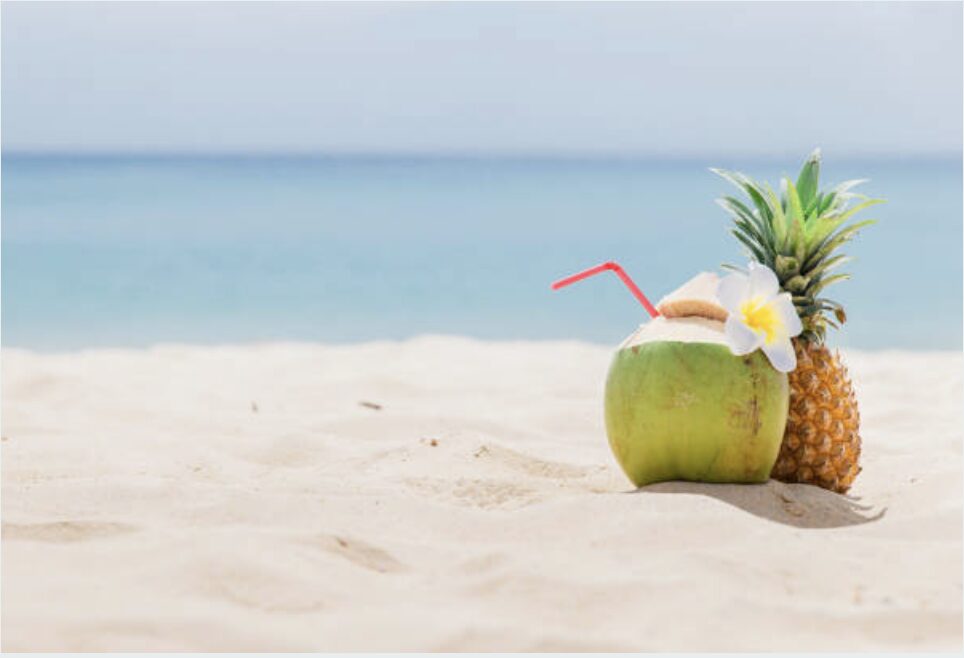
Fruity and Sunny Notes 🥭🍍🥥
The trend for tropical fruity perfumes comes to us from Brazil in the 1990s.
In Brazilian culture, the tradition has long been to douse oneself in “banho de cheiro,” infusions of refreshing and mystical plants for the body. In our more modern times, the tradition of the fragrant splash used for purely hedonistic purposes after the shower has taken precedence over these purifying infusions. The notes of tropical fruits, in which the country abounds (passion fruit/maracujá, açaí, pineapple, coconut, etc.), have replaced—or else blended with—the ancestral plants with their many virtues.
Since fruits cannot offer their aromatic essences owing to their overly high water content, perfumers have recreated these smells using synthetic molecules:
And so, from the 1990s onward, tropical fruit notes appeared—first in hygiene products, in the United States initially through the American brand Bath and Body Works, then little by little in our perfume bottles—to bring their joy, their colours and their energy, reminiscent of Brazilian carnivals.
Fruity notes are often used in perfumes for women, but they also appear in unisex and masculine compositions to add a fresh, invigorating dimension. They are particularly popular in summer perfumes and light eaux de toilette, where they bring a sensation of lightness and joy. Perfumers often combine them with floral, woody or spicy notes to create balanced and harmonious compositions.
Mango
Mango is a juicy, sweet note that brings a sensation of tropical freshness—round, juicy and creamy. Native to South Asia, mango is rich in sweet and slightly tangy nuances. In perfumery, it is often used to add a gourmand, sunny touch to compositions.
Fame by Paco Rabanne uses mango to create a summery, gourmand fragrance, hyper-addictive.
Pineapple
Pineapple is a fruit emblematic of the tropics, native to South America. Its fresh, sweet and slightly tangy scent is perfect for dynamic, refreshing perfumes. Pineapple brings a touch of exoticism and vivacity to fragrant compositions. Paired with coconut, it brings a festive piña colada note.
Dolce & Gabbana Pineapple is an excellent example of a perfume using this note to evoke a sensation of exotic holidays and pleasure under the sun.
Coconut
Coconut, with its creamy, milky smell, is essential for evoking the beaches of tropical islands. It brings a soft, comforting and exotic dimension to solar perfumes. Often used in summer compositions, it immediately recalls seaside holidays.
Le Beau by Jean-Paul Gaultier incorporates this note at the heart to add a tropical depth to its sophisticated, woody pyramid, and Bronze Goddess by Estée Lauder makes a more pronounced and ambery use of it for a purely summery effect.

Papaya
Papaya is another tropical fruit much appreciated in perfumery for its tropical sweetness. Native to the tropical regions of Central and South America, papaya offers sweet, juicy and slightly musky notes.
Papaya Paradise Cove by Bath & Body Works uses papaya, perfect for recalling a soft, calm day at the beach.
Guava
Guava, with its sweet and slightly floral aroma, is a less common but equally exotic fruity note. Native to the tropical regions of Central America, guava brings a unique tropical touch to fragrant compositions.
Delta of Venus by the house of Eris is a green floral perfume in which the papaya note in the base intensifies the exotic aspect of the fragrance.
Passion Fruit
Passion fruit is an intense, fragrant note that brings a sensation of freshness and gourmandise to perfumes. Native to the tropical regions of South America, this fruit is known for its sweet, tangy and slightly floral aroma.
Arancia Rossa by Laboratorio Olfattivo is a citrus fragrance in which the passion fruit note gives an exotic twist to a refreshing composition.
The Floral Notes of the Tropics 🌺
The floral notes of the tropics are often used as heart notes in fragrant compositions for their richness, combining a sensual and captivating dimension. They are combined with fruity, woody or spicy notes to create balanced and harmonious fragrances.
Whether to evoke the softness of the islands or the richness of tropical vegetation, the flowers of the tropics play a crucial role in the art of perfumery.
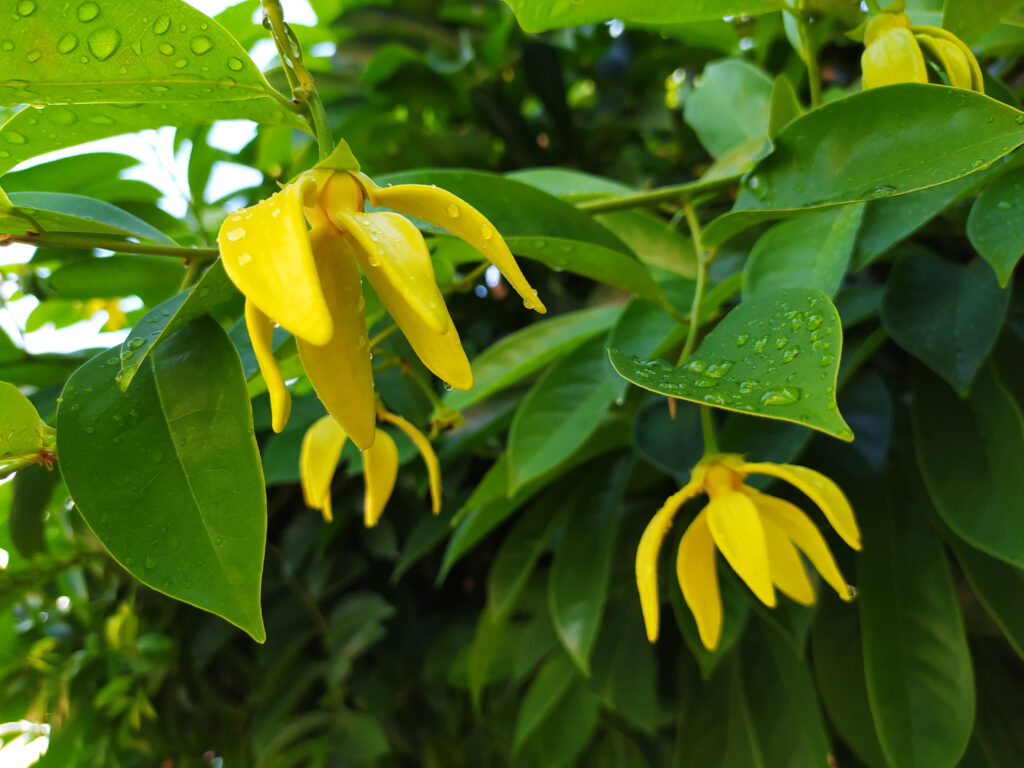
Ylang-Ylang
Ylang-ylang, whose name means “flower of flowers,” is native to Madagascar, the Comoros and the Philippines. This star-shaped yellow flower is known for its intoxicating scent, sweet and slightly spicy. Ylang-ylang essential oil is extracted by steam distillation of the fresh flowers, producing different fractions depending on the duration of the distillation, each with distinct olfactory nuances. Ylang-ylang is often used in floral, oriental and chypre compositions to add an exotic, sensual dimension. It can also be found in solar perfumes, evoking the warmth and softness of tropical islands.
Mon Guerlain by the eponymous house uses ylang-ylang to enrich its floral bouquet, bringing a touch of exotic, creamy luxury.
Frangipani
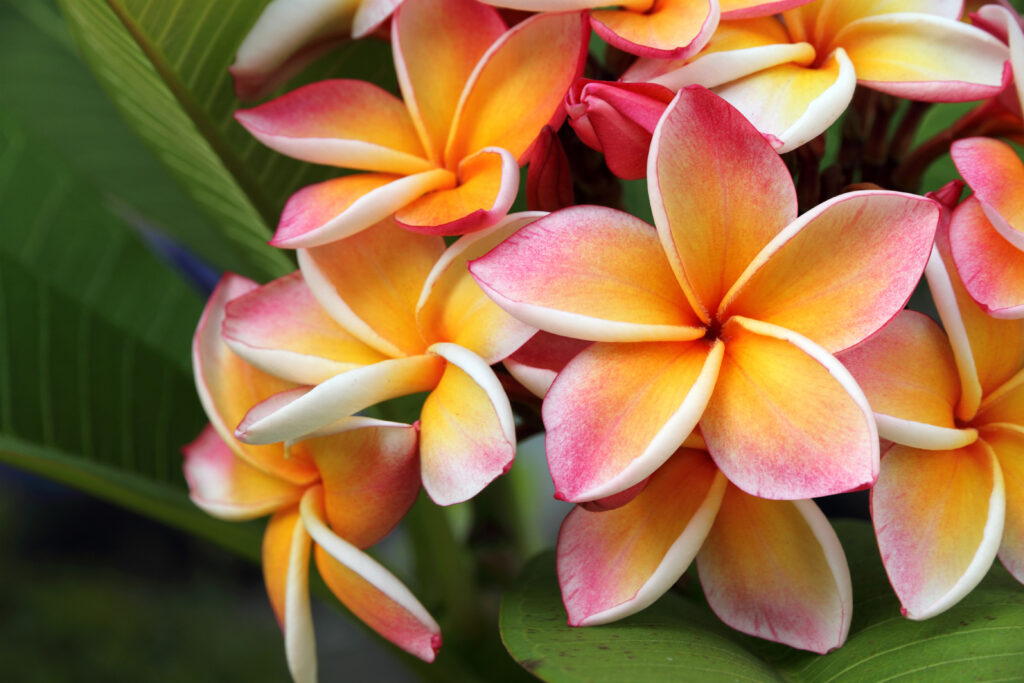
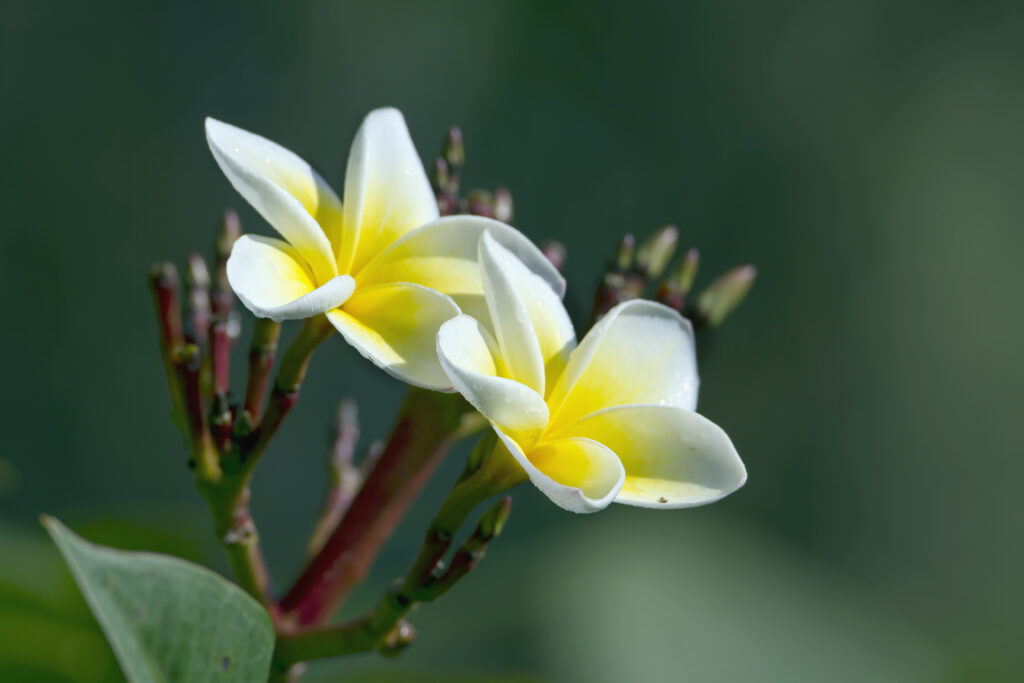
Frangipani, also known as plumeria, is a tropical flower emblematic of the Pacific islands, Central America and the Caribbean. Its scent is soft, sweet and slightly creamy, often associated with a sensation of purity and serenity.
Frangipani is prized for its exotic softness in floral compositions. It is often used in perfumes for women, bringing a delicate, soothing note.
Frangipani Flower Cologne by Jo Malone is a luminous, exotic fragrance inspired by the captivating beauty of the frangipani flower. With its fresh, woody notes, this cologne offers a sensory escape embodying the natural, captivating beauty of tropical flowers.
Gardenia
Gardenia is a tropical flower native to Asia and the Pacific islands. Its scent is rich, heady and slightly spicy, often described as intensely floral with creamy nuances. Gardenia is used in perfumes to bring a lush, sensual floral depth.
Velvet Gardenia by Tom Ford showcases this sumptuous flower combined with accords of honey and plum, making it divinely addictive and captivating.
Tiaré
The tiaré flower, or Gardenia tahitensis, is native to French Polynesia and is a symbol of beauty and purity. It scents the famous monoï oil. Its scent is soft, creamy and slightly sweet, with delicate floral nuances. Tiaré is often used in solar and floral perfumes to evoke paradisiacal beaches and sunny days.
Sunkissed Goddess by By Kilian is a floral amber in which the tiaré flower, combined with ylang-ylang, offers a warm, sensual perfume.
Hibiscus
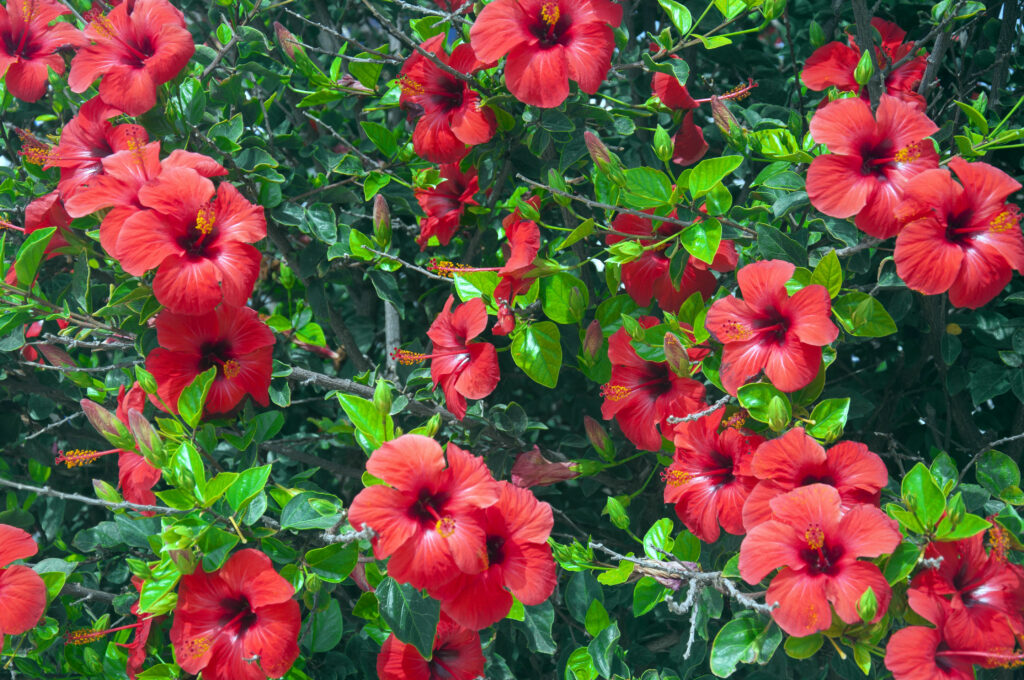
Hibiscus is a tropical flower found in many warm regions of the world, notably in Asia, Africa and the Caribbean. Its scent is soft, slightly fruity and floral.
Hibiscus is often used to bring a light, exotic touch to floral compositions.
Hibiscus Paradise by Bath & Body Works is a perfume in which the hibiscus flower at the heart brings a floral freshness to a gourmand fruity ensemble.
Sambac Jasmine
Sambac jasmine, also known as Arabian jasmine, is native to Southeast Asia. This variety of jasmine is fruitier and sweeter than jasmine grandiflorum, with slightly spicy nuances. Sambac jasmine is used to add an exotic, intoxicating floral depth to fragrant compositions.
Alien by Mugler uses this note to create a mysterious, ambery and musky fragrance, evoking the captivating beauty of the tropics.
Vanilla Notes ☀️
Vanilla is one of the most prized raw materials in perfumery, recognised for its soft, rich and enveloping smell. Native to tropical regions, vanilla brings a comforting warmth and a gourmand depth to fragrant compositions.
Madagascar vanilla, often called Bourbon vanilla, is the most famous variety and the most used in perfumery. This vanilla comes from the orchid Vanilla planifolia, cultivated mainly on the island of Madagascar, which produces about 80% of the world’s vanilla. Bourbon vanilla pods are known for their fragrant richness, creamy and sweet, with slightly spicy nuances.
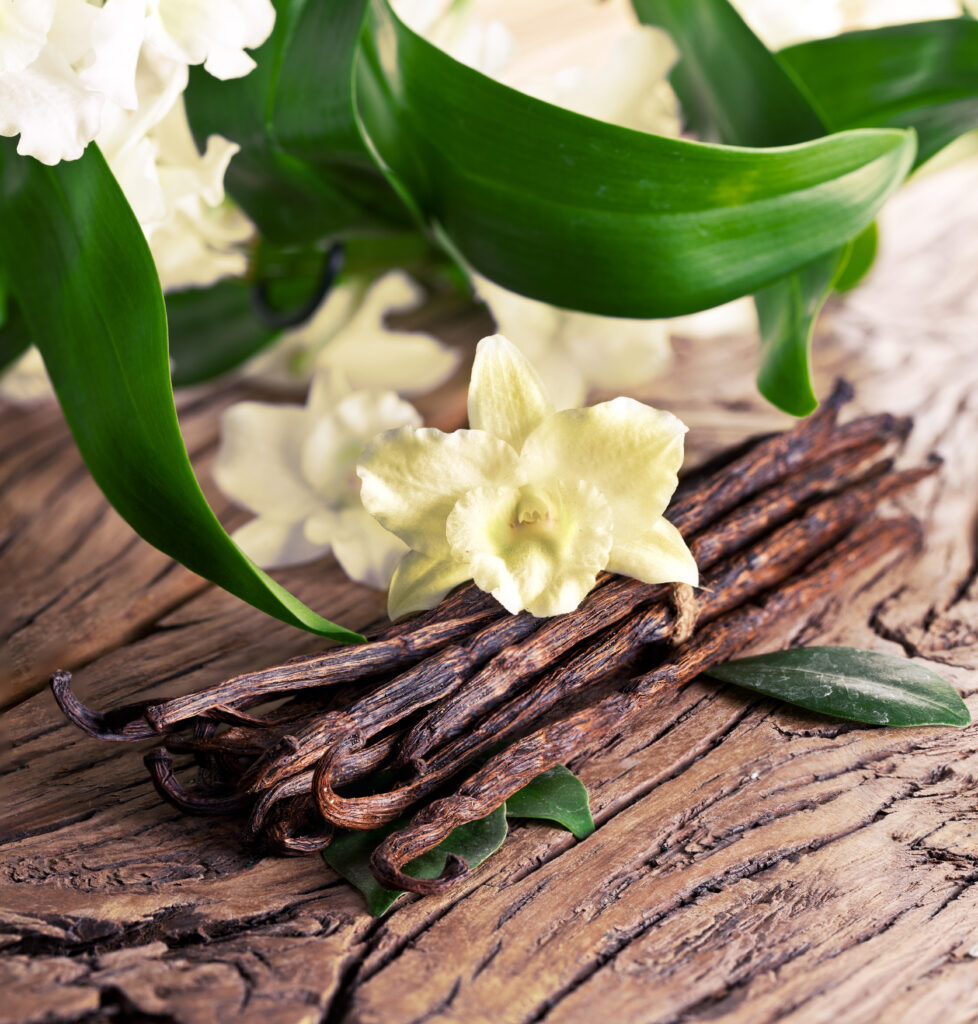
Vanilla production in Madagascar is a complex, artisanal process. Vanilla flowers are pollinated by hand, and the pods, once harvested, undergo a series of treatments including scalding, fermentation, drying and conditioning, in order to develop their characteristic aroma.
Serge Lutens – Un Bois Vanille: This fragrance uses Madagascar vanilla to create a creamy softness, enriched with notes of sandalwood, liquorice and caramel.
Tahitensis vanilla, cultivated mainly in French Polynesia, notably in Tahiti, is another precious variety. This vanilla comes from the orchid Vanilla tahitensis and is distinguished by its shorter, wider pods. Its aroma is more floral, fruity and exotic, with nuances of cherry and almond. The production of tahitensis vanilla also follows rigorous artisanal methods, and although its production is less abundant than that of Madagascar, it is highly appreciated for its unique qualities.
Les Indémodables – Vanille Havane: This fragrance showcases tahitensis vanilla with accords of tobacco, honey and rum, creating a rich, exotic composition.
The olfactory notes of the tropics offer a unique sensory escape. Whether through fruity and sunny notes, intoxicating flowers or gourmand vanillas, perfumers continue to draw inspiration from the tropics to create fragrances that transport the senses towards distant, paradisiacal horizons.
Article co-written by Elfa and Anne-Laure
Rosa Damascena is a botanical jewel prized for its intoxicating scent and precious oils. In this article, we will dive into the geographic and botanical origins of this iconic flower, its rich history, the methods used to extract its essence, its unique olfactory facets, how it differs from Rosa Centifolia, and finally, we will explore a few iconic perfumes that showcase it.
Geographic and Botanical Origins
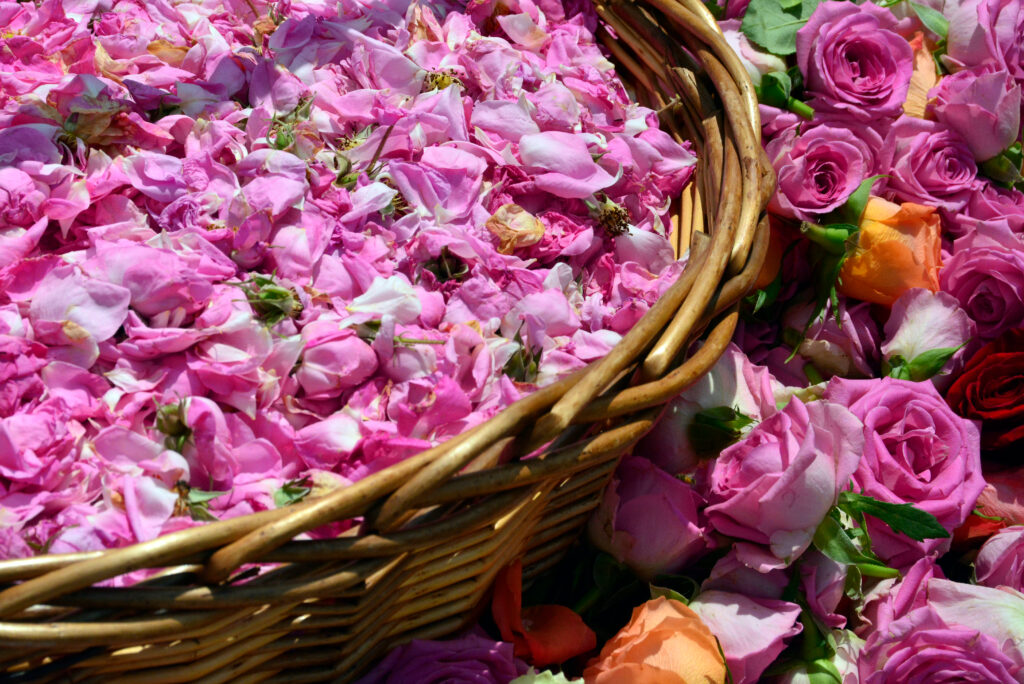
Rosa Damascena, commonly known as the Damask rose, takes its name from the ancient city of Damascus in Syria. But its true origin lies in Shiraz, Iran (formerly Persia). It is a hybrid of Rosa Gallica, Rosa Moschata and Rosa Fedtschenkoana, native to Central Asia and China. Botanically classified as Rosa Damascena, this rose belongs to the Rosaceae family. It generally takes the form of a robust shrub that can reach up to 2 metres in height. Its leaves are a glossy dark green, and its flowers, which bloom in early summer, range in colour from pale pink to deep red. Each flower is composed of multiple layers of petals, giving it a very dense and voluptuous appearance. It travelled from Shiraz to Damascus, a major Mediterranean trading hub in the Middle Ages. The Crusades of the Middle Ages facilitated its introduction to Europe. Christened the “Damask rose,” it was enthusiastically adopted in royal botanical gardens and apothecaries for its therapeutic virtues and its enchanting scent. From the Near East, the Damask rose also made a journey eastward to India and China, where it is still found and cultivated today. Persian Muslims invented rose water during the 8th century and would perfume Asia and the world with it for roughly 8 centuries. Between the 15th and 16th centuries, the Ottoman Empire made extensive use of the Damask rose: in its pharmacopoeia for its medicinal properties (migraines, stomach aches, ailments of the eyes or lungs, etc.). It could be ingested or applied as an ointment. Rose water was also used for its toning and deodorising cosmetic properties, and it was likewise incorporated into food dishes, both savoury and sweet. It also served to purify the home. Using the qumqum (sprinkler), visitors’ hands were washed as a gesture of welcome. In the 15th century, Sultan Murad III, unwilling to depend solely on Persia to supply his palace in Constantinople (now Istanbul) with rose petals and rose water, asked his gardener to begin cultivating these Damask roses in his province of Edirne (present-day Bulgaria), which proved to be an ideal climatic zone for their flowering. When Bulgaria gained its independence in 1880, it claimed the invention of modern rose essence through the principle of double distillation (the water from the first distillation is distilled again: see below). From that point on, the Bulgarian rose dominated the market until the 20th century. Its reign fell with the crisis resulting from the collapse of the USSR.
Today, the Damask rose used in perfumery comes mainly from Turkey, even though it is still cultivated in other countries such as Bulgaria, Morocco, India, Egypt, Iran and China. The popularity of Rosa Damascena as a source of essential oil has given rise to specialised cultivation techniques designed to maximise oil production. The Kazanlak Valley region in Bulgaria and the city of Isparta in Turkey are particularly famous for their annual rose festivals, which celebrate the flower harvest and the production of rose oil. These festivities highlight not only the economic importance of the rose, but also its role in the cultural heritage of these regions.
Extraction Methods
Extracting the essential oil (also called essence) of Rosa Damascena and its water is an art that has been refined over the centuries, combining tradition and technological innovation to capture the delicate, complex scent of this iconic flower. In perfumery, the two most widely used techniques for extracting its fragrant soul are hydrodistillation and volatile solvent extraction.
Hydrodistillation
No steam distillation, which could stick the flower’s delicate petals together. It is hydrodistillation that is favoured to extract the essential oil and the water of Rosa Damascena.
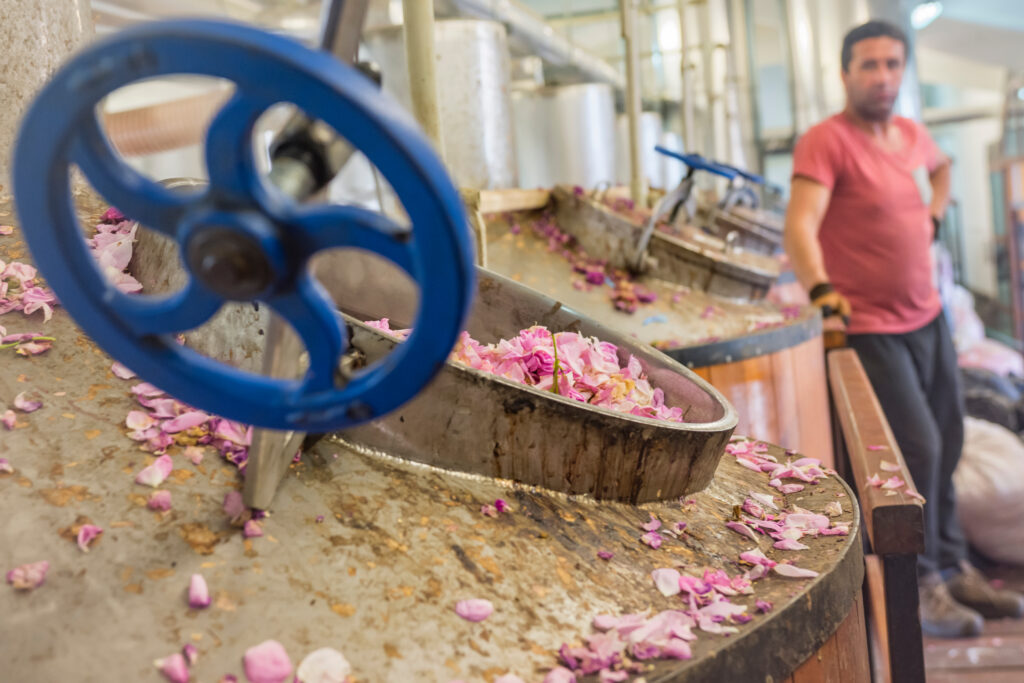
The process begins at daybreak, when the roses are picked by hand to ensure the freshness and quality of the petals. These petals are then placed in large distillation vats to which water is added. The mixture is brought to a boil in order to generate a vapour that becomes laden with the flowers’ aromatic compounds. This fragrant vapour is then cooled in a coil that condenses it, transforming it into a liquid containing both water and essential oil.
This liquid is poured into a Florentine flask, where the oil, lighter than water, separates naturally and floats to the surface.
This first oil is collected and, according to the Bulgarian technique known as “stripping,” the resulting rose water is steam-distilled again.
But that is not all! The water from this second distillation is also re-distilled, which yields a 3rd ESSENTIAL OIL. This process makes it possible to obtain several qualities of essential oil that can then be blended together.
Volatile Solvent Extraction
Here, the rose petals are placed in a vat on several levels.
This vat is filled with a solvent (hexane) that “washes” the flowers—that is, it becomes saturated with their fragrant components. Once the solvent is saturated with the flowers’ scent, it is extracted, filtered, and then evaporated.
Once the solvent has completely evaporated, all that remains is a fragrant wax saturated with the flowers’ aromatic components. This wax is called the CONCRETE.
This concrete can be used as is. But most of it is melted and washed in alcohol in order to remove the waxes. The resulting alcohol-based product is then heated to evaporate the alcohol and obtain a pure fragrant product called the ABSOLUTE.
Choosing the Method
The choice of extraction method often depends on the desired final product.
The essential oil obtained by hydrodistillation offers fruity facets reminiscent of lychee or raspberry, as well as spicy ones. It is used in perfumery and aromatherapy.
Rose water, another result of distillation, freshly petalled, is used in cosmetics and in cooking.
The absolute, with the best yield, is scented with warmer, sweeter, honeyed facets.
There are also other extraction methods for obtaining rose-based products: maceration in alcohol, which yields an infusion; CO2 extraction (SFE = Supercritical Fluid Extraction), which yields an extract; and headspace, which makes it possible to create an accord. But the most common remain hydrodistillation and solvent extraction.
Benefits of Rosa Damascena
Rosa Damascena is recognised for its many benefits to health and well-being.
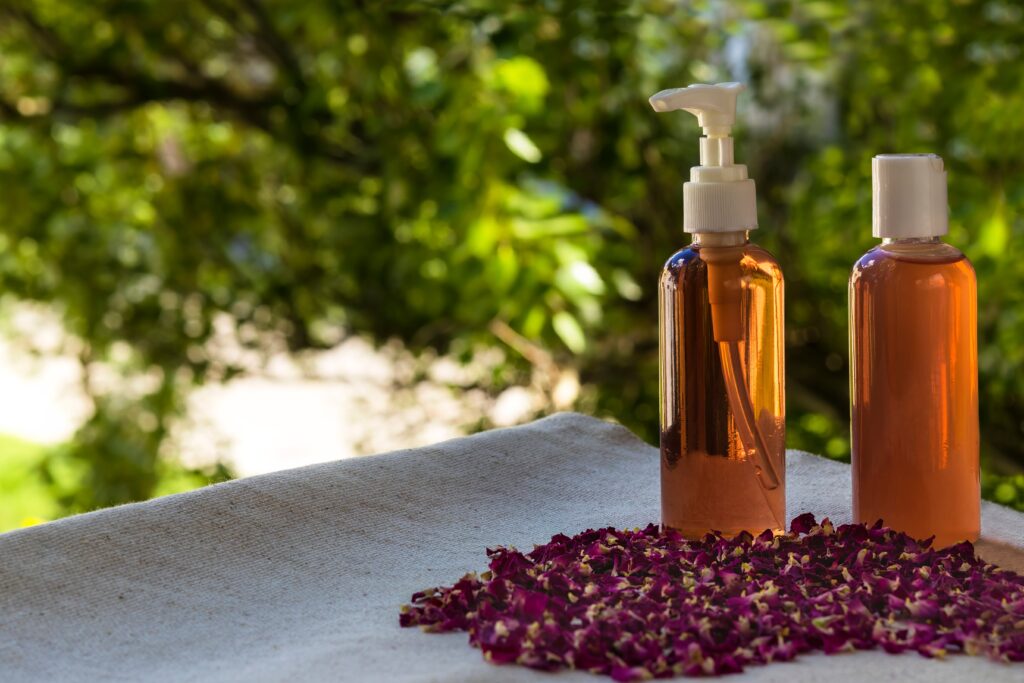
Used in aromatherapy, it helps reduce anxiety and stress thanks to its relaxing and antidepressant properties. On an emotional level, the essence of Rosa Damascena is known for opening the ANAHATA heart chakra, located at the sternum, associated with love, joy and inner peace, but also with sadness and despair. Rosa Damascena essential oil works to balance the heart chakra in order to restore confidence in oneself and in others.
In cosmetics, rose water and Rosa Damascena essential oil are valued for their moisturising, toning and anti-inflammatory effects, beneficial for sensitive skin and helping to prevent the signs of ageing.
In traditional medicine, Rosa Damascena is also used for its tonic virtues, notably to purify the blood and aid digestion.
Thus, this rose makes a significant contribution to physical and emotional health, reinforcing overall well-being.
Olfactory Facets of Rosa Damascena
Rosa Damascena is universally used for its complex and deeply captivating olfactory profile, which sets it clearly apart in the world of perfumery. This flower offers a kaleidoscope of olfactory nuances that can vary slightly depending on the soil and climatic conditions in which it is grown, as well as the extraction methods employed.
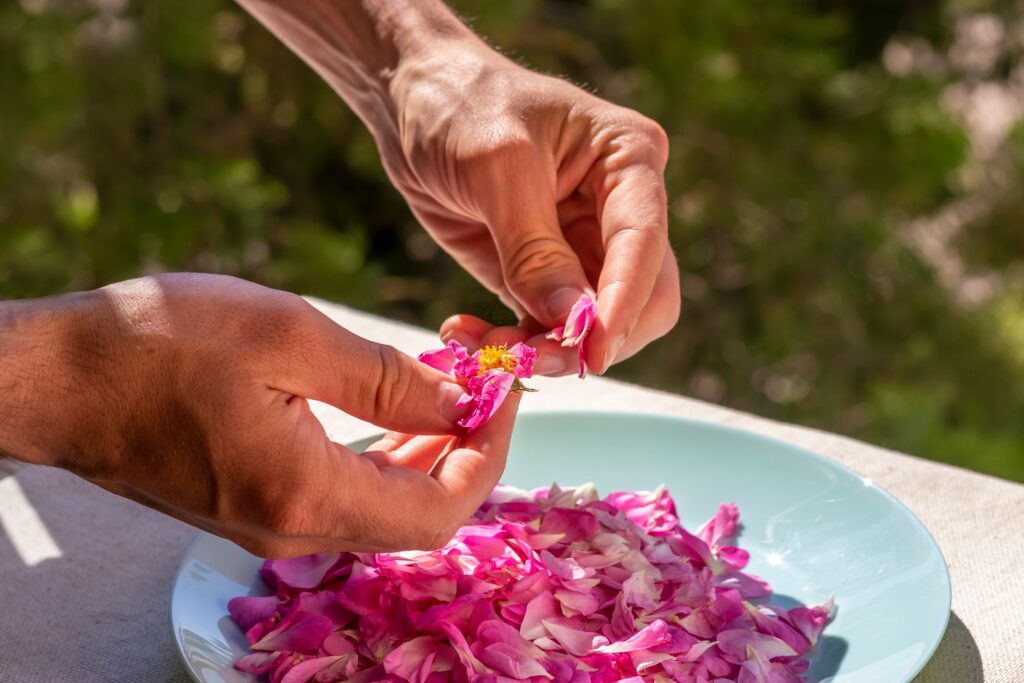
Top Notes: Delicate Freshness
The top notes of Rosa Damascena are often described as fresh and slightly sweet, with accents of green notes. This can evoke morning dew on rose petals, a sensation of purity and freshness. These first olfactory impressions are light and volatile, evaporating quickly.
Heart Notes: Floral Richness
At the heart of the Rosa Damascena scent lies an intense floral richness. The heart notes are heavier and linger longer on the skin. This facet of the fragrance is primarily floral, with nuances of honey and, at times, a slight spiciness. It is here that the rose’s scent is at its most opulent and recognisable, offering an almost tactile sensory experience of the flower in full bloom thanks to the textures it evokes.
Base Notes: Subtlety and Depth
The base notes of Rosa Damascena reveal a complex subtlety, with musky and woody nuances that add to the richness of its scent. These deeper notes provide a solid foundation on which the fragrance can unfold, extending the perfume’s life on the skin and adding dimensions of warmth and depth that contrast with the freshness of the top notes. Nevertheless, Rosa Damascena remains very rarely used in base notes.
Unique Characteristics
What truly sets Rosa Damascena apart is its perfect balance between softness and richness. It has a unique ability to transform, presenting different olfactory facets at different moments, which makes it a prized choice for complex, multifaceted perfumes. Its scent can also vary slightly depending on the region of cultivation—roses grown in the rich, humid soils of Bulgaria may, for example, have heavier and sweeter notes compared to those grown in drier climates.
Distinction from Rosa Centifolia
Rosa Damascena and Rosa Centifolia, two jewels of horticulture and perfumery, display marked differences both botanically and olfactorily.
These differences influence their use in perfume creation and their cultivation around the world.
Rosa Centifolia is also known as the “May rose” because of its main flowering period.
It is characterised by very full flowers, with extremely tight, rounded petals that create an almost perfect cup shape.
Rosa Centifolia is traditionally cultivated in France, notably in the Grasse region, famous for its perfumery industry.
Olfactorily, Rosa Centifolia is known for its soft, subtle scent, often described as the closest to the natural fragrance of fresh roses. Its notes are delicately floral with accents of honey, but less intense than those of Damascena.
It is often used in light, romantic compositions, ideal for perfumes that call for finesse and understated elegance.
Examples of Iconic Perfumes
Nahéma by Guerlain, created by Jean-Paul Guerlain in 1979, is known as the dramatic and opulent interpretation of the rose. The fragrance opens on notes of bergamot, peach and a light touch of rosewood, before unfolding into a rich heart of Bulgarian rose and jasmine. The base is a warm blend of patchouli, vanilla and musk, enveloping the rose in a sweet, woody embrace.
Sa Majesté la Rose by Serge Lutens, created by Christopher Sheldrake in 2000. This perfume showcases the rose in an almost monolithic way, through the essence of the Damask rose with a luminous clarity. Notes of honey and chamomile add a subtle sweetness, while musk and guaiac wood provide a deep base, making this fragrance both majestic and commanding.
Portrait of a Lady by Editions de Parfums Frédéric Malle, created by Dominique Ropion in 2010, is a complex, multidimensional fragrance in which the rose blends with notes of blackcurrant, raspberry, cinnamon and clove, offering a modern and baroque interpretation of the flower. The base is rich—patchouli, sandalwood, incense and amber—creating a powerful and elegant sillage.
Isparta by Pierre Guillaume, created in 2012. Named after the Turkish region famous for its roses, Isparta offers a dark rose, almost red wine in character, with notes of resin, red wood and a hint of liqueur. The fragrance combines the sweetness of red fruit with the depth of labdanum and oud wood, for a rich and enveloping interpretation of the rose.
Rose de Taïf by Perris Monte Carlo, created by Luca Maffei in 2013. Rose de Taïf is an ode to the Rosa Damascena cultivated in Saudi Arabia, renowned for its rich, intense scent. This minimalist yet elegant fragrance opens on fresh notes of Sicilian lemon and nutmeg, which introduce the floral heart dominated by the rose of Taïf. Touches of geranium and light woods delicately support the rose, while amber and musks in the base add a subtle warmth, offering extended longevity on the skin. Rose de Taïf stands out for its purity and elegance, ideal for lovers of refined floral fragrances.
À la Rose by Francis Kurkdjian, created in 2014, is a vibrant tribute to femininity and elegance, inspired by the beauty and freshness of Centifolia and Damascena roses. The fragrance opens on bright, airy notes of Italian bergamot and Californian orange, offering a sparkling introduction that sets the stage for the floral heart. At the heart, the essences of Centifolia and Damascena rose unfold in all their splendour, accompanied by nuances of violet and magnolia, which add a dimension of softness and sophistication. The sillage is soft and lasting, with base notes of musk and cedar that anchor the fragrance while lending it an understated elegance.
Click Song by Une Nuit Nomade, created by Serge de Oliveira in 2022. Click Song is a tribute to Miriam Makeba, the famous South African singer. Click Song opens on fresh, sparkling notes of bergamot, soon followed by a Turkish rose accompanied by spicy nuances of geranium and cedar wood, creating a floral and woody harmony. The base is captivating, with notes of amber, labdanum, patchouli and vanilla, adding roundness and power.
Rosa Damascena remains one of the most prized raw materials in the world of perfumery. Its olfactory richness and fascinating history continue to inspire perfume creators around the world. Whether through its pure essence or integrated into fragrant compositions, the Damask rose is truly the queen of flowers.
As the perfumery industry continues to evolve, the place of Rosa Damascena seems assured, thanks to its unique profile that prompts perfumers to explore new creations. The future promises continued innovation around this legendary flower, perhaps exploring new uses in other fields such as natural medicine and eco-friendly skincare products. Rosa Damascena has not finished unfurling its petals to charm the world.
Article co-written by Elfa and Anne-Laure Hennequin
The tobacco note in perfumery is a true invitation to travel, having left its mark on the history of fragrances for centuries. From sweet, honeyed blond tobacco to intense, leathery brown tobacco, each variety offers a richness of nuances that continues to inspire contemporary perfumers. Strictly regulated by IFRA to guarantee consumer safety, the tobacco note is now widely used while respecting environmental and ethical standards. This article explores the history of the tobacco note in perfumery, its extraction methods, its olfactory facets and its use in emblematic perfumes, offering sensory discoveries through this timeless raw material.
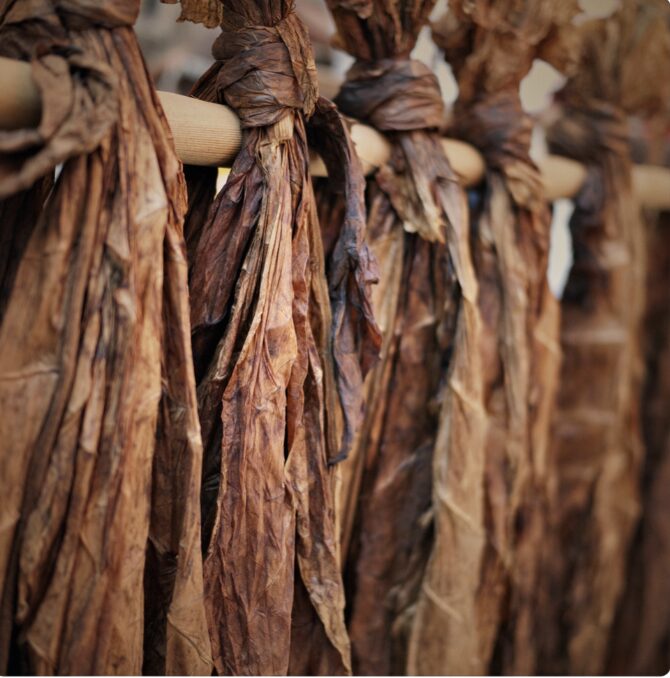
Botanical and Geographical Origin of Tobacco
Tobacco, mainly the species Nicotiana tabacum and Nicotiana rustica, belongs to the Solanaceae family. Cultivated by the indigenous peoples of the Americas for millennia, it was introduced to Europe in the 16th century by European explorers, quickly gaining popularity as a medicinal and then recreational plant.
Nicotiana tabacum, native to South America (notably Bolivia and Paraguay), is the most cultivated for its large leaf rich in nicotine, ideal for cigarettes and cigars.
Nicotiana rustica, more robust and with a higher nicotine content, is cultivated in the cold, mountainous regions of North and South America.
Tobacco cultivation is today global, with key producing regions on several continents. It requires rich, well-drained soil and a tropical or subtropical climate with sufficient rainfall. The main growing areas include Central and South America, the United States (notably North Carolina and Kentucky), India, China, and certain regions of Africa such as Zimbabwe.
Geographical diversity influences the characteristics of the tobacco leaves. For example, Cuban tobacco is renowned for its aromatic leaves, prized for high-end cigars, while Virginia tobacco, milder, is often used in cigarette blends.
History and Use in Perfumery
Cultivated by the indigenous peoples of the Americas for millennia, tobacco was used by Native American peoples during purification rituals and to implore their gods, as well as a medicinal plant.
In 1492, Christopher Columbus discovered that the Indians smoked a plant called “petum” in various ways: by inhaling a fumigation, in peace pipes, or by chewing the leaves or inhaling powder (snuff).
It was introduced to Europe in the 16th century by European explorers, quickly gaining popularity as a medicinal and then recreational plant. It was Jean Nicot (the origin of the word nicotine), the French ambassador to Portugal—where it was cultivated for its medicinal virtues—who sent a few leaves to Catherine de’ Medici to treat her migraines by snuffing it. “The queen’s herb,” also called the “catherinaire,” provoked a craze at court and was exported throughout Europe.
First used for its medicinal and recreational virtues before being appreciated for its olfactory qualities, in the 18th century infused tobacco became a symbol of sophistication in aristocratic salons.
In the 19th century, industrialisation and the popularity of cigars propelled tobacco as a raw material in perfumery, with French artisans incorporating tobacco accords with woody and leathery nuances.
During the Roaring Twenties, after the First World War, women—having worked in the factories while the men were at the front—became emancipated. They worked, smoked, wore trousers and had their hair cut in a boyish style. Their perfume, like their hairstyle, set them apart from other women, and they dared the notes traditionally associated with men, such as leather, tobacco, vetiver notes: Tabac Blond by Caron (1919), Cuir de Russie by Chanel (1928), Habanita by Molinard (1921), called a “perfume for cigarettes” because the strength of its sillage attenuated the smell. They slipped it, in the form of sachets, into their cigarette packs.
Then the fashion would pass and return in the 1980s with intense masculine chypres, then, at the end of the 20th and beginning of the 21st centuries, through niche perfumery. The 20th century saw the rise of modern perfumery thanks to advanced extraction methods and the introduction of synthetic compounds, making it possible to isolate precise aromas of tobacco. Today, tobacco is used in a varied range of compositions, from classic masculine perfumes to unisex and feminine creations.
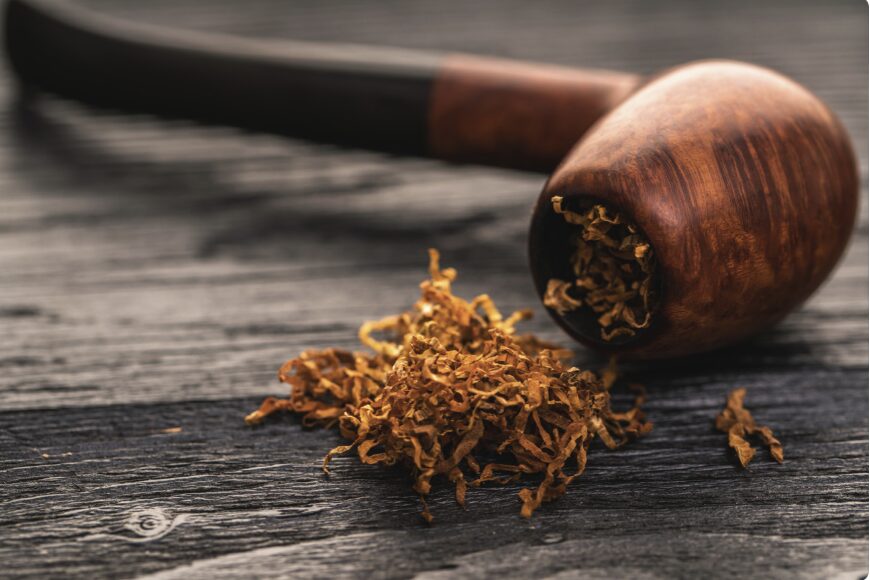
IFRA and the Tobacco Raw Material
The International Fragrance Association (IFRA) strictly regulates the use of tobacco in perfumery owing to potentially carcinogenic compounds such as nitrosamines. To comply with these regulations while retaining the olfactory characteristics of tobacco, perfumers use synthetic alternatives that imitate its complex aromas without the risks associated with natural extracts.
These molecules offer a consistent stability and quality, essential for industrial production. IFRA guidelines define the maximum concentrations of certain substances, guaranteeing consumer safety and regulatory compliance. Thus, innovation and the development of synthetic alternatives are essential to preserve the essence of tobacco in perfumery.
Extraction Methods of Tobacco in Perfumery
The extraction methods of tobacco in perfumery make it possible to preserve the richness of this raw material. Here are the most relevant techniques:
Volatile Solvent Extraction
Volatile solvent extraction uses organic solvents such as hexane to dissolve the aromatic compounds of the tobacco leaves. After evaporation of the solvent, a concrete is obtained, then treated with ethanol to remove the waxes, producing a tobacco absolute. This method offers a concentrated extract with honeyed, woody and ambery notes.
Steam Distillation
Steam distillation consists of passing steam through the tobacco leaves, releasing the aromatic compounds. The steam is then condensed to separate the water and the essential oil. This technique preserves the fresh, herbaceous notes of tobacco, ideal for balancing fragrant compositions.
Supercritical CO2 Extraction
Supercritical CO2 extraction uses carbon dioxide under high pressure to extract the aromas of tobacco. This method is environmentally friendly and does not use toxic solvents. It makes it possible to obtain high-purity extracts with complex olfactory profiles faithful to the original raw material.
The Synthetic Tobacco Note in Perfumery
The synthetic tobacco note offers a relevant, stable alternative to natural extracts. Synthetic molecules, such as isobutylquinoline for leathery notes and tobacco lactones for a honeyed softness, overcome the quality and environmental-impact limitations of natural raw materials. They also allow innovative accords and respond to the demand for vegan, ethical products, allowing perfumers to create sophisticated fragrances while respecting environmental and societal concerns.
Types of Tobacco Used in Perfumery
Blond tobacco: Derived from Nicotiana tabacum, dried with hot air, cultivated in Virginia, it offers sweet, honeyed and fruity notes, bringing warmth and comfort to perfumes.
Brown tobacco: Air-dried or fire-dried, cultivated in Kentucky and Africa, it presents robust, earthy, leathery and spicy aromas, adding depth and sophistication.
Green tobacco: Dried quickly after harvest, it retains fresh, herbaceous notes, adding a lively, natural touch, often combined with floral or aromatic accords.
Olfactory Facets of the Tobacco Note
The tobacco note, which is generally classed in the woody olfactory family, is rich and complex, offering a multitude of olfactory facets. Here are some of the most common facets:
Leathery facet: Notes of brown tobacco evoking tanned hides, bringing sophistication.
Honeyed facet: Softness of blond tobacco recalling honey, dried flowers and ripe fruits, ideal for oriental and floral perfumes.
Spicy facet: Nuances of clove, cinnamon and nutmeg, bringing warmth and complexity, often used in woody and oriental perfumes.
Ambery facet: Balsamic and resinous notes, rich and sensual, marrying well with vanilla, patchouli and labdanum.
Smoky facet: Notes of fire-dried tobacco recalling wood fires and cigars, adding a rustic, mysterious touch.
Iconic Perfumes with a Tobacco Note
Tabac Blond by Caron, created in 1919 by Ernest Daltroff (reformulated several times), is a fragrance that embodies the elegance and sophistication of the 1920s. Initially designed for men, this perfume is a tribute to the independence and audacity of the modern women of the era. The fragrance opens on fresh, sparkling notes of neroli, bergamot and lemon, offering a luminous, invigorating burst. The floral heart unfolds with powdery iris, exotic ylang-ylang and spicy carnation. Then the base is enveloping, dominated by soft, almost sweet tobacco, a warm leather and a creamy vanilla, bringing a timeless depth and sensuality. Today, to accompany its emblematic Tabac Blond, the house of Caron has launched its “Les Beaux Tabacs” collection, offering fragrances exalting tobacco through different facets: the luminous “Tabac Blanc,” the gourmand “Tabac Exquis,” and the warm “Tabac Noir.”
Chergui by Serge Lutens, created in 2001 by Christopher Sheldrake, is a spicy oriental perfume where tobacco plays a central role. It opens on notes of tobacco blended with honey and spices. The heart reveals accords of hay, musk and sandalwood, while the base rich in amber and incense brings a sensual depth.
Pure Havane by Mugler, created in 2011 by Jacques Huclier. Pure Havane is an ode to Cuban cigars, with notes of tobacco richly enveloped in honey. The perfume opens on accords of tobacco and vanilla, followed by a heart where cocoa, tonka bean and patchouli blend. The base is woody and ambery, creating a captivating aura.
Volutes by Diptyque, created in 2012 by Fabrice Pellegrin. Volutes is inspired by steamboat travel of the 1930s. The perfume combines top notes of tobacco, honey and iris flower with dried fruits. The spicy heart includes hay, immortelle and saffron, while the resinous base of myrrh, opoponax and benzoin becomes deep.
Jazz Club by Maison Margiela, created in 2013 by Aliénor Massenet, evokes the muffled, smoky atmosphere of a jazz club. The top notes are dominated by lemon and pink pepper, followed by a heart where tobacco blends with rum and vanilla. The fragrance is carried by tonka bean, styrax and vetiver, creating a warm sensation of elegance.
Tobacco Honey by Guerlain, created in 2014 by Delphine Jelk and Thierry Wasser, is a gourmand, enveloping composition where tobacco and honey play the leading roles. The top notes of honey that becomes waxy and of deep tobacco melt into a floral, spicy heart, with nuances of rose and cinnamon. The base is rich and balsamic, with accents of vanilla and musk.
Tabac Tabou by Parfum d’Empire, created in 2015 by Marc-Antoine Corticchiato. The fragrance is a tribute to sacred tobacco and its powerful aromas. The perfume begins with vegetal, herbaceous notes, evolving towards a heart of narcotic, honeyed tobacco, softened by accents of white flowers. The base is woody and resinous, with an animalic leathery touch.
Spicebomb Extrême by Viktor & Rolf, created in 2015 by Olivier Polge. Spicebomb Extrême is an intense, spicy version of the original fragrance. The perfume opens on explosive notes of black pepper and cinnamon, followed by a heart where tobacco plays the leading role, enveloped in vanilla and cumin. The base is powerful and balsamic, with notes of tonka bean and wood.
Smoke by Akro, created in 2018 by Olivier Cresp. Smoke by Akro evokes the intoxicating essence of smoke and tobacco. The opening with birch brings a woody, resinous note, recalling a campfire. The heart, composed of juniper and benzoin, adds an aromatic freshness and a balsamic softness. The rich base of tobacco, tonka bean and patchouli creates a warm, earthy depth, enveloping and slightly sweet.
5 The Guardian Master by Spiritum, created in 2020 by Philippe Paparella-Paris, is a sophisticated, nuanced composition. The opening is spicy with cardamom, pepper and turmeric, evolving quickly towards a rich, complex heart of captivating tobacco, supported by accords of honey, suave jasmine and cedar. The base is deep and resinous, energetic, with touches of leather, vanilla and vetiver, offering an olfactory experience of power and addictive intensity.
The tobacco note, with its many facets and its rich history, continues to appeal to creators and lovers of fine perfumery. Its ability to evoke warm, sophisticated atmospheres makes it a precious, timeless raw material. As the art of perfumery evolves, the tobacco note remains an inexhaustible source of inspiration, promising many more intoxicating olfactory creations to come. For perfume enthusiasts, discovering the nuances of tobacco means setting out to encounter a rich, complex history, where each facet tells a deep, charismatic story.
Article co-written by Elfa and Anne-Laure Hennequin
This year, 20 March marks the start of spring. What is less well known is that the following day is World Perfume Day! A perfect pairing, because spring marks the return of many flowers—and is there any olfactory family more celebrated in perfumery than that of floral fragrances? To kick off the season in style, Master Parfums takes you on a discovery of this olfactory family that seems impossible to dethrone.
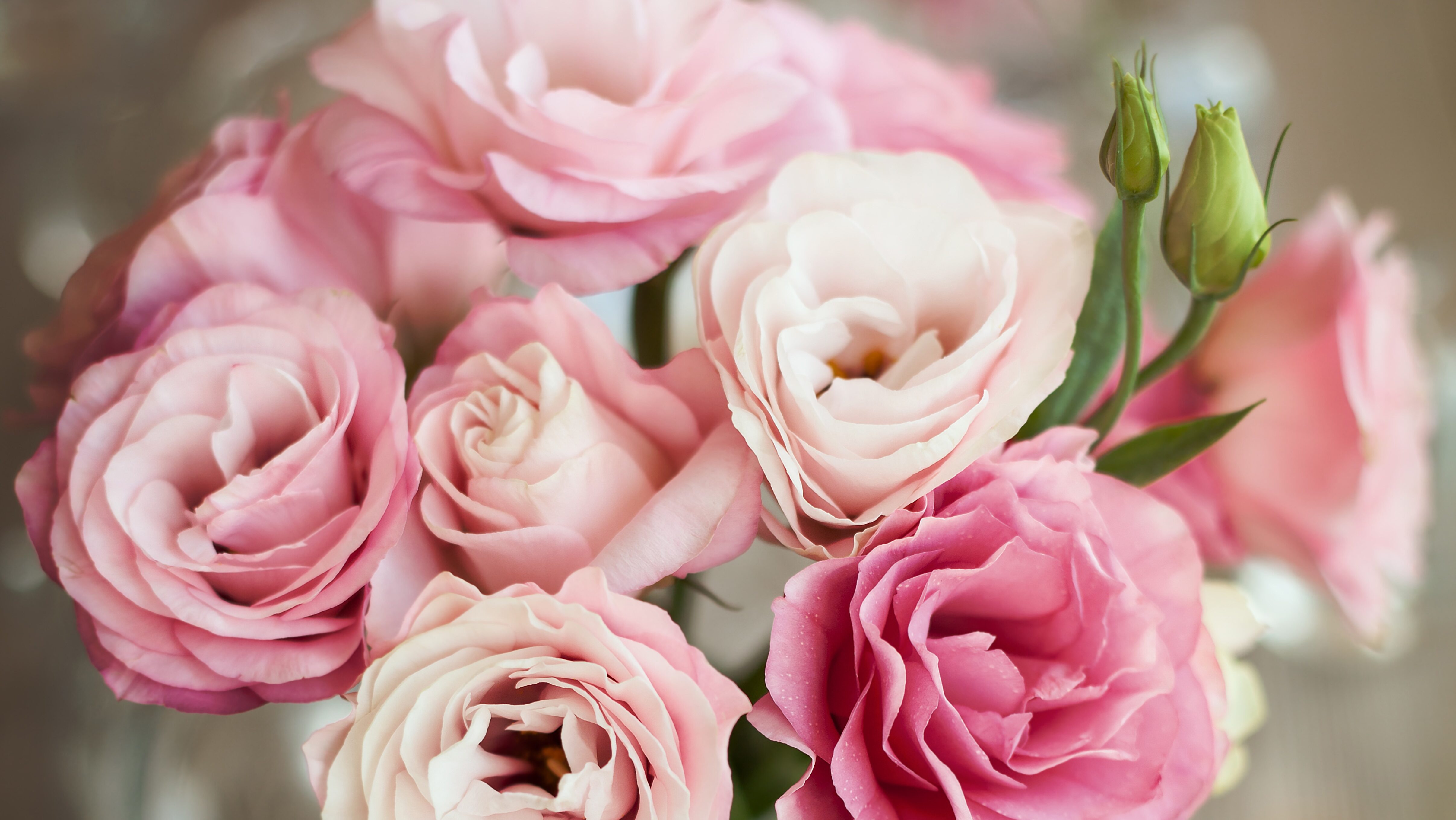
The Floral Olfactory Family, the Queen of Perfumery
Hesperidic, floral, fougère, chypre, woody, amber-oriental and leather: these are the seven olfactory families established by the Société Française des Parfumeurs. Although this classification, devised at the beginning of the 20th century by perfumers, has evolved over the eras and with the developments of perfumery, distinguishing fragrances according to their olfactory characteristics revolutionised the sector, making it possible to navigate more easily a market overflowing with creativity and ever more competitive.
If there is one perfume family that continues to make a splash decade after decade, it is the floral family. It has sometimes suffered from being perceived as a little has-been, and has never stopped fighting back by continually reinventing itself, to the point of becoming timeless. Since flowers have historically long been seen as the embodiment of femininity in its purest state, it is unsurprising that the family celebrating them dominates the women’s perfume market. But no matter—flowers also make their way into masculine perfumes and gender-neutral perfumes. After all, why arbitrarily deprive ourselves of an olfactory richness like the one the floral family has to offer?
Ingredients and Facets in Abundance
Flower species number in the hundreds of thousands—so it is difficult to name all the notes that populate the floral perfume family! We can, however, highlight those that often play the leading role.
You have no doubt guessed it: the top prize goes hands down to the rose, that delicate flower, the ultimate symbol of love, capable of taking on a thousand faces. Orange blossom also demonstrates astonishing versatility, as do its fellow white flowers jasmine and tuberose, by turns delicate and carnal. In the powdery register, violet, iris, heliotrope or mimosa often make eyes at us; ylang-ylang, frangipani and tiaré are the best allies of perfumers venturing into solar territory.
A fragrance in which one flower in particular is treated as the main character of the work is called a soliflore, and conversely, we speak of a “bouquet” when a whole host of flowers make their way into a perfume. Within each olfactory family, we also distinguish facets, a kind of olfactory sub-category that refines the identity of a perfume, because a fragrance is rarely purely floral, purely woody or 100% gourmand!
Some of the facets that dress up the floral family are…
- The fruity facet: plump cherry, yellow apricot or juicy pear—synthesis allows fruits to bring or emphasise a sweet touch in a floral perfume;
- The aldehydic facet: it is embodied to perfection in the sumptuous Chanel No. 5, a marriage of jasmine, rose, ylang-ylang and those famous aldehydes, synthetic molecules with a cold, metallic smell that have the power to sublimate a bouquet;
- The woody facet: sandalwood, cedar or patchouli allow the composition to be enveloped in warmth and to underscore its elegance and character;
- The spicy facet: it plays with so-called spicy flowers such as immortelle, lily or carnation, or with notes such as pepper (a fresh spice) or clove (a warm spice).
…And much more besides! A floral perfume can also exhibit more aquatic, green, powdery, ambery, leathery and even gourmand facets.
To welcome spring as it deserves, let us take a closer look at a few flowers that will soon be poking out their noses…
A Small Selection of Spring Flowers
The Rose

It would be almost sacrilege to speak of the flower family without pausing on the rose. Having become one of the emblems of the Grasse region, the Rosa Centifolia or May rose (one of the two roses predominantly used in perfumery, along with Rosa Damascena, the Damask rose) gives off a scent as subtle as it is majestic, green and rich, with occasional surprising accents of lychee.
When it comes to capturing the sweet aromas of Rosa Centifolia for perfumery, the hydrodistillation method—which yields an essence—offers too low a return for what it costs. One must therefore opt for volatile solvent extraction, which makes it possible to obtain a beautiful rose absolute blending earthy and honeyed facets, fruity, even a little spicy.
In Rose Centifolia Extrait by Guerlain (2023), Delphine Jelk and Thierry Wasser reveal the brilliance of the majestic Grasse rose, so delicate and so powerful.
The Narcissus
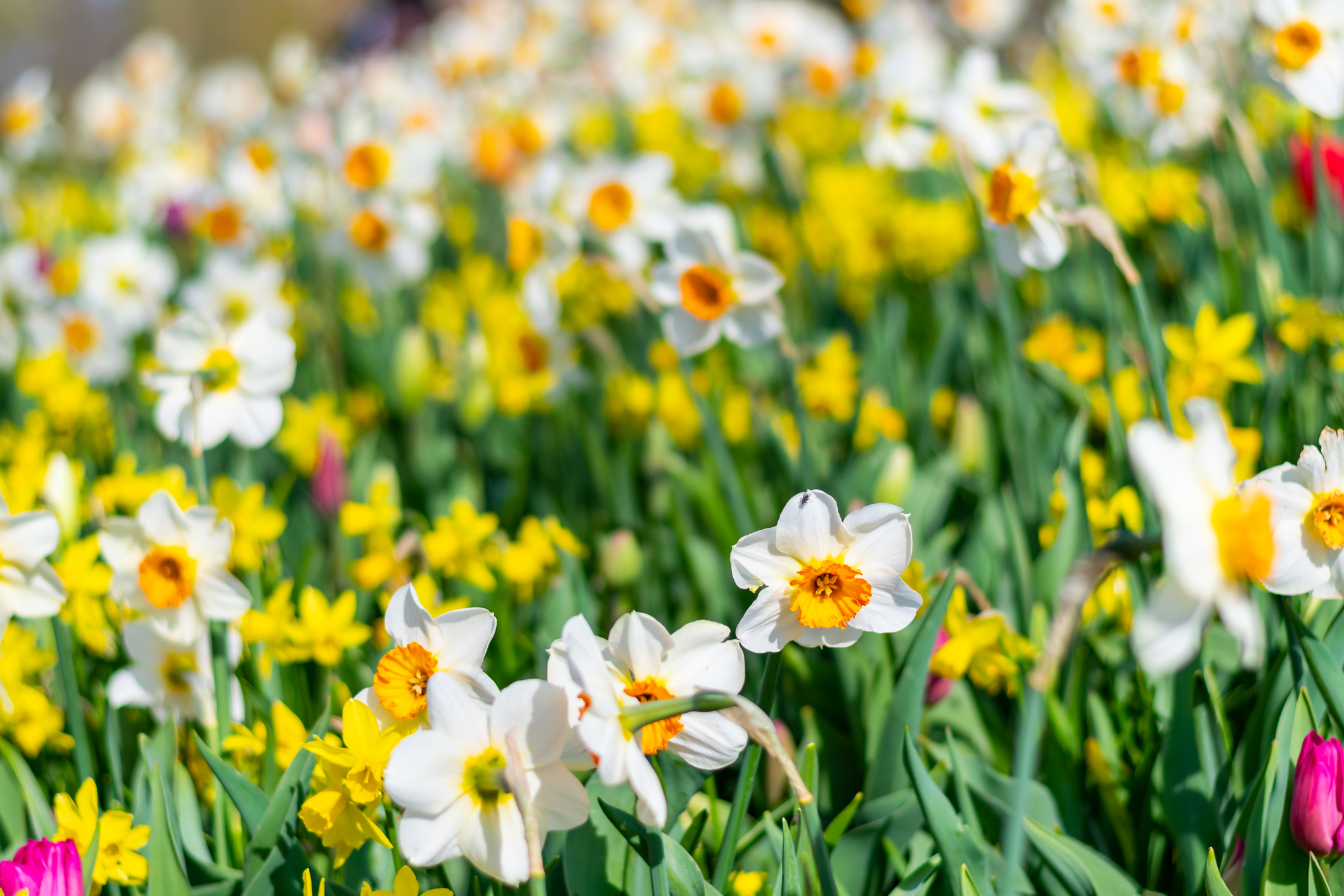
There are 22 varieties of this pretty two-toned flower. The wild field narcissus remains the favourite of perfumers. It is one of the rare wild flowers to be used in perfumery! The narcissus is a regular of the floral olfactory family, but also of the chypre family. From its flowers, it is possible to extract an absolute with a floral, spicy heart, with herbaceous and earthy facets, resting on an animalic and honeyed base. In Narcisse Noir by Caron (1911), Ernest Daltroff had the genius and the audacity to create an ode to this flower without any narcissus in the formula! Powerful and animalic, it became an olfactory icon. More recently (2018), Anne Flipo admirably rendered the wild side of the flower in Mont de Narcisse, for L’Artisan Parfumeur.
The Magnolia

This flower from China is one of the oldest plants on the planet. It gives off a green, floral and very refined scent, recalling that of jasmine. Magnolia is light and luminous, to be sure, but it does not deny itself the possibility of being more sensual by playing on its creamy side. It can also call to mind a waxy, lemony, slightly vanilla-tinged fruit!
In short, here is a complex scent, often recreated in perfumery through accords of natural materials and synthetic ingredients. For although it is possible to extract an essential oil from magnolia by distillation, the yield is very low, and therefore very costly. One can also extract an essential oil from its leaves and stem: the resulting scent will then be more herbaceous and aromatic.
In Blanc de Chine, by Parfumeurs du Monde, Patrice Revillard pays tribute to the beautiful white flower, glorifying its facets without a single ounce of magnolia, and achieving the feat of composing only with 100% natural materials! A magnificent result of a disturbing sensuality.
The Lilac
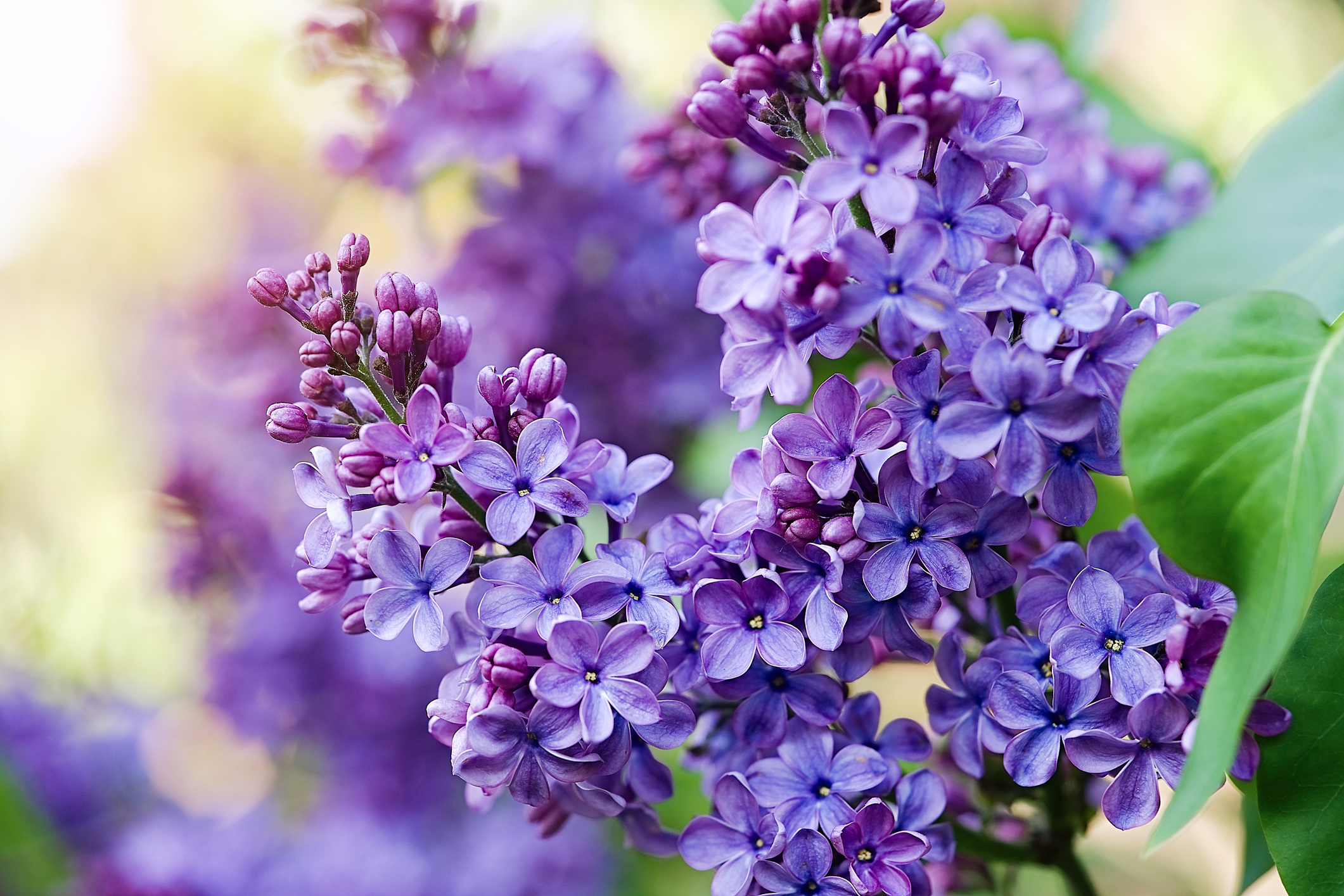
On reading the name of this spring flower, you have no doubt pictured pretty mauve petals in pastel tones… Pastel is also how one might describe the smell of lilac: its scent is powdery and anisic, very romantic, and calls to mind mimosa (another powdery flower) or lily of the valley.
When the time comes to capture the scent of lilac for perfumery, things get complicated, because it is a mute flower, a flower that refuses to give up its scent through distillation or volatile solvent extraction! With these flowers, the enfleurage technique is sometimes used, as is that of headspace: this method aims to capture the odorant molecules of a raw material by placing it under a bell filled with a gas that collects the molecules in question, in order to identify and reproduce them. Most often, we rely on combinations of other raw materials and on the use of synthetic molecules to bring to life the smell of these flowers which, like lilac, keep us waiting.
In En Passant (2000) by Editions de Parfums Frédéric Malle, Olivia Giacobetti revives the sensations of spring brought by a great gust of lilac.
The Violet
In perfumery, it is the Parma violet that is the most used. It is a flower with a very soft, subtly green scent… but it too gives itself up only reluctantly to perfumers, for whom synthesis is then the best ally. To recreate the scent of violet, two types of molecule are frequently used: ionones and methylionones. Soft and reassuring, it turns to candy in La Violette by Goutal (2001) by Isabelle Doyen and Camille Goutal, bolder and more sensual in Insolence by Guerlain, and delicate and romantic in Paris by Yves Saint Laurent.
In perfumery, the leaves of the violet are worked far more than its flowers: it is possible to extract from them an intense absolute, green and aqueous, a little earthy, evoking the fresh morning dew or the flavour of a freshly peeled cucumber.
The violet leaf caused a surprise by bringing its carefree quality and its freshness to the masculine Fahrenheit by Dior (1988) by Jean-Louis Sieuzac, Michel Almairac and Maurice Roger.
A Few Other Iconic Floral Perfumes
- With the opulent Chanel No. 5 (1921), Ernest Beaux created a revolutionary perfume. The dance between May rose, ylang-ylang and jasmine is magnified by a burst of aldehydes, the olfactory signature of this now iconic fragrance.
- Hyacinth, Bulgarian rose and lilac are some of the flowers populating the exuberant Nahéma (1979) by Guerlain, between an opening of aldehydes and a base of warm, sensual vanilla.
- Paris (1983) by Yves Saint Laurent seals the sumptuous marriage of rose and violet. A string of other flowers, a spicy touch of clove and a woody base come to sublimate this masterpiece by the perfumer Sophia Grojsman.
- The elegant J’Adore (1999) by Dior is a floral bouquet built around an accord of tuberose and jasmine, rose and violet, all accompanied by a delicious note of candied plum as well as sandalwood and enveloping musks.
- L’Air du Temps (1948) by Nina Ricci sounded the starting signal for floral-spicy perfumes: Rosa Centifolia, Grasse jasmine and powdery violet make us vibrate, but it is the carnation-gardenia accord of the fragrance that gives it all its strength.
- On the niche perfumery side, Annick Goutal also offers us Le Chèvrefeuille (2002): the eponymous flower (honeysuckle) meets narcissus in this soft green perfume punctuated with petitgrain, created by Camille Goutal and Isabelle Doyen.
- In L’Instant by Guerlain (2003), ylang-ylang, creamy magnolia and sweet orange honey bring to life a sublime floral, ambery fragrance reinterpreting the Guerlinade, the house’s famous perfume base and olfactory signature.
Fancy continuing your stroll through this springtime garden? The Master Parfums Game-Book has prepared 120 questions about perfume for you, as well as 12 scented pencils to tickle your fifth sense—including pencil no. 6, illustrating a floral bouquet centred on rose and peony.
Happy spring to all 🌸
On the occasion of the mimosa festival, let’s explore mimosa in perfumery together, from its geographical and botanical environment to its use in the creation of fragrances. Let’s discover its natural smell, the extraction methods used to capture its essence, and analyse the olfactory nuances that make it a note prized by perfumers. Finally, we will highlight a selection of perfumes that embody the richness of mimosa.
The Geographical and Botanical Environment of Mimosa
Mimosa, a symbol of delicacy and resilience, finds its origins in the distant lands of Australia. This shrub, which is now an integral part of the Mediterranean landscape, and in particular on the Côte d’Azur, is known for its winter flowering, offering touches of colour and warmth in the often dark landscape of late winter.
Mimosa, belonging to the Fabaceae family and characterised by its graceful leaves and its bouquets of spherical yellow flowers, blooms from January to March, bringing colour and scent to winter landscapes. Beyond its aesthetics, mimosa plays a crucial ecological role in fixing soils and serving as a habitat for wildlife, while having a cultural importance, notably in the Côte d’Azur region where it is celebrated for its resilience and its beauty that brighten the landscapes in late winter.
The Smell of Mimosa and Its Extraction Method
This scent, at once delicate and complex, makes mimosa an essence prized in perfumery for its ability to bring luminosity and elegance to compositions.
The Smell of Mimosa
Its natural scent stands out for an enveloping softness, where slightly powdery, almondy floral notes blend with a honeyed base and a hint of fresh greenery. This olfactory alchemy evokes springtime softness, gentle sunshine. The smell of mimosa is at once delicate and powerful, luminous and soothing.
In perfumery, mimosa brings a touch of light and warmth to compositions, marrying harmoniously with woody, ambery notes, or with floral and green accords.
The nuances of the smell of mimosa are manifold: at first, it may seem simply sweet and floral, but more sustained attention reveals its richness and its complexity. The green, fresh facets recall the first days of spring, while the powdery, honeyed touches offer a depth and an enveloping warmth, creating a perfect balance between vivacity and softness.
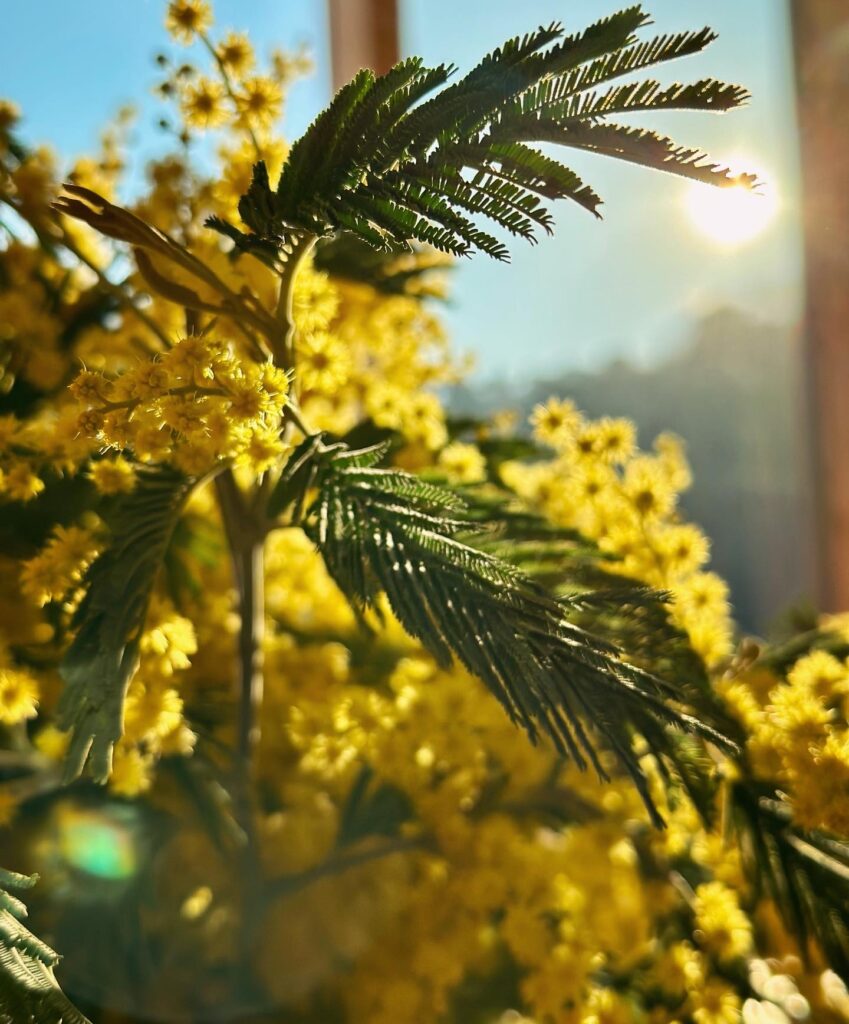
The Extraction Methods
The extraction of mimosa essence for its use in perfumery is a delicate process that aims to capture all the complexity of its fragrance. Mimosa flowers are particularly fragile, which requires careful extraction methods to preserve their authentic essence.
- Volatile solvent extraction makes it possible to obtain a mimosa absolute. The flowers are plunged into a solvent, most often hexane, which captures the volatile compounds. Once saturated with scent, the solvent is evaporated in order to collect a concrete, a kind of fragrant wax, which will be washed with alcohol to separate the fatty substances and thus obtain the absolute. This very concentrated absolute offers perfumers a high-quality raw material for their creations.
- Supercritical CO2 extraction, applied to mimosa, makes it possible to obtain a pure, high-quality essence of this flower without using chemical solvents. By exploiting CO2 in the supercritical state, which combines the properties of a gas and a liquid, this method extracts, at low temperature, the delicate aromatic compounds of mimosa while preserving their freshness and their integrity. This environmentally friendly process offers a complex extract faithful to its natural scent.
A Few Perfumes Built Around Mimosa
Several olfactory creations showcase mimosa, each interpreting this solar flower in its own way. Among the emblematic perfumes, we can cite:
Farnesiana by Caron, a floral perfume launched in 1947 by Michel Morsetti, interprets mimosa with a rich, nuanced composition. At the top, accords of mimosa blend with wafts of hay, blackcurrant and bergamot, introducing a complex, welcoming opening. The heart unfolds around violet, jasmine and lily of the valley, creating a deep, captivating floral bouquet thanks to iris butter. In the base, vanilla, sandalwood, opoponax and musk bring a warm, resinous base, finishing on a soft, honeyed note.
Mimosa Pour Moi by L’Artisan Parfumeur, by Anne Flipo in 1992. This perfume is a pure, simple celebration of mimosa, offering a fresh, slightly sweet fragrance. The composition opens on green notes that evolve towards a floral, powdery heart, capturing the delicate, sunny essence of mimosa. The base reveals a touch of vanilla, adding a soft, comfortable dimension to the fragrance.
Champs-Élysées by Guerlain, Olivier Cresp, 1996. Inspired by the eponymous Parisian avenue, this floral, fruity perfume blends mimosa with rose, almond and fruity notes of melon and peach. The presence of mimosa brings a unique softness to the composition, making Champs-Élysées a joyful, sophisticated fragrance; the base remains barely gourmand for a luminous fragrance.
Summer by Kenzo, created by Alberto Morillas in 2005, is a perfume that evokes summer with its top notes of citrus and bergamot. The floral heart blends mimosa and almond milk with delicate flowers such as lily of the valley and jasmine, while the base notes combine musk, lemon, amber and wood for a warm, sunny finish. An invitation to summer pleasures, a fragrance that is at once fresh and deep, perfect for evoking the most luminous season of the year.
Le Mimosa by Goutal, by Isabelle Doyen and Camille Goutal, created in 2011. Le Mimosa is an ode to this flower, with a fresh, luminous interpretation. The mimosa notes are accompanied by accords of peach and iris, creating a soft, powdery and slightly fruity fragrance that evokes the first breath of spring.
Mimosa & Cardamom by Jo Malone, created in 2015 by Marie Salamagne. A warm, spicy perfume, where mimosa meets the richness of cardamom. This combination creates a fragrance that is at once comforting and invigorating, with mimosa bringing a floral softness and cardamom adding a spicy, aromatic dimension. The base, carried by tonka bean, wraps the whole to reinforce the softness.
Infusion de Mimosa by Prada, launched in 2016 and created by Alberto Morillas, is an olfactory ode to mimosa, blending delicacy and radiance. Part of the Les Infusions collection, it is imbued with Prada’s sophistication. Floral notes intertwine around mimosa, evoking a breeze fragrant with flowers. The composition, subtle and balanced, is completed by warm base notes that add depth and comfort. This perfume, at once modern and timeless, is ideal for those who want a pure floral essence for everyday.
Mimosa Indigo by Atelier Cologne, created in 2016. A perfume that is part of the Cologne Absolue collection, combining mimosa with rich, deep notes such as leather and sandalwood. The result is a complex, sophisticated fragrance, where the softness of mimosa blends with darker, more enveloping accords, offering a unique interpretation of this flower combined with bergamot and lilac on a distinguished base.
Mimosa Tanneron by Perris Monte Carlo, by Jean-Claude Ellena in 2020. Named after the Tanneron region, famous for its mimosa forests in France, this perfume captures the essence of the flower with exceptional fidelity. The fragrance opens on fresh, green notes, leading to a rich heart of mimosa, before settling on a woody, slightly sweet base, reflecting the complexity and the beauty of the flower.
Mimosa by Le Couvent, created in 2021 by Jean-Claude Ellena. This perfume is probably a celebration of mimosa in its purest, most natural form. One can expect a delicate fragrance, highlighting the softness and luminosity characteristic of mimosa, possibly accompanied by subtle green or woody notes to complete its olfactory profile.
Mimosa Supercritique by Les Eaux Primordiales, created in 2021 by Amélie Bourgeois, is an ode to mimosa, using CO2 extraction to capture the pure essence of the flower. The fragrance begins with invigorating top notes of aldehydes, cyclamen, bergamot and neroli, evolving towards a floral heart of jasmine, tuberose and orange blossom. In the base, mimosa blends with white musks and ambroxan, creating a perfume that marries tradition and innovation, for a rich, modern olfactory signature.
Each of these perfumes offers a distinct interpretation of mimosa, demonstrating the versatility and the richness of this note in perfumery.
Mimosa is an inexhaustible source of inspiration in perfumery, offering a palette of fragrance that goes from powdery softness to honeyed warmth. Its cultivation, its extraction, and its prime place in olfactory compositions make it a true treasure for perfume lovers. The diversity of perfumes built around mimosa testifies to its richness and its universality, inviting a sensory journey with every waft.
Welcome to the captivating world of hesperidic perfumes, where the freshness of citrus mingles with the subtle art of perfumery. This article invites you on an olfactory journey through the history, ingredients and extraction techniques that define the hesperidic family. Discover emblematic citruses such as mandarin, lemon and bergamot, as well as less conventional notes such as citron or yuzu. We will also explore iconic perfumes that have left their mark on this category, revealing how hesperidics continue to captivate our senses and enrich the world of perfumery.
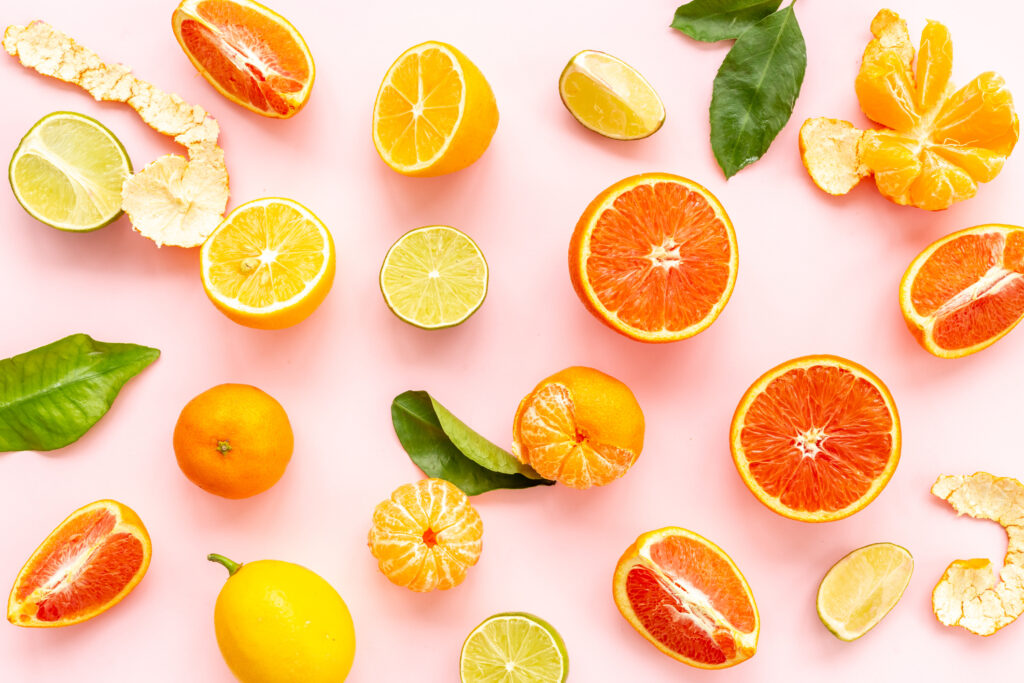
The History of Hesperidics: A Journey Through Time
Historically, hesperidics were prized for their refreshing and antiseptic properties. Today, they are used to create dynamic, sparkling perfumes, often paired with floral or spicy notes for a more complex signature.
The Garden of the Hesperides
The fascinating story of hesperidic perfumes begins in mythological antiquity, extends across the centuries, and continues to influence contemporary perfumery.
The hesperidic olfactory facet/family takes its name from the Hesperides, nymphs of Greek mythology. According to the myth, these nymphs guarded the precious garden where the “golden apples” grew, bestowing immortality and fertility on the gods of Olympus, and whose description evoked oranges. This interpretation would, however, be an anachronism, because at that time citrus fruits did not exist in that region! It may instead have been the quince, the literal translation of the word “golden apple” in Greek. Nevertheless, this idea of citrus in the garden of the Hesperides took hold all the more firmly because, often described as an earthly paradise, this garden evoked a world of freshness and purity—ideas still associated with citrus in perfumery.
The Rise of Citrus in Europe
Citrus fruits are native to Southeast Asia. Their introduction to Europe, notably through conquests and trade, marked a turning point. Lemons, oranges and other citruses became prized ingredients for their medicinal virtues, their refreshing properties and their invigorating scent.
In the 17th century, the fascination with citrus intensified in Europe. Italian perfumers, in particular, began to experiment with combinations of citrus essential oils and the aromatic herbs of the physic gardens of the time. These experiments gave rise to the first eaux de Cologne and to light perfumes that contrasted with the heavier, more opulent scents of the era. This period marks the beginning of the systematic use of hesperidics in perfumery.
The Golden Age of Hesperidics
The golden age of hesperidics extended from the 18th to the 19th century. During this period, hesperidic perfumes stood at the confluence of hygiene and pleasure and, used by the nobility and high society, they were synonymous with refinement and elegance.
Key Raw Materials: Citrus at the Heart of Creations
Hesperidics, with their captivating and refreshing essence, stand out in the world of perfumery thanks to specific raw materials: citrus fruits. These fruits, true jewels of nature, lie at the heart of the most emblematic creations of this olfactory facet/family.
The Variety of Citrus Used
Lemon: A symbol of freshness, lemon offers a sparkling, biting and slightly tangy note, much prized for its brightness and vivacity.
Orange: With its soft, fruity nuances, orange brings a warmth and roundness that are appreciated, particularly in soft hesperidic compositions.
Bergamot: Known for the scent it brings to Earl Grey tea, it is prized for its subtle bitterness and its green, floral freshness. This citrus is a must-have, bringing an elegant, refined touch.
Mandarin: Softer and slightly sweet, mandarin enriches hesperidic perfumes with a joyful, sunny facet.
Grapefruit: Its character, at once bitter and fresh, makes it an ideal top note for dynamic, modern perfumes.
In addition to classic citruses such as lemon, orange and bergamot, hesperidic fragrances are enriched by the use of less conventional but equally captivating fruits, such as citron, yuzu and bitter orange. Each of these citruses brings a unique dimension to fragrant compositions.
Citron: an ancient fruit, it offers a more robust and less acidic scent than the classic lemon. It has green and slightly floral notes that bring an interesting complexity to fragrances.
Yuzu: exoticism and freshness. Native to East Asia, yuzu is famous for its unique scent, combining notes of grapefruit, mandarin and lime. It brings an exotic touch and a pungent freshness to perfumes.
Bitter orange (bigarade): a sophisticated bitter orange, it stands out for its fresh and slightly bitter notes. It is often used to add a refined dimension and an interesting contrast to hesperidic perfumes.
Sweet lime (limette): lively and verdant, this small citrus typical of Mexico has a note that recalls a little of Coca-Cola or key lime pie, the iconic Florida dessert.
Combava: also called kaffir lime, whose leaves are prized as a spice in Thailand and India, it offers citronella, geranium and aldehydic facets, clean and tonic.
Calamansi or calamondin: a small citrus from the Philippines, lively and bursting, still very, very little used in perfumery.
Finger lime (caviar lime): a small citrus from Oceania whose pulp is composed of small crunchy beads recalling caviar. It is also called “finger lime” because of its size and its elongated shape (from 4 to 10 cm). Its very thin skin, which can be black, green, yellow or red, does not allow essence to be extracted from it. It is its crunchy, tangy texture that is reproduced in perfume.
The Intruders
A little apart in the kingdom of hesperidics, we can also mention materials which, although they are not citrus fruits, are categorised within this facet. They are often halfway between the hesperidic facet and the green facet.
Citronella: an Asian plant well known for its mosquito-repellent qualities, its long leaves are distilled to yield a green, lemony oil.
Lemongrass: often confused with citronella, lemongrass exhales herbaceous, lemony and fruitier notes.
Petitgrain: this is the essential oil obtained by distilling the leaves and twigs of the bitter orange tree (bigaradier). They are also called “brouts.” They are cut at the moment when the flowers give way to the fruit. Green, hesperidic and crunchy, it brings joy to top notes.
Verbena: known for its digestive virtues, verbena brings its lemony, green freshness to eaux de Cologne.
Ginger: here we flirt more with the spicy facet. Bursting and lively, sometimes slightly soapy, ginger brings its exotic, pungent lemony touch.
Cultures and Terroirs
These citruses are grown in specific terroirs, often characterised by a Mediterranean climate. The quality of the fruits depends largely on sunshine, the nature of the soil and the know-how of the growers. The regions of Italy, Spain and certain areas of North Africa are renowned for producing high-quality citrus for perfumery.
Extraction Methods: Capturing the Essence of Citrus
The quintessence of citrus in hesperidic perfumes rests on meticulous, precise extraction techniques aimed at capturing the purest essence of these fruits.
Cold Expression: The Traditional Technique
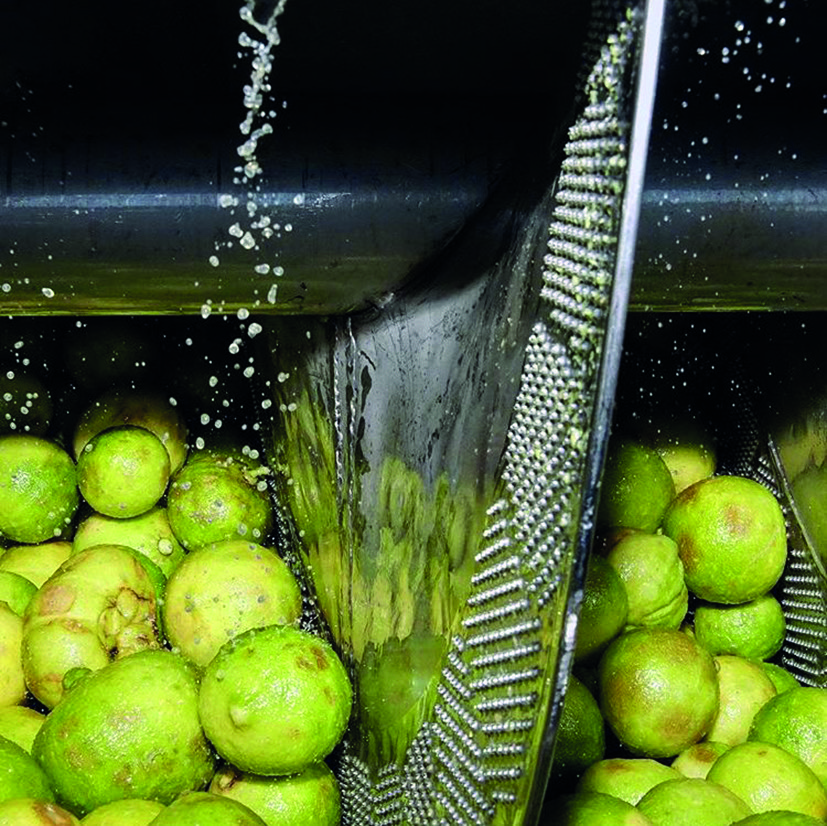
Principle: Cold expression is the most traditional and most commonly used method for extracting citrus essential oils.
There are two methods:
- Pelatrice: After being washed, the fruits are dropped into a machine that, by scraping the skin, releases the oil contained in the oil sacs of the zest. The water is then separated from the essential oil using a centrifuge and a decanter. This method preserves the freshness and integrity of the olfactory notes, thereby capturing the true essence of the fruit that is peeled without alteration due to heat.
- Sfumatrice (Sfuma Torchio): this other method consists of crushing the whole fruits together with their juice before passing them through the centrifuge. The essential oil combines the gourmand aspect of the fruit with the vivacity of the zest.
Steam Distillation: A Delicate Alternative
Although less frequent for citrus, steam distillation is sometimes used, notably for grapefruit and sweet lime. This technique involves passing steam through the raw materials to extract their aromatic compounds. Steam distillation makes it possible to obtain a softer, less acidic essence, offering an interesting alternative for more subtle notes.
Innovation and Technological Advances
Supercritical CO2 Extraction: This modern technique uses CO2 in a supercritical state to extract essential oils. It makes it possible to obtain very pure, concentrated extracts, capturing olfactory facets that are sometimes lost in traditional methods. This technological advance offers new possibilities in perfume creation, allowing perfumers to explore unprecedented facets and to create more complex, nuanced compositions.
Iconic References of Hesperidic Perfumes
Several fragrant creations have marked the history of hesperidics. Let us cite, for example, “Eau d’Orange Verte” by Hermès, a classic reference, or “Light Blue” by Dolce & Gabbana, which combines citrus and aquatic notes for a modern effect.
Eau d’Orange Verte by Hermès was created in 1979 by Jean-Claude Ellena. It is a timeless classic, representative of freshness and elegance, perfect for a sensation of cleanliness and vivacity. This fragrance opens on an invigorating burst of green orange, offering an intense freshness and a sparkling start. The heart reveals nuances of mint and blackcurrant, bringing a green and slightly fruity dimension. Finally, the base is composed of patchouli and woody notes, giving the perfume a subtle depth and sophistication.
Light Blue by Dolce & Gabbana was created in 2001 by Olivier Cresp. Light Blue is an emblematic summer fragrance, known for its lightness and its joyful character, ideal for sunny days. At the top, the perfume bursts with fresh notes of Granny Smith apple and Sicilian lemon, creating an energetic, refreshing start. The floral heart is composed of jasmine and bamboo, offering a touch of softness and elegance. The white wood notes bring a discreet warmth and a clean sensation.
Bigarade Concentrée by Frédéric Malle was created in 2002 by Jean-Claude Ellena. It is a minimalist, refined fragrance, characterised by its purity and clarity, capturing the essence of bitter orange in a unique and contemporary way. The bigarade dominates from the opening, offering a hesperidic freshness with a distinctive touch of bitterness. The heart is pared-down, highlighting the fresh and slightly spicy aspects of the bigarade. The base is understated, with a touch of rose and wood to balance the bitterness.
Mandarine Basilic by Guerlain was created in 2007 by Marie Salamagne. It is a dynamic, sunny fragrance, perfect for those seeking a fresh, natural perfume. The pairing of mandarin and basil creates a unique olfactory experience, at once hesperidic and aromatic. From the opening, the perfume unveils an explosion of mandarin, bringing a characteristic juicy, sparkling freshness. Mandarin, with its hesperidic brilliance, immediately gives a sensation of vitality and energy. Basil, the central ingredient of this perfume, intertwines with the citrus notes, bringing a green, slightly spicy and aromatic touch. This pairing creates a refreshing, invigorating contrast, evoking a Mediterranean garden in high summer. Then touches of green tea and amber add a subtle dimension and depth to the perfume. Green tea brings a slight astringency, while amber offers a soft warmth, balancing the freshness of the top and heart notes.
Escale à Portofino by Dior, created in 2008 by François Demachy, is part of the “Les Escales de Dior” collection. It is a perfume that captures the essence of the Italian dolce vita, with its refreshing hesperidic notes and its delicate floral accords. The perfume opens on radiant hesperidic notes, with a predominance of bergamot and lemon. This combination creates a fresh, sparkling start, evoking the invigorating energy of the Mediterranean coast. At the heart, the fragrance unveils a bouquet of white flowers, with a particular emphasis on orange blossom and petitgrain. These floral notes bring a touch of softness and elegance, balancing the freshness of the citrus. Then come bitter almond and musk, offering a soft, slightly creamy finish. This combination gives the perfume a sensation of comfort and warmth while maintaining its lightness.
California Dream by Louis Vuitton, launched in 2020, is a creation by Jacques Cavallier that celebrates the splendour of Californian sunsets. The top note is dominated by mandarin, bringing a juicy, sunny explosion. Just behind the mandarin, pear adds a fruity, delicate sweetness. This note creates a perfect balance with the acidity of the mandarin, bringing a touch of roundness and suavity. Ambrette, with its musky and slightly fruity nuances, offers a soft transition between the fruity top notes and the richer base. It gives the perfume a natural sensation of floating and comfort. In the base, benzoin reveals itself with its resinous and slightly vanilla-tinged facets. This note brings a richness and depth to the perfume, prolonging the sensation of warmth and serenity of the sunset.
Hesperidics are not merely perfumes; they are an expression of joy, freshness and vitality. From antiquity to the present day, these fragrances have crossed the eras, constantly reinventing themselves while retaining their timeless essence. As we conclude our exploration of hesperidics, we are left with an exciting question: what will be the next chapter in the evolution of this fascinating olfactory family? With continued advances in perfumery and the boundless creativity of perfumers, the future of hesperidics promises to be as bright and refreshing as their past.