This year, 20 March marks the start of spring. What is less well known is that the following day is World Perfume Day! A perfect pairing, because spring marks the return of many flowers—and is there any olfactory family more celebrated in perfumery than that of floral fragrances? To kick off the season in style, Master Parfums takes you on a discovery of this olfactory family that seems impossible to dethrone.
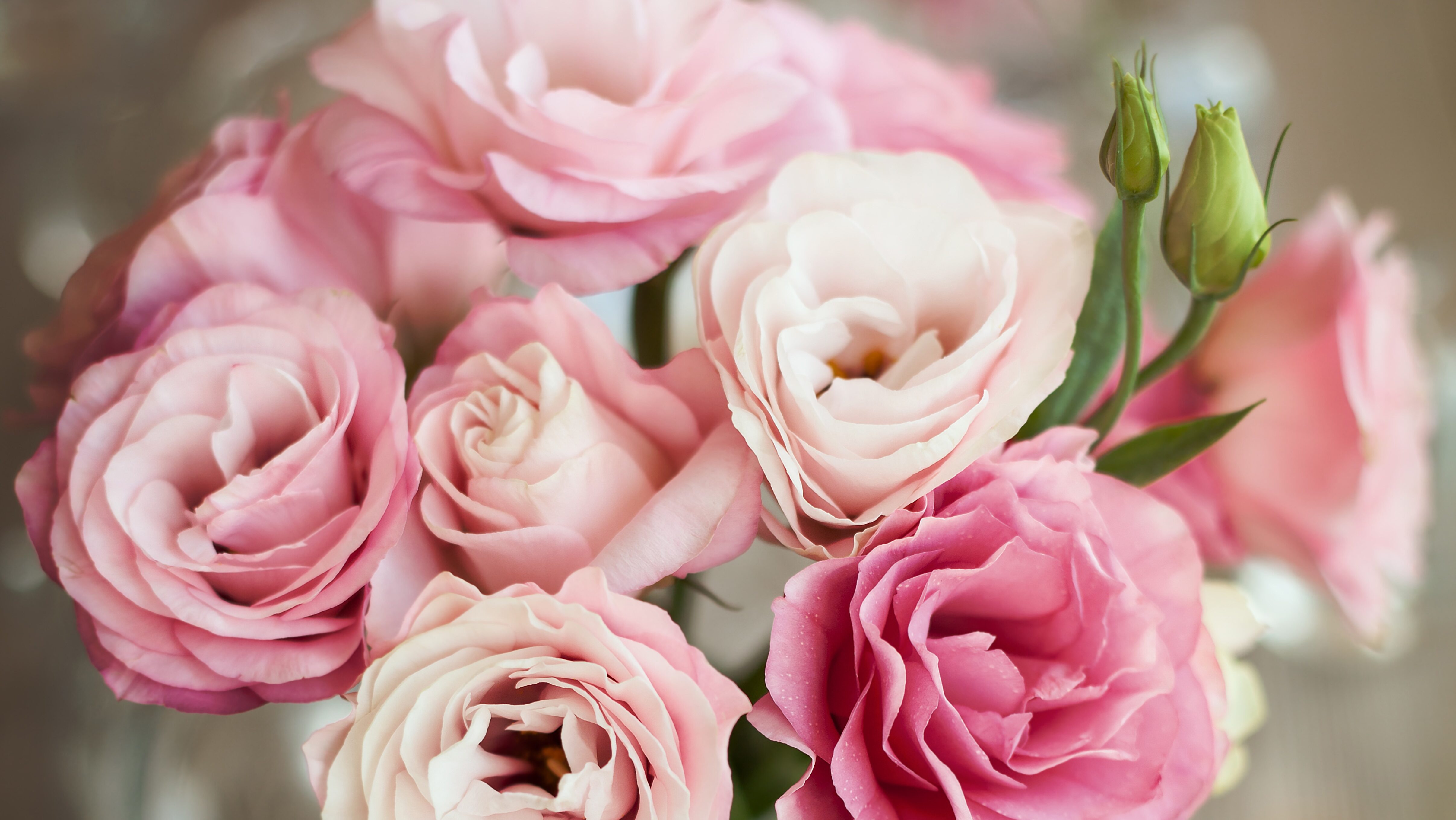
The Floral Olfactory Family, the Queen of Perfumery
Hesperidic, floral, fougère, chypre, woody, amber-oriental and leather: these are the seven olfactory families established by the Société Française des Parfumeurs. Although this classification, devised at the beginning of the 20th century by perfumers, has evolved over the eras and with the developments of perfumery, distinguishing fragrances according to their olfactory characteristics revolutionised the sector, making it possible to navigate more easily a market overflowing with creativity and ever more competitive.
If there is one perfume family that continues to make a splash decade after decade, it is the floral family. It has sometimes suffered from being perceived as a little has-been, and has never stopped fighting back by continually reinventing itself, to the point of becoming timeless. Since flowers have historically long been seen as the embodiment of femininity in its purest state, it is unsurprising that the family celebrating them dominates the women’s perfume market. But no matter—flowers also make their way into masculine perfumes and gender-neutral perfumes. After all, why arbitrarily deprive ourselves of an olfactory richness like the one the floral family has to offer?
Ingredients and Facets in Abundance
Flower species number in the hundreds of thousands—so it is difficult to name all the notes that populate the floral perfume family! We can, however, highlight those that often play the leading role.
You have no doubt guessed it: the top prize goes hands down to the rose, that delicate flower, the ultimate symbol of love, capable of taking on a thousand faces. Orange blossom also demonstrates astonishing versatility, as do its fellow white flowers jasmine and tuberose, by turns delicate and carnal. In the powdery register, violet, iris, heliotrope or mimosa often make eyes at us; ylang-ylang, frangipani and tiaré are the best allies of perfumers venturing into solar territory.
A fragrance in which one flower in particular is treated as the main character of the work is called a soliflore, and conversely, we speak of a “bouquet” when a whole host of flowers make their way into a perfume. Within each olfactory family, we also distinguish facets, a kind of olfactory sub-category that refines the identity of a perfume, because a fragrance is rarely purely floral, purely woody or 100% gourmand!
Some of the facets that dress up the floral family are…
- The fruity facet: plump cherry, yellow apricot or juicy pear—synthesis allows fruits to bring or emphasise a sweet touch in a floral perfume;
- The aldehydic facet: it is embodied to perfection in the sumptuous Chanel No. 5, a marriage of jasmine, rose, ylang-ylang and those famous aldehydes, synthetic molecules with a cold, metallic smell that have the power to sublimate a bouquet;
- The woody facet: sandalwood, cedar or patchouli allow the composition to be enveloped in warmth and to underscore its elegance and character;
- The spicy facet: it plays with so-called spicy flowers such as immortelle, lily or carnation, or with notes such as pepper (a fresh spice) or clove (a warm spice).
…And much more besides! A floral perfume can also exhibit more aquatic, green, powdery, ambery, leathery and even gourmand facets.
To welcome spring as it deserves, let us take a closer look at a few flowers that will soon be poking out their noses…
A Small Selection of Spring Flowers
The Rose
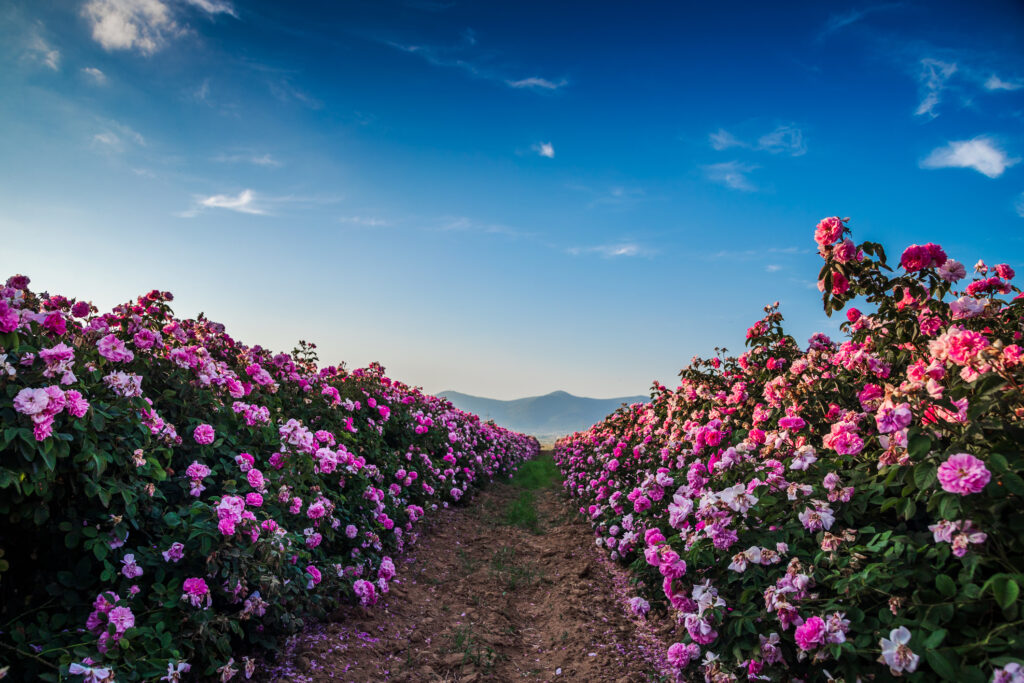
It would be almost sacrilege to speak of the flower family without pausing on the rose. Having become one of the emblems of the Grasse region, the Rosa Centifolia or May rose (one of the two roses predominantly used in perfumery, along with Rosa Damascena, the Damask rose) gives off a scent as subtle as it is majestic, green and rich, with occasional surprising accents of lychee.
When it comes to capturing the sweet aromas of Rosa Centifolia for perfumery, the hydrodistillation method—which yields an essence—offers too low a return for what it costs. One must therefore opt for volatile solvent extraction, which makes it possible to obtain a beautiful rose absolute blending earthy and honeyed facets, fruity, even a little spicy.
In Rose Centifolia Extrait by Guerlain (2023), Delphine Jelk and Thierry Wasser reveal the brilliance of the majestic Grasse rose, so delicate and so powerful.
The Narcissus
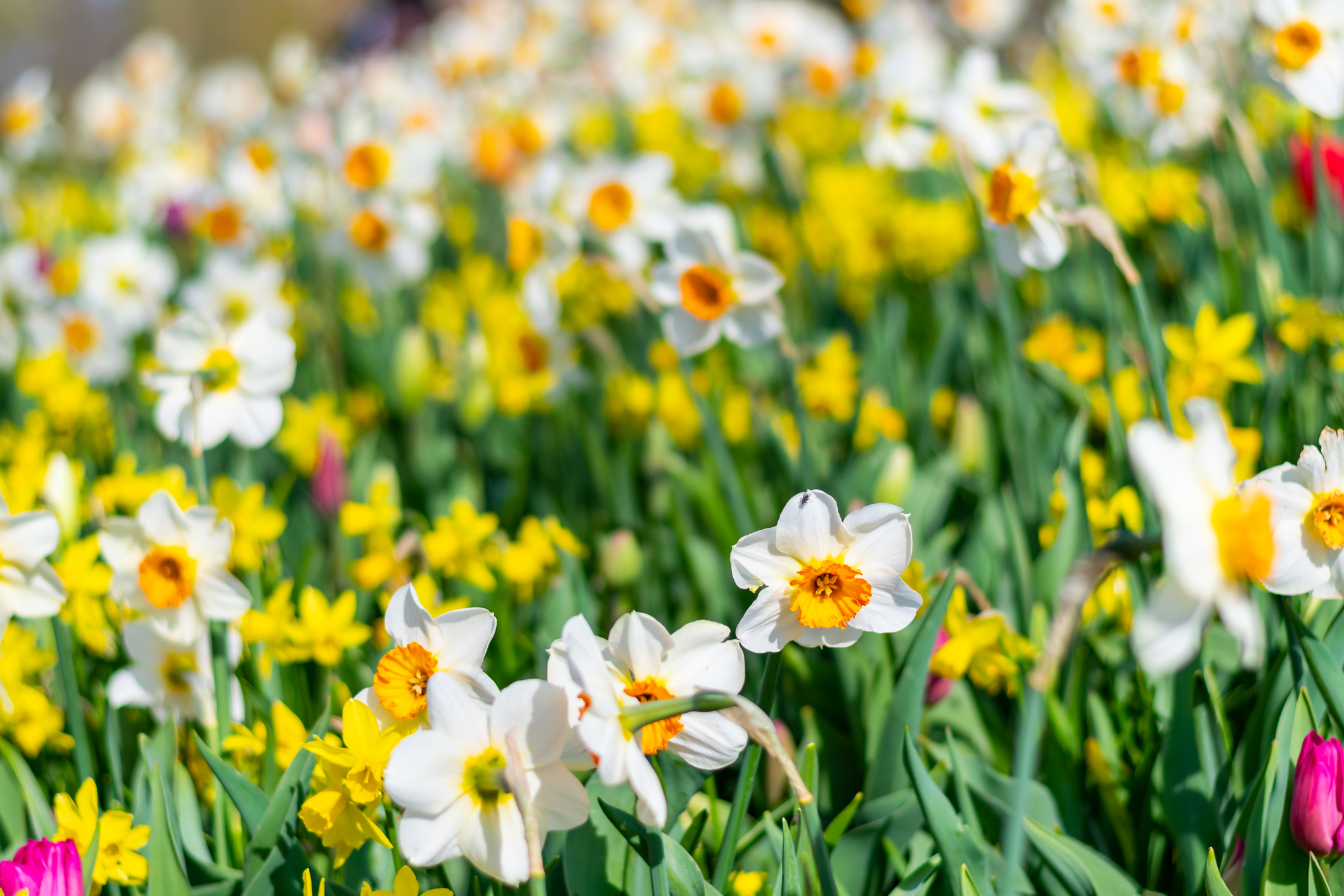
There are 22 varieties of this pretty two-toned flower. The wild field narcissus remains the favourite of perfumers. It is one of the rare wild flowers to be used in perfumery! The narcissus is a regular of the floral olfactory family, but also of the chypre family. From its flowers, it is possible to extract an absolute with a floral, spicy heart, with herbaceous and earthy facets, resting on an animalic and honeyed base. In Narcisse Noir by Caron (1911), Ernest Daltroff had the genius and the audacity to create an ode to this flower without any narcissus in the formula! Powerful and animalic, it became an olfactory icon. More recently (2018), Anne Flipo admirably rendered the wild side of the flower in Mont de Narcisse, for L’Artisan Parfumeur.
The Magnolia
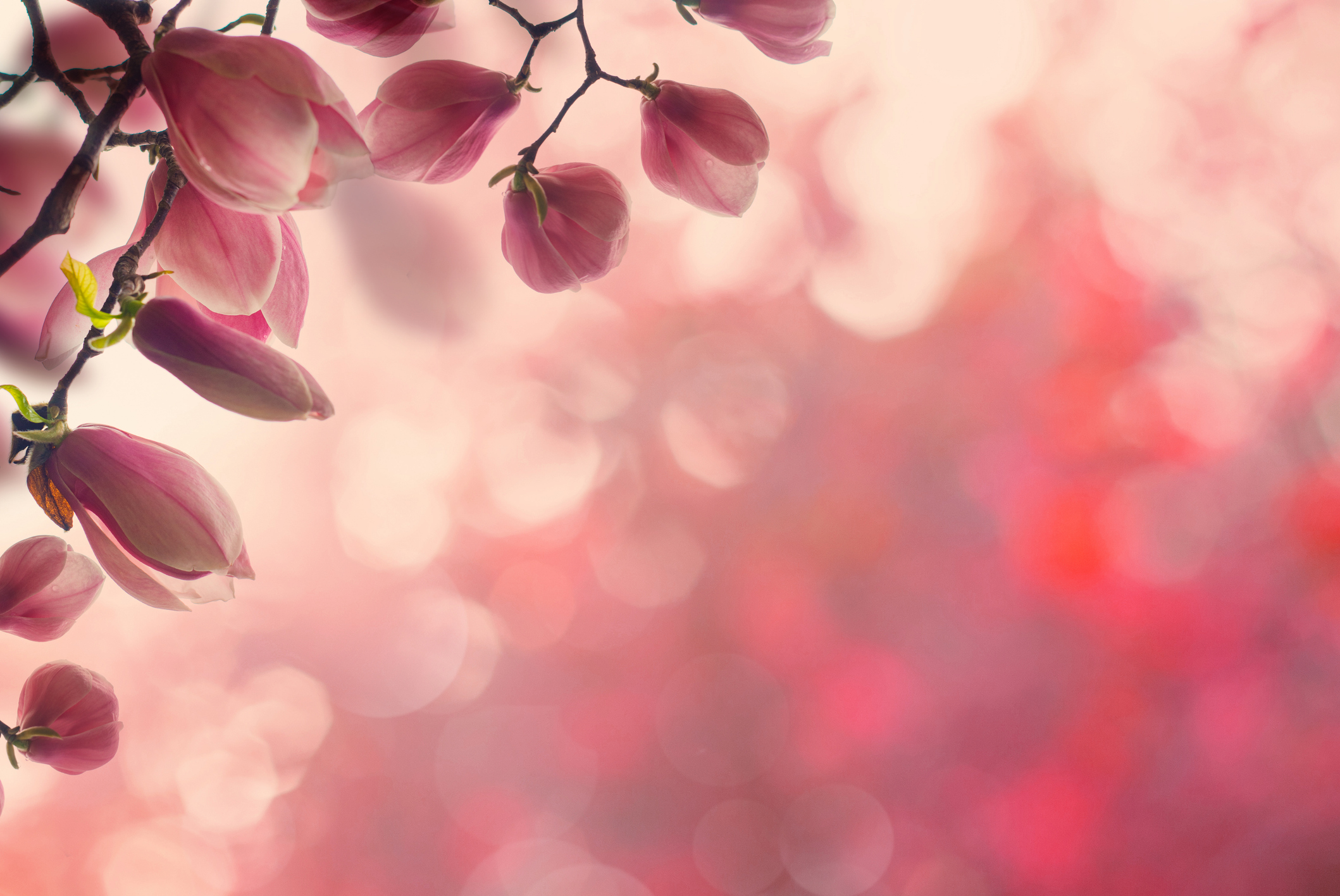
This flower from China is one of the oldest plants on the planet. It gives off a green, floral and very refined scent, recalling that of jasmine. Magnolia is light and luminous, to be sure, but it does not deny itself the possibility of being more sensual by playing on its creamy side. It can also call to mind a waxy, lemony, slightly vanilla-tinged fruit!
In short, here is a complex scent, often recreated in perfumery through accords of natural materials and synthetic ingredients. For although it is possible to extract an essential oil from magnolia by distillation, the yield is very low, and therefore very costly. One can also extract an essential oil from its leaves and stem: the resulting scent will then be more herbaceous and aromatic.
In Blanc de Chine, by Parfumeurs du Monde, Patrice Revillard pays tribute to the beautiful white flower, glorifying its facets without a single ounce of magnolia, and achieving the feat of composing only with 100% natural materials! A magnificent result of a disturbing sensuality.
The Lilac
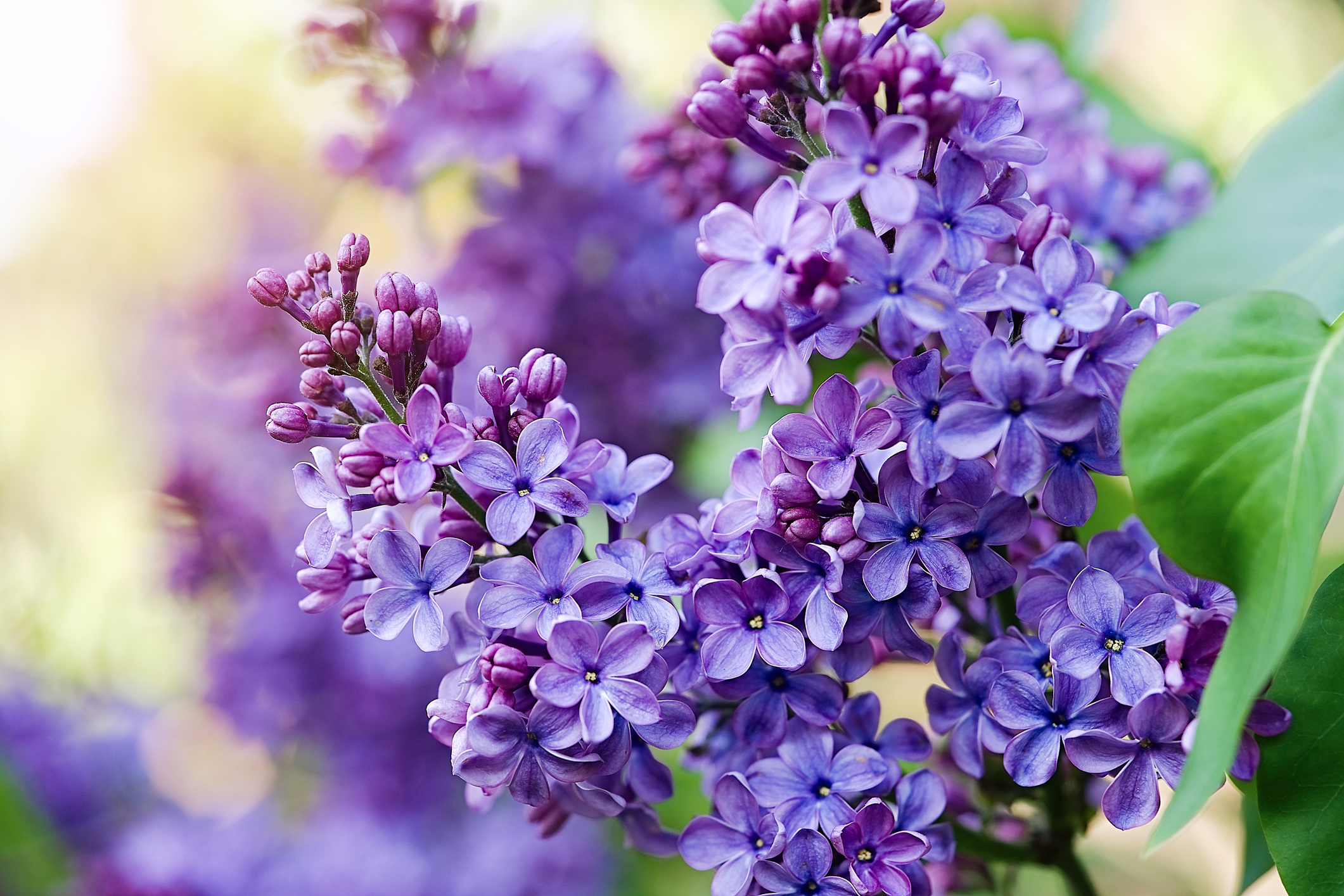
On reading the name of this spring flower, you have no doubt pictured pretty mauve petals in pastel tones… Pastel is also how one might describe the smell of lilac: its scent is powdery and anisic, very romantic, and calls to mind mimosa (another powdery flower) or lily of the valley.
When the time comes to capture the scent of lilac for perfumery, things get complicated, because it is a mute flower, a flower that refuses to give up its scent through distillation or volatile solvent extraction! With these flowers, the enfleurage technique is sometimes used, as is that of headspace: this method aims to capture the odorant molecules of a raw material by placing it under a bell filled with a gas that collects the molecules in question, in order to identify and reproduce them. Most often, we rely on combinations of other raw materials and on the use of synthetic molecules to bring to life the smell of these flowers which, like lilac, keep us waiting.
In En Passant (2000) by Editions de Parfums Frédéric Malle, Olivia Giacobetti revives the sensations of spring brought by a great gust of lilac.
The Violet
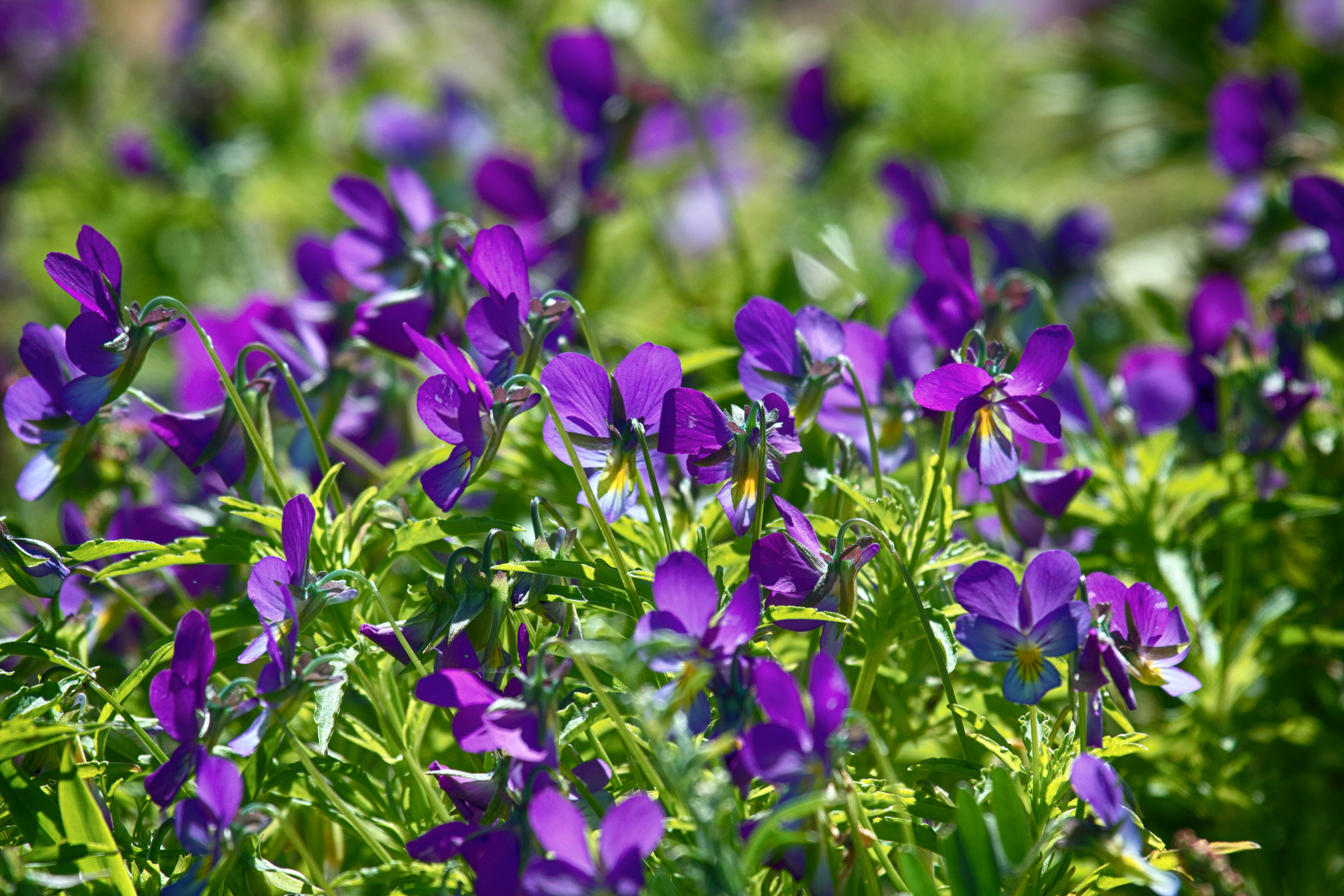
In perfumery, it is the Parma violet that is the most used. It is a flower with a very soft, subtly green scent… but it too gives itself up only reluctantly to perfumers, for whom synthesis is then the best ally. To recreate the scent of violet, two types of molecule are frequently used: ionones and methylionones. Soft and reassuring, it turns to candy in La Violette by Goutal (2001) by Isabelle Doyen and Camille Goutal, bolder and more sensual in Insolence by Guerlain, and delicate and romantic in Paris by Yves Saint Laurent.
In perfumery, the leaves of the violet are worked far more than its flowers: it is possible to extract from them an intense absolute, green and aqueous, a little earthy, evoking the fresh morning dew or the flavour of a freshly peeled cucumber.
The violet leaf caused a surprise by bringing its carefree quality and its freshness to the masculine Fahrenheit by Dior (1988) by Jean-Louis Sieuzac, Michel Almairac and Maurice Roger.
A Few Other Iconic Floral Perfumes
- With the opulent Chanel No. 5 (1921), Ernest Beaux created a revolutionary perfume. The dance between May rose, ylang-ylang and jasmine is magnified by a burst of aldehydes, the olfactory signature of this now iconic fragrance.
- Hyacinth, Bulgarian rose and lilac are some of the flowers populating the exuberant Nahéma (1979) by Guerlain, between an opening of aldehydes and a base of warm, sensual vanilla.
- Paris (1983) by Yves Saint Laurent seals the sumptuous marriage of rose and violet. A string of other flowers, a spicy touch of clove and a woody base come to sublimate this masterpiece by the perfumer Sophia Grojsman.
- The elegant J’Adore (1999) by Dior is a floral bouquet built around an accord of tuberose and jasmine, rose and violet, all accompanied by a delicious note of candied plum as well as sandalwood and enveloping musks.
- L’Air du Temps (1948) by Nina Ricci sounded the starting signal for floral-spicy perfumes: Rosa Centifolia, Grasse jasmine and powdery violet make us vibrate, but it is the carnation-gardenia accord of the fragrance that gives it all its strength.
- On the niche perfumery side, Annick Goutal also offers us Le Chèvrefeuille (2002): the eponymous flower (honeysuckle) meets narcissus in this soft green perfume punctuated with petitgrain, created by Camille Goutal and Isabelle Doyen.
- In L’Instant by Guerlain (2003), ylang-ylang, creamy magnolia and sweet orange honey bring to life a sublime floral, ambery fragrance reinterpreting the Guerlinade, the house’s famous perfume base and olfactory signature.
Fancy continuing your stroll through this springtime garden? The Master Parfums Game-Book has prepared 120 questions about perfume for you, as well as 12 scented pencils to tickle your fifth sense—including pencil no. 6, illustrating a floral bouquet centred on rose and peony.
Happy spring to all 🌸
On the occasion of International Women’s Rights Day, on 8 March, it is essential to pay tribute to the remarkable contributions of women in the world of perfumery. Historically, the industry has been perceived as dominated by men, but over the decades, talented women have broken down the barriers, bringing their unique sensitivity, their creativity and their innovative vision. This article highlights some of the most influential women perfumers, their inspiring journeys, and the olfactory creations that have left an indelible imprint on the world of perfumes.
Breaking Traditional Barriers
Women have established themselves in the world of perfumery, traditionally dominated by men, through a combination of talent, perseverance and innovation. Their rise in this olfactory art can be attributed to several key factors that reflect both a cultural shift and the evolution of the industry itself.
Historically, perfumery was considered an extension of chemistry, a field where women had little presence. However, over time, perceptions evolved, and education as well as increased access to specialised training opened doors. Institutions such as ISIPCA in France played a crucial role in training generations of perfumers, including talented women who then left their mark on the industry.
Sensitivity and Approach
Women brought a different sensitivity and perspective to perfume creation, often drawing on their intuitive understanding of emotions and lived experiences to design fragrances that resonate deeply on an emotional level. This ability to weave rich, complex olfactory narratives not only allowed women to distinguish themselves in the field but also enriched the diversity of perfumes available on the market.
Innovation, Creativity and Mentoring
Women perfumers have often been at the forefront of innovation, pushing the limits of creativity to explore new facets of perfumery. Whether through the use of modern techniques, the reinterpretation of traditional notes or the development of new molecules, their work has contributed to shaping olfactory trends and introducing new standards of beauty and excellence in the industry.
The importance of networking and mentoring cannot be underestimated in the rise of women in perfumery. By establishing strong links with other industry professionals and benefiting from the support of mentors, women have been able to navigate the sector more effectively, gaining visibility and recognition. Moreover, many established women perfumers have taken to heart the mentoring of the new generation, thus ensuring a legacy of female talent in perfumery.
The Olfactory Architects of Modern Perfumery
The Master Perfumers
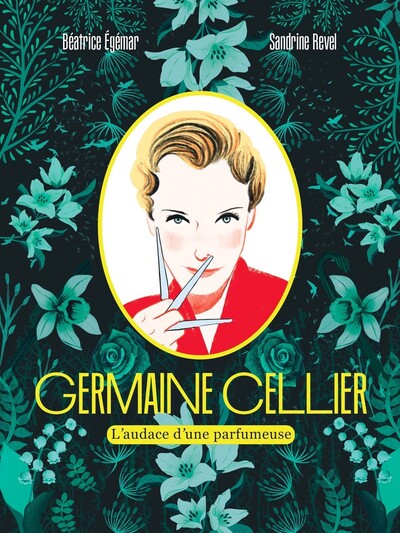
Germaine Cellier
Germaine Cellier was a pioneer in the world of perfumery, known for her revolutionary work in the 1940s and 1950s. She created emblematic perfumes for the house of Balmain, such as Vent Vert, and Fracas for R. Piguet. G. Cellier is recognised for having broken the conventions of her time, introducing bold compositions that changed the face of modern perfumery.
Daniela Andrier
Daniela Andrier is a renowned perfumer working mainly with Givaudan, one of the largest perfume creation houses. She is not an in-house perfumer for a specific brand but collaborates with several luxury brands. D. Andrier is known for her delicate, precise approach to perfumery, with creations such as Infusion d’Iris for Prada or Untitled for Maison Martin Margiela. Her strength lies in her ability to create perfumes that evoke subtle, complex emotions, which has earned her recognition in the industry.
Calice Becker
Calice Becker is director of perfumery creation at Givaudan and was the creative force behind perfumes such as J’Adore by Dior. Her contribution to perfumery goes beyond her creations; now perfumer vice-president and director of the Givaudan Perfumery School, she is a mentor and a source of inspiration for the new generations of perfumers, proving the importance of passion, innovation and determination in the pursuit of excellence. In 2021, she was the laureate of the Fragrance Foundation’s “Lifetime Achievement Perfumer Award” for her brilliant career and her visionary leadership in promoting the art of perfumery. Calice Becker continues to influence the industry with her work, leaving a lasting mark that testifies to her creative genius.
Nathalie Lorson
Trained at Roure, Nathalie Lorson is a master perfumer at Firmenich. She has created perfumes for a multitude of brands, including Encre Noire for Lalique. N. Lorson is appreciated for her aptitude in creating complex, enveloping fragrances, using her talent to explore new olfactory dimensions, as with Black Opium by YSL. N. Lorson recreated the Héritage collection of the house of Violet with great mastery. She collaborates with various brands as an independent perfumer, and has received several awards recognising her talent.
Isabelle Doyen
Isabelle Doyen is a master perfumer whose creations stimulate the imagination through their originality and their audacity. Long associated with the house of Annick Goutal, now Goutal Paris, I. Doyen was the creative force behind several of the brand’s emblematic perfumes, such as Songes and Nuit Étoilée, which reflect her talent for capturing the essence of nature and human emotions. Her collaboration with Camille Goutal, daughter of Annick Goutal, led to a series of fragrances that celebrate the founder’s legacy while introducing new olfactory directions. I. Doyen is also known for her work on independent creations that defy traditional categorisations, showing her penchant for experimentation and innovation.
Nathalie Feisthauer
Nathalie Feisthauer is an independent perfumer, having created Lab-Scent after working at Givaudan then Symrise. She contributed to the creation of perfumes such as Eau des Merveilles for Hermès and has a reputation for her innovative work. She has received several awards, notably the FIFI Perfumer of the Year award in 2019, the Best Revelation award with the launch of the Sous le Manteau collection in 2020, and a FIFI Award with L’Orchestre Parfum for Electro Limonade in 2021.
Annick Menardo
Annick Menardo is a perfumer who has worked for Firmenich. She is famous for her bold, innovative creations, such as Hypnotic Poison for Dior and Body Kouros for Yves Saint Laurent. A. Menardo has a particular talent for creating perfumes that are both contemporary and timeless, using a varied range of ingredients to capture complex emotions.
Aliénor Massenet
Aliénor Massenet works as a perfumer for Symrise, one of the great perfume creation houses. Over the course of her career, she has created perfumes for a variety of brands, including Memo Paris. A. Massenet is known for her detailed approach and her ability to create rich, complex fragrances, where memories and emotions are highlighted through her compositions.
Sophia Grojsman
Sophia Grojsman, working mainly with IFF (International Flavors & Fragrances), is famous for her unique approach to perfumery. She has created emblematic perfumes such as Eternity for Calvin Klein and Trésor for Lancôme. Grojsman is known for her generous use of floral notes, in particular rose, and has been rewarded with numerous awards for her contributions to the industry.
Françoise Caron
Françoise Caron has worked on a multitude of perfumed creations over the course of her career for various houses, notably for Hermès with the creation of Eau d’Orange Verte. An independent worker with recognised expertise, Caron is famous for her ability to capture freshness and simplicity in her perfumes, creating works that are both delicate and powerful.
Honorine Blanc
Honorine Blanc is a perfumer at Firmenich who has produced many emblematic perfumes, notably the blockbuster Flowerbomb for Viktor & Rolf. Her mastery of floral compositions and her talent for creating bold fragrances make her a respected figure in the field. H. Blanc is known for her collaborative work with various luxury brands.
Anne Flipo
A perfumer at International Flavors & Fragrances (IFF) since 2004, Anne Flipo’s journey began at ISIPCA, where she developed her passion for raw materials. Rich in a unique talent, she has created many successful perfumes for luxury brands. Her expertise in balancing natural and synthetic ingredients gives rise to unique, distinctive fragrances. Composing for prestigious brands such as Guerlain, Yves Saint Laurent and Lancôme, Anne Flipo continues to pursue her work and to inspire through her admirable output. She notably signs the new fragrance of Essential Parfums, Néroli Botanica.
A Relevant New Approach
Daphné Bugey
Daphné Bugey, a perfumer at Firmenich, has created fragrances for a variety of brands, including Le Labo with Rose 31, for example. D. Bugey is appreciated for her know-how combining contemporary and traditional ingredients to create innovative fragrances. She also works independently with various houses.
Sonia Constant
Sonia Constant works for Givaudan and has created perfumes for brands such as Valentino, but is above all recognised for her work for Narciso Rodriguez, with whom she has collaborated on a large collection around musk. She is known for her modern approach and her use of unexpected raw materials to create perfumes that defy conventions. S. Constant has also created her own brand, EllaK, in which she transcribes all her creative sensitivity.
Emilie Coppermann
Emilie Coppermann, a perfumer at Symrise, is recognised for her dynamic, innovative creations, notably for brands such as The Different Company. Her mastery of woody and fresh accords makes her an essential figure in the industry, Dance of the Dawn being an example of this. E. Coppermann also works independently with many houses, bringing her unique approach to each project.
Cécile Zarokian
Cécile Zarokian is an independent perfumer who has established her own company, Cécile Zarokian Parfums. She is known for creations such as Amouage Epic Woman. C. Zarokian has gained recognition for her artisanal approach to perfumery, developing perfumes that tell a story and evoke deep emotions.
Christine Nagel
Christine Nagel is currently the in-house perfumer for Hermès, having succeeded Jean-Claude Ellena. Before joining Hermès, she worked on projects for many prestigious brands. C. Nagel is known for her narrative approach to perfumery, creating perfumes that tell stories and capture moments. Among her notable creations at Hermès is Eau de Rhubarbe Écarlate. Her appointment as head perfumer at Hermès marks a significant step in her career, underlining her talent and her vision in the art of perfumery.
Mathilde Laurent
Mathilde Laurent has been the in-house perfumer for Cartier since 2005, where she is famous for having created a variety of emblematic perfumes, including La Panthère. Before joining Cartier, M. Laurent worked at Guerlain. Her bold approach and her innovative use of ingredients make her a leading figure in the industry, pushing the limits of olfactory creation.
Olivia Giacobetti
Olivia Giacobetti is recognised for her ability to capture the essence of invisible, ephemeral things in her perfumes. She is an independent perfumer and the founder of her own brand, IUNX. Among her most famous creations is En Passant for Frédéric Malle, highlighting subtle notes of lilac. O. Giacobetti is appreciated for her poetic style and her ability to create nuanced, captivating perfumes.
Vero Kern
Vero Kern was the founder of Vero Profumo, a Swiss niche brand. As an independent perfumer, she created perfumes that became cult in the world of niche perfumery, such as Onda, Kiki, and Rubj. Kern was known for her use of high-quality raw materials and for her bold, timeless compositions.
Amélie Bourgeois
Amélie Bourgeois is a French perfumer whose passion and expertise for olfactory creation distinguish her in the world of perfumery. Trained at the ISIPCA perfumery school, one of the most prestigious in the world, Amélie quickly developed a unique creative signature, marked by a bold exploration of raw materials and an avant-garde approach to composition. Her vision of perfumery, at once poetic and innovative, has led her to work on various olfactory projects, from niche perfumes to artistic collaborations.
Anne-Sophie Behaghel
Anne-Sophie Behaghel also possesses a solid training in perfumery, having refined her talent and her technique at ISIPCA before embarking on a distinguished career in the industry. Anne-Sophie is recognised for her ability to harmoniously balance complexity and subtlety in her creations, as witnessed by her work for major brands and niche projects. Her passion for telling stories through perfumes and her meticulous attention to detail make her a creative force in the field.
(Together, Amélie Bourgeois and Anne-Sophie Behaghel founded Le Studio Flair, an olfactory creation studio that stands out through its personalised approach and its commitment to innovation and excellence.)
Sophie Labbé
Sophie Labbé took up the art of perfumery after being inspired by Jean Kerléo, a perfumer at Jean Patou. She studied at ISIPCA in Versailles before joining IFF, where she practised for more than 20 years before joining, in 2019, the Paris teams of Firmenich. Her perfumes, imbued with her passion for nature and romanticism, stand out for their softness and their harmony. Sophie Labbé is recognised for her determination to perfect each creation. Her compositions, such as Very Irresistible by Givenchy or Parisienne by Yves Saint Laurent, charm through their ability to reveal unique atmospheres and stories.
Véronique Nyberg
Véronique Nyberg, an artist and chemist by training, found her passion in perfumery after her studies at the IFF Perfumery School. Her journey led her through various cities, refining her creativity and her mastery of contrasts. In 2014, she joined MANE in Paris as vice-president of fine perfumery creation. Her artistic signature lies in the subtle harmony of opposites. For Véronique, innovation is the fruit of deep introspection, nourished by experiences and imagination, giving rise to singular, captivating creations.
And so many others still… Today, perfumery has the good fortune to see many women perfumers continue to emerge, allowing it to benefit ever more from this feminine artistic sensitivity.
Extraordinary Contributions to Perfumery
The contributions of these extraordinary women to perfumery are invaluable. They have not only paved the way for other creative women in this traditionally male field but have also enriched our world with fragrances that awaken the senses and arouse deep emotions. Their legacy inspires a new generation of women perfumers to explore the art of perfumery without limits, promising a future where the boundaries of creativity and innovation continue to be pushed back. In celebrating International Women’s Day, we recognise not only their past achievements but also the future impact of women in the perfume industry.
The establishment of women in perfumery reflects a broader shift in society towards greater gender equality and the recognition of talent regardless of gender. Their success in this olfactory art underlines the importance of the diversity of perspectives and experiences in creating perfumes that inspire—bound up with the determination that can lead to excellence, regardless of gender.
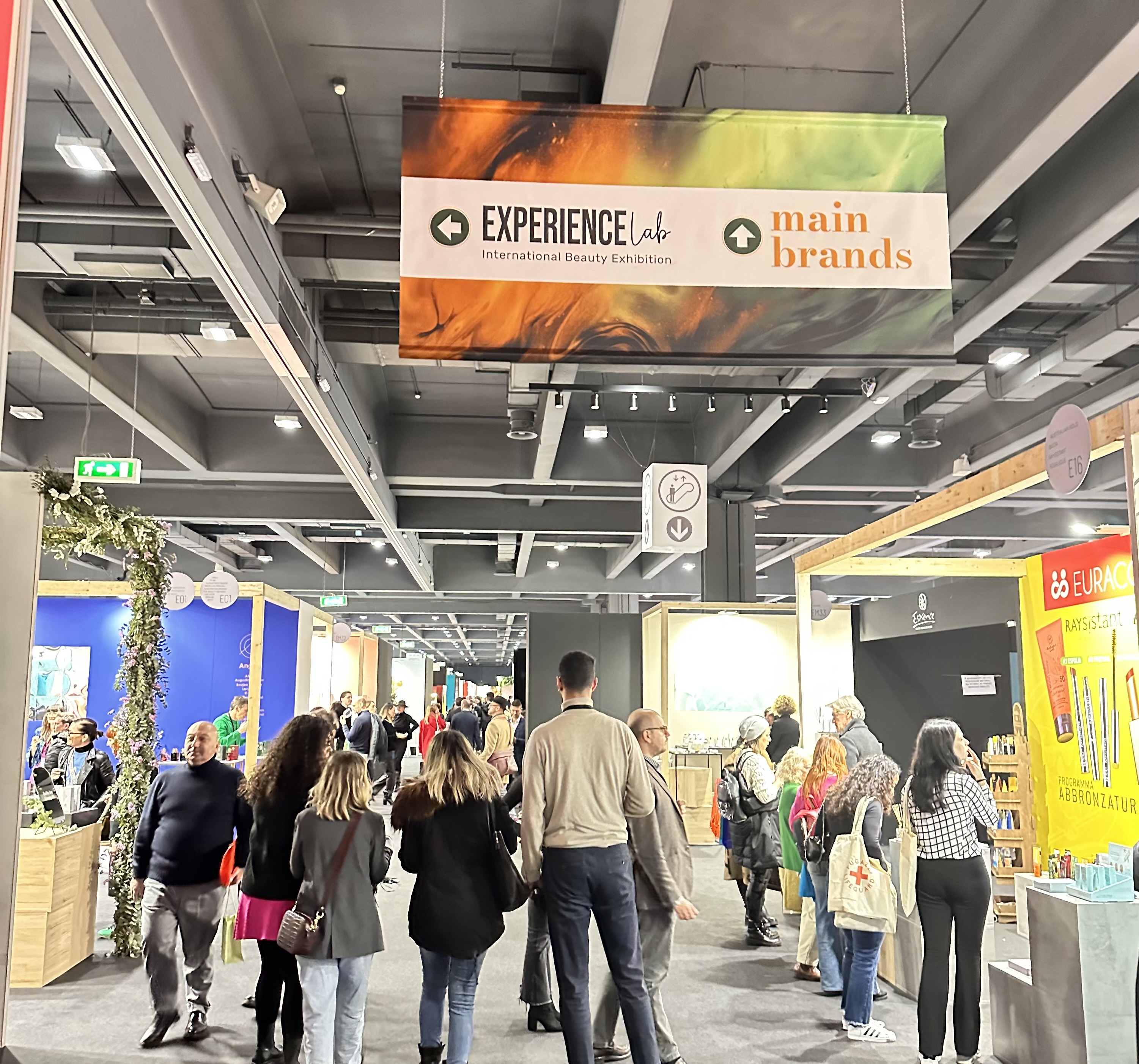
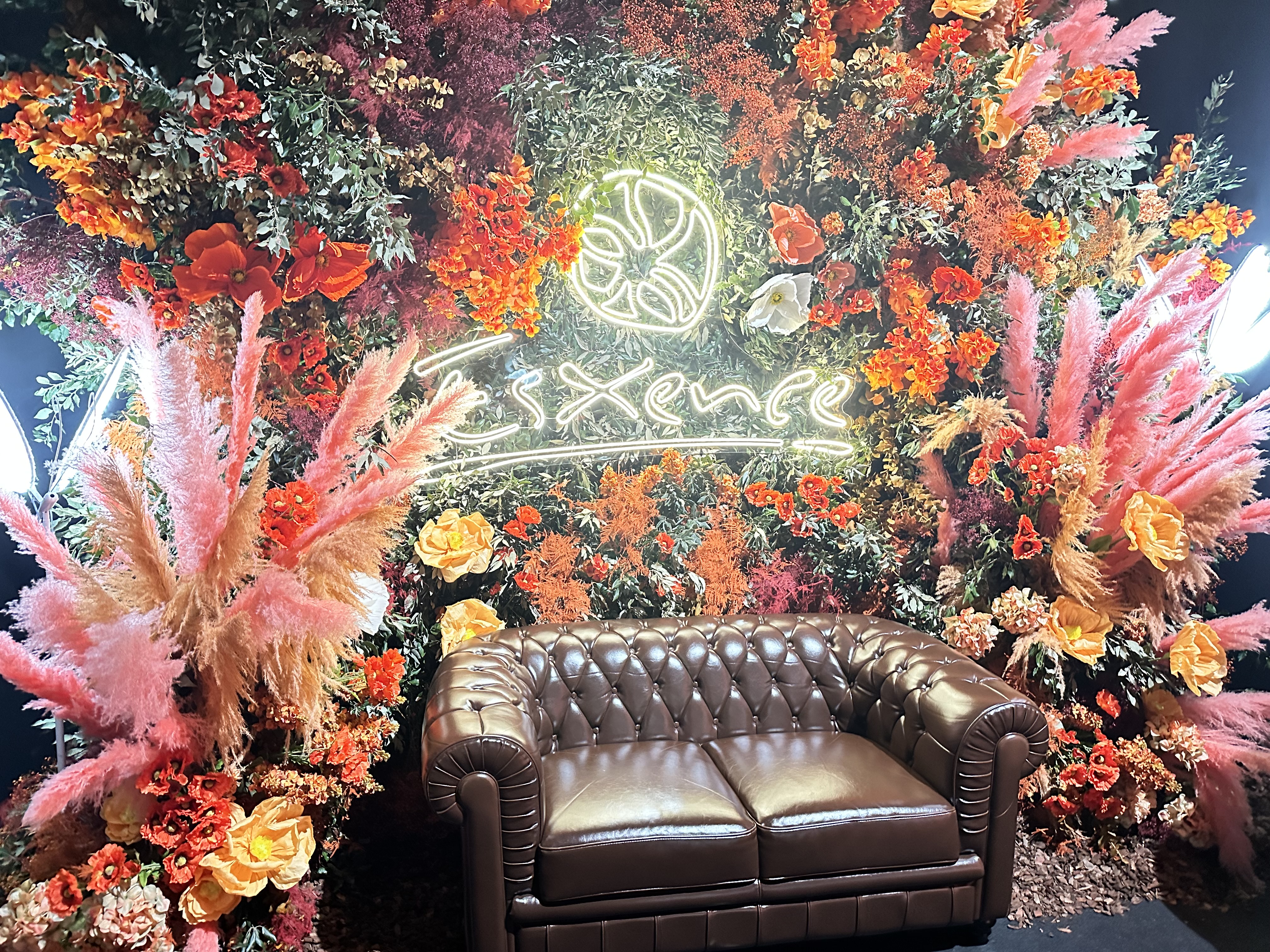
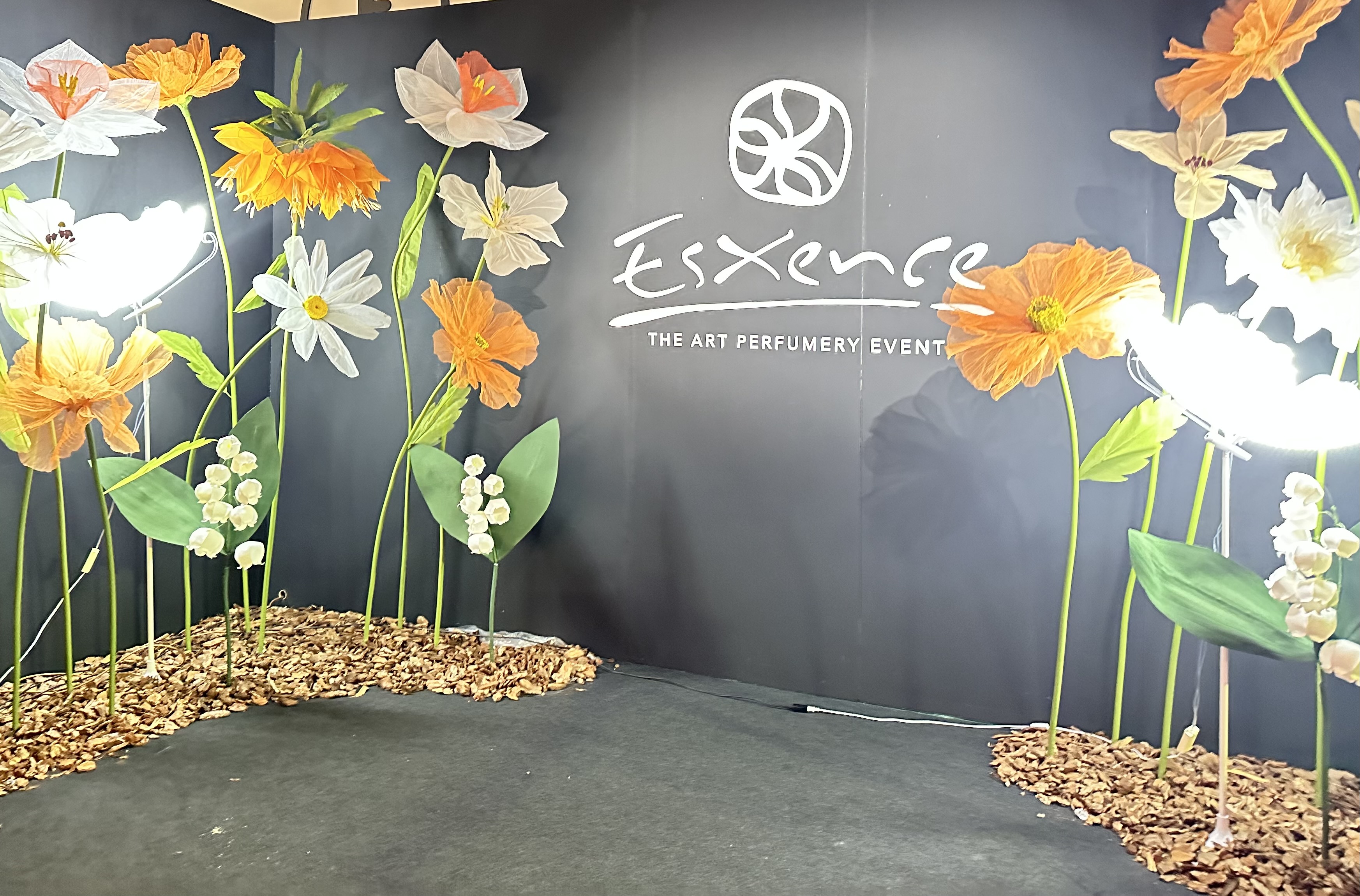
From 6 to 9 March, the 14th edition of the Esxence fair takes place. Every year, perfumers and brands, professionals of all kinds from the perfumery world and a passionate public gather in Milan for this unmissable rendezvous of niche perfumery. It is also called haute perfumery, artistic perfumery, alternative perfumery, confidential perfumery or creators’ perfumery—at Master Parfums, we take stock of this branch of perfumery, its origins and its ambitions.
Before Niche Perfumery
Perfume was for a long time a luxury object and the marker of a high social status. But from the 19th century, several events would change the game. With the Industrial Revolution and the advances of chemistry, craftsmanship and the bespoke faded in favour of mass production. François Coty would contribute largely to the democratisation of perfumery. This evolution also affected the fashion sector. But while during the first half of the 20th century couturiers made their way onto the perfume market, with precursors such as Paul Poiret, Gabrielle Chanel or Jeanne Lanvin, a fragrance remained a purchase reserved for the wealthiest.
It was not until the aftermath of the Second World War that the marketing of perfumes by fashion houses resumed and that jewellers followed in their footsteps, with the ambition of broadening the range of social classes able to afford a fragrance… and it succeeded! We then witnessed the first steps of what we know today as mass perfumery.
Mass Perfumery, or the Mainstream Counterpart of Perfumery
Mass perfumery is the perfumes created by major luxury brands and easily found in department stores. Think of the fragrances of Chanel, Dior, Lancôme, Dolce & Gabbana or Givenchy, which teem on the shelves of the big perfumery chains such as Sephora, Marionnaud, Nocibé and other department stores. Very often, these perfumes seek to please as many people as possible. Market studies, olfactory panels… Many means are deployed to orchestrate the successes and prevent the flops. When success is there, a fragrance will then have many variations, also called flankers, the aim being to capitalise on this success while maximising the profitability of the initial product.
Mass perfumery gives pride of place to marketing and communication during a new launch, treating itself to advertising spots at staggering prices and making the promotion of the perfume—or even of the entire brand—rest amply on a celebrity. Thus, by buying a perfume, consumers will be granted a little piece of prestige, elegance, sensuality and much more, by mimicry with the fragrance’s headliner. On reading the words “J’adore, Dior,” perhaps you saw Charlize Theron spring up in a corner of your head?
Unfortunately, the popularity and accessibility of perfume are double-edged. Over the years, we have witnessed a phenomenon of standardisation: the desire to transform perfume into a consumer product means that as early as the 1950s, in the eyes of some, fragrances began to resemble one another a little too much, as if the very art of perfumery was losing a little of its soul… It is in reaction to this that niche perfumery emerged towards the end of the 1960s.
Niche Perfumery, or the Rebellious Child of the Olfactory World
If mass perfumes are, in a way, the blockbusters of the perfume market, confidential perfumery means to be a more authentic alternative. It makes the choice to target a more restricted, less competitive market, also often made up of connoisseurs—in short, a niche!
The perfume historian Elisabeth de Feydeau defines the ambitions of niche perfumery as those of “awakening emotion, flattering the personality and responding to a strong need to set oneself apart.”
In the 1970s, creators wished to free themselves from the tyranny of markets and refocus perfume on the essential: the juice itself.
Little by little, new brands came into being. Relegating market studies and olfactory and commercial trends to the background, individuality, originality and creative freedom became the watchwords. At the time, people spoke of “third perfumery” or “parallel perfumery.”
The perfumers hit the mark, and the following decades saw niche perfumery prosper before it experienced a real boom at the beginning of the new millennium. For the journalist specialising in perfumery Maïté Turonnet, the three great pioneers of niche perfumery are Jean Laporte with L’Artisan Parfumeur, Serge Lutens and Annick Goutal.
Among the houses that established themselves as references in the niche world are Le Jardin Retrouvé, Nicolaï, Editions de Parfums Frédéric Malle, Le Labo, By Kilian, Maison Francis Kurkdjian, Byredo, Juliette Has A Gun, The Different Company or Memo. Some newcomers such as BDK Parfums or Maison Crivelli are well set to stay.
In hindsight, some brands born before the movement found themselves labelled niche—for example, Diptyque (1961), Penhaligon’s (1870), Creed (1760) or even Santa Maria Novella (1221), the latter being houses endowed with a rich historic olfactory heritage.
Characteristics of Niche Perfumery
In niche perfumery, the emphasis is placed on the quality and nobility of the raw materials, and it is often they that one seeks to value and place at the centre of communication. Niche perfumes take on the responsibility of incorporating into their compositions less conventional ingredients and notes, sometimes avant-garde proposals and concepts that can surprise, or even displease, and they claim this difference. Here, it is no longer a question of wanting to identify with a brand’s muse or of blending into the mass by adopting the latest olfactory trend, but rather of expressing a more personal, fully assumed identity.
As niche perfumes target a more restricted market, they are also distributed in a more selective way, in the brand’s points of sale, independent perfumeries or pop-up stores. As they are produced in smaller numbers, they are also often more expensive, because one must still be profitable… The good news is that the brand will also have to sell fewer of them to reach this profitability. Finally, a good number of niche perfumes are unisex, non-gendered perfumes.
It is important to recall that the fact that a perfume is niche is not necessarily a guarantee of quality. In the same way, a mass perfume is not automatically inferior or devoid of all artistic sensitivity: many fragrances that are today mythical and considered little olfactory jewels are mass perfumes! Here, it is a question of highlighting the differences in approach between two branches of perfumery.
Mass and Niche: Increasingly Less Hermetic Boundaries?
In recent years, the boundaries between mass perfumery and niche perfumery have crumbled. Many niche brands have joined large groups in order to pursue their development. This is the case, for example, of Frédéric Malle and Le Labo, which were bought by Estée Lauder; Maison Francis Kurkdjian joined LVMH, Atelier Cologne joined L’Oréal, while Byredo, Penhaligon’s and L’Artisan Parfumeur are now part of Puig.
Some brands have emerged from the confines of confidential shops and extended their reach, making their way into Sephora or department stores such as Galeries Lafayette. Furthermore, several niche fragrances have acquired a certain renown: Le Labo with Santal 33, Frédéric Malle with Portrait of a Lady, Creed with Aventus… Indeed, success has made the audience of certain houses… a little less niche!
Finally, brands historically accustomed to mass perfumes have begun to offer creations turned towards niche, with a greater valuing of raw materials, higher prices and a more selective distribution: Tom Ford and his Private Blend collection, Armani with Armani Privé, Chanel with Les Exclusifs de Chanel, the Collection Privée of Christian Dior, or Olfactories at Prada…
In any case, niche perfume remains above all a philosophy, a way of approaching perfume and the relationship we maintain with it. To continue this discovery of confidential perfumery while having fun, opt for the Master Parfums Pocket Quiz special Jovoy edition, the Parisian temple of this confidential perfumery. A game of 120 questions and answers to get to know niche perfume!
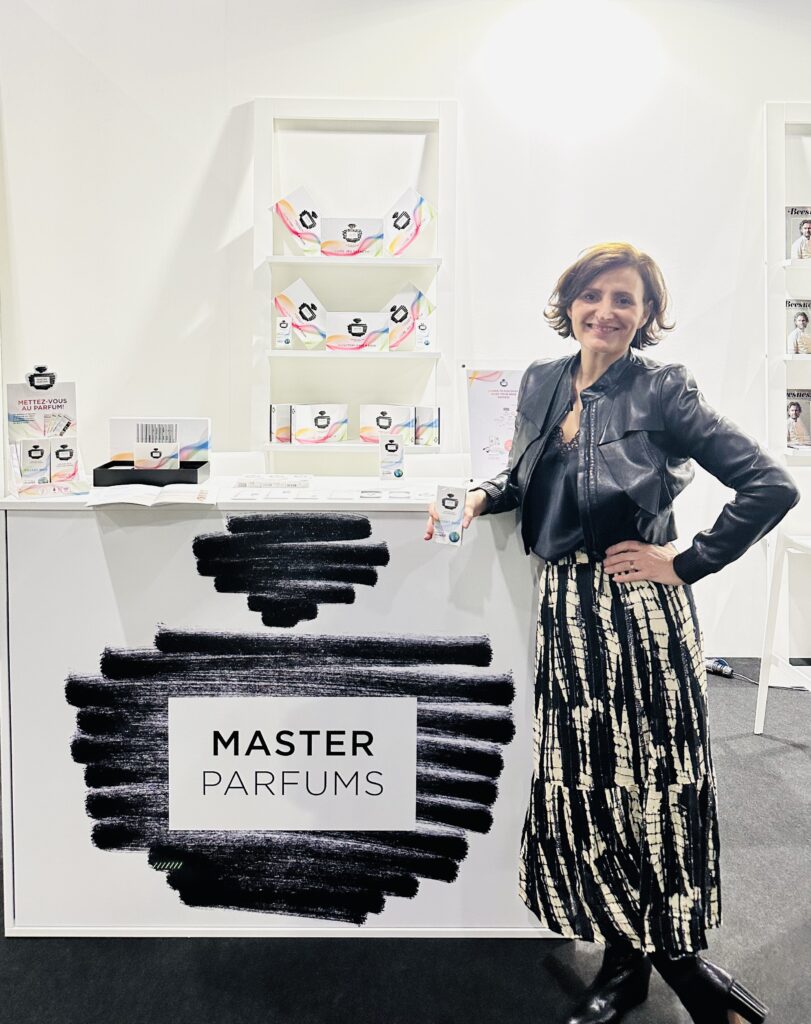
That’s not all: if you are in the vicinity during the Esxence fair, good news, Master Parfums will be there too! Who better to plunge you into the brand’s world and its range of olfactory games than its creator Anne-Laure Hennequin? See you in Milan, from 6 to 9 March!